
AP2, ACP, and UCP are not three things you build. They are three layers, and most merchants touch zero of them directly. Here is the literal answer, by AI surface.
Do merchants need both AP2 and ACP?
No. Most merchants do not need to integrate AP2 or ACP directly at all, and the few who do almost never need both as a build project. AP2 is a payment-authorization layer your processor owns; ACP is a checkout layer your platform abstracts. The question only feels hard because the protocol-comparison pages that rank for it conflate two different things: the layer that proves an agent is allowed to pay (AP2) and the layer that runs the actual checkout conversation inside an AI surface (ACP for ChatGPT and Copilot, UCP for Google AI Mode). The short version of do merchants need both AP2 and ACP: it depends on which buyer agents you intend to accept.
Here is the cleaner mental model. Agentic commerce is a stack, not a menu. AP2, ACP, and UCP each solve a distinct problem, are each maintained by a different organization, and are designed to interoperate rather than compete. When you ask “do merchants need both AP2 and ACP,” you are really asking “which of these layers is my responsibility?” For the overwhelming majority of merchants in 2026, the honest answer is: none of them, because Shopify Agentic Storefronts and the new Agentic Plan abstract both checkout protocols, and your payment processor absorbs AP2.
The rest of this article gives you the literal decision by AI surface, a layer diagram you can hand to a stakeholder, and a per-channel table of what you actually build versus what someone else owns. We will keep returning to the core question, because the wrong answer to “do merchants need both AP2 and ACP” can cost a six-figure integration you never needed.
AP2 = your processor’s job. ACP = ChatGPT/Copilot checkout, abstracted by your platform. UCP = Google AI Mode checkout, abstracted by your platform. You build a clean product feed; the protocols negotiate around it.
AP2 vs ACP vs UCP for merchants: what each layer actually is
AP2 is the authorization and trust layer; ACP and UCP are the merchant-of-record checkout layers. AP2 answers “is this agent allowed to spend this money?” while ACP and UCP answer “how does the agent discover, cart, and check out a product?” Confusing these is the single most common error in the AP2 vs ACP vs UCP debate, and it is why so many merchants over-scope their work.
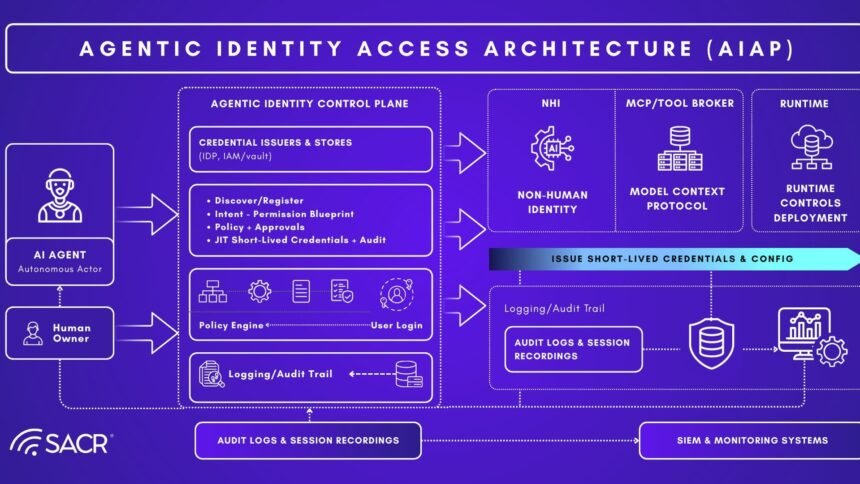
AP2 (Agent Payments Protocol) was introduced by Google and is backed by 60-plus partners spanning payment networks (Mastercard, American Express), processors (Adyen, PayPal), and merchants. It uses cryptographically signed mandates: tamper-proof digital contracts that define exactly what an agent may do on a buyer’s behalf, such as “book a trip under $2,000 through these five partners only.” Critically, the signing, validation, and network settlement of those mandates happen at the processor and network level, not in your storefront.
ACP (Agentic Commerce Protocol) was co-developed by OpenAI and Stripe and released under Apache-2.0. It standardizes the checkout conversation inside conversational surfaces like ChatGPT and Microsoft Copilot, using a Shared Payment Token: the agent creates a scoped, time-limited token containing the authorization needed to complete a purchase, then sends a checkout request to the merchant. ACP has grown well past its ChatGPT Instant Checkout origin into a standard endorsed by 25-plus partners including Salesforce, Squarespace, and Adobe Commerce.
UCP (Universal Commerce Protocol) was announced by Sundar Pichai at NRF 2026 on January 11, 2026, co-developed with Shopify and endorsed by Etsy, Wayfair, Target, Walmart, and 20-plus others. UCP covers four stages of the buying journey: discovery, capability negotiation, checkout, and post-purchase handoff. It is the path for selling inside Google AI Mode, the Gemini app, and Google Shopping, and it explicitly keeps the retailer as seller of record. Importantly, UCP is compatible with AP2, A2A, and MCP rather than replacing them.
“AP2, ACP, and UCP are complementary layers in one stack, not three competing standards you pick between.”
The layer model
| Layer | Maintained by | Solves | AI surfaces | Who integrates it |
|---|---|---|---|---|
| AP2 | Google + 60+ partners | Payment authorization and trust (signed mandates) | Network-level, all surfaces | Your payment processor / card network |
| ACP | OpenAI + Stripe (Apache-2.0) | Checkout conversation (Shared Payment Token) | ChatGPT, Microsoft Copilot | Your platform (Shopify) or you, if direct |
| UCP | Shopify + Google | Discovery, negotiation, checkout, post-purchase | Google AI Mode, Gemini, Google Shopping | Your platform (Shopify) or you, if direct |
Do I need to integrate AP2 to sell in ChatGPT?
No. You do not integrate AP2 to sell in ChatGPT. Selling in ChatGPT runs over ACP, and AP2 is an authorization layer that your payment processor handles on the network side. For a merchant, AP2 is a 2026 awareness item, not a 2026 build item.
The reason this trips people up is that both protocols touch “payment,” so they sound like overlapping work. They are not. ACP carries the checkout into the ChatGPT conversation and hands your backend a Shared Payment Token; AP2 governs the cryptographic proof that the agent was authorized to spend, which is settled between the agent, the network, and your processor. By the time AP2 affects your live transactions, Stripe, Adyen, or PayPal will have shipped support inside the integration you already use. You will update an SDK, not run a project.
So the practical sequence for ChatGPT is: (1) make sure your products are in a clean, accurate feed; (2) be reachable over ACP, which on Shopify is a toggle and on non-Shopify platforms is increasingly handled by the platform or the Shopify Agentic Plan; (3) let your processor handle AP2 whenever it becomes relevant to your transactions. At no point do you, the merchant, write AP2 code to sell in ChatGPT.
If a vendor quotes you an “AP2 integration” to start selling in ChatGPT, push back. Selling in ChatGPT is an ACP-and-feed exercise. AP2 lives in your processor’s roadmap, not your sprint.Which agentic commerce protocol should a merchant support, by AI surface?
Pick the AI surface first, and the surface picks the protocol. ChatGPT and Microsoft Copilot pull ACP; Google AI Mode, Gemini, and Google Shopping pull UCP; AP2 is shared across all surfaces and owned by your processor. You rarely choose a protocol in the abstract. This is the cleanest way to answer “which agentic commerce protocol should a merchant support” without drowning in spec comparisons.
Read the decision tree below top to bottom. The only branch where you personally implement a protocol is the last one, where you have deliberately decided not to route through a platform that abstracts it for you.
START: Which AI surface do you want to sell on?
-> ChatGPT or Microsoft Copilot? The checkout layer is ACP. AP2 (authorization) is owned by your processor.
-> On Shopify? Flip on Agentic Storefronts. You integrate nothing protocol-level; you maintain feed + inventory.
-> On WooCommerce / Magento / custom? Use the Shopify Agentic Plan (upload catalog) OR your platform’s native ACP support. You still write no AP2 code.
-> Refuse to use a platform abstraction? Then you implement ACP yourself and own its maintenance.
-> Google AI Mode, Gemini, or Google Shopping? The checkout layer is UCP. AP2 is still owned by your processor.
-> On Shopify? Agentic Storefronts also covers UCP. One toggle, both surfaces.
-> On WooCommerce / Magento / custom? Agentic Plan or Google Merchant Center UCP onboarding; your platform increasingly handles the spec.
-> Refuse abstraction? You implement UCP’s capability profile yourself.
-> Just want the payment-authorization layer (AP2)? That is not yours to build. It lives with your PSP and the card networks. Confirm your processor’s AP2 timeline and move on.
The takeaway: “which agentic commerce protocol should a merchant support” almost always resolves to “the one my chosen platform already supports for the surface I picked.”
Surface decides protocol. ChatGPT/Copilot -> ACP. Google AI Mode/Gemini -> UCP. AP2 is everyone’s payment layer and nobody’s merchant integration.
Shopify Agentic Storefronts: which protocols do they cover?
Shopify Agentic Storefronts cover both ACP and UCP behind a single admin toggle, with no app install, custom integration, or developer work. A Shopify merchant flips one switch and becomes reachable across ChatGPT, Microsoft Copilot, Google AI Mode, and the Gemini app. This is why most Shopify merchants correctly answer “do merchants need both AP2 and ACP” with “my platform handles it.”
Shopify co-developed UCP with Google and built Agentic Storefronts on its Checkout Kit foundation, using JSON-RPC 2.0 messaging and capability profiles published at a /.well-known/ucp endpoint. The design principle Shopify states plainly is: merchants implement only what they need, and agents negotiate only what they can handle. In practice that means the protocol negotiation is Shopify’s problem; your job is an accurate catalog and inventory. Shopify has also signaled UCP will extend to Meta experiences and that Shop Pay is coming to Copilot.
For non-Shopify merchants, the March 2026 Agentic Plan is the headline. Announced alongside the broader Agentic Storefronts rollout (Shopify’s momentum post is dated March 24, 2026), the Agentic Plan lets brands on WooCommerce, Magento, BigCommerce, or a fully custom stack upload product data to the Shopify Catalog and become shoppable across ChatGPT, Google AI Mode, Gemini, Microsoft Copilot, and the Shop App, without building a Shopify storefront. It is, bluntly, Shopify selling its agentic distribution to merchants who are not Shopify customers.
Pros
Cons
How do non-Shopify merchants sell in ChatGPT in 2026?
Non-Shopify merchants sell in ChatGPT in 2026 by one of three paths: the Shopify Agentic Plan (upload your catalog, no storefront needed), your own platform’s native ACP support, or a direct ACP implementation. None of these require you to write AP2 code. This is the part the incumbent comparison pages bury, so here is the concrete decision for WooCommerce, Magento, BigCommerce, and custom builds.
Path 1 – Shopify Agentic Plan (most merchants). Sign up for the Agentic Plan, push your product data into the Shopify Catalog, and you become shoppable across ChatGPT, Google AI Mode, Gemini, Copilot, and the Shop App. This covers both ACP and UCP surfaces simultaneously and is the lowest-engineering path. You maintain feed accuracy; Shopify handles the protocol negotiation and abstracts AP2 through its payment flow.
Path 2 – Native platform support. Adobe Commerce has committed to both UCP and ACP, and platforms including Wix, WooCommerce, BigCommerce, and Squarespace have been rolling out ACP support. If your platform ships it, enabling ChatGPT selling becomes a configuration task, not a protocol build. Check your platform’s agentic-commerce documentation before assuming you must build anything.
Path 3 – Direct ACP implementation (optionality seekers). If you deliberately want to avoid routing through a platform’s catalog, you implement ACP yourself: expose a product feed, support agent-initiated checkout, and accept the Shared Payment Token. Grid Dynamics characterizes this as a higher upfront lift that buys long-term optionality. Even here, AP2 remains your processor’s responsibility, so “do merchants need both AP2 and ACP” is still a no on the AP2 half.
The cheapest way for a WooCommerce or Magento brand to appear in ChatGPT in 2026 is the Shopify Agentic Plan: upload a catalog, skip the storefront, and reach every major AI surface at once.Universal Commerce Protocol vs ACP for merchants: what changed in 2026
4
AI surfaces from one Shopify toggle
ChatGPT, Copilot, Google AI Mode, Gemini
60+
AP2 backing partners
Networks, processors, merchants; processor-owned
25+
ACP endorsers
Incl. Salesforce, Squarespace, Adobe Commerce
4
UCP journey stages
Discovery, negotiation, checkout, post-purchase
The practical difference between UCP and ACP for merchants is surface coverage, not a build decision: ACP routes you into ChatGPT and Copilot, UCP routes you into Google AI Mode, Gemini, and Google Shopping. In 2026 both protocols expanded their capability surface, and your platform absorbed those expansions on your behalf.
ACP expanded materially in its 2026 release, adding Cart, Feed, Orders, Authentication, and MCP integration to the protocol surface, broadening it from a single ChatGPT checkout flow into a fuller commerce standard. That widened the gap between “ACP is a ChatGPT feature” (last year’s framing) and “ACP is a cross-platform commerce protocol” (the 2026 reality with 25-plus endorsers).
UCP saw a significant March 2026 update from Google that added multi-item cart support (agents can now add several items from one retailer in a single operation rather than one transaction per item), live catalog queries (real-time variant, price, and stock lookups instead of static feed snapshots), and identity linking so shoppers keep loyalty pricing, member discounts, and free shipping when buying through an agent. Google also simplified UCP onboarding through Merchant Center. The January launch had partners including Mastercard, Visa, Walmart, Target, and Best Buy; the March update made the protocol genuinely usable for real carts.
For a merchant, the meta-point is the reassuring one: you did not have to ship any of these upgrades. If you are on Shopify Agentic Storefronts or the Agentic Plan, the cart, catalog, and loyalty capabilities arrived through the platform. That is the entire argument for why most merchants touch neither ACP nor UCP directly, and certainly not AP2.
So which protocols do you actually build? A final verdict
Do merchants need both AP2 and ACP? Almost never directly.
For the vast majority of merchants the answer to “do merchants need both AP2 and ACP” is: you build neither directly. You build a clean product feed and accurate inventory; your platform abstracts ACP and UCP; and your payment processor owns AP2. The only merchants who write protocol code are those who consciously reject platform abstraction in exchange for full control and optionality.
Use this as the per-channel build sheet. It is the table the conflated comparison pages never give you: what YOU integrate versus what your platform and processor own, by surface.
| AI surface | Checkout layer | Auth layer | What YOU build (typical merchant) | What’s owned for you |
|---|---|---|---|---|
| ChatGPT | ACP | AP2 | Product feed + accurate inventory | ACP negotiation (platform); AP2 (processor) |
| Microsoft Copilot | ACP | AP2 | Product feed + accurate inventory | ACP + Shop Pay flow (platform); AP2 (processor) |
| Google AI Mode | UCP | AP2 | Catalog/feed; loyalty IDs if used | UCP capability profile (platform); AP2 (processor) |
| Gemini app | UCP | AP2 | Catalog/feed | UCP negotiation (platform); AP2 (processor) |
| Google Shopping | UCP | AP2 | Merchant Center feed | UCP onboarding (platform); AP2 (processor) |
Builder’s take
I build commerce-adjacent AI systems at Cyntr and Loomfeed, and the single most expensive mistake I see merchants make right now is treating AP2, ACP, and UCP as a build backlog. They are a stack, not a to-do list. Here is how I’d actually reason about it:
- Ask ‘which surface do I want to sell on’ before you ask ‘which protocol.’ The surface picks the protocol for you: ChatGPT/Copilot pulls ACP, Google AI Mode pulls UCP. You almost never choose a protocol in the abstract.
- AP2 is a red herring for the merchant. It is the cryptographic authorization layer that lives inside your PSP. If you are on Stripe, Adyen, or PayPal, AP2 arrives in their SDK update, not in your sprint. Don’t staff it.
- The honest 2026 answer to ‘what do I build’ is usually ‘a clean product feed and accurate inventory,’ because Shopify Agentic Storefronts and the Agentic Plan abstract both ACP and UCP behind a toggle.
- If you are on WooCommerce, Magento, or custom, the Agentic Plan is the cheapest distribution Shopify has ever sold to non-customers. That is the real story, not the protocol names.
- Optionality is the only reason to integrate a protocol directly: if you refuse to route revenue through Shopify’s catalog, then yes, you implement ACP and/or UCP yourself, and you own the maintenance.
Frequently asked questions
Almost never directly. AP2 is a payment-authorization layer owned by your card network and processor, and ACP is a checkout layer your platform abstracts. A typical merchant integrates neither: Shopify Agentic Storefronts (or the Agentic Plan for non-Shopify brands) handles ACP, and your processor handles AP2. You focus on a clean product feed and accurate inventory.
No. Selling in ChatGPT runs over ACP, not AP2. AP2 is the cryptographic authorization layer that your payment processor (Stripe, Adyen, PayPal) handles at the network level. For merchants, AP2 is a 2026 awareness item that arrives as an SDK update from your processor, not a build project of your own.
Choose the AI surface first; the surface picks the protocol. ChatGPT and Microsoft Copilot use ACP, while Google AI Mode, Gemini, and Google Shopping use UCP. If you are on Shopify, Agentic Storefronts cover both with one toggle, so you usually do not choose a protocol in the abstract at all.
Three paths: the Shopify Agentic Plan (upload your catalog to the Shopify Catalog with no storefront and reach ChatGPT plus other AI surfaces), your platform’s native ACP support (Wix, WooCommerce, BigCommerce, Squarespace, and Adobe Commerce have been rolling this out), or a direct ACP implementation if you want full optionality. None require you to write AP2 code.
They differ by surface coverage, not by being a build choice. ACP (OpenAI + Stripe) is the checkout standard for ChatGPT and Copilot; UCP (Shopify + Google) covers Google AI Mode, Gemini, and Google Shopping across four stages: discovery, negotiation, checkout, and post-purchase. UCP keeps the retailer as seller of record and is compatible with AP2, A2A, and MCP.
Google’s March 2026 UCP update added multi-item cart support (multiple items from one retailer in a single operation), live catalog queries for real-time variant, price, and stock data, and identity linking so shoppers keep loyalty pricing and member discounts when buying through an AI agent. It also simplified onboarding through Merchant Center. If you are on Shopify, these capabilities arrived through the platform automatically.
Primary sources
- Building the Universal Commerce Protocol (2026) — Shopify Engineering
- Under the Hood: Universal Commerce Protocol (UCP) — Google Developers Blog
- Agentic Payments: AP2 vs. ACP and the future of AI payment processing — Grid Dynamics
- OpenAI’s ACP and Google’s UCP: What’s the difference? — Checkout.com
- Millions of merchants can sell in AI chats — Shopify
- Google announces a new protocol to facilitate commerce using AI agents — TechCrunch
- Universal Commerce Protocol updates improve AI shopping for retailers — Google
- Google’s UCP Update: Carts, Catalogs and Loyalty in AI Shopping — Search Engine Journal
Last updated: June 3, 2026. Related: Commerce.