
Cognition Devin is the autonomous AI software engineer from Cognition AI — the first product to position itself as a fully autonomous engineering teammate rather than an inline code completion tool. Cognition launched Devin on March 12, 2024, with a now-famous demo showing the agent picking up a ticket on Upwork, writing the code, testing it, and submitting the PR end-to-end. By 2026, Devin has matured into an enterprise product with Slack and GitHub integrations, browser access for QA work, and a multi-tier pricing model. Cognition acquired Windsurf (formerly Codeium) in mid-2025, folding the IDE-extension ecosystem into the Devin platform. Importantly, Devin’s positioning is different from Claude Code, Cursor, or GitHub Copilot — those are tools you use while engineering; Devin is an engineer you delegate to.
What is Cognition Devin?
Cognition Devin is an autonomous AI software engineer built by Cognition AI (the company founded by Scott Wu, Steven Hao, and Walden Yan in late 2023). Specifically, Devin operates as a fully agentic engineering teammate — you assign a ticket via Slack or directly through the Devin dashboard, and Devin executes the work end-to-end: reading the codebase, planning the change, writing and testing the code, opening a pull request, responding to review comments. By contrast, Claude Code, Cursor, and GitHub Copilot are pair-programming tools you steer turn-by-turn; Devin is closer to a contractor you delegate the whole task to.
Cognition unveiled Devin on March 12, 2024 with a now-famous launch demo: Devin took a real ticket on Upwork, wrote the code, debugged the code, submitted the PR, and got paid. The launch generated massive industry attention and a $2 billion valuation reported within weeks. The early demo was contested — independent researchers pointed out that the demo edited test cases to match output and used non-public Upwork APIs. Cognition addressed the criticisms and the product matured significantly through 2024-2025. By 2026, Devin’s enterprise customer list includes Goldman Sachs, MongoDB, Nubank, and dozens of Fortune 500 engineering teams.

📌 Quick definition. Cognition Devin is an autonomous AI software engineer launched March 12, 2024. Operates as an agent that takes tickets and ships PRs end-to-end via Slack + GitHub integrations. Made by Cognition AI (founded by Scott Wu). Acquired Windsurf (Codeium) mid-2025. Product page: cognition.ai.
How Devin works in production
Devin’s operating model is what makes it different. You assign Devin a task the way you’d assign a junior engineer — via Slack message, Linear ticket, GitHub issue, or directly in the Devin dashboard. Devin then spins up a sandboxed virtual machine (its own Linux environment), clones the relevant repository, reads the codebase, plans the work, writes the code, runs the tests, and finally opens a PR for human review. The workflow doesn’t require an engineer sitting at the keyboard — Devin operates asynchronously, often overnight, and reports back when ready.
The Devin VM and tools
Each Devin task runs in an isolated VM provisioned by Cognition. The VM has shell access, a browser (for visual QA and web research), an IDE, and the cloned repository. The agent can install dependencies, run builds, execute tests, and even browse documentation websites mid-task. As a result, Devin handles workflows that purely text-API agents cannot — like debugging by reading error messages, inspecting test output, and modifying code based on what failed.
Slack-native engagement
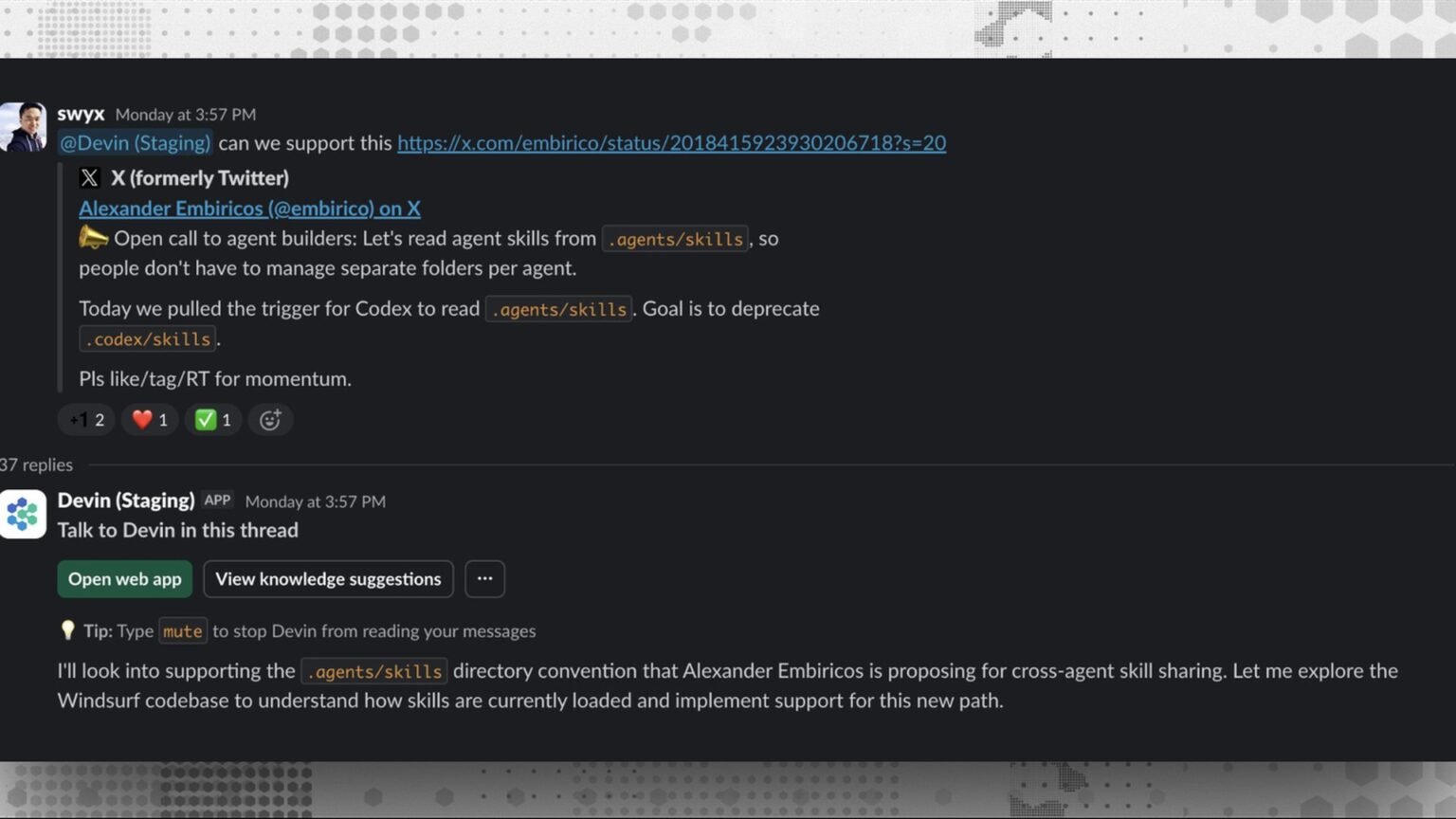
Devin’s primary delivery surface is Slack. You @-mention Devin in a channel, describe the task, and Devin acknowledges. Throughout the task, Devin posts updates (“installing dependencies”, “running tests”, “opened PR #123”). Then you can interrupt, redirect, or ask questions in-thread. This asynchronous Slack pattern is how most enterprise teams have integrated Devin — it fits how engineering teams already operate.
Cognition Devin pricing and tiers in 2026
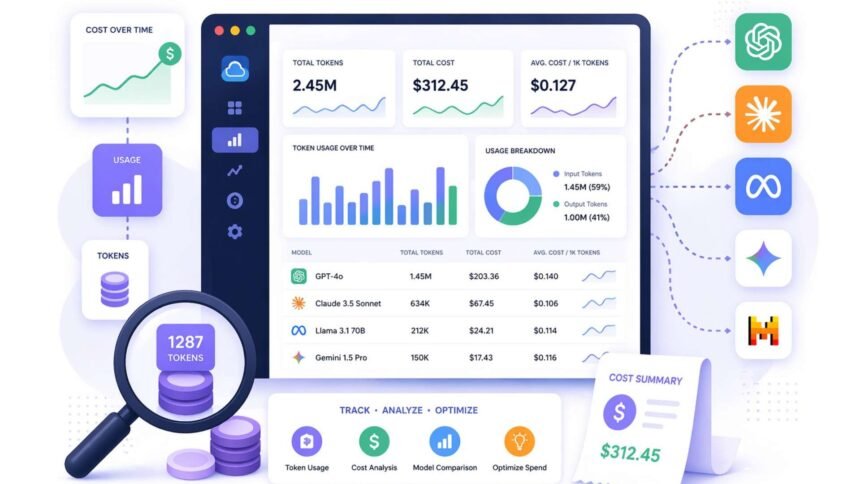
Devin’s pricing has evolved significantly since launch. The 2026 lineup is tiered around ACUs (Agent Compute Units), Cognition’s metering primitive that maps roughly to model-token usage plus VM compute. Simple tickets consume few ACUs; complex multi-day projects consume many. The pricing is enterprise-anchored — individual developer pricing exists but most production deployments are team or enterprise contracts.
⚠️ Watch the ACU consumption. Devin’s ACU billing is opaque — a single complex task can consume far more ACUs than you’d expect, especially if Devin runs into debugging loops. Specifically, enterprise customers report 5-10x cost variability between similar-looking tickets. Mitigation: set per-task ACU budgets, monitor consumption weekly, scope tickets tightly.
| Tier | Price (approx, 2026) | ACUs included | Best for |
|---|---|---|---|
| Core | ~$20/month | Limited ACU pool | Individual developer trial / small tasks |
| Team | ~$500/month per seat | 250 ACUs/month per seat | Engineering teams doing many small tickets |
| Enterprise | Custom (multi-six-figure annual) | Volume-discounted ACUs | Fortune-500 teams with SSO, audit logs, dedicated support |
Cognition Devin vs Claude Code vs Cursor
Devin’s positioning is different from other AI engineering tools. The three leading alternatives in 2026 — Claude Code (CLI), Cursor (IDE), and GitHub Copilot Workspace (web) — are all pair-programming tools you steer turn-by-turn. Specifically, Devin is the only product positioning itself as a fully autonomous teammate you delegate tasks to.
“Devin is what happens when you stop asking the AI to suggest code and start asking it to ship code.”
Industry framing, 2026
| Tool | Form factor | Autonomy level | Best for |
|---|---|---|---|
| Cognition Devin | Slack + dashboard (async) | Fully autonomous — delegate full tickets | Tickets you can describe in 2-3 sentences and don’t want to babysit |
| Claude Code | Terminal CLI | Pair-programming with confirmation | Long architectural sessions where you stay in the loop |
| Cursor | IDE (VS Code fork) | Pair-programming with inline accept/reject | IDE-native workflow with visual diffs |
| GitHub Copilot Workspace | Web app | Plan-then-execute with review | GitHub-centric, PR-scoped changes |
The Windsurf acquisition and Devin’s product expansion
Cognition acquired Windsurf (formerly Codeium) in mid-2025 — one of the largest agent-infrastructure acquisitions of the year. Specifically, Windsurf brought a mature IDE-extension and editor product that complements Devin’s autonomous-agent positioning. As a result, Cognition’s 2026 product surface spans the full delegation spectrum: Devin for fully autonomous tickets, Windsurf for IDE-native pair programming, and shared infrastructure for code understanding, code search, and codebase indexing.
The acquisition also brought Codeium’s significant enterprise customer base — by 2025 Codeium had reportedly 700,000+ enterprise developers using its IDE extensions. Combining that footprint with Devin’s autonomous-agent positioning gives Cognition arguably the broadest AI-coding-tools customer reach of any private company in the space.
What this means for builders and engineering leaders
First, if you’re a solo engineer or small team, Devin’s Team tier is worth piloting for tickets you’d otherwise hand to a junior engineer. Specifically, the cost ($500/month per seat with 250 ACUs) maps roughly to one day of engineering time per month — if Devin saves you more than a day, it pencils out.
Next, if you’re an engineering leader at a Fortune 500, Devin is the most mature option for adding autonomous engineering capacity. You’ll need to invest in spec-writing discipline — Devin only works as well as the ticket it’s given. Leaders who adopt Devin successfully invest in ticket-writing playbooks and ACU budgets before they roll out.
Finally, if you’re evaluating the AI engineering tool space, Devin pairs naturally with Claude Code or Cursor — Devin for delegated work, the others for pair-programming sessions. The two approaches don’t conflict — most enterprise teams using Devin also use a pair-programming tool for their own daily engineering.
Builder’s take
I’ve evaluated Devin for Cyntr‘s engineering work. The honest read: Devin solves a real problem (delegated engineering capacity) but the ACU pricing means it only pencils out for tickets that take you more than a few hours of your own time. Specifically, for the work I do on Cyntr — patches, architectural reviews, content tooling — Claude Code gives me more leverage per dollar. For the well-scoped ticketed work that shows up in enterprise sprints, Devin’s autonomy is genuinely useful.
- Where Devin fits: well-scoped tickets you can describe in 2-3 sentences. Bug fixes, small features, dependency upgrades, test additions. The Slack-native UX is the right surface for this.
- Where it doesn’t: architectural decisions, refactors that span unclear boundaries, anything where the spec evolves mid-task. Devin doesn’t push back on ambiguous tickets the way a human engineer does.
- The Windsurf acquisition is the strategic move worth watching. Cognition now spans both autonomous (Devin) and pair-programming (Windsurf) tools. That breadth is what positions them against Anthropic + OpenAI, both of which lack a fully autonomous offering as of 2026.
The contrarian view — why some teams pass on Devin
Devin’s customer wins are real, but the loud quiet of certain enterprise engineering orgs deciding NOT to adopt Devin is also data. Four arguments the skeptics make.
- The ACU pricing variance is too wide for budget planning. A simple bug fix might burn 5 ACUs; a debugging loop on the same ticket can hit 50. Engineering managers who run quarterly budgets find this hard to underwrite, even when the average cost pencils out.
- Ticket-writing discipline isn’t free. Devin works as well as the ticket it’s given. Teams that ship vague tickets to humans don’t suddenly write crisp tickets just because Devin’s reading them. The cultural lift is bigger than the tool lift.
- Integration friction with internal tools. Devin runs in its own VM. If your build needs proprietary base images, internal package registries with custom auth, or hardware-specific deps, the setup cost can swamp the per-ticket savings.
- The supervisory burden shifts but doesn’t disappear. Time you save not writing the code, you spend reviewing the PR. For teams whose senior engineers are already PR-bottlenecked, Devin doesn’t help — it potentially worsens the constraint.
Frequently asked questions
Cognition AI launched Devin on March 12, 2024 with a viral launch demo showing the agent autonomously completing an Upwork software task end-to-end. Specifically, the launch generated significant industry debate — some independent researchers contested the demo, but the product has matured significantly through 2024-2026 into a real enterprise product. Launch announcement at cognition.ai/blog/introducing-devin.
As of 2026, Devin has three tiers: Core (~$20/month) for individual developers, Team (~$500/month per seat with 250 ACUs included) for engineering teams, and Enterprise (custom pricing, typically multi-six-figure annual) for Fortune-500 teams with SSO, audit logs, and dedicated support. The ACU (Agent Compute Unit) pricing model can vary 5-10x in cost between similar-looking tickets, so scope tickets carefully.
Each Devin task runs in an isolated Linux VM provisioned by Cognition. Specifically, the VM has shell access, a browser for visual QA, an IDE, and the cloned repository. Devin reads the codebase, plans the work, writes and tests the code, opens a PR, and responds to review comments. The primary engagement surface is Slack — you @-mention Devin in a channel, and Devin reports progress in-thread.
They’re different categories. Specifically, Claude Code is a terminal CLI for pair-programming with Claude — you stay in the loop on every action. By contrast, Devin is fully autonomous — you delegate a full ticket and Devin ships the PR asynchronously. As a result, most enterprise teams use both: Claude Code for hands-on architectural work, Devin for delegated tickets.
Yes. Cognition acquired Windsurf (formerly Codeium) in mid-2025. Specifically, the acquisition brought Windsurf’s IDE-extension product and ~700,000+ enterprise developer customers into Cognition’s portfolio. As a result, Cognition’s 2026 product surface spans both autonomous agents (Devin) and IDE-native pair programming (Windsurf), with shared infrastructure across both.