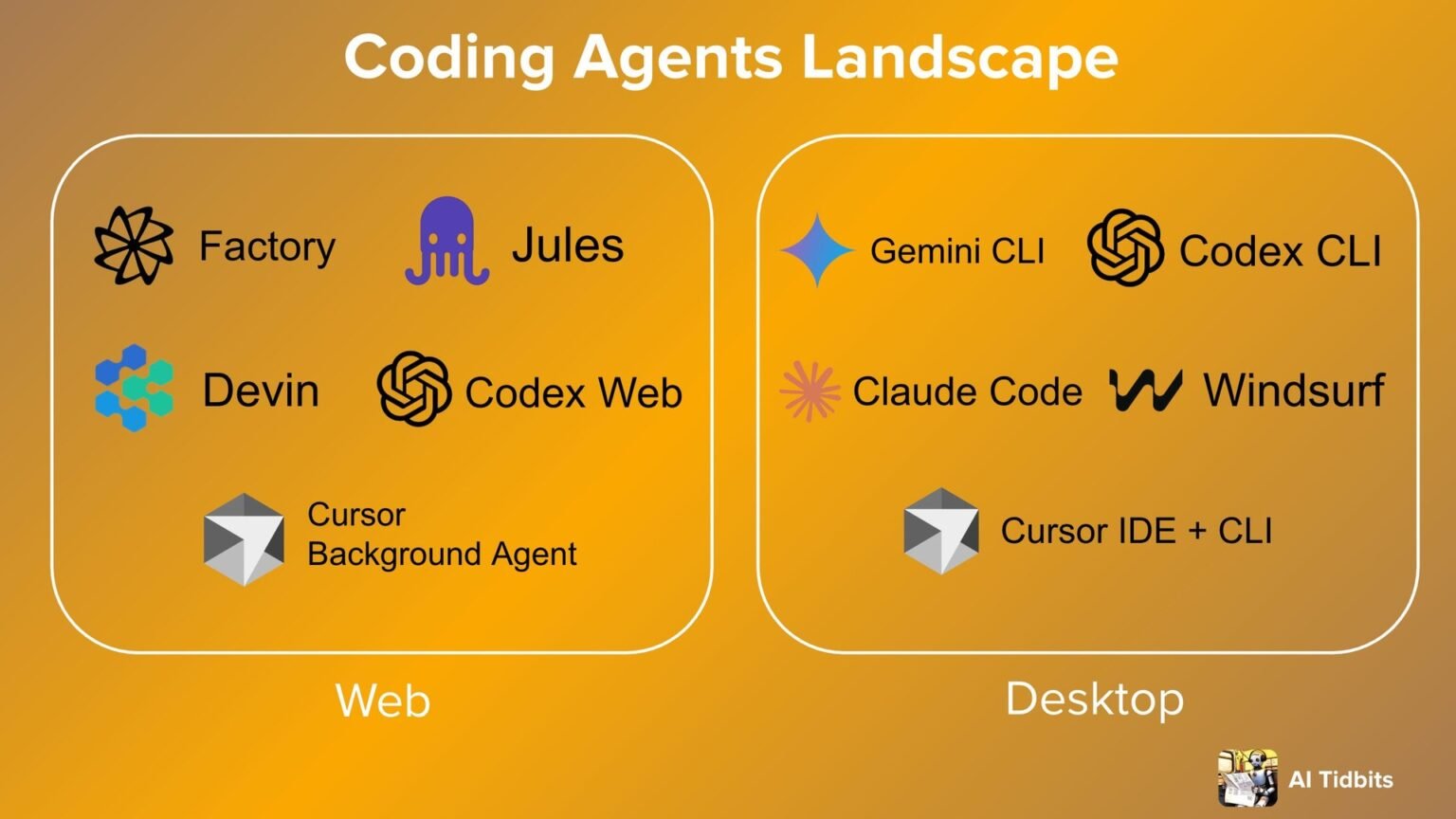

Devin vs Codex is the head-to-head every engineering team weighing autonomous coding agents has to evaluate in 2026. Choosing between Cognition Devin and OpenAI Codex is really a choice between two operating models for delegated software work. Devin is sold as an autonomous AI engineer with collaboration hooks like Slack and GitHub plus sandboxed execution environments. OpenAI’s 2025-era Codex relaunch is a cloud software engineering agent embedded in the ChatGPT stack, with parallel task handling and direct alignment with OpenAI’s enterprise plans. Both aim to move beyond autocomplete into assignable engineering work. The better pick depends on whether your team wants a standalone agent workflow or a ChatGPT-native one. For a deeper backgrounder on Cognition’s product, see our Devin enterprise guide.
Devin vs Codex at a glance
$500/mo
Devin Team starting price
Listed on Cognition pricing
2025
OpenAI Codex relaunch year
Cloud-based coding agent announcement
parallel
Codex task execution model
OpenAI says users can run many tasks simultaneously
The market has shifted from AI coding assistants toward delegable coding agents. That distinction matters. A coding assistant helps a developer write code in-session. An autonomous coding agent is expected to take a scoped task, use tools, operate in an isolated environment, and return artifacts or status updates. On that definition, both Devin and the new Codex belong in the same shortlist.
The products come from different lineages. Cognition introduced Devin in 2024 as an autonomous AI software engineer and has continued to position it around end-to-end task execution with integrations such as Slack and GitHub. OpenAI’s original Codex was a model family announced in 2021, but the relevant 2026 comparison is OpenAI’s 2025 relaunch of Codex as a cloud-based software engineering agent available through the ChatGPT product stack.
For buyers, the practical comparison comes down to workflow surface, execution model, pricing structure, and enterprise fit. Devin looks more like a dedicated AI teammate. Codex looks more like an agent layer inside the broader OpenAI workspace.

📌 Scope note. This comparison covers the current product category overlap between Cognition Devin and OpenAI Codex as autonomous coding agents, not the legacy 2021 Codex model API.
Cognition Devin review: best for teams that want a dedicated AI engineer workflow
Cognition’s pitch for Devin remains unusually direct: this is an AI software engineer, not just a code completion layer. In the original launch post, Cognition described Devin as able to plan and execute complex engineering tasks, recall context, learn over time, and use tools such as the shell, code editor, and browser inside a sandboxed environment. That framing still matters because it explains why Devin is often evaluated as agent infrastructure rather than as an IDE add-on.
The strongest verified differentiator is workflow design. Cognition’s product pages and docs emphasize task assignment, GitHub integration, and collaboration surfaces including Slack. That makes Devin appealing to organizations that want work to arrive where teams already coordinate, then be executed in a contained environment with a clear handoff back into the software delivery process.
Devin also benefits from being purpose-built around the autonomous engineer concept. The product is not a side feature inside a broader chat app. For some buyers, that focus is a feature in itself: less ambiguity about what the tool is for, and fewer incentives to use it as a general-purpose assistant when the real goal is delegated engineering throughput.
The tradeoff is platform concentration. Cognition controls the agent experience end to end, which can be good for coherence but limiting for teams that want broad model choice or deep alignment with an existing AI platform standard. Pricing is another gating factor. Cognition’s pricing page lists Devin Team at $500 per month, while Enterprise is custom, which places it firmly in a serious team budget category rather than an impulse individual subscription.
Cognition Devin
Best for: Engineering teams that want a dedicated agent workflow across Slack, GitHub, and isolated execution environments
What works
Watch out for
Pros
Cons
📌 Verdict. Devin is the stronger fit when you want a standalone autonomous engineering workflow with collaboration hooks and sandboxed execution as first-class product primitives.
“Devin is a collaborative AI teammate that can help engineers achieve more.”
Cognition product messaging
OpenAI Codex review: best for teams already living in ChatGPT
OpenAI’s current Codex should be understood as a product reset. The 2021 Codex announcement introduced a model for translating natural language to code. The 2025 Codex announcement introduced something different: a cloud-based software engineering agent that can work on many tasks in parallel, write features, answer codebase questions, run tests, and propose pull requests. That puts it directly into Devin territory, but with a very different distribution advantage.
That advantage is the ChatGPT stack. OpenAI says Codex is available to ChatGPT Pro, Team, and Enterprise users, which changes the buying motion. For companies already paying for ChatGPT seats, Codex can look less like a separate procurement event and more like an extension of an existing AI platform relationship. That matters in 2026 because many enterprises are consolidating vendors rather than adding point tools.
Codex also benefits from OpenAI’s broader product surface. The official launch materials describe parallel task execution and code review capabilities, and the product sits alongside ChatGPT’s existing collaboration and enterprise controls. For teams that already use ChatGPT as the front door for knowledge work, Codex offers a familiar control plane for engineering tasks.
The downside is that Codex is more tightly coupled to OpenAI’s ecosystem. If your organization wants a dedicated autonomous engineer product with its own operating rhythm, Codex can feel like an agent feature inside a larger suite rather than a standalone system of work. That is not inherently worse, but it does shape adoption. It favors organizations that want one AI vendor spanning chat, reasoning, and coding workflows.
OpenAI Codex ⭐ Editor’s Pick
Best for: Teams already standardized on ChatGPT Pro, Team, or Enterprise that want coding agents inside the OpenAI ecosystem
What works
Watch out for
Pros
Cons
📌 Verdict. Codex is the better choice for companies that already run on ChatGPT and want autonomous coding work to live inside the same platform and billing relationship.
“Codex can work on many tasks in parallel.”
OpenAI, Introducing Codex
Workflow, pricing, and control model differences
The cleanest way to compare these products is to ask where work begins. With Devin, the center of gravity is the autonomous engineer itself, with collaboration and repository integrations feeding into that workflow. With Codex, the center of gravity is ChatGPT. That sounds cosmetic, but it changes user behavior, procurement, and governance.
Pricing reinforces the split. Cognition publicly lists Devin Team at $500 per month and Enterprise as custom. OpenAI’s Codex is tied to ChatGPT Pro, Team, and Enterprise availability in the launch announcement, which means many organizations will evaluate it as part of a broader seat bundle rather than as a dedicated line item. If finance wants fewer vendors, Codex has an obvious edge. If engineering wants a tool justified on autonomous delivery outcomes alone, Devin’s standalone pricing can actually make ROI easier to isolate.
Control and lock-in are the other major fault lines. Devin is a product-specific environment from Cognition. Codex is a capability inside OpenAI’s wider platform. Buyers should be honest about what they want. If the goal is a specialized agent product with a distinct operating model, Devin is easier to reason about. If the goal is to consolidate around one AI vendor for chat, coding, and enterprise controls, Codex is easier to justify.
Neither product should be bought on marketing language alone. The real test is task shape. Bug triage, test writing, small feature implementation, repository Q&A, and repetitive maintenance work are the categories where autonomous coding agents are easiest to evaluate. Teams should run the same scoped tasks through both systems and compare not just output quality, but supervision load, retry rate, and how naturally the work fits existing human workflows.
⚠️ Buying caution. Do not compare these products as if they were just code generators. The meaningful differences are workflow surface, task orchestration, and enterprise operating model.
| Dimension | Cognition Devin | OpenAI Codex |
|---|---|---|
| Primary workflow identity | Dedicated autonomous AI engineer product | Coding agent inside the ChatGPT ecosystem |
| Collaboration surface | Slack and GitHub are prominent in product messaging | ChatGPT-centered workflow with OpenAI enterprise context |
| Execution model | Sandboxed environments are core to Devin’s design | OpenAI emphasizes cloud execution and parallel tasks |
| Pricing posture | Team plan listed at $500/month; Enterprise custom | Available to ChatGPT Pro, Team, and Enterprise users |
| Best organizational fit | Teams wanting a standalone agent workflow | Teams already standardized on OpenAI |
Which should you pick?
Best overall: OpenAI Codex
Our editorial recommendation is narrow rather than absolute. OpenAI Codex is the better default pick for most 2026 buyers because distribution matters. If your company already uses ChatGPT Pro, Team, or Enterprise, Codex is easier to trial, easier to govern under an existing vendor relationship, and easier to position as part of a broader AI platform strategy.
Devin remains highly compelling, especially for teams that want a dedicated autonomous engineer workflow and do not want coding agents to be just another tab inside a general-purpose AI suite. In some organizations, that focus will produce better adoption because the product’s identity is clearer and the collaboration loop is more explicit.
The deciding question is simple: do you want a standalone AI engineer system or a coding agent inside your existing AI platform? If you are undecided, start with Codex if you are already an OpenAI shop. Start with Devin if engineering leadership wants a distinct autonomous delivery lane with Slack and GitHub at the center.
| Use case | Pick | Why |
|---|---|---|
| Company already standardized on ChatGPT Enterprise | OpenAI Codex | Lowest adoption friction and strongest platform alignment |
| Engineering org wants a dedicated autonomous engineer workflow | Cognition Devin | Product is purpose-built around delegated software execution |
| Slack-first internal coordination | Cognition Devin | Slack is a visible part of Devin’s collaboration story |
| Procurement wants fewer AI vendors | OpenAI Codex | Can fit into an existing OpenAI relationship |
| Need a clear standalone budget line for autonomous engineering | Cognition Devin | Dedicated pricing makes ROI easier to isolate |
| Broad AI platform consolidation across chat and coding | OpenAI Codex | Best fit for one-vendor workflow standardization |
Frequently asked questions
No. OpenAI first introduced Codex as a model in 2021, documented at OpenAI Codex. The current comparison refers to the later Codex product relaunch as a cloud-based software engineering agent.
Cognition’s product materials describe Devin as integrating with team workflows including GitHub, and Cognition has also highlighted Slack in Devin collaboration materials. Start from the official Cognition site and the Introducing Devin post for the product overview.
Cognition publicly lists pricing on its official pricing page, including Devin Team at $500/month and custom Enterprise pricing. See Cognition pricing.
Teams that want a dedicated autonomous engineer workflow, especially those centered on repository operations and collaboration flows outside a general-purpose chat suite, should look closely at Devin. Cognition’s positioning in Introducing Devin makes that product intent clear.
Primary sources
- Cognition: Introducing Devin — Cognition
- Cognition pricing — Cognition
- Cognition homepage — Cognition
- OpenAI: Introducing Codex — OpenAI
- OpenAI Codex (2021 announcement) — OpenAI
Last updated: May 20, 2026. Related: Agent Infrastructure.