
Google added a new agent runtime to its portfolio on May 20 at Google I/O 2026, announcing Managed Agents API and a desktop testing app called Antigravity 2.0. The launch, first detailed by Crypto Briefing, points to a developer-facing hosted agent stack built around web access, sandboxed code execution, and multi-step workflows. It also leaves major questions unanswered, from pricing and persistence to how this new platform relates to Vertex AI Agent Builder.
Google’s new agent launch is about runtime, not just models
May 20
Announcement date
Second day of Google I/O 2026
2
New products announced
Managed Agents API and Antigravity 2.0
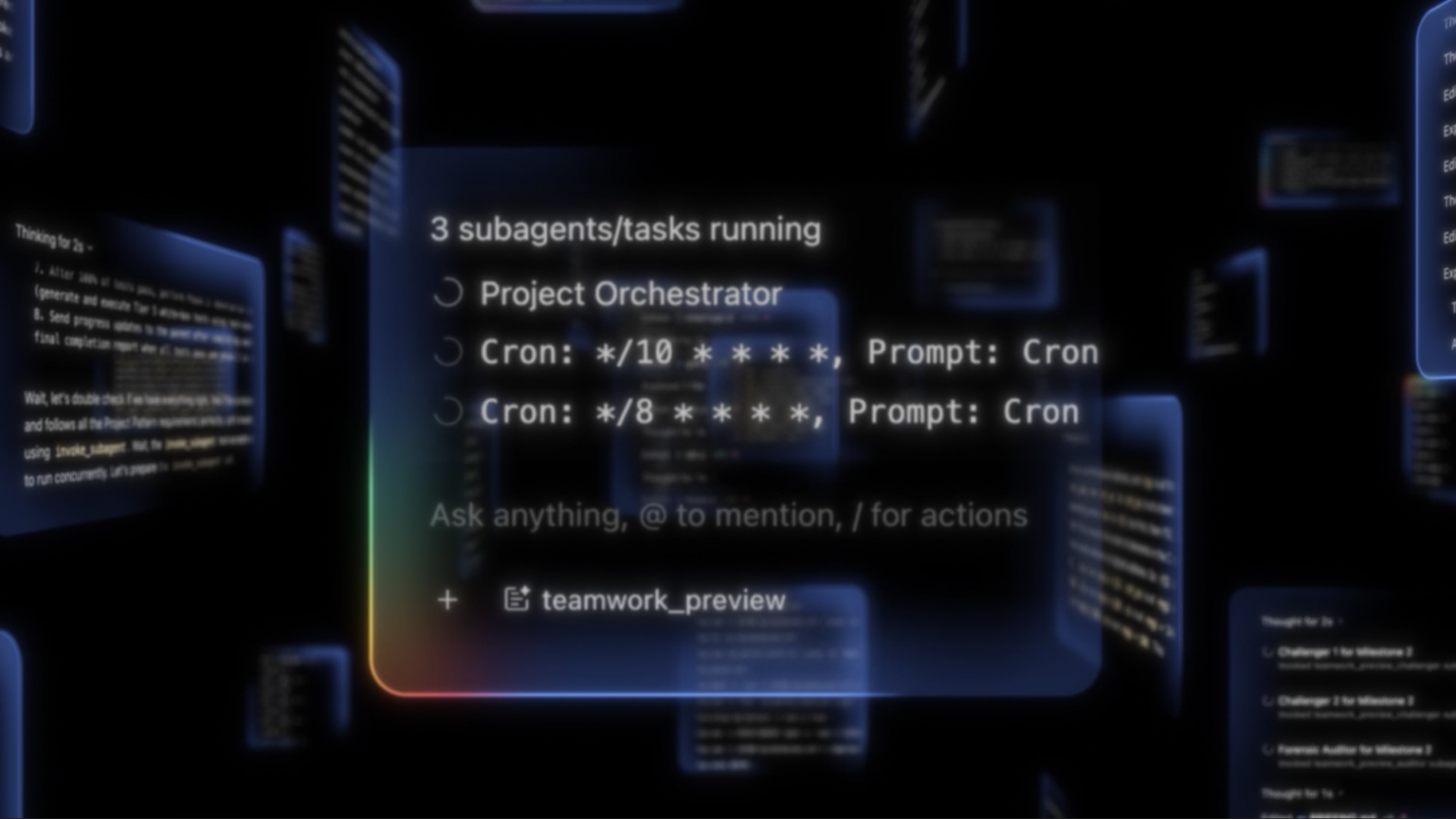
Google used May 20, the second day of I/O 2026, to announce two agent products: Managed Agents API, described as a hosted agent runtime, and Antigravity 2.0, a desktop testing application for that API. The initial reporting comes from Crypto Briefing, which says the stack is designed to let developers run agents with autonomous reasoning and planning, live web browsing, code execution in an isolated sandbox, ephemeral Linux environments, and multi-step workflow execution.
That matters because the announcement is not just another model release. It is a move into the execution layer of agent infrastructure: the part that handles browsing, code runs, environment setup, and orchestration across multiple steps. In other words, Google is packaging more of the agent runtime itself as a managed service rather than asking developers to stitch together models, sandboxes, browser automation, and workflow logic on their own.
What is confirmed at this stage is narrow but meaningful. Google announced the products on May 20, 2026. Managed Agents API is the hosted runtime. Antigravity 2.0 is the desktop testing app. The runtime supports autonomous reasoning and planning, live web browsing, code execution in isolated sandboxes, ephemeral Linux environments, and multi-step workflows, according to the report. Nearly everything else developers usually ask first, including pricing and technical limits, remains undisclosed in the public details cited so far.
Confirmed from the cited report: product names, announcement date, and the listed runtime capabilities. Not disclosed in the cited report: pricing, memory limits, concurrency, latency targets, identity model, persistence, and interoperability details.
“The launch looks less like a model announcement and more like Google staking a claim in the agent execution layer.”
Alatirok analysis
| Product | What it is | What is confirmed |
|---|---|---|
| Managed Agents API | Google hosted agent runtime | Autonomous reasoning and planning, live web browsing, isolated sandbox code execution, ephemeral Linux environments, multi-step workflows |
| Antigravity 2.0 | Desktop testing application for the API | Announced alongside Managed Agents API on May 20, 2026 |
What Managed Agents API and Antigravity 2.0 actually are
Early read: a managed runtime play
The easiest way to read the launch is as a convenience layer for agent developers. Managed Agents API appears to give developers a hosted runtime where an agent can reason through tasks, browse the web live, execute code in an isolated sandbox, and chain multiple steps together inside ephemeral Linux environments. That is a broad bundle of capabilities that many teams currently assemble from separate components.
Antigravity 2.0 is the more unusual half of the announcement. According to the same report, it is a desktop testing application for the API. That stands out because most agent tooling today shows up as a web console, a command-line workflow, or a library embedded in an existing IDE. A desktop-first testing surface suggests Google may be trying to make agent iteration feel more like local app testing than cloud configuration, though the report does not provide deeper product detail than the name and role.
There is a practical implication here. If Google is bundling runtime, browsing, sandboxing, and workflow execution behind one API, it is trying to remove a large amount of operational work from the developer. That can speed prototyping and reduce infrastructure burden. It can also narrow how much of the underlying system a team can inspect or customize.
Pros
Cons
{
  "managed_agents_api": {
    "runtime": "hosted",
    "capabilities": [
      "autonomous reasoning and planning",
      "live web browsing",
      "code execution in isolated sandbox",
      "ephemeral Linux environments",
      "multi-step workflow execution"
    ]
  },
  "antigravity_2_0": {
    "type": "desktop testing application",
    "for": "Managed Agents API"
  }
}
The trade-off: convenience over control
The sharpest analytical point in the initial coverage is the trade-off. In the framing reported by Crypto Briefing, Google is abstracting away the execution layer. That lowers the operational burden on developers, but it also reduces developer control.
The losses are concrete. Developers give up visibility into container configuration. They lose real-time sandbox inspection. They also lose the ability to bolt on custom monitoring in the same way they could with self-managed or lower-level infrastructure. For teams building internal tools or lightweight automations, that may be an acceptable exchange. For teams operating regulated workflows, debugging brittle browser tasks, or tuning runtime behavior closely, it may be a meaningful limitation.
This is a notable strategic choice because it runs against the grain of some other agent infrastructure approaches. OpenAI has pushed developers toward lower-level primitives and orchestration patterns through its platform docs, while Anthropic has emphasized explicitness around computer-use style interactions and tool control in its developer materials. Google, at least from what is public so far, seems to be making the opposite bet: many developers would rather have a managed black box that works well enough than a transparent stack they have to operate themselves.
Google’s pitch appears to be convenience over control. The more of the runtime Google manages, the less visibility developers have into configuration, inspection, and custom observability.
“Abstracting the execution layer is useful until a team needs to debug, inspect, or govern what happens inside it.”
Alatirok analysis
| Dimension | Managed approach | What developers may lose |
|---|---|---|
| Execution environment | Google-hosted ephemeral Linux runtime | Container-level configuration visibility |
| Sandboxing | Isolated code execution managed by Google | Real-time sandbox inspection |
| Observability | Platform-defined monitoring surface | Custom monitoring capabilities |
Why launch this when Google already has Vertex AI Agent Builder?
Most important unanswered product question: overlap with Vertex
The biggest portfolio question is not whether Google should have an agent product. It already does. Vertex AI Agent Builder has been Google Cloud’s existing product for building and deploying AI agents and conversational applications. That makes Managed Agents API and Antigravity 2.0 look like a second agent platform inside the same company.
Google has not publicly explained that relationship in the source material cited here, so any answer has to be labeled as inference rather than fact. The most plausible read is segmentation. Vertex AI Agent Builder sits inside the Google Cloud enterprise stack. Managed Agents API, based on the naming and the runtime-first feature set, looks more developer-facing and execution-oriented. One product may be aimed at enterprise application assembly and cloud workflows; the other may be aimed at developers who want a hosted runtime with less setup friction.
That split would make strategic sense, but it is still only a hypothesis until Google publishes positioning, migration guidance, or architecture docs. The absence of any explicit comparison to Vertex AI Agent Builder in the initial announcement is one of the most important gaps. Without that, buyers and developers are left guessing whether this is a complementary layer, a simpler on-ramp, or the beginning of a broader product realignment.
Vertex AI Agent Builder is a real, existing Google Cloud product. The announcement coverage cited for Managed Agents API does not explain how the new runtime relates to it.
| Product | Known status | Open question |
|---|---|---|
| Vertex AI Agent Builder | Existing Google Cloud agent product | How it overlaps with or differs from Managed Agents API |
| Managed Agents API | Newly announced hosted runtime | Whether it is aimed at a different buyer, workflow, or abstraction level |
Google is entering a crowded execution-layer market
Even with limited public detail, the category signal is clear. Ephemeral Linux sandboxes and hosted execution environments are already a live market. Cloudflare Workers gives developers a globally distributed execution layer. Modal offers serverless infrastructure for code execution and AI workloads. E2B has focused directly on secure cloud sandboxes for AI agents. Cerebras is also part of the broader conversation around AI infrastructure, though its positioning is different from a pure hosted sandbox provider.
Google’s move matters because it suggests the execution layer for agents is becoming a standard cloud battleground rather than a niche tooling category. If every major platform can offer browsing, code execution, and short-lived Linux environments behind an API, the infrastructure itself starts to commoditize. The differentiation shifts to ergonomics, observability, identity, pricing, ecosystem support, and how tightly the runtime integrates with models and external tools.
The announcement also lands in a market where competitors are taking different abstraction bets. OpenAI’s developer platform has leaned into primitives and composability. Anthropic has highlighted explicit tooling around computer use and agent control. Cloudflare and Stripe have been pushing on the commerce and identity side of agent transactions. Google, from what is visible so far, is trying to make the runtime disappear behind a managed interface. That is a coherent strategy. It is not the only one, and it may not be the one advanced teams want.
“The more cloud vendors package browsing, code execution, and ephemeral environments behind one API, the more the runtime itself starts to look like a commodity.”
Alatirok analysis
| Company | Relevant product or area | Why it matters here |
|---|---|---|
| Cloudflare | Workers | Established execution layer for code running close to users |
| Modal | Serverless compute for AI and code workloads | Competes on managed execution convenience |
| E2B | Cloud sandboxes for AI agents | Directly relevant to isolated execution environments |
| Managed Agents API | Brings hosted agent runtime into Google’s stack |
What Google did not say is almost as important as what it launched
0
Pricing details disclosed
None in the cited announcement coverage
0
Deep runtime specs disclosed
No memory, concurrency, or latency details cited
What to watch next
The announcement leaves several gaps that matter to developers and buyers. Pricing was not disclosed. There was no direct competitive positioning against OpenAI’s Assistants-era platform offerings, Anthropic’s agent tooling, or the Cloudflare-Stripe push around agent commerce and identity. No Google executive quotes were captured in the source material cited here. There were also no deep technical specs such as memory limits, concurrency ceilings, or latency service-level targets.
There are also structural questions the launch does not answer. What is the identity and authentication story for agents? That matters if the runtime is meant to support real-world transactions or access to external systems. How does persistence work, if at all? The report confirms ephemeral Linux environments, but says nothing about memory across runs, durable state, or long-lived sessions. What is the tool ecosystem? There is no public indication in the cited material about support for open protocols or whether the stack is tightly Google-specific.
Those omissions do not make the launch unimportant. They do mean the market should resist over-reading it. Right now, the strongest conclusion is that Google has entered the managed agent runtime race with a convenience-first product and an unusual desktop testing companion. The weakest conclusion would be to assume the platform is already complete, differentiated, or ready to displace every other agent stack.
No public pricing, no deep runtime specs, no disclosed identity model, no persistence explanation, and no interoperability details were included in the cited announcement coverage.
| Missing detail | Why it matters |
|---|---|
| Pricing | Determines whether the product is viable for production workloads or only experimentation |
| Memory, concurrency, latency | Defines whether the runtime can support serious multi-agent or user-facing applications |
| Identity and authentication | Critical for external system access and agent-commerce use cases |
| Persistence | Determines whether agents can maintain state across runs |
| Tool ecosystem and protocol support | Affects lock-in, portability, and integration with existing developer workflows |
Frequently asked questions
Based on the initial report from Crypto Briefing, Google Managed Agents API is a hosted agent runtime announced on May 20, 2026 at Google I/O 2026. The reported capabilities include autonomous reasoning and planning, live web browsing, code execution in an isolated sandbox, ephemeral Linux environments, and multi-step workflow execution.
Antigravity 2.0 was announced alongside Managed Agents API and is described in the cited report as a desktop testing application for the API. The public details available in Crypto Briefing’s coverage do not go much deeper than that, which is why the product’s workflow and target user still need clarification from Google.
Google already offers Vertex AI Agent Builder, but the announcement coverage cited here does not explain how Managed Agents API relates to it. The safest interpretation today is that Vertex is an existing Google Cloud agent product, while Managed Agents API appears to be a newly announced hosted runtime. Anything more precise would require additional Google documentation.
No public pricing was disclosed in the announcement coverage cited for this article, and there were no deep technical specs such as memory limits, concurrency ceilings, or latency targets. The current public reporting at Crypto Briefing is enough to establish what launched, but not enough to fully evaluate production readiness.
Primary sources
- Crypto Briefing: Google launches Managed Agents API and Antigravity 2.0 at I/O 2026 — Crypto Briefing
- Google I/O 2026 — Google
- Vertex AI Agent Builder — Google Cloud
- Cloudflare Workers — Cloudflare
- Modal — Modal
- E2B — E2B
- Cerebras — Cerebras
Last updated: May 22, 2026. Related: Agent Infrastructure.