
Here’s the contrarian claim: the biggest mistake builders make in 2026 is treating open source AI agents and closed AI agents as mutually exclusive bets. I think the winning architecture for most teams is neither pure OSS nor pure vendor stack, but a hybrid where you own the orchestration layer and rent the pieces that are expensive to reproduce. That view sounds less romantic than the open-source maximalist case and less convenient than the all-in managed-platform pitch, but it maps better to how products actually get built, secured, procured, and scaled.
My view: pure open and pure closed are both overplayed
The honest answer: hybrid is usually right
I do not think the strategic question is, “Should we use open source or closed AI agents?” I think the real question is, “Which layer of the agent stack do we need to control ourselves?” That distinction matters because agent systems are not one product category. They are a stack: models, orchestration, memory, tools, observability, security, deployment, and human review. Teams that collapse all of that into a binary choice usually end up overbuilding or overbuying.
The open-source camp has real evidence on its side. LangGraph is explicitly positioned around building stateful, controllable agent workflows. CrewAI has built a large developer following around multi-agent orchestration. Microsoft’s AutoGen remains one of the most recognizable frameworks for agentic multi-agent systems. Phidata focuses on building agents with memory, knowledge, and tools. Hugging Face’s smolagents pushes a lightweight code-first approach. None of those are toy projects anymore; they are part of the working toolkit for teams that want control.
The closed camp also has real evidence. Sierra sells an enterprise conversational agent platform. Cognition markets Devin as an AI software engineer. OpenAI has published Operator and now frames agentic product experiences directly in ChatGPT and its platform materials at ChatGPT and its developer docs. These products are not just wrappers around models. They package support, reliability work, integrations, and procurement pathways that many enterprises value more than architectural purity.
That is why my contrarian take is simple: if you are still arguing open versus closed as a belief system, you are probably avoiding the harder design question. The strategic decision is about ownership boundaries, not ideology.
📌 Thesis. In 2026, the strongest default is hybrid: own orchestration when it matters, buy managed capabilities when they remove real operational burden.
“The strategic decision is about ownership boundaries, not ideology.”
alatirok opinion
Why open source AI agents keep winning technical arguments
When builders say they want open source AI agents, they usually mean four things: flexibility, auditability, portability, and cost control. I think those are durable advantages, not temporary talking points. Frameworks such as LangGraph, CrewAI, AutoGen, Phidata, and smolagents let teams define workflow logic in code, inspect state transitions, swap models, and connect arbitrary tools. That matters once an agent stops being a demo and starts becoming product infrastructure.
LangGraph is a good example of why OSS resonates with serious builders. Its pitch centers on long-running, stateful workflows and explicit control over graph-based execution. That is a very different posture from black-box “agent magic.” It gives teams a way to reason about retries, branching, interrupts, and human-in-the-loop patterns. If your agent touches regulated workflows, expensive actions, or customer-facing operations, that kind of explicitness is not a nice-to-have.
CrewAI appeals for a different reason. It makes role-based multi-agent patterns legible to developers and product teams. AutoGen has long been influential because it gave the ecosystem a practical vocabulary for multi-agent collaboration and tool use. Smolagents shows the appeal of keeping the abstraction thin. Phidata has focused on the practical ingredients teams need to make agents useful, including knowledge and memory. The common thread is not that every framework is identical. It is that OSS lets you shape the system around your workflow instead of reshaping your workflow around a vendor product.
There is also a governance argument here. Open systems are easier to inspect. You can review prompts, tool permissions, routing logic, and failure handling. You can instrument them with your own observability stack. You can decide what gets logged and retained. For teams operating under internal security review or external compliance requirements, that control can be the difference between shipping and stalling.
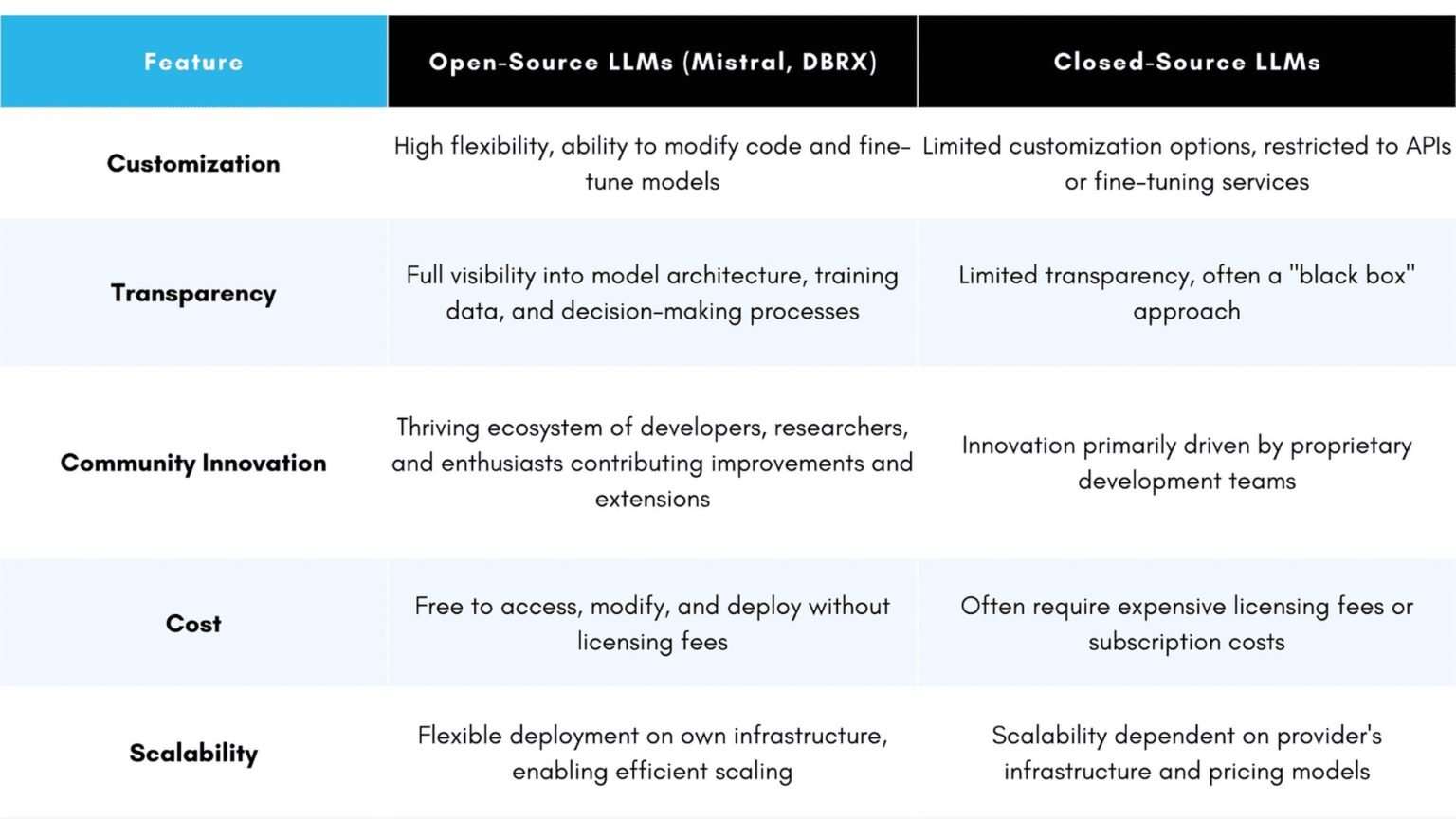
I also think cost control becomes more important over time than many teams admit in year one. A managed agent product can look cheap when usage is low and the team is small. Once the workflow becomes central and volume grows, the economics of owning orchestration and choosing models deliberately can become much more attractive. Open source does not make inference free, but it does give you leverage.
Pros
Cons
📌 Where OSS is strongest. Open frameworks are best when the workflow itself is strategic, regulated, high-volume, or likely to change faster than a vendor roadmap.
| Open framework | What builders use it for | Why it matters strategically |
|---|---|---|
| LangGraph | Stateful agent workflows and graph-based orchestration | Gives teams explicit control over execution paths and human review |
| CrewAI | Multi-agent role-based coordination | Useful when organizations want agent teams mapped to business functions |
| AutoGen | Agent collaboration and tool-using workflows | Backed by Microsoft’s research and developer ecosystem |
| Phidata | Agents with memory, knowledge, and tools | Appeals to teams building practical internal or customer-facing assistants |
| smolagents | Lightweight code-first agents | Keeps abstraction low for teams that want simplicity and portability |
Why closed agents keep winning buying decisions
If open source wins many technical arguments, closed systems still win a surprising number of real-world decisions. I do not think that is because buyers are unsophisticated. I think it is because production maturity is expensive, and many companies would rather buy it than assemble it.
Take Sierra. The company positions itself around customer-facing conversational AI for enterprises, and its pitch is not just raw model quality. It is the surrounding platform: deployment, governance, integrations, and an enterprise-ready product story. Cognition’s Devin is similar in a different domain. Buyers are not only evaluating whether the system can complete tasks. They are evaluating whether there is a vendor to call, a contract to sign, a roadmap to review, and a support path when things break.
OpenAI’s Operator and broader ChatGPT agent experiences point to another closed-system advantage: proximity to the model provider. When the company controlling the frontier model also controls the agent product surface, it can ship capabilities that are difficult for external frameworks to match immediately. That does not mean the closed product is always better. It means the integration path can be tighter, especially around browser use, tool invocation, safety systems, and product UX.
Procurement matters more than developers like to admit. Security questionnaires, data processing terms, admin controls, identity integration, and support SLAs are not glamorous, but they decide a lot of enterprise outcomes. A closed vendor with a polished buying motion can beat a technically superior DIY stack simply because it reduces organizational friction.
There is also a talent reality. Not every company wants to become an agent infrastructure company. If your business is insurance, retail, logistics, or healthcare delivery, your highest-leverage move may be to buy a mature agent product for a bounded use case and keep your engineering team focused on the core business. I do not think that is laziness. I think it is strategy.
⚠️ What OSS advocates often underweight. Enterprise support, procurement readiness, and integrated product experience are not side issues. They are often the deciding factors in production adoption.
“A closed vendor with a polished buying motion can beat a technically superior DIY stack simply because it reduces organizational friction.”
alatirok opinion
| Closed product | Primary posture | Why buyers care |
|---|---|---|
| Sierra | Enterprise conversational agent platform | Packages deployment and enterprise-facing controls into a vendor product |
| Cognition Devin | AI software engineering product | Offers a managed product experience instead of a framework to assemble |
| OpenAI Operator | Agentic task execution from OpenAI | Benefits from tight integration with OpenAI’s model and product stack |
| ChatGPT agent experiences | Consumer and enterprise-facing agent workflows | Lower-friction access for organizations already standardizing on ChatGPT |
The layer that matters most is orchestration
Own the workflow, rent the intelligence
If I had to tell builders to own one layer, it would usually be orchestration. Not always the model, not always the UI, not always the retrieval stack. Orchestration is where business logic lives. It is where you decide what tools can be called, when humans are asked for approval, how state is persisted, how retries work, and what counts as success or failure. That is why I keep coming back to open orchestration even when I am perfectly happy to use closed models underneath.
This is also where the hybrid pattern becomes compelling. A team can build workflows in LangGraph or another open framework, use frontier closed models through APIs, add internal tools, and keep the option to swap providers later. That architecture does not eliminate dependence on model vendors, but it prevents the entire application from collapsing into one vendor-specific product surface.
For many teams, that is the sweet spot. You get the quality and convenience of top commercial models while retaining control over the workflow that differentiates your product. You can add observability, policy checks, and human review in ways that fit your organization. You can test multiple models against the same orchestration layer. You can move slower on the pieces that should be stable and faster on the pieces that should evolve.
This is why I would point readers to our deeper coverage of LangGraph, CrewAI, and the broader comparison in LangGraph vs CrewAI vs AutoGen. The frameworks differ in ergonomics and philosophy, but they all reinforce the same strategic lesson: owning orchestration gives you leverage.
from typing import TypedDict

class AgentState(TypedDict):
    user_request: str
    approved: bool
    result: str

# Pseudocode illustrating why orchestration matters more than model choice

def route(state: AgentState) -> str:
    if not state["approved"]:
        return "human_review"
    return "execute"

def human_review(state: AgentState) -> AgentState:
    # insert approval workflow here
    return state

def execute(state: AgentState) -> AgentState:
    # call chosen model provider and tools here
    state["result"] = "done"
    return state
Where pure OSS still falls short
I do not want to romanticize open source AI agents. The OSS path is often sold as freedom, but freedom comes with a pager. Teams that choose open frameworks inherit integration work, evaluation design, deployment decisions, observability gaps, and a long tail of edge cases. It is one thing to demo a multi-agent workflow. It is another to run it reliably for customers, with audit logs, rollback paths, and clear accountability.
Framework churn is another issue. The agent ecosystem has moved fast, and APIs, abstractions, and best practices have changed quickly. That experimentation is healthy, but it can create maintenance burden for teams that need stability more than novelty. A closed vendor can absorb some of that churn behind a product boundary. With OSS, your team often absorbs it directly.
There is also a false economy trap. Teams sometimes justify open source on cost grounds, then spend far more in engineering time than they would have spent on a managed product. If the use case is not strategic, if the workflow is standard, or if the company lacks the internal appetite to own agent operations, building may be the expensive option disguised as the cheap one.
That is why I think the right pro-OSS argument is not that open source is always cheaper or always better. It is that open source is better when control compounds. If control does not compound in your use case, buying may be smarter.
⚠️ Common mistake. Do not choose OSS because it feels strategically pure. Choose it when the value of control exceeds the cost of operating the system.
Where pure closed stacks become dangerous
Closed is strongest at the edge of your business, not always at the core
The closed path has its own trap: convenience can turn into dependency faster than teams expect. If your workflow, prompts, tool contracts, analytics, and user experience all become entangled with one vendor’s product surface, switching costs rise quickly. That is manageable when the use case is peripheral. It is risky when the agent becomes central to your product or operations.
Auditability is another concern. Some organizations need to know exactly how decisions are made, what tools were called, and what state was carried across steps. Closed products can expose some of that, but not always at the level a builder or compliance team wants. If you cannot inspect enough of the system, you may discover too late that the product is easy to buy but hard to govern.
Roadmap dependence is the final issue. Vendors optimize for broad markets, not your exact workflow. If your product requires unusual branching logic, custom review steps, or deep internal tool integration, you may find yourself waiting on features that never become priorities. That is the moment many teams realize they outsourced not just implementation but product velocity.
This is also why our coverage of Sierra and Cognition Devin matters in context. These are serious products with real strengths. They are not universal answers. Builders still need to ask whether the vendor’s abstraction matches the part of the workflow they can afford to standardize.
“Convenience can turn into dependency faster than teams expect.”
alatirok opinion
My practical framework for builders in 2026
If I were advising a builder today, I would start with three questions. First, is the agent workflow a differentiator or a commodity? Second, do we need deep auditability and policy control? Third, do we have the engineering appetite to own the operational burden? Those questions usually clarify the answer faster than any abstract debate about open versus closed.
If the workflow is core to your product, likely to evolve quickly, or tightly coupled to internal systems, I would lean toward open orchestration from day one. If the workflow is a standard customer support, internal productivity, or bounded task automation use case, I would be more open to buying a closed product. If the answer is mixed, which it often is, I would use a hybrid architecture and keep the seams clean.
Clean seams matter. Keep tool interfaces explicit. Keep state portable. Avoid burying business logic inside vendor-specific prompt builders if you can help it. Treat model providers as dependencies, not identities. The teams that preserve optionality early usually make better decisions later.
My bottom line is not that open source AI agents win or that closed AI agents win. It is that builders should stop trying to win the argument and start designing for leverage. In 2026, leverage usually comes from owning the workflow layer while staying pragmatic about everything else.
I could be wrong. This take fails if closed vendors expose far deeper auditability, portability, and customization than they do today while keeping procurement and support advantages. It also fails if open frameworks converge on production maturity so quickly that the operational gap largely disappears for mainstream teams. If either of those conditions becomes true, the hybrid middle may shrink. Right now, I think it is where the smartest builders should stand.
📌 Decision rule. Own the parts of the agent stack where control compounds. Buy the parts where operational burden compounds.
| Situation | Bias | Why |
|---|---|---|
| Workflow is core product IP | Open orchestration | Control, portability, and iteration speed matter most |
| Use case is standardized and urgent | Closed product | Speed to production and support outweigh customization |
| Enterprise deployment with custom logic | Hybrid | Combines procurement-friendly services with owned workflow control |
Frequently asked questions
Commonly cited open frameworks include LangGraph, CrewAI, Microsoft’s AutoGen, Phidata, and Hugging Face’s smolagents. They differ in ergonomics and architecture, but all give developers more direct control over workflow logic than a fully managed closed product.
Examples discussed by builders and enterprises include Sierra, Cognition Devin, and OpenAI’s Operator. OpenAI also documents agent-related capabilities through its platform docs and ChatGPT product pages.
A hybrid setup lets teams keep control over orchestration while still using strong commercial models or managed services. That can mean building workflows in an open framework such as LangGraph while calling closed model APIs through a provider. The benefit is optionality: teams can preserve workflow control without giving up frontier model access.
A company should be cautious if the use case is not strategically differentiating, the internal team does not want to own production operations, or enterprise support requirements are high. In those cases, buying a managed product from a vendor such as Sierra or evaluating a packaged product like Devin may be more practical than assembling and operating a full stack internally.
Primary sources
- LangGraph — LangChain
- CrewAI — CrewAI
- AutoGen documentation — Microsoft
- Phidata — Phidata
- smolagents documentation — Hugging Face
- Sierra — Sierra
- Cognition — Cognition
- OpenAI Operator announcement — OpenAI
- OpenAI platform docs — OpenAI
- ChatGPT — OpenAI
Last updated: May 20, 2026. Related: Agent Infrastructure.