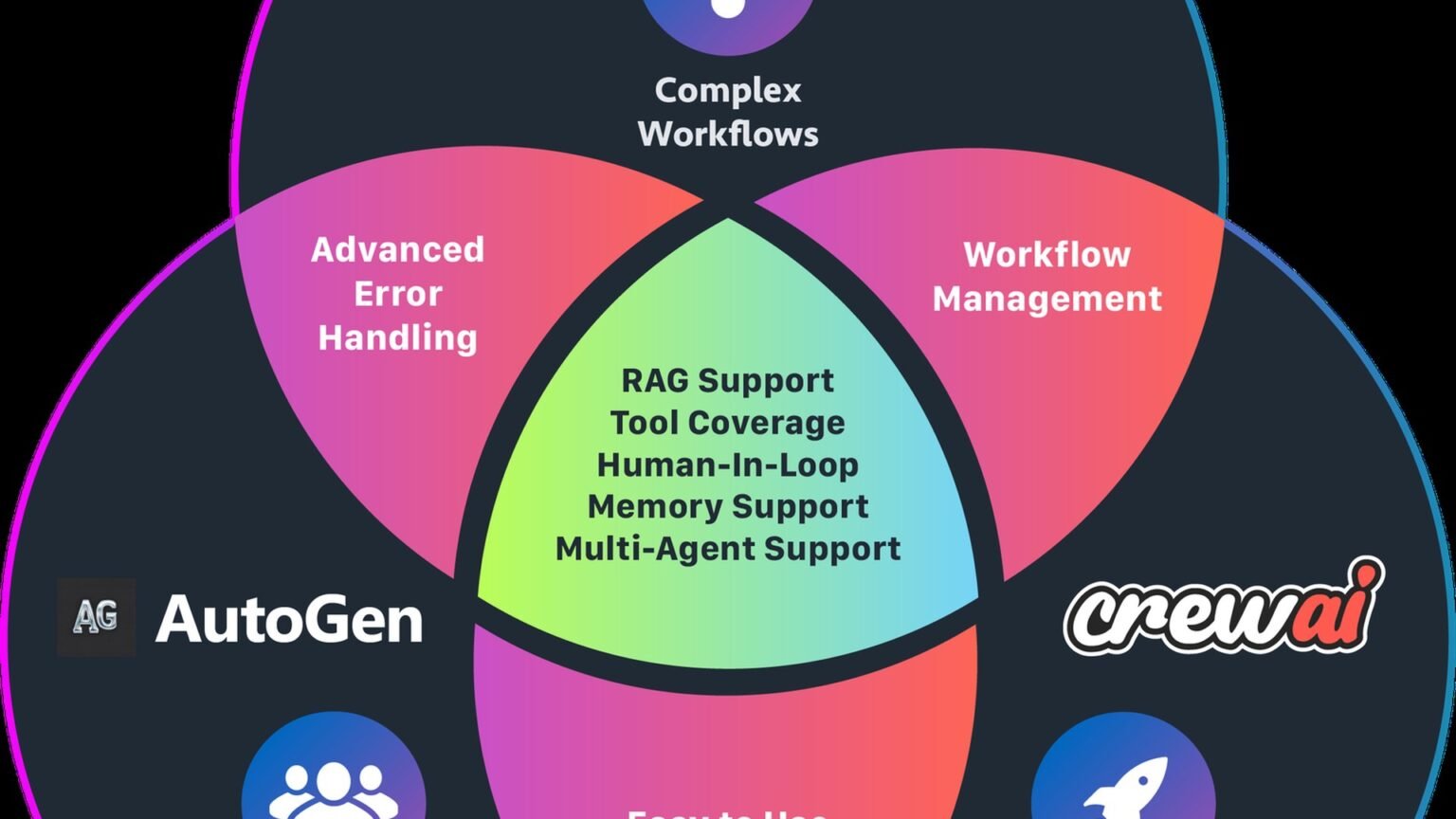

LangGraph vs CrewAI vs AutoGen is the framework decision most teams shipping multi-agent systems have to make. There is no single winner in the 2026 multi-agent stack. LangGraph is the most opinionated about durable orchestration, CrewAI is the most approachable for role-based agent teams, and AutoGen remains the cleanest fit when multi-agent conversation is the product. The right choice depends on whether you want explicit state graphs, human-readable crew roles, or message-driven agent collaboration. For deeper background, see our guides to what LangGraph is, a weekend with CrewAI, the case against multi-agent frameworks, and a LangGraph multi-agent tutorial.
Three frameworks, three orchestration philosophies
3
frameworks compared
LangGraph, CrewAI, and AutoGen
2
LangGraph durable primitives called out
Checkpointing and human-in-the-loop are highlighted in official docs
2026
decision window
This comparison is written for teams choosing a framework now
A useful multi-agent framework comparison starts with the core abstraction each project wants developers to think in. LangGraph asks you to model workflows as graphs with nodes, edges, and shared state. CrewAI asks you to think in terms of agents with roles, goals, and tasks assembled into crews and flows. AutoGen centers the interaction itself: agents exchange messages, tools are invoked through those interactions, and the conversation becomes the execution fabric.
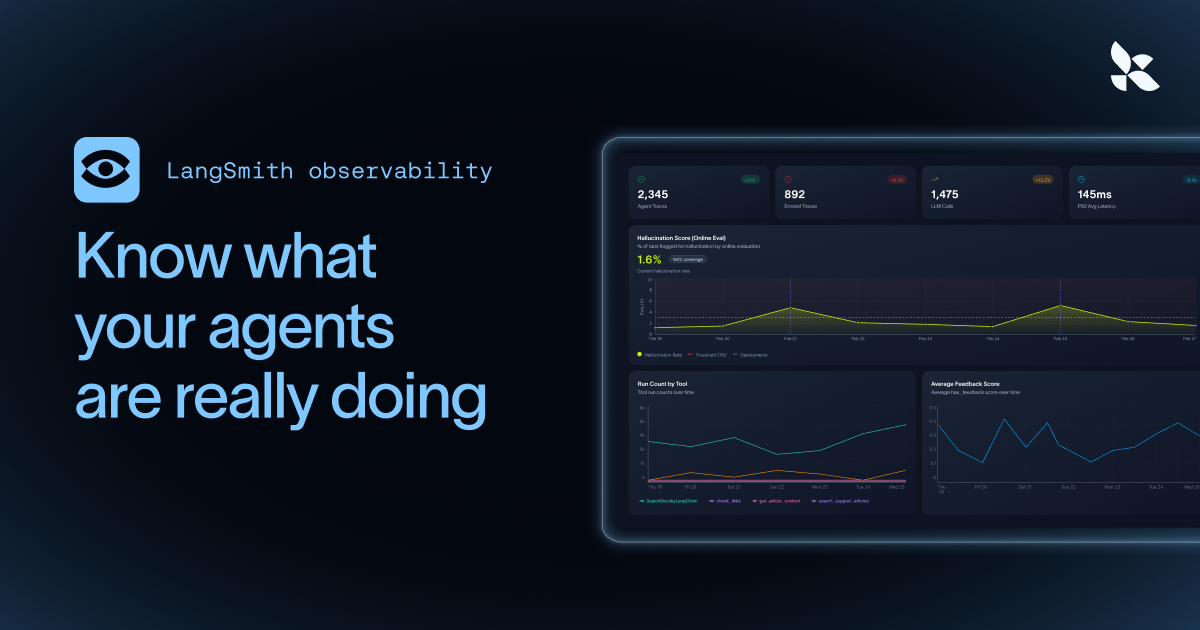
That difference is not cosmetic. It affects how easy it is to reason about branching logic, how much control you have over retries and persistence, and whether your team can debug failures after deployment. It also shapes the surrounding platform story. LangGraph is tightly linked to LangSmith for tracing and evaluation. CrewAI pairs its framework with CrewAI Enterprise and CrewAI Studio documentation and platform materials. AutoGen offers AutoGen Studio to build and inspect agent workflows.
If your team is still deciding whether multi-agent systems are even warranted, it is worth reading our case against multi-agent frameworks before standardizing. Many production systems still work better as single-agent or deterministic pipelines. But when you do need decomposition, handoffs, and specialized sub-agents, these three frameworks represent the most commonly discussed approaches.
📌 How to read this comparison. This review compares official capabilities documented by LangGraph, CrewAI, and AutoGen across programming model, durability, ecosystem tooling, production maturity, and learning curve. Scores are editorial judgments grounded in those public materials.
LangGraph review: best for durable production orchestration
LangGraph is the strongest option here if your team wants explicit control over execution. The project describes itself as a library for building stateful, multi-actor applications with LLMs, and its docs emphasize cyclic graphs, controllability, and persistence. That graph-first model is more demanding than a role-based abstraction, but it gives builders a clearer way to encode branching, retries, tool use, and human approval steps. For teams already using LangChain components, the transition is also relatively smooth because LangGraph sits inside the same broader ecosystem.
The biggest practical differentiator is durability. LangGraph documentation prominently highlights checkpointing, which lets developers persist state and resume long-running workflows. That matters for agent systems that span multiple tool calls, require human review, or need to survive process restarts. In 2026, this is still one of the clearest dividing lines between frameworks that feel production-oriented and those that still feel prototype-heavy.
The ecosystem story is also mature. LangGraph is commonly paired with LangSmith for tracing, evaluation, and debugging. That pairing gives teams a more complete operational surface than a framework alone. It does not remove complexity, and LangGraph can feel verbose when all you want is a simple two-agent handoff. But if your organization cares about observability, reproducibility, and explicit state transitions, the extra ceremony is usually a feature rather than a bug.
The tradeoff is learning curve. Graph-based orchestration requires developers to think about state schemas, edge conditions, and execution topology up front. That is more work than writing a few role prompts and calling it a crew. Still, for serious systems, LangGraph is the one most likely to age well because it forces architectural clarity early. Readers who want a deeper walkthrough should see our complete LangGraph guide and LangGraph multi-agent tutorial.
LangGraph ⭐ Editor’s Pick
Best for: Teams building production workflows with branching, persistence, and observability requirements
What works
Watch out for
Pros
Cons
📌 Verdict. LangGraph is the best fit for teams that need durable, inspectable, production-grade orchestration rather than the fastest path to a demo.
from typing import TypedDict
from langgraph.graph import StateGraph, END

class State(TypedDict):
    task: str
    result: str


def planner(state: State) -> State:
    return {**state, "result": f"planned: {state['task']}"}


def reviewer(state: State) -> State:
    return {**state, "result": f"reviewed: {state['result']}"}


graph = StateGraph(State)
graph.add_node("planner", planner)
graph.add_node("reviewer", reviewer)
graph.set_entry_point("planner")
graph.add_edge("planner", "reviewer")
graph.add_edge("reviewer", END)

app = graph.compile()
print(app.invoke({"task": "draft launch memo", "result": ""}))
“LangGraph’s core advantage is not that it makes agents magical. It makes them explicit.”
Alatirok editorial assessment based on LangGraph docs
CrewAI review: best for fast team-based agent design
CrewAI has built a distinct identity around role-based multi-agent systems. Its documentation centers on Crews and Flows, which gives builders a more intuitive language for decomposing work across specialized agents. For product teams, consultants, and startups trying to move quickly, that framing is attractive because it maps neatly to how people already describe collaborative work: researcher, writer, reviewer, operator, and so on.
The framework’s biggest strength is approachability. Compared with LangGraph, CrewAI usually asks for less orchestration ceremony before you can express a useful workflow. That lowers the barrier to entry for teams that want to test whether multi-agent decomposition improves outcomes at all. The official docs also cover observability, knowledge, memory, tools, and deployment-related topics, while CrewAI’s commercial materials point to a broader platform story around enterprise deployment and management.
Where CrewAI is less convincing than LangGraph is durable execution as a first-class architectural principle. CrewAI absolutely supports structured workflows, but its public identity is still more strongly associated with role-driven collaboration than with low-level state-machine rigor. That is not a flaw for many use cases. If your workload is content operations, research pipelines, internal assistants, or business process automation where the crew metaphor helps teams reason about behavior, CrewAI can be the fastest route from idea to working system.
The learning curve sits in the middle of this comparison. It is easier to explain to non-specialists than LangGraph, but it can become conceptually messy if teams over-index on anthropomorphic agent roles instead of designing crisp task boundaries. We found CrewAI strongest when used with discipline: clear task contracts, limited delegation, and careful evaluation. For a hands-on editorial perspective, see our weekend with CrewAI.
CrewAI
Best for: Startups, operators, and product teams building agent teams around business tasks
What works
Watch out for
Pros
Cons
📌 Verdict. CrewAI is the best choice for teams that want a readable, role-based abstraction and a faster path to multi-agent prototypes and business workflows.
from crewai import Agent, Task, Crew

researcher = Agent(
    role="Researcher",
    goal="Find relevant facts",
    backstory="Specialist in gathering source material"
)

writer = Agent(
    role="Writer",
    goal="Turn findings into a concise brief",
    backstory="Experienced analyst and communicator"
)

research_task = Task(
    description="Research the latest official framework docs",
    agent=researcher
)

writing_task = Task(
    description="Write a short comparison brief using the research",
    agent=writer
)

crew = Crew(
    agents=[researcher, writer],
    tasks=[research_task, writing_task]
)

result = crew.kickoff()
print(result)
AutoGen review: best for conversation-centric agent systems
AutoGen remains the most conversation-native framework in this comparison. Microsoft’s project has long focused on agents that collaborate through message exchange, and that design still feels distinct in 2026. If your application naturally looks like a set of agents negotiating, critiquing, or iterating through dialogue, AutoGen can feel more direct than either a graph abstraction or a role-and-task abstraction.
The official documentation now spans the framework itself plus AutoGen Studio, which provides a visual interface for prototyping and inspecting agent workflows. That helps close part of the usability gap for teams that want to see interactions rather than only define them in code. Microsoft’s stewardship also gives AutoGen credibility with enterprise buyers who value a recognizable maintainer and a documented open-source roadmap.
The limitation is that conversation is not always the best primitive for production orchestration. Message-based systems can be elegant for collaborative reasoning, but they can also become harder to bound when you need deterministic transitions, resumability, and strict operational guarantees. AutoGen supports tools and structured patterns, but its center of gravity is still agent interaction rather than durable workflow state. That makes it compelling for research, experimentation, and applications where the conversation itself is the product, but less obviously superior for long-running operational pipelines.
AutoGen’s learning curve is moderate. Developers who already think in terms of chat-based agents often find it intuitive. Teams coming from workflow engines may find it looser than they want. In editorial terms, AutoGen is the most conceptually elegant when agent dialogue is the point, and the least persuasive when dialogue is just a wrapper around what should probably be a deterministic process.
AutoGen
Best for: Research teams and builders creating conversational multi-agent systems
What works
Watch out for
Pros
Cons
⚠️ Verdict. AutoGen shines when agent-to-agent conversation is the core abstraction, but it is not our first pick for teams prioritizing durable workflow orchestration.
from autogen_agentchat.agents import AssistantAgent
from autogen_agentchat.teams import RoundRobinGroupChat
from autogen_ext.models.openai import OpenAIChatCompletionClient

model_client = OpenAIChatCompletionClient(model="gpt-4o-mini")

planner = AssistantAgent("planner", model_client=model_client)
reviewer = AssistantAgent("reviewer", model_client=model_client)

team = RoundRobinGroupChat([planner, reviewer], max_turns=4)

# Example usage would run the team on a task in an async context.
“AutoGen is strongest when the conversation is the system, not just the interface.”
Alatirok editorial assessment based on AutoGen docs
Where the differences matter most in production
Across the five criteria in this comparison, the clearest split is between explicit orchestration and expressive collaboration. LangGraph wins on explicit orchestration because graphs, state, and checkpointing are central to the framework’s identity. CrewAI wins on expressive collaboration for business teams because roles and tasks are easier to communicate and iterate on. AutoGen wins when the collaboration itself is conversational and the message exchange is not incidental but essential.
On checkpointing and durability, LangGraph has the strongest public story. Its docs explicitly foreground persistence and resumability. CrewAI has workflow structure and platform ambitions, but the framework’s public narrative is not as tightly anchored to durable state transitions. AutoGen can absolutely support sophisticated systems, yet its conversation-first model does not communicate the same operational guarantees out of the box.
On ecosystem, each framework has a credible answer. LangGraph benefits from LangSmith, which is one of the more visible observability and evaluation tools in the LLM stack. CrewAI has built a recognizable product layer around Studio and enterprise deployment. AutoGen Studio gives Microsoft’s framework a usable visual surface for prototyping and inspection. None of these ecosystems are interchangeable, though. LangSmith is strongest for tracing and evaluation around graph-like execution. CrewAI’s ecosystem is strongest when teams want a more packaged business workflow experience. AutoGen Studio is strongest when developers want to inspect agent interactions.
Production maturity is partly technical and partly organizational. LangGraph feels most mature for teams that already know they need durable orchestration. CrewAI feels mature for organizations operationalizing agent workflows quickly across business functions. AutoGen feels mature in the sense that it is well-documented and institutionally backed, but it remains more specialized in where it clearly outperforms alternatives.
The learning curve follows the same pattern. CrewAI is easiest to explain. AutoGen is easy if you already think in conversations. LangGraph is hardest initially, but often easiest to maintain once systems become complex because the control flow is less implicit.
| Criterion | LangGraph | CrewAI | AutoGen |
|---|---|---|---|
| Programming model | Graph and state based | Role, task, and flow based | Conversation and message based |
| Checkpointing / durability | Strong official emphasis | More workflow-oriented than durability-first | Less central than conversation flow |
| Ecosystem | LangSmith integration | CrewAI Studio / enterprise platform | AutoGen Studio |
| Production maturity | Best for explicit orchestration | Strong for business workflow rollout | Strongest in conversation-centric systems |
| Learning curve | Highest | Lowest to moderate | Moderate |
Which should you pick?
Best overall: LangGraph
Our recommendation is straightforward. Pick LangGraph if you are building a serious production system with long-running state, branching logic, and a need to resume or inspect execution. Pick CrewAI if your team wants the fastest path to understandable multi-agent workflows and the role-based abstraction matches how your organization already thinks. Pick AutoGen if your product or research workflow is fundamentally about agent conversation rather than durable orchestration.
The most common mistake is choosing based on hype rather than workload shape. A graph framework will feel cumbersome if you only need a lightweight research-and-write crew. A role-based framework will feel too fuzzy if you need deterministic state transitions and resumability. A conversation-first framework will feel elegant right up until you need strict operational guarantees. Start with the execution model your system actually needs, not the one that demos best.
| Use case | Best pick | Why |
|---|---|---|
| Long-running production agent workflow | LangGraph | Checkpointing, explicit state, and graph control flow are the best fit |
| Internal business automation with specialist agents | CrewAI | Role-and-task abstractions are easier to design and communicate |
| Research prototype with collaborating agents | AutoGen | Conversation-centric design maps naturally to collaborative reasoning |
| Need strong tracing and evaluation around orchestration | LangGraph | LangSmith pairing gives it the strongest observability story |
| Non-specialist team wants to prototype quickly | CrewAI | Readable abstractions reduce setup and conceptual overhead |
| Agent dialogue is itself the product experience | AutoGen | Message exchange is the framework’s native strength |
Frequently asked questions
Based on official documentation, LangGraph has the clearest durability story because it explicitly highlights checkpointing and long-running, stateful workflows. That makes it the strongest default for teams that need resumability and production-grade orchestration.
Choose AutoGen when agent-to-agent conversation is the core abstraction in your system. If your application depends on collaborative dialogue, iterative critique, or conversational coordination, AutoGen is often a more natural fit than a graph-first or role-first framework.
Primary sources
- LangGraph official docs — LangChain
- LangSmith official site — LangChain
- CrewAI official docs — CrewAI
- CrewAI GitHub repository — GitHub
- CrewAI enterprise page — CrewAI
- AutoGen official docs — Microsoft
- AutoGen GitHub repository — GitHub
- AutoGen Studio user guide — Microsoft
Last updated: May 20, 2026. Related: Agent Infrastructure.