
LangChain alternatives 2026 is the wrong question if you are building real agents. After reading the current framework landscape, I think most teams are not replacing LangChain so much as narrowing its role: orchestration in one layer, then a more focused tool for retrieval, type safety, code execution, or prompt optimization where that abstraction actually pays off.
Is LangChain dying?
No. If I answer this the way builders actually ask it, I would say the center of gravity has shifted, not disappeared. The better read on LangChain alternatives 2026 is that teams have become more selective about what they want from a framework. Early LangChain often stood in for everything: prompting, tools, chains, retrieval, memory, orchestration. In production, that broad surface area pushed many teams to split responsibilities across narrower components.
That is why I do not think the framing “what is replacing LangChain?” holds up. The strongest pattern I see in current comparisons from Vellum, Logic, Scrapfly, and Langfuse is specialization. LangChain remains relevant where orchestration matters, while teams reach for Pydantic AI when schemas matter, LlamaIndex when retrieval dominates, smolagents when code execution is the point, and DSPy when prompt optimization is the work.
LangChain’s own answer to this evolution is LangGraph. That matters because the most credible challenge to old LangChain patterns has come from the LangChain camp itself. LangGraph is positioned around stateful, controllable, graph-based agent workflows rather than the looser chain abstractions that defined the earlier era.
LangChain is not dying; its role is getting narrower and more production-oriented.
What is replacing LangChain in 2026?
My honest answer: nothing is cleanly replacing it. The production consensus in LangChain alternatives 2026 is more like this: use LangGraph or another orchestration layer, then add one focused tool where a focused abstraction earns its keep. That is why the either-or framing feels more like SEO than architecture.
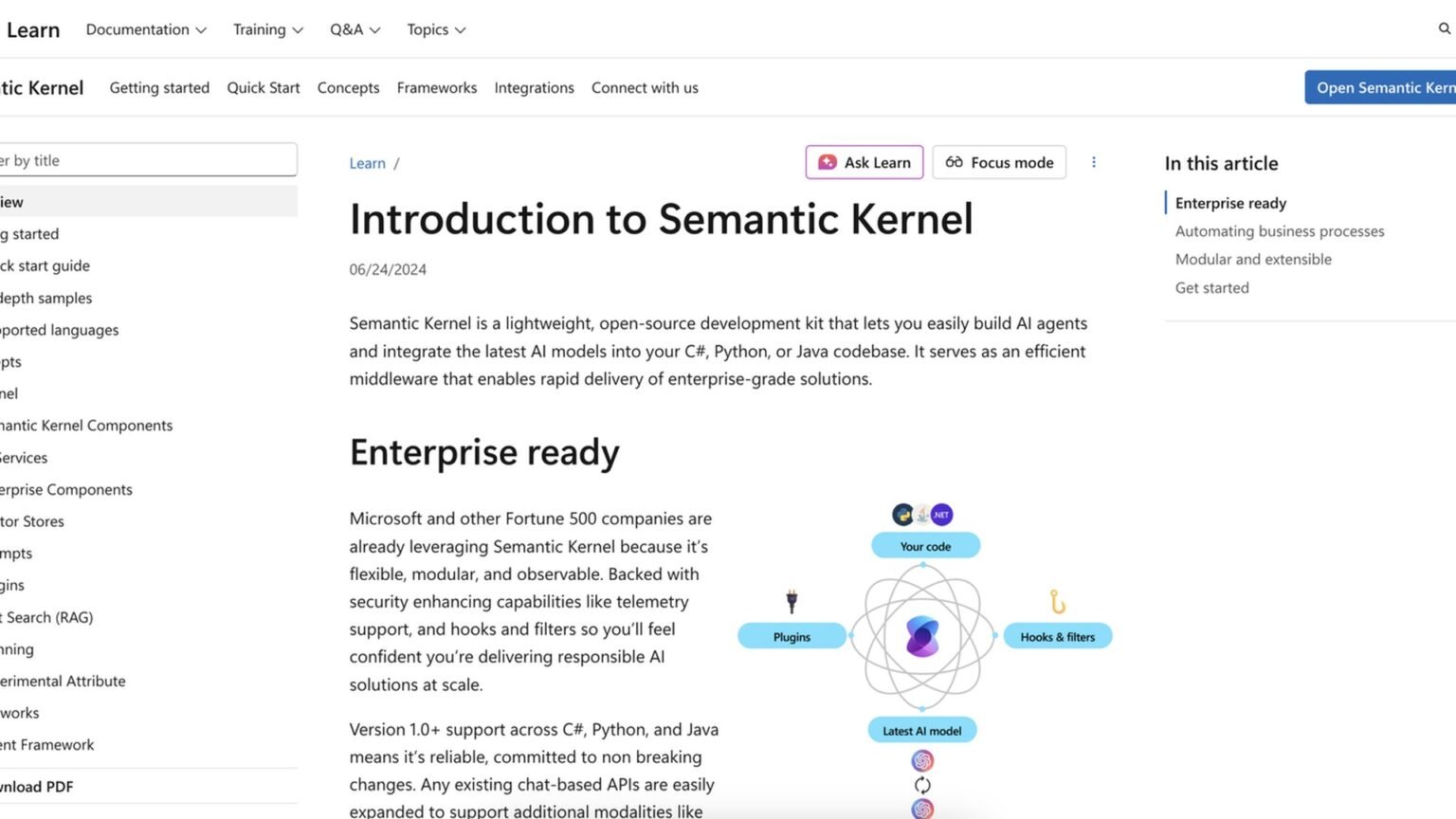
If I had to map the field quickly, I would break it into jobs. LangGraph is the strongest answer for durable state, branching, resumability, and human-in-the-loop checkpoints. Pydantic AI is the answer when tool inputs and outputs must be type-safe. smolagents from Hugging Face is compelling when you want agents that write and run Python with minimal abstraction. LlamaIndex is still the obvious RAG-first choice when retrieval is the dominant workflow. Haystack remains attractive for pipeline control and enterprise operations. OpenAI Agents SDK and Anthropic Agent SDK make sense when you are comfortable going all-in on one model vendor. DSPy is different from all of them because it is really a programming and optimization paradigm. Semantic Kernel matters if your stack is not Python-only. CrewAI is useful when explicit multi-agent roles are the product requirement.
That is the key reframe I would want readers to keep: in LangChain alternatives 2026, the winners are usually complements, not replacements.
“In 2026, it is rarely LangChain or alternative — it is LangChain (or LangGraph) plus a focused tool for the part of the stack where a focused tool earns its abstractions.”
Editorial synthesis based on current framework comparisons and official docs
| Framework | Best fit | Open source | Vendor lock-in profile |
|---|---|---|---|
| LangGraph | Stateful orchestration and agent control flow | Yes | Low to moderate |
| Pydantic AI | Type-safe tools and structured outputs | Yes | Low |
| smolagents | Code-execution agents | Yes | Low |
| LlamaIndex | RAG-heavy applications | Yes | Low to moderate |
| Haystack | Production pipelines and ops control | Yes | Low |
| OpenAI Agents SDK | OpenAI-centric agent apps | Yes | High |
| Anthropic Agent SDK | Anthropic-centric agent apps with MCP | Yes | High |
| DSPy | Prompt/program optimization for structured tasks | Yes | Low |
| Semantic Kernel | Mixed Python, C#, and Java environments | Yes | Moderate |
| CrewAI | Role-based multi-agent workflows | Yes | Low to moderate |
Which is the best LangChain alternative for production?
Best overall for production: LangGraph plus one specialist
If you force me to pick one, I would not pick one. I would pick a stack. For most production teams, the best answer inside LangChain alternatives 2026 is LangGraph for orchestration plus one specialist. That specialist depends on the failure mode you care about most.
If correctness of parameters and tool contracts is the risk, I would look first at Pydantic AI. If retrieval quality and document workflows dominate, I would look at LlamaIndex. If the application depends on agents writing and executing code, smolagents is unusually direct. If your organization needs more explicit pipeline control and enterprise support options, Haystack deserves serious attention. If your team is OpenAI-only or Anthropic-only and wants first-party tracing, handoffs, or MCP support, the vendor SDKs reduce integration friction at the cost of portability.
This is also where I think open-source versus vendor-locked choices matter more than many comparison posts admit. Pydantic AI, smolagents, LlamaIndex, Haystack, DSPy, Semantic Kernel, CrewAI, and LangGraph all give you an open-source path. OpenAI Agents SDK and Anthropic Agent SDK are real options, but they are strategically narrower because they are designed around one provider’s platform assumptions.
Pros
Cons
Choose the framework that reduces your most expensive failure: bad state, bad schemas, bad retrieval, bad code execution, or bad prompt behavior.
What’s the difference between LangChain and LangGraph?
I think of LangChain as the broader ecosystem and LangGraph as the more opinionated runtime for agent workflows. LangGraph is built by the LangChain team, but it is centered on graph-based execution, persistent state, branching, resumability, and checkpoints. That makes it a better fit for production agents that need to pause, recover, route, or involve humans.
That distinction matters because many searches for LangChain alternatives 2026 are really searches for a more reliable orchestration model. In that sense, LangGraph is not an alternative in the usual sense. It is the evolution of the stack for teams that outgrew simpler chain abstractions.
Here is the smallest possible LangGraph-style example to show the mental model. The point is not feature completeness; it is that you define state and node transitions explicitly.
from typing import TypedDict
from langgraph.graph import StateGraph, START, END

class State(TypedDict):
    topic: str
    draft: str


def write_draft(state: State) -> State:
    return {**state, "draft": f"Draft about {state['topic']}"}


graph = StateGraph(State)
graph.add_node("write_draft", write_draft)
graph.add_edge(START, "write_draft")
graph.add_edge("write_draft", END)

app = graph.compile()
result = app.invoke({"topic": "agent frameworks", "draft": ""})
print(result)
Should I use Pydantic AI or LangChain?
If your biggest problem is orchestration, I would lean LangGraph. If your biggest problem is getting structured data and tool arguments right, I would lean Pydantic AI. That is why I do not see this as a clean head-to-head. Pydantic AI comes from the Pydantic team and leans into typed models, validation, and Python ergonomics that will feel natural to FastAPI and modern backend developers.
For builders comparing LangChain alternatives 2026, Pydantic AI is one of the clearest examples of a focused abstraction beating a general one. When an agent must call tools with correct parameters, or when you need confidence that outputs conform to a schema before they hit downstream systems, type safety is not a nice-to-have.
A minimal example makes the difference obvious. You define the output contract as a model, and the framework works around that contract rather than treating structure as an afterthought.
Pros
Cons
from pydantic import BaseModel
from pydantic_ai import Agent

class Answer(BaseModel):
    summary: str
    confidence: float

agent = Agent(
    'openai:gpt-4o-mini',
    output_type=Answer,
    system_prompt='Return a concise answer with a confidence score between 0 and 1.'
)

result = agent.run_sync('What does durable execution mean for agents?')
print(result.output.model_dump())
Are there LangChain alternatives that don’t leak your data?
The careful answer is that frameworks do not magically prevent data leakage; deployment choices, logging defaults, model providers, and infrastructure policies do. Still, the privacy angle behind many LangChain alternatives 2026 searches is real, especially in regulated industries.
Open-source frameworks give you the strongest starting point if data control is the priority. Pydantic AI, smolagents, LlamaIndex, Haystack, DSPy, Semantic Kernel, CrewAI, and LangGraph can all be self-hosted or integrated into environments where you control logging, storage, and model routing. That does not make them private by default, but it gives you more room to design for privacy than a tightly coupled vendor SDK.
The vendor SDKs are not disqualified, but they require a clearer acceptance of platform dependency. If your compliance posture requires strict control over prompts, traces, and tool-call payloads, I would favor open-source orchestration and observability components, then connect to model providers under explicit policy. Haystack is especially relevant here because its pipeline orientation maps well to teams that want operational control.
No framework alone guarantees privacy. Data handling depends on hosting, logging, provider settings, and internal controls.
What about LlamaIndex vs LangChain for RAG?
If retrieval is the product, I would usually start with LlamaIndex before I start with generic orchestration. That is not a knock on LangChain. It is just a recognition that RAG systems live or die on ingestion, indexing, retrieval quality, and document workflow design. LlamaIndex has long been strongest when those concerns are the center of the application.
If the app is broader than retrieval, I would not force a false choice. This is another place where the LangChain alternatives 2026 framing breaks down. A team can use LlamaIndex for retrieval-heavy components and still use LangGraph to orchestrate the larger workflow around those components.
I would put Haystack in this same conversation for teams that want more explicit pipeline architecture and operational control. LlamaIndex is the retrieval-first answer. Haystack is the pipeline-and-ops answer. LangGraph is the orchestration answer. Those are different jobs.
| Question | My pick |
|---|---|
| RAG is the core product | LlamaIndex |
| RAG inside a larger agent workflow | LlamaIndex plus LangGraph |
| Need stronger pipeline control and enterprise ops | Haystack |
Final recommendation by use-case
Best overall: LangGraph as the orchestrator
If I were advising a builder today, I would map the framework to the bottleneck, not to the hype cycle. Use LangGraph when you need durable state, branching, resumability, or human approval steps. Use Pydantic AI when schema correctness and tool contracts are the hard part. Use smolagents when code execution is the product behavior. Use LlamaIndex when retrieval dominates. Use Haystack when pipeline control and enterprise operations dominate. Use DSPy when the core problem is optimizing prompts and signatures for structured tasks. Use Semantic Kernel when your organization spans Python, C#, and Java. Use CrewAI when explicit role-based multi-agent design is the requirement. Use OpenAI Agents SDK or Anthropic Agent SDK when first-party integration matters more than portability.
On the common question “Which is better, LangChain or Hugging Face?” I would answer that Hugging Face’s smolagents is better for a very specific style of Pythonic, code-executing agent, while LangGraph is better for orchestrated workflows with state and control. They are not substitutes in every architecture.
So my closing answer to the whole LangChain alternatives 2026 debate is simple: stop shopping for a single winner. Shop for the narrowest abstraction that solves your most expensive problem, then compose the stack around it.
LangGraph ⭐ Editor’s Pick
Best for: Teams that need state, branching, checkpoints, and human-in-the-loop control
What works
Watch out for
Pydantic AI
Best for: Python teams that care deeply about schema correctness
What works
Watch out for
LlamaIndex
Best for: Teams building RAG systems where retrieval is the core workflow
What works
Watch out for
“Stop shopping for a single winner. Shop for the narrowest abstraction that solves your most expensive problem.”
alatirok interview-style conclusion
Frequently asked questions
I would not say one framework is replacing it. The more accurate pattern is LangGraph for orchestration plus a focused tool such as Pydantic AI, LlamaIndex, or smolagents depending on the job.
The main alternatives depend on use-case: LangGraph for orchestration, Pydantic AI for type safety, LlamaIndex for RAG, Haystack for pipeline control, and DSPy for prompt optimization.
If you mean Hugging Face’s smolagents, it is better for lightweight, Pythonic code-execution agents. LangGraph is better for stateful orchestration and workflow control.
For production, I would look first at LangGraph, Pydantic AI, LlamaIndex, and Haystack. The best choice depends on whether your biggest risk is orchestration, schema correctness, retrieval quality, or operational control.
Open-source options include LangGraph, Pydantic AI, smolagents, Haystack, DSPy, and Semantic Kernel.
Primary sources
- Vellum: Top LangChain alternatives — Vellum
- Uvik: Python AI agent frameworks — Uvik
- Logic: LangChain alternatives — Logic
- DEV: 33 LangChain alternatives that won’t leak your data — DEV Community
- Scrapfly: Top LangChain alternatives — Scrapfly
- Langfuse: AI agent framework comparison — Langfuse
- LangGraph GitHub repository — GitHub
- Pydantic AI GitHub repository — GitHub
- smolagents GitHub repository — GitHub
- Haystack GitHub repository — GitHub
- DSPy GitHub repository — GitHub
- Semantic Kernel GitHub repository — GitHub
- LlamaIndex homepage — LlamaIndex
Last updated: May 23, 2026. Related: Agent Infrastructure.