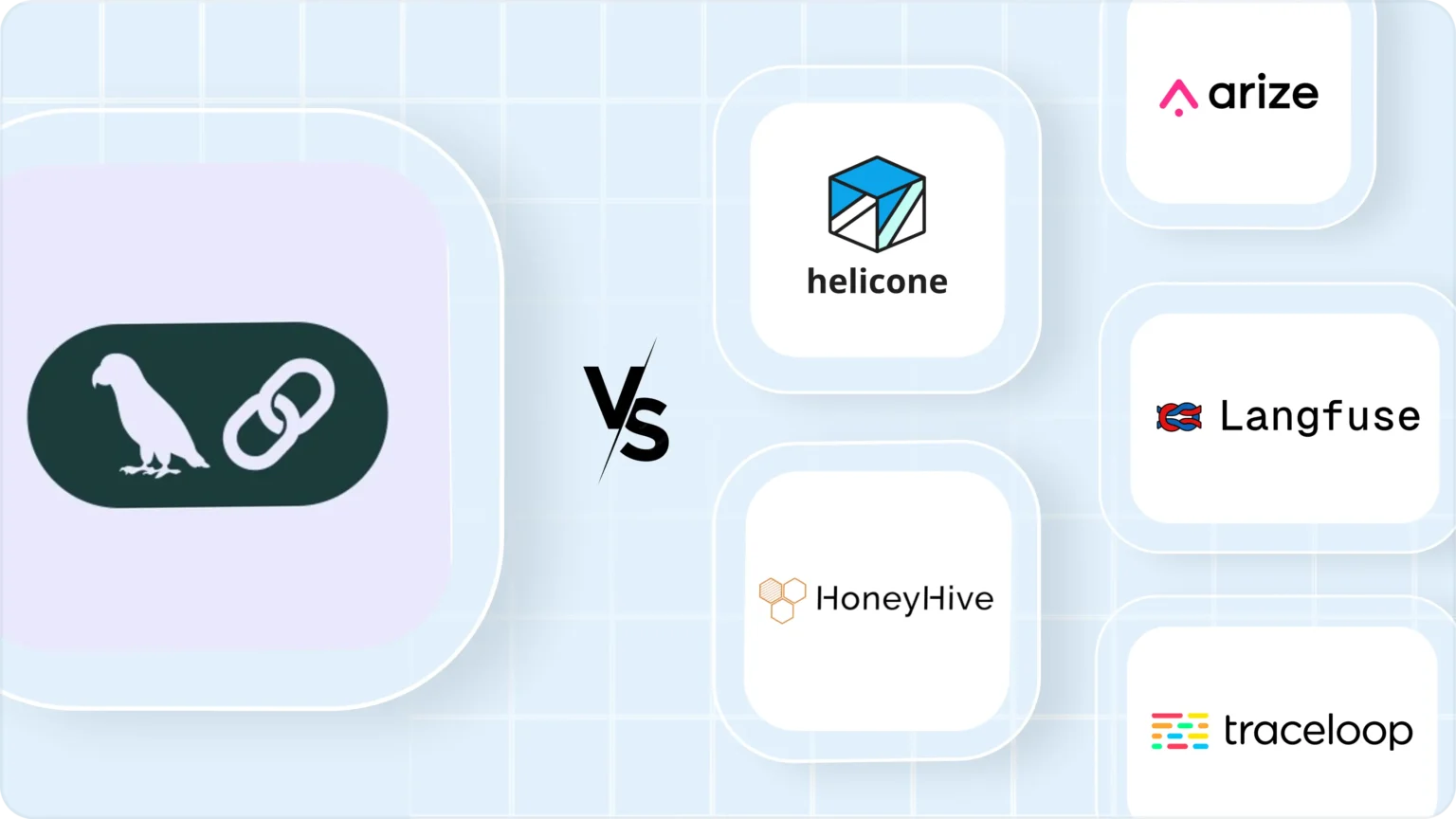

Choosing an LLM observability stack 2026 is less about feature checklists than about architecture: proxy or SDK, cloud or self-host, evals built in or observability only. In this tutorial, we build a minimal traced app, then map Langfuse, Helicone, LangSmith, and Arize Phoenix to the production constraints that actually decide the winner.
What we’re building and what you need first
This tutorial builds a small Python chat app and shows two concrete instrumentation paths that teams actually use in production: a gateway-style path with Helicone and an SDK path with Langfuse. Then it uses those implementations to explain the broader decision for an LLM observability stack 2026: whether you want a proxy in front of model traffic, direct SDK tracing inside the app, or an OpenTelemetry-native route that fits an existing observability estate.
Prerequisites are intentionally light: Python 3.10+, an API key for the model provider you already use, and accounts or local setups for the tools you want to test. Helicone documents a proxy pattern for OpenAI-compatible traffic at docs.helicone.ai. Langfuse provides both cloud and self-hosted options on its main site and GitHub. Arize Phoenix is open source on GitHub. LangSmith is LangChain’s first-party platform and is most natural when your app already uses LangChain.
The thesis is simple. Langfuse is open-source and self-hostable, with tracing, evals, and prompt management. Helicone is a one-line proxy and works best when you want near-zero-code instrumentation. LangSmith is the first-party choice for LangChain-heavy teams. Arize Phoenix is open source and tightly aligned with OpenTelemetry, which matters if your company already standardizes on OTel for non-LLM telemetry.
The right choice is usually determined by data path, hosting constraints, and eval needs before UI polish or dashboard preference.
import os
from openai import OpenAI


def build_client() -> OpenAI:
    api_key = os.environ["OPENAI_API_KEY"]
    return OpenAI(api_key=api_key)


def run_chat(prompt: str) -> str:
    client = build_client()
    response = client.chat.completions.create(
        model="gpt-4o-mini",
        messages=[
            {"role": "system", "content": "You are a concise assistant."},
            {"role": "user", "content": prompt},
        ],
        temperature=0.2,
    )
    return response.choices[0].message.content or ""


if __name__ == "__main__":
    print(run_chat("Give me three bullet points on observability for LLM apps."))
“Open-source LLM engineering platform. Trace, evaluate, and improve your LLM application.”
Langfuse homepage
| Tool | Best fit | Instrumentation model | Hosting posture | What stands out |
|---|---|---|---|---|
| Langfuse | Teams that want data ownership | SDK / drop-in client | Cloud or self-hosted | Trace + eval + prompt management |
| Helicone | Teams that want zero-code instrumentation | Proxy / gateway | Hosted gateway model | Base URL swap for OpenAI-compatible traffic |
| LangSmith | LangChain-centric teams | First-party LangChain integration | Cloud | Works naturally inside LangChain workflows |
| Arize Phoenix | OTel-first organizations | SDK / OpenTelemetry aligned | Open source | Fits broader observability stacks |
Stage 1: Understand what each tool actually does
Start with the product boundaries, because most confusion in this market comes from comparing tools that solve adjacent problems. Langfuse positions itself as an open-source LLM engineering platform with tracing, evals, and prompt management. That makes it broader than a pure request logger. If your team wants a polished UI and full data ownership, Langfuse is the cleanest fit among the four.
Helicone is different. Its core appeal is gateway-style observability through a proxy. In practice, that means changing the client base URL and adding Helicone headers, rather than wiring a tracing SDK through your application code. For teams that need to instrument quickly across many services, that is a real operational advantage. The trade-off is equally real: the proxy sits in the request path.
LangSmith is LangChain’s first-party platform. The key point is not that it is an observability product in the abstract, but that it is the native choice when the rest of your application stack already runs on LangChain. In that setup, the integration burden is lower because the framework and the observability layer are designed together.
Arize Phoenix sits on another branch of the tree. Phoenix is open source and tightly integrated with OpenTelemetry standards. If your company already uses OTel collectors, exporters, and dashboards for application telemetry, Phoenix is often the easiest way to bring LLM traces into the same operational language. That makes it especially relevant for platform teams, not just AI feature teams.
This is why an LLM observability stack 2026 decision should begin with architecture, not vendor demos. Langfuse and Phoenix lean SDK. Helicone leans proxy. LangSmith leans framework-native cloud. Those are not cosmetic differences; they determine deployment shape, trust boundaries, and how much code you need to touch.
“Phoenix is an open-source AI observability platform designed for experimentation, evaluation, and troubleshooting.”
Arize Phoenix GitHub repository
Stage 2: Build the proxy path with Helicone
If you want the fastest possible path to visibility, Helicone is the easiest place to start. The implementation model is simple: keep your OpenAI-compatible client, point it at Helicone’s base URL, and attach the Helicone auth header. That is why Helicone is often the first test drive for teams evaluating an LLM observability stack 2026 under time pressure.
The upside is speed. You can instrument traffic without threading a tracing object through your codebase. The downside is the trust model. Because the proxy handles API traffic, your organization has to be comfortable with that network path. In some companies that is acceptable. In others, especially regulated environments, it is the reason Helicone gets ruled out early.
Pros
Cons
A proxy minimizes code changes but introduces a man-in-the-middle data path for model requests and responses.
import os
from openai import OpenAI


def build_helicone_client() -> OpenAI:
    return OpenAI(
        api_key=os.environ["OPENAI_API_KEY"],
        base_url="https://oai.helicone.ai/v1",
        default_headers={
            "Helicone-Auth": f"Bearer {os.environ['HELICONE_API_KEY']}",
        },
    )


def run_chat_with_helicone(prompt: str) -> str:
    client = build_helicone_client()
    response = client.chat.completions.create(
        model="gpt-4o-mini",
        messages=[
            {"role": "system", "content": "You are a concise assistant."},
            {"role": "user", "content": prompt},
        ],
        temperature=0.2,
    )
    return response.choices[0].message.content or ""


if __name__ == "__main__":
    print(run_chat_with_helicone("Summarize why proxy-based observability is attractive."))
Stage 3: Build the SDK path with Langfuse
Best overall for most production teams: Langfuse
Langfuse takes the opposite route. Instead of routing traffic through a proxy, you instrument the application directly. That can be done with a drop-in OpenAI client from Langfuse or by creating traces and generations explicitly. The practical benefit is that you keep observability inside your app boundary while gaining tracing, eval support, and prompt management in one system.
For many teams, this is the most balanced answer to the LLM observability stack 2026 question. You write a bit more code than with Helicone, but you avoid the proxy trade-off and keep the option to self-host. That combination matters a lot once an AI feature moves from prototype to a system that handles customer data.
Pros
Cons
Langfuse combines self-hostability with LLM-native tracing and evals, which is a strong middle ground for production teams.
import os
from langfuse.openai import OpenAI


def build_langfuse_client() -> OpenAI:
    # Requires LANGFUSE_PUBLIC_KEY, LANGFUSE_SECRET_KEY, and LANGFUSE_HOST
    # in the environment as documented by Langfuse.
    return OpenAI(api_key=os.environ["OPENAI_API_KEY"])


def run_chat_with_langfuse(prompt: str) -> str:
    client = build_langfuse_client()
    response = client.chat.completions.create(
        model="gpt-4o-mini",
        messages=[
            {"role": "system", "content": "You are a concise assistant."},
            {"role": "user", "content": prompt},
        ],
        temperature=0.2,
    )
    return response.choices[0].message.content or ""


if __name__ == "__main__":
    print(run_chat_with_langfuse("Explain SDK-based observability in two sentences."))
Stage 4: Decide the two forks that matter most
The first fork is proxy versus SDK. Helicone represents the proxy side: minimal code changes, fast rollout, and a gateway posture. Langfuse and Phoenix represent the SDK side: more explicit instrumentation, but no requirement to put a third-party proxy in the middle of every model call. This is usually the first hard constraint in an LLM observability stack 2026 review.
The second fork is cloud-only versus self-host. LangSmith is the clearest cloud-first option in this group. Langfuse and Phoenix both support self-hosted, open-source deployment models. That distinction matters less for a startup shipping internal copilots and much more for healthcare, finance, government, and any company with strict data residency or vendor review requirements.
There is also a third, subtler fork: LLM-native versus general OpenTelemetry alignment. Langfuse, Helicone, and LangSmith are LLM-native products first. Phoenix is unusually attractive when your platform team already thinks in OTel collectors, traces, spans, and standardized telemetry pipelines. In those environments, Phoenix can reduce organizational friction even if another tool looks more polished in an AI-specific demo.
| Decision fork | Choose this when… | Likely winner |
|---|---|---|
| Proxy vs SDK | You need near-zero-code rollout | Helicone |
| Proxy vs SDK | You want in-app tracing without MITM | Langfuse or Phoenix |
| Cloud vs self-host | You can use cloud and run LangChain heavily | LangSmith |
| Cloud vs self-host | You need self-hosting or stronger data control | Langfuse or Phoenix |
| LLM-native vs OTel-native | You want LLM-specific workflows first | Langfuse, Helicone, or LangSmith |
| LLM-native vs OTel-native | You already run OpenTelemetry broadly | Arize Phoenix |
Stage 5: Factor in evals, not just traces
Observability alone is not enough once your team starts asking whether outputs are improving. This is where the field separates. Langfuse and LangSmith both provide built-in evaluation frameworks. Helicone is observability-focused rather than an eval platform. Phoenix can participate in evaluation workflows, but its strongest differentiation is still its open-source, OTel-aligned observability posture.
That distinction changes buying behavior. If your immediate need is request logging, latency, and prompt-response inspection, Helicone may be enough. If your roadmap includes regression testing, prompt iteration, and systematic quality measurement, then Langfuse or LangSmith will usually age better. In other words, the best LLM observability stack 2026 is often the one that matches your next six months, not just today’s debugging pain.
Teams that skip evals early often end up adding a second tool later. If quality measurement is already on the roadmap, choose for that now.
from typing import Iterable


def simple_keyword_eval(outputs: Iterable[str], required_term: str) -> float:
    outputs_list = list(outputs)
    if not outputs_list:
        return 0.0
    passed = sum(1 for text in outputs_list if required_term.lower() in text.lower())
    return passed / len(outputs_list)


if __name__ == "__main__":
    samples = [
        "Observability helps debug latency and failures.",
        "Tracing is useful for prompt debugging.",
        "You also need evaluation for quality.",
    ]
    score = simple_keyword_eval(samples, "debug")
    print({"keyword_eval_score": score})
“Debug, test, evaluate, and monitor your LLM applications.”
LangSmith product page
Stage 6: Pick by team type, then know where to go from here
Runner-up: Helicone for fastest rollout
For a startup or product team that wants the broadest production-ready feature set with self-hosting available, Langfuse is the safest default. For a platform team that needs instrumentation this week and can accept the proxy model, Helicone is the fastest route. For a LangChain-heavy application, LangSmith is the path of least resistance. For an enterprise platform group already invested in OpenTelemetry, Phoenix is the most organizationally coherent choice.
That is the practical answer to the LLM observability stack 2026 question. There is no universal winner. There is a winner for your trust boundary, your hosting posture, and your evaluation maturity. If you are still unsure, run a two-day bake-off: instrument one endpoint with Helicone, one with Langfuse, and compare not just dashboards but rollout friction, data comfort, and whether the tool supports the next workflow your team will need.
Where to go from here: first, wire one production-like path end to end and inspect traces for a real user flow. Second, decide whether you need evals now or later. Third, if your company already runs OpenTelemetry, test Phoenix or OpenLLMetry before adding a separate telemetry island. The right stack is the one your developers will actually keep on, your security team will approve, and your product team can use to improve output quality over time.
Langfuse ⭐ Editor’s Pick
Best for: Teams that want self-hosting, evals, and a polished tracing workflow
What works
Watch out for
Helicone
Best for: Teams that want a gateway-style rollout with minimal application changes
What works
Watch out for
LangSmith
Best for: Teams deeply committed to LangChain
What works
Watch out for
Arize Phoenix
Best for: Platform teams standardizing on OpenTelemetry
What works
Watch out for
| Team type | Recommended starting point | Why |
|---|---|---|
| General product team | Langfuse | Balanced mix of tracing, evals, prompt management, and self-hosting |
| Fast-moving team with minimal code appetite | Helicone | Base URL swap is the quickest path to visibility |
| LangChain-native team | LangSmith | First-party fit with the rest of the stack |
| OTel-standardized enterprise platform team | Arize Phoenix | Best alignment with existing observability architecture |
Frequently asked questions
For self-hosting, start with Langfuse or Arize Phoenix. Both have open-source deployment paths, while LangSmith is the cloud-first option in this comparison.
Choose Arize Phoenix when your organization already runs OpenTelemetry across services and wants LLM telemetry to fit that model. If you want a more LLM-native product with prompt management and built-in eval emphasis, Langfuse is usually the better starting point.
Primary sources
- Langfuse homepage — Langfuse
- Langfuse GitHub — GitHub
- Helicone homepage — Helicone
- Helicone docs — Helicone
- Helicone GitHub — GitHub
- LangSmith product page — LangChain
- Arize Phoenix GitHub — GitHub
- OpenLLMetry GitHub — GitHub
- Comparison video — YouTube
Last updated: May 22, 2026. Related: Observability.