
Evaluation has moved from a nice-to-have to the control plane for agent engineering. Teams shipping copilots, retrieval systems, and multi-step agents now need tooling that can score outputs, inspect traces, compare experiments, and close the loop between offline tests and production behavior. This ranked list looks at seven widely used AI agent evaluation tools through the lenses that matter in practice: product maturity, pricing posture, open-source versus SaaS flexibility, IDE and workflow integrations, and how well each platform supports modern agent debugging and evaluation.
Why this list matters now
Agent builders have largely solved the first-mile problem of calling models and wiring tools. The harder problem in 2026 is proving that an agent is getting better rather than merely changing. That means teams need systems for dataset-backed testing, human and model-based scoring, trace inspection, regression detection, and production feedback loops. The market has matured enough that buyers now face a real choice between integrated commercial platforms, open-source-first stacks, and observability products that are expanding into evaluation.
This ranking focuses on seven products with active official platforms and documentation: LangSmith from LangChain, Braintrust, Arize and Phoenix, Weave from Weights & Biases, Helicone, and Langfuse. The ordering reflects a practical buyer rubric rather than a single benchmark: maturity, pricing posture, OSS versus SaaS flexibility, IDE and developer workflow integrations, and the breadth of evaluation features. If you are comparing two of the most commonly shortlisted options, see our related guide, LangSmith vs Langfuse.
📌 Method. This list uses only publicly verifiable information from official product sites and docs. It does not infer unpublished pricing, roadmap items, or unsupported integrations.
1. LangSmith — the most complete default choice for agent teams
Verdict: LangSmith is the strongest all-around pick for teams that want evaluation, tracing, prompt iteration, and deployment-adjacent workflows in one mature stack.
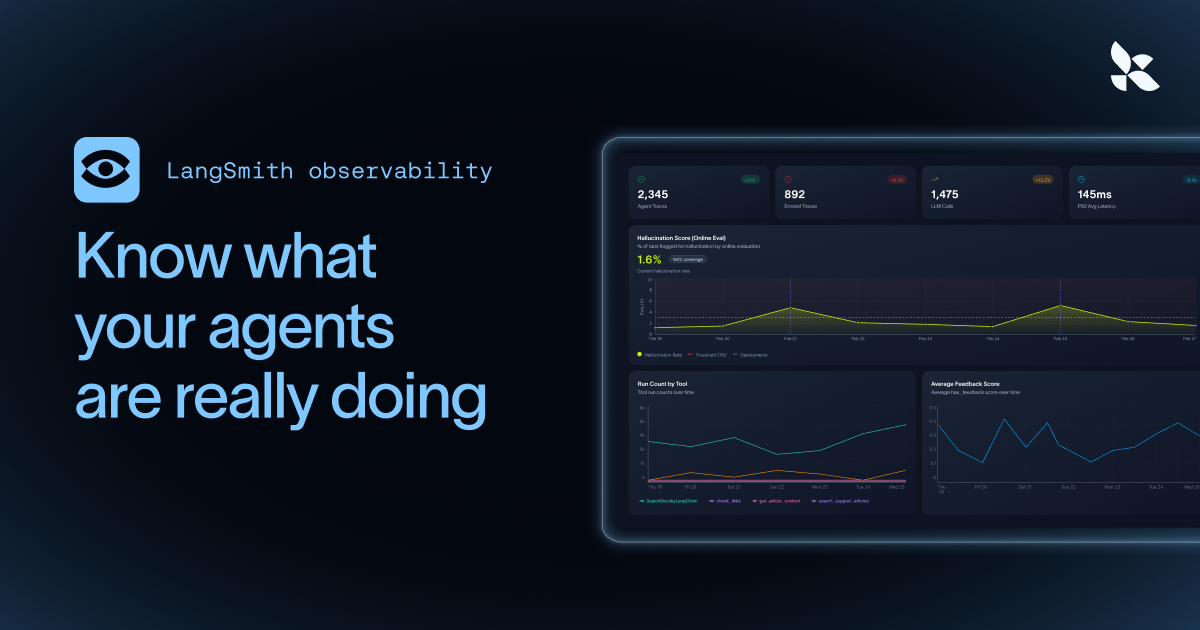
LangSmith has become the default shortlist entry for many agent teams because it combines observability and evaluation in a product built around LLM application development. LangChain positions it for debugging, testing, evaluating, and monitoring LLM apps, and its docs cover datasets, experiments, online evaluators, annotation queues, prompt engineering, and tracing. That breadth matters for teams that do not want separate systems for offline evals and production debugging. Official docs also show integrations across the LangChain ecosystem and SDKs for instrumenting applications.
On maturity, LangSmith benefits from LangChain’s broad developer footprint and a product surface that has expanded well beyond simple traces. On pricing posture, LangChain publishes LangSmith pricing publicly, which lowers procurement friction compared with products that require a sales conversation for most meaningful usage. On workflow fit, LangSmith is especially strong for teams already using LangChain or LangGraph, though it is not limited to those frameworks. For buyers who want a deeper side-by-side with an open-source-heavy alternative, our LangSmith vs Langfuse guide is the natural next read.
Who it’s best for: teams already building with LangChain or LangGraph, startups that want a mature hosted platform quickly, and product organizations that need one place for traces, datasets, experiments, and monitoring.
“Debug, test, evaluate, and monitor your LLM applications.”
LangSmith product page
2. Braintrust — the strongest eval-first platform for serious experimentation
Verdict: Braintrust stands out for teams that treat evaluation as a first-class engineering discipline and want a platform centered on experiments, datasets, and scoring.
Braintrust has built its product identity around evals rather than treating them as an add-on to tracing. Its official site and docs emphasize AI evaluations, prompts, datasets, playground workflows, and observability. That framing is important: some teams want observability with enough eval support, while others want a system where experiment management and benchmark discipline are the center of gravity. Braintrust fits the second camp well.
The platform’s maturity shows in how explicitly it structures evaluation workflows. Public materials describe building evals, running experiments, managing prompts, and collecting production feedback. Braintrust also publishes docs for integrations and SDK usage, which helps it fit into engineering workflows rather than remaining a standalone dashboard. Pricing is publicly presented on the company site, another practical advantage for buyers comparing tools quickly.
Braintrust ranks just behind LangSmith because LangSmith’s broader ecosystem and end-to-end product surface are hard to ignore, but Braintrust is arguably the sharper choice for organizations that want evaluation rigor to drive model and prompt decisions from day one.
Who it’s best for: AI product teams with dedicated eval owners, enterprises building benchmark-driven release processes, and developers who want evals to be the organizing layer rather than a secondary feature.
📌 Best fit. Choose Braintrust when your internal process already revolves around datasets, experiment comparison, and measurable quality gates.
3. Weave — best for teams that want evals tied to experiment tracking
Verdict: Weave is a compelling option for builders who want LLM tracing and evaluation inside the broader Weights & Biases workflow for experiments and ML operations.
Weave comes from Weights & Biases, a company with deep credibility in experiment tracking and ML tooling. Its official materials position Weave around tracing, evaluation, and monitoring for AI applications. That lineage matters because many teams already use W&B for model development and want a path that connects LLM app evaluation to existing experiment culture rather than introducing a completely separate vendor.
Weave’s appeal is less about being the most opinionated agent platform and more about fitting naturally into ML-heavy organizations. If your company already treats runs, artifacts, and comparisons as standard practice, Weave’s place in the W&B ecosystem can reduce context switching. The product also benefits from W&B’s mature developer tooling posture. Public docs cover tracing and evaluation concepts, and the official site makes the product’s role in the stack clear.
It lands below Braintrust in this ranking because Braintrust is more singularly focused on eval workflows, while Weave’s strength is integration with a broader experimentation platform. For some buyers, that is a feature rather than a compromise.
Who it’s best for: ML-native teams already using Weights & Biases, research-heavy organizations, and companies that want LLM evals connected to a wider experiment tracking culture.
4. Arize — best for enterprises that want evaluation plus production AI observability
Verdict: Arize is a strong choice for organizations that want LLM evaluation in the context of a broader AI observability and monitoring platform.
Arize approaches the market from the observability side, with official product pages covering AI observability, evaluation, and monitoring. That makes it attractive to enterprises that are not only asking whether an agent passed an offline benchmark, but also whether production quality, drift, and failure patterns can be tracked in a governance-friendly environment. Arize’s positioning is broader than a pure-play eval startup, and that breadth can be valuable in larger deployments.
The company’s open-source Phoenix project also matters here. Phoenix gives Arize a credible OSS story for tracing and evaluation workflows, while the commercial Arize platform serves teams that need managed infrastructure and enterprise controls. That dual posture is useful for buyers who want to prototype in open source and later standardize on a hosted platform. Public docs and product pages make the relationship between Arize and Phoenix visible enough to evaluate without guesswork.
Arize ranks ahead of Phoenix in this list because the commercial platform offers a more complete answer for teams that need managed operations, while Phoenix remains one of the best open-source options in the category.
Who it’s best for: enterprises, platform teams, and organizations that want evaluation tightly linked to production observability and broader AI monitoring.
5. Phoenix — the best open-source-first evaluation and tracing option
Verdict: Phoenix is the top pick for teams that want serious open-source evaluation and tracing without committing immediately to a proprietary hosted workflow.
Phoenix, maintained by Arize, has become one of the most important open-source projects in LLM observability and evaluation. Its official site describes it as open-source AI observability, and the docs cover tracing, evaluations, prompt engineering, and experimentation workflows. For many developers, Phoenix is the answer to a simple requirement: they want visibility into agent behavior and eval support, but they also want the option to self-host, inspect the code, and avoid early platform lock-in.
The open-source posture is Phoenix’s biggest differentiator in this ranking. Langfuse also has a strong OSS story, but Phoenix is especially visible among teams that want notebook-friendly and developer-centric debugging workflows around LLM applications. Its connection to Arize also gives it a path into a larger commercial platform if requirements expand. That combination of OSS accessibility and enterprise adjacency is rare.
Phoenix sits below Arize because the managed platform story is naturally broader on the commercial side, but for many engineering teams Phoenix will be the more attractive starting point. If your buying process is constrained by security review, budget, or a preference for self-hosting, Phoenix deserves a very close look.
Who it’s best for: open-source-first teams, startups that want to self-host early, and developers who need tracing and evals without immediately adopting a full SaaS platform.
📌 Open-source angle. Phoenix is one of the clearest OSS entries in this category, making it useful for teams that want local control or a lower-friction proof of concept.
6. Langfuse — best for OSS flexibility and product analytics-style observability
Verdict: Langfuse is a strong hybrid choice for teams that want open-source flexibility, hosted availability, and a practical blend of tracing, metrics, prompts, and evals.
Langfuse has earned a durable place in the LLM tooling stack by combining open-source availability with a hosted product and a clear focus on observability for LLM applications. Its official site and docs cover tracing, prompt management, metrics, datasets, and evaluations. That makes it broader than a simple logging tool, while still feeling approachable for engineering teams that want to instrument production systems quickly.
The reason Langfuse ranks below Phoenix here is not a lack of capability. It is a reflection of category emphasis. Langfuse is often strongest when buyers want observability first and evaluation as part of a larger telemetry and workflow layer. Phoenix, by contrast, has become especially prominent in open-source evaluation and debugging conversations. Langfuse remains highly competitive, particularly for teams that value its OSS-plus-SaaS model and broad integration posture.
For buyers comparing hosted maturity, open-source control, and feature shape, Langfuse is one of the most common alternatives to LangSmith. We break that comparison down in detail in LangSmith vs Langfuse.
Who it’s best for: teams that want open-source optionality with a hosted path, product engineering groups that care about observability and prompt workflows, and buyers comparing directly against LangSmith.
7. Helicone — best for lightweight observability with growing eval relevance
Verdict: Helicone is the best fit for teams that want fast, practical LLM observability and cost visibility, with evaluation features as part of a broader monitoring workflow.
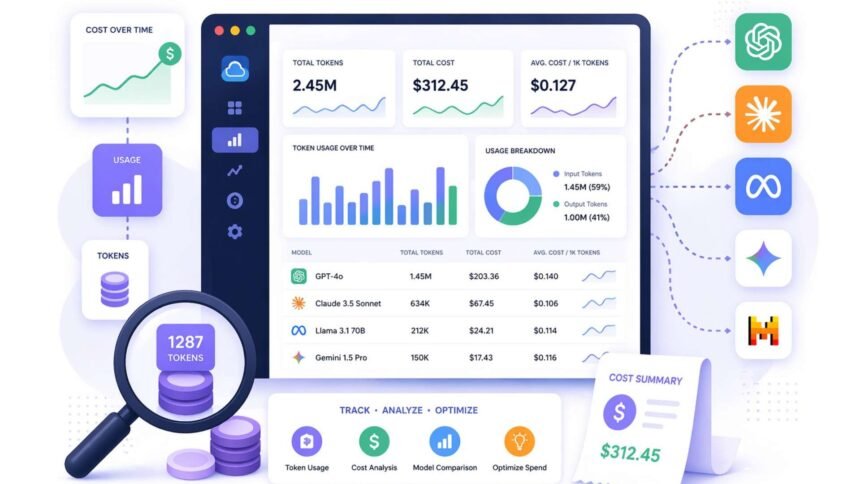
Helicone is best known as an observability layer for LLM applications, with official materials emphasizing logging, analytics, monitoring, and cost tracking. That orientation places it somewhat differently from the eval-first products higher on this list. Still, many teams do not start with a formal benchmark suite. They start by asking what their agents are doing in production, how much those calls cost, and where failures cluster. Helicone addresses that operational need directly.
Its lower ranking is mostly about category center of gravity. If your primary requirement is a sophisticated evaluation platform with datasets and experiment workflows at the core, LangSmith, Braintrust, Weave, Arize, Phoenix, or Langfuse will usually be stronger starting points. If your real need is production observability with enough structure to support quality analysis and iteration, Helicone is a credible option. Public docs and product pages make that positioning clear.
Helicone also appeals to teams that want a relatively straightforward path to instrumenting LLM traffic without overhauling their stack. In practice, that can make it a useful entry point for startups before they adopt a heavier eval discipline.
Who it’s best for: startups and product teams prioritizing LLM observability, usage analytics, and cost tracking, especially when formal evaluation is still emerging.
⚠️ Know the tradeoff. Helicone is strongest when observability is the immediate problem. Teams seeking a deeply eval-centric workflow may outgrow it faster than the tools ranked above.
Meta summary table
No single platform wins every buying scenario. The right choice depends on whether you want evals as the center of your workflow, observability as the foundation, or an open-source path that keeps deployment options flexible. This summary table condenses the ranking into the practical dimensions most teams use during vendor selection.
| Rank | Tool | Best known for | OSS vs SaaS posture | Best for |
|---|---|---|---|---|
| 1 | LangSmith | End-to-end evals, tracing, and LLM app workflows | Hosted platform | Teams wanting the most complete default choice |
| 2 | Braintrust | Eval-first experimentation and datasets | Commercial platform | Organizations centered on benchmark-driven iteration |
| 3 | Weave | LLM evals tied to W&B experiment culture | Commercial platform | ML-native teams already using Weights & Biases |
| 4 | Arize | Enterprise AI observability plus evaluation | Commercial platform | Larger teams needing production monitoring and governance |
| 5 | Phoenix | Open-source tracing and evaluation | Open source | Self-hosting and OSS-first engineering teams |
| 6 | Langfuse | OSS plus SaaS observability with eval support | Open source + hosted | Teams wanting flexibility and broad instrumentation |
| 7 | Helicone | LLM observability, analytics, and cost tracking | Hosted platform | Teams starting from production visibility needs |
Frequently asked questions
AI agent evaluation tools help teams test, score, and inspect the behavior of LLM-powered applications and agents. Depending on the product, they can include tracing, dataset management, experiment comparison, human annotation, model-based evaluators, and production monitoring. Official examples include LangSmith, Braintrust, and Phoenix.
Helicone is primarily positioned as an LLM observability platform, with official materials emphasizing monitoring, analytics, and cost tracking. You can review its product positioning directly at Helicone. Teams that need evals as the core workflow may prefer products such as LangSmith or Braintrust.
A practical way to choose is to decide whether you want a more integrated hosted workflow centered on the LangChain ecosystem or a more flexible OSS-plus-SaaS observability stack. Start with the official product pages for LangSmith and Langfuse, then read our comparison at LangSmith vs Langfuse.
Primary sources
- LangSmith product page — LangChain
- LangSmith documentation — LangChain
- LangSmith pricing — LangChain
- Braintrust homepage — Braintrust
- Braintrust docs — Braintrust
- Weights & Biases Weave — Weights & Biases
- Weave documentation — Weights & Biases
- Arize AI platform — Arize AI
- Phoenix by Arize — Arize AI
- Phoenix docs — Arize AI
- Langfuse homepage — Langfuse
- Langfuse docs — Langfuse
- Helicone homepage — Helicone
- Helicone docs — Helicone
Last updated: May 20, 2026. Related: Agent Infrastructure.