
Build-an-app agents — Replit Agent, Bolt.new, v0.dev, Lovable — let anyone describe an app in prose and get working code. Four of the most visible build-an-app agents now compete on the same promise: turn natural-language intent into a working app, then keep iterating until it is good enough to ship. The overlap is real, but the products are not the same. Replit Agent is tied to Replit’s cloud workspace and deploy flow. Bolt.new from StackBlitz pushes full-stack generation inside the browser. v0 from Vercel still shines at UI generation, with growing app-building breadth. Lovable is optimized for fast product creation and publishing. For readers deciding between app-generation agents and coding copilots, this sits adjacent to our look at Cursor vs Windsurf vs Claude Code.
The market has converged on prompt-to-app, but the tradeoffs are different
4
major app-generation products compared
Replit Agent, Bolt.new, v0, and Lovable
1
shared interaction model
Prompt, generate, preview, iterate
2
core buyer questions
Can I ship it, and can I own the code?
All four products now sell a version of the same dream: describe an app, watch an agent generate code, inspect the result in a live preview, then keep refining through chat. That makes them easy to lump together. The buying decision gets clearer once you separate who each tool is really for. Replit Agent is strongest when you want one environment for generation, editing, running, and deployment. Bolt.new is compelling when you want a browser-native full-stack builder with fast iteration and direct code access. v0 remains unusually good at generating modern React and Next.js interfaces, especially for teams already standardizing on Vercel. Lovable is often the quickest route to a polished startup-style prototype with publishing built in.
The harder question is not whether these tools can produce code. They can. The question is whether the generated output is structurally sound enough to extend, whether the stack matches your target architecture, whether deployment is built into the loop, and whether you can take the code elsewhere without friction. Those are the dimensions that matter more than demo quality.
📌 How to read this comparison. This is a comparison of app-generation agents, not IDE copilots. If you want tools that assist engineers inside an editor rather than generate an app from a prompt, see our comparison of Cursor, Windsurf, and Claude Code.
Replit Agent verdict: best all-in-one environment for non-local builders
Replit Agent is the most integrated product in this group. Replit positions it as an agent that can build apps from natural-language prompts inside the broader Replit workspace, where users can inspect files, run the app, collaborate, and deploy. That matters because the product is not just a generator bolted onto a code editor. It is part of a hosted development environment with databases, authentication options, and deployment paths already nearby on the platform.
On output quality, Replit Agent tends to be strongest when the task benefits from end-to-end orchestration rather than pixel-perfect frontend polish. It can generate working app structure, wire up backend logic, and keep the project runnable inside Replit. For users who do not want to think about local setup, package managers, or environment drift, this is a real advantage. The tradeoff is that teams with established local workflows may find the Replit-centric loop less natural than tools that assume export to GitHub and deployment elsewhere.
Supported stack breadth is one of Replit’s practical strengths because Replit itself supports multiple languages and frameworks across its workspace product. For this comparison, the key point is not that Agent supports every stack equally well, but that it lives in an environment already designed to run and host many kinds of projects. Code ownership is also straightforward in the sense that users can access and edit the generated code directly in the workspace.
Replit Agent
Best for: Founders, students, and teams that want a hosted app-building environment instead of a local dev setup
What works
Watch out for
Pros
Cons
“Replit Agent makes the most sense when the app builder and the runtime should live in the same place.”
Alatirok editorial assessment based on Replit product positioning
Bolt.new verdict: best browser-native full-stack builder
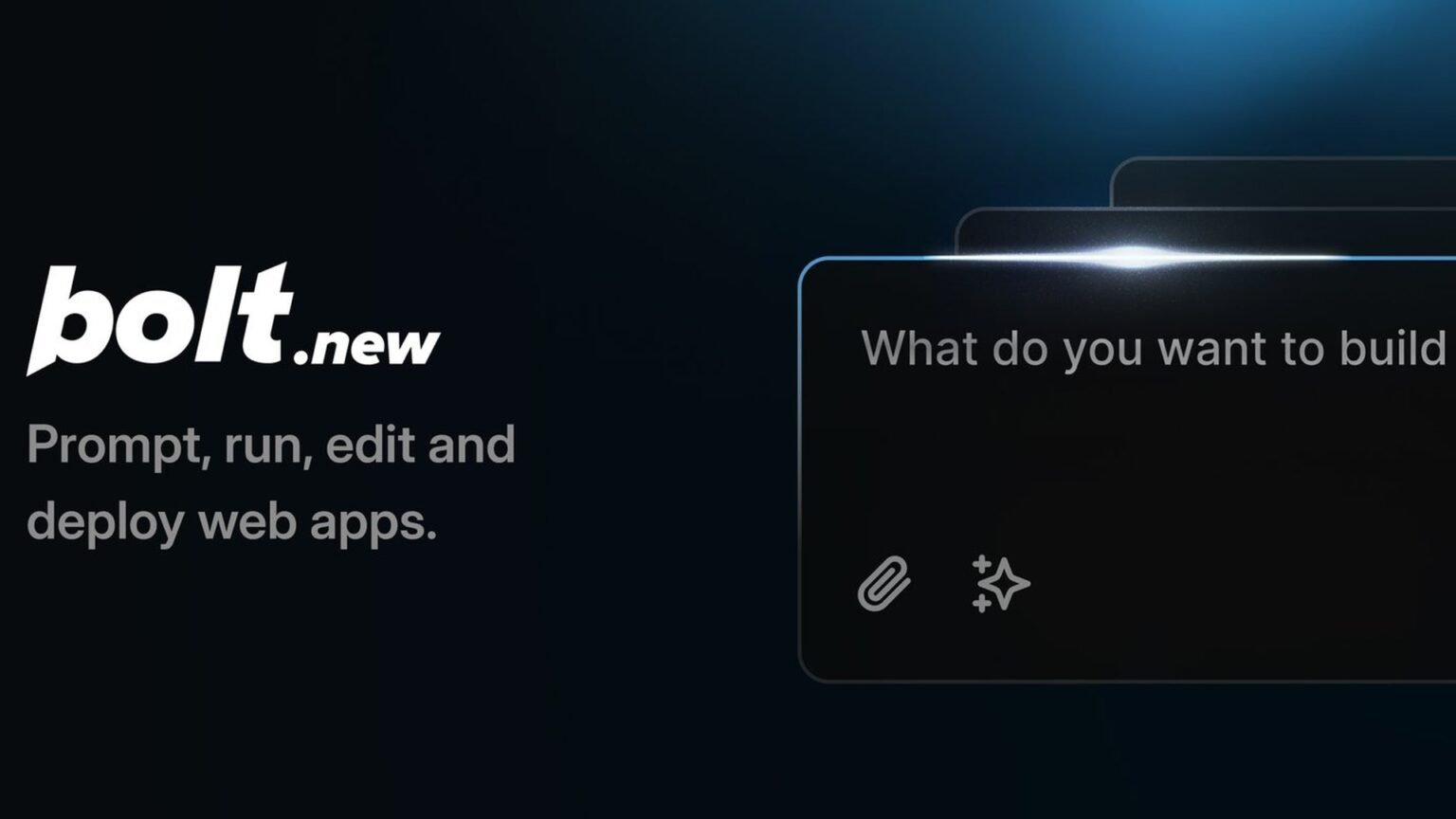
Bolt.new from StackBlitz is the cleanest expression of the browser-native app builder thesis. StackBlitz built its reputation on web-based development environments, and Bolt.new extends that into prompt-driven app creation. The product emphasizes generating, running, editing, and iterating on full-stack web apps directly in the browser, which gives it a distinctive feel compared with tools that are more tightly framed as design-to-code or cloud IDE experiences.
Output quality is strongest when you want a credible working app quickly and you value the speed of the loop. Bolt.new is not just a mockup generator. It is designed to produce runnable projects and let you keep changing them in place. That makes it attractive to product teams, indie hackers, and developers who want to test ideas without context-switching into a local environment. The live preview and immediate editability are central to the experience.
On supported stacks, Bolt.new is most naturally associated with modern JavaScript and TypeScript web app workflows because it sits on StackBlitz’s web development foundation. Deployment and handoff depend on the exact path you choose, but code ownership is clear: you can inspect and work with the generated project rather than being trapped in a no-code abstraction. For many users, that is the line between toy and tool.
Bolt.new ⭐ Editor’s Pick
Best for: Builders who want a fast in-browser full-stack app workflow with direct code access
What works
Watch out for
Pros
Cons
v0 verdict: best for frontend quality and Vercel-native teams
v0 began as a way to generate UI from prompts and has expanded well beyond that initial framing. It still carries that DNA. In this group, v0 is the product most likely to impress users with the polish of its generated React and Next.js output, especially when the target is a modern web interface that should fit naturally into the Vercel ecosystem. Vercel’s own positioning around v0 connects it closely to design, component generation, and app scaffolding for web teams.
That frontend strength is the reason many teams start with v0 even when they are not sure they need a full app-generation agent. If your workflow already centers on Next.js, React, and deployment to Vercel, v0 can feel less like a separate tool and more like an acceleration layer for the stack you already use. The generated code is meant to be taken seriously, edited, and shipped, not merely copied from a screenshot.
The limitation is also clear. v0 is at its best when your target architecture aligns with Vercel’s world. If you need broader language flexibility, a more neutral runtime story, or a workflow that starts from backend orchestration rather than interface generation, other tools may fit better. Code ownership is not the issue here; ecosystem fit is.
v0
Best for: Product and design-heavy teams building React and Next.js apps on Vercel
What works
Watch out for
Pros
Cons
📌 Where v0 stands out. If your team already builds with React, Next.js, and Vercel, v0 often has the shortest path from prompt to production-ready frontend.
git clone <your-exported-project>
cd <your-project>
npm install
npm run dev
Lovable verdict: best for startup-style prototyping and fast publishing
Lovable, formerly associated with the GPT Engineer brand, has carved out a distinct position by focusing on rapid product creation with a strong emphasis on simplicity. The pitch is straightforward: describe what you want, generate the app, iterate conversationally, and publish quickly. That makes Lovable especially attractive to founders, operators, and nontraditional builders who care less about framework ideology and more about getting a convincing product into users’ hands.
Output quality is often strongest at the prototype and early product layer. Lovable is good at turning a rough concept into something that looks and behaves like a real SaaS or internal tool, which is exactly what many early-stage teams need. It is less about maximizing architectural flexibility and more about compressing the path from idea to usable software. For some buyers, that is a feature, not a compromise.
Code ownership and export matter here because startup teams frequently outgrow their first tool. Lovable’s positioning around editable code and publishing helps reduce the fear that a prototype will become a dead end. The main caution is that teams with very specific infrastructure requirements may still prefer a tool with deeper alignment to their target stack from day one.
Lovable
Best for: Startup teams, solo founders, and nontraditional builders shipping prototypes fast
What works
Watch out for
Pros
Cons
“Lovable is easiest to recommend when speed to a convincing product matters more than stack purity.”
Alatirok editorial assessment
Pricing, deployment, and code ownership are where the real buying decision happens
The marketing pages for all four products emphasize speed, but the practical decision usually comes down to three things. First, how metered is the experience? App-generation tools often use credits, message limits, or plan-based usage controls that can materially change the cost of iteration. Second, how close is deployment to generation? Replit and Vercel have obvious advantages when the builder sits next to the hosting platform. Third, can you take the code and continue elsewhere without pain?
That last point matters more than many buyers realize. A build-an-app agent is most valuable when it creates leverage without creating lock-in. Replit, Bolt.new, v0, and Lovable all present themselves as code-generating products rather than no-code black boxes. Even so, the degree of ecosystem gravity differs. v0 is most attractive inside the Vercel orbit. Replit Agent is strongest inside Replit’s cloud workflow. Bolt.new feels relatively neutral at the browser workflow level. Lovable is optimized for speed to product, which can be ideal early and less decisive later.
If your team already knows where the app will live, start there. If you do not, choose the tool whose iteration loop best matches how your team thinks. That tends to matter more than feature checklist comparisons.
⚠️ Pricing note. Plan details and usage limits change frequently for AI products. Check the official pricing pages before buying: Replit, StackBlitz, Vercel, and Lovable.
Which should you pick?
Best overall: Bolt.new
For most readers, the answer is simpler than the category noise suggests. Pick Bolt.new if you want the best overall balance of browser-native speed, full-stack ambition, and direct code iteration. Pick Replit Agent if you want the app builder, runtime, and deployment path in one hosted environment. Pick v0 if frontend quality and Vercel alignment matter most. Pick Lovable if your priority is turning an idea into a polished, testable product as fast as possible.
None of these tools removes the need for judgment. The best teams use them as acceleration layers, not substitutes for product thinking, architecture review, or QA. The good news is that the category has matured enough that the choice can now be made on workflow fit rather than on whether the tools work at all.
| Use case | Best choice | Why | Runner-up |
|---|---|---|---|
| Fastest browser-based full-stack app generation | Bolt.new | Strong prompt-to-app loop with runnable output directly in the browser | Replit Agent |
| All-in-one hosted environment with deployment nearby | Replit Agent | Generation, editing, runtime, and deployment live in one Replit workflow | Bolt.new |
| Best frontend quality for React and Next.js teams | v0 | Especially strong for modern UI generation inside the Vercel ecosystem | Bolt.new |
| Startup prototype or MVP this week | Lovable | Optimized for quick product creation and publishing | Bolt.new |
| Team already standardized on Vercel | v0 | Closest ecosystem fit for design-to-code and app scaffolding | Replit Agent |
| Nontraditional builder who wants minimal setup | Replit Agent | Hosted workflow reduces local tooling overhead | Lovable |
Frequently asked questions
Build-an-app agents are AI products that take a natural-language prompt and generate a runnable application, usually with a live preview and editable source code. Examples include Replit Agent, Bolt.new, v0, and Lovable.
Tools like Cursor and Claude Code primarily assist developers inside an engineering workflow, while build-an-app agents are designed to generate an app from a prompt and keep iterating from there. For the IDE-assistant category, see our comparison at Cursor vs Windsurf vs Claude Code.
All four products position themselves around editable code rather than pure no-code lock-in, but the practical answer depends on ecosystem fit. Bolt.new and Replit Agent are especially compelling if you want to work directly with a runnable project, while v0 is strongest when that code will continue into a Vercel-centric stack.
Primary sources
- Replit Agent — Replit
- Replit Pricing — Replit
- Bolt.new — StackBlitz
- StackBlitz Pricing — StackBlitz
- v0 — Vercel
- Vercel Pricing — Vercel
- Lovable — Lovable
Last updated: May 20, 2026. Related: Agent Infrastructure.