
Unframe Series B was announced May 19 with $50 million led by Highland Europe, alongside a claim of more than $100 million in total contract value over 12 months. That headline number is notable, but it is not the same thing as annual recurring revenue, and that distinction matters if you are trying to understand what investors actually backed.
A fast-growing enterprise AI company, with one metric that needs careful reading
$50M
Series B
Announced May 19, 2026
$100M+
12-month TCV
Total contract value, not ARR
400%
Net revenue retention
Expansion within existing customers
~130
Employees
About 70 in Israel
Unframe said it has raised a $50 million Series B led by Highland Europe, with existing investors Bessemer Venture Partners, Craft Ventures, TLV Partners, Third Point Ventures, Cerca Partners, and Vintage Investment Partners also participating. The round was announced on May 19, 2026, in coverage first detailed by CTech and Globes.
The headline-grabbing operating figure attached to the round is $100 million-plus in total contract value over 12 months. That is a serious number for a company founded in 2024. It also is not ARR. In the coverage around Unframe Series B, several outlets and social posts have blurred those terms together. Readers should not. TCV measures the total value of signed contracts across their full terms. ARR measures annualized recurring revenue. Those can be related, but they are not interchangeable.
That distinction does not make the company’s growth less impressive. It changes how the market should interpret it. If investors underwrote Unframe Series B against contracted volume and expansion inside large accounts, they are betting on enterprise adoption velocity and deal quality, not just a clean SaaS revenue multiple.
Unframe reported $100M+ in 12-month TCV, not $100M ARR. Those metrics answer different questions about revenue quality and timing.
The numbers behind the round
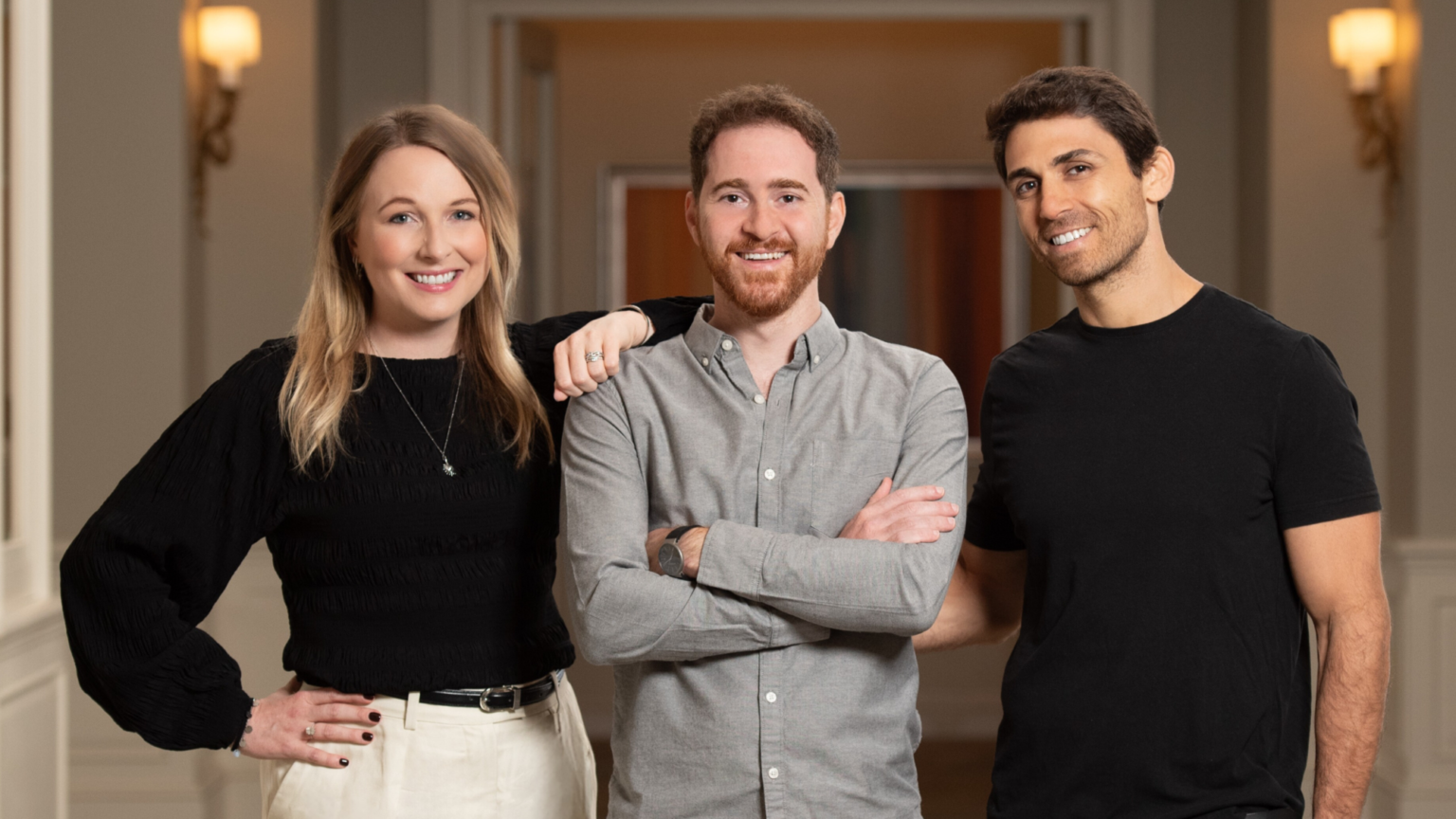
The company facts disclosed across CTech, Globes, Axios Pro and Unframe’s own materials are unusually compact and unusually strong. Unframe was founded in 2024 by CEO Shay Levi, COO Larissa Schneider, and Adi Azarya. It is headquartered in Israel, has roughly 130 employees, and about 70 of them are in Israel, with the rest split between California and Berlin.
The operating metrics are what turned this into a market signal rather than just another AI funding announcement. Unframe said it surpassed $100 million in total contract value in 12 months and reported 400% net revenue retention. It also said its customers span the Fortune 500. Those are the kinds of numbers that suggest the company is not selling lightweight experimentation software. It is landing inside large enterprises and then expanding quickly.
The 400% NRR figure stands out even more than the TCV number. In traditional SaaS, 130% to 150% net revenue retention is often treated as elite. A 400% figure implies that existing customers are increasing spend at a pace far beyond normal seat expansion. That can happen when initial deployments begin as narrow pilots and then broaden into multiple workflows, or when pricing scales with usage as adoption spreads. Either way, the signal in Unframe Series B is that expansion revenue appears to be doing a lot of the work.
| Metric | Reported figure | Why it matters |
|---|---|---|
| Series B size | $50 million | Growth capital for hiring, delivery, and enterprise expansion |
| 12-month TCV | $100 million+ | Shows contracted demand, but not the same as recurring annual revenue |
| Net revenue retention | 400% | Suggests very large expansion inside existing accounts |
| Headcount | ~130 | Indicates a sizable delivery and go-to-market buildout for a 2024 company |
Why Highland Europe leading matters
The lead investor is not a trivial detail here. Highland Europe is a London-based growth-stage firm with a track record in European enterprise software, including investments in companies such as Snyk and JFrog. That makes the round look less like a frontier-model bet and more like an enterprise infrastructure bet wrapped in AI language.
The returning syndicate reinforces that reading. Bessemer, Craft Ventures, TLV Partners, Third Point Ventures, Cerca Partners, and Vintage Investment Partners all came back into the round, according to the company’s announcement coverage. Repeat participation does not guarantee anything about future performance, but it usually means earlier investors saw enough in customer behavior and execution to keep backing the company at the next stage.
For the market, Unframe Series B reads as a financing for an AI delivery layer aimed at large organizations that already have budgets, data, and pressure to ship. That is different from backing a model lab. It is also different from backing a horizontal chatbot vendor. The investor mix suggests confidence that the hard part of enterprise AI is implementation and rollout, not just access to models.
“AI platform designed to help organizations turn business needs into operational AI solutions in days rather than months.”
Unframe company description
The founders built for enterprise delivery, not consumer AI
Unframe’s founding team is another clue to how the company wants to be understood. The company was founded in 2024 by Shay Levi, Larissa Schneider, and Adi Azarya. The public framing around the business has been consistent: Unframe is an enterprise AI platform, sometimes described by Axios Pro as an AI delivery platform, built to turn business requirements into working operational systems quickly.
That positioning matters because it places Unframe in a crowded but still underbuilt layer of the stack. Many enterprises have signed model deals, run workshops, and identified use cases. Far fewer have pushed those projects into production with governance, integration, and measurable business outcomes. The company’s pitch is that it can compress that timeline from months to days.
In that sense, Unframe Series B is also a financing around a thesis: the bottleneck in enterprise AI is no longer awareness. It is execution. If that thesis is right, the winners may look less like pure software seats and more like platforms that package integration, orchestration, controls, and deployment into something enterprises can actually buy.
Unframe is being financed as an enterprise execution layer, not as a model company.
TCV is not ARR, and that is the key analytical point
This is the section where the coverage needs to slow down. Total contract value is the aggregate value of signed agreements over their contractual lives. Annual recurring revenue is the annualized value of recurring subscription revenue at a point in time. A three-year contract worth $3 million contributes $3 million to TCV, but only about $1 million to ARR if it is recognized as recurring annual revenue. Services, implementation fees, minimum commitments, and non-recurring components can also affect TCV depending on how a company defines and reports it.
Nothing in the primary reporting suggests Unframe is trying to blur that line. The opposite is true: the company’s own framing, as cited by CTech and Globes, is $100 million-plus in contracts or total contract value over 12 months. The confusion has come from how quickly the broader AI market tends to translate any large contracted number into ARR shorthand.
That is why the most important takeaway from Unframe Series B is not that the company has reached some canonical SaaS threshold. It is that it has signed a very large amount of enterprise business very quickly. Investors can absolutely fund that. Buyers can absolutely care about that. Analysts just should not treat it as the same revenue metric.
The 400% NRR figure adds another layer. If Unframe is landing with smaller initial scopes and then expanding across departments or workflows, TCV may rise sharply before a clean ARR picture is visible from the outside. That pattern is common in enterprise software with heavy implementation or phased rollouts. It can produce excellent businesses. It can also make headline comparisons to pure-play SaaS companies less useful.
For readers trying to benchmark the round, the cleanest framing is simple: Unframe has shown exceptional early enterprise contracting momentum. It has not publicly disclosed ARR in the source materials tied to this round.
TCV captures total signed contract value across terms. ARR captures annualized recurring revenue. Treating them as the same can overstate software scale.
{
  "example_contract": {
    "term_years": 3,
    "total_value_usd": 3000000,
    "tcv_usd": 3000000,
    "arr_usd": 1000000
  }
}The implementation gap thesis is bigger than one startup
Unframe’s pitch lands because it addresses a problem many large companies now admit openly: they have AI ambition, but not enough shipped systems. Enterprises have spent the last two years buying access to models, training teams, and running proofs of concept. The harder step is connecting those efforts to real workflows, internal systems, and governance requirements.
That is where the company’s positioning overlaps with the work global consultancies have been doing. PwC, Accenture, Deloitte and others have all built major AI practices around training, workflow redesign, and enterprise deployment. Unframe’s argument is that a productized platform can do more of that work in software, with less dependence on custom consulting motion.
If that framing holds, the upside is large. The budget line for enterprise AI implementation may end up sitting somewhere between software and services. That is a useful place to be if you can standardize enough of the delivery layer to keep margins software-like while still solving messy enterprise problems. The investor interest behind Unframe Series B suggests some growth investors think that wedge is real.
What the round does and does not tell us about valuation
Bottom line: a strong round, but read the metric correctly
There is an understandable temptation to reverse-engineer a valuation from the round size and the operating metrics. That would be guesswork. None of the primary sources cited for the financing disclosed a post-money valuation, and it would be irresponsible to present one as fact.
What can be said is narrower and still useful. A $50 million Series B led by a growth-stage enterprise software investor, following $100 million-plus in 12-month TCV and 400% NRR, places Unframe in the part of the market where investors are willing to pay up for speed, account expansion, and enterprise relevance. It does not tell us the exact multiple. It does tell us the company has crossed from early promise into a scale conversation.
That is the practical meaning of Unframe Series B. The company is no longer being judged as a speculative AI startup with a good deck. It is being judged on whether it can turn contracted demand into durable revenue, keep expansion rates high as deployments mature, and prove that the implementation layer can become a repeatable software business rather than a services-heavy one.
The round size, lead investor, participant list, TCV, NRR, founding date, and headcount are public. The valuation was not disclosed in the cited primary sources.
Frequently asked questions
Highland Europe led the $50 million Series B announced on May 19, 2026, with participation from existing investors including Bessemer Venture Partners and Craft Ventures, according to the cited deal coverage.
Unframe describes itself at unframe.ai as an AI platform that helps organizations turn business needs into operational AI solutions in days rather than months. Axios Pro referred to it as an AI delivery platform.
Net revenue retention measures how much revenue from existing customers grows over time. A 400% figure is far above the levels usually considered strong in software, which is why it suggests very rapid expansion inside accounts. The round coverage in Globes and CTech is notable for pairing that with large contract volume.
Primary sources
- CTech: Unframe raises $50M Series B — CTech by Calcalist
- Globes: Unframe exceeds $100M contracts — Globes
- Unframe official website — Unframe
- Highland Europe official website — Highland Europe
Last updated: May 22, 2026. Related: Capital.