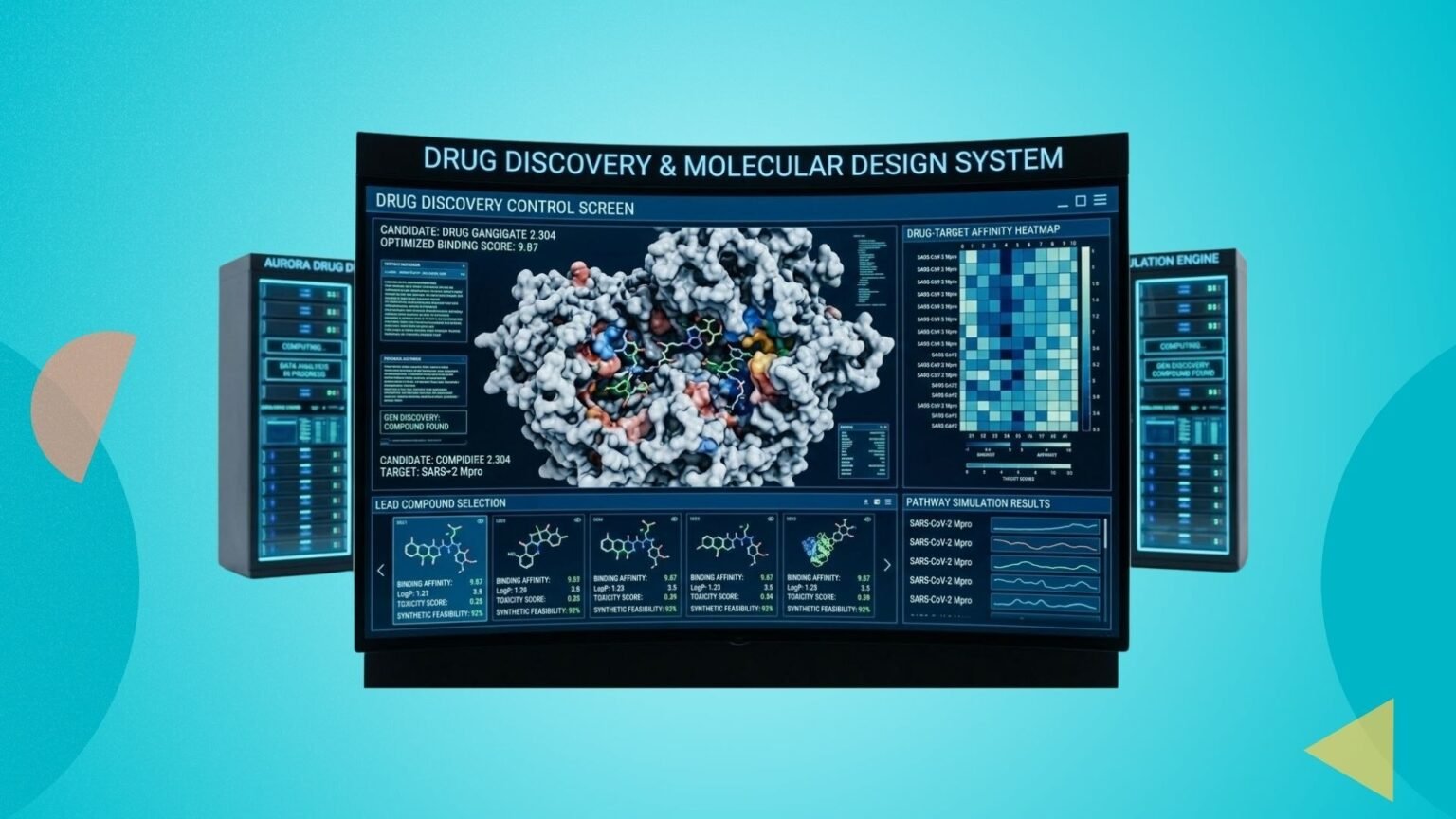

Five companies raised billions to industrialize AI drug discovery. We compare their platforms, pharma deals, and what is actually in human trials in 2026.
The state of AI drug discovery in 2026
AI drug discovery in 2026 is richly funded and technically real, but clinically early — billions have flowed into a handful of platforms, yet only a few AI-designed molecules have produced any human efficacy data, and exactly zero have reached a Phase 3 readout. The gap between what these companies have raised and what they have proven in patients is the single most important thing to understand about the field.
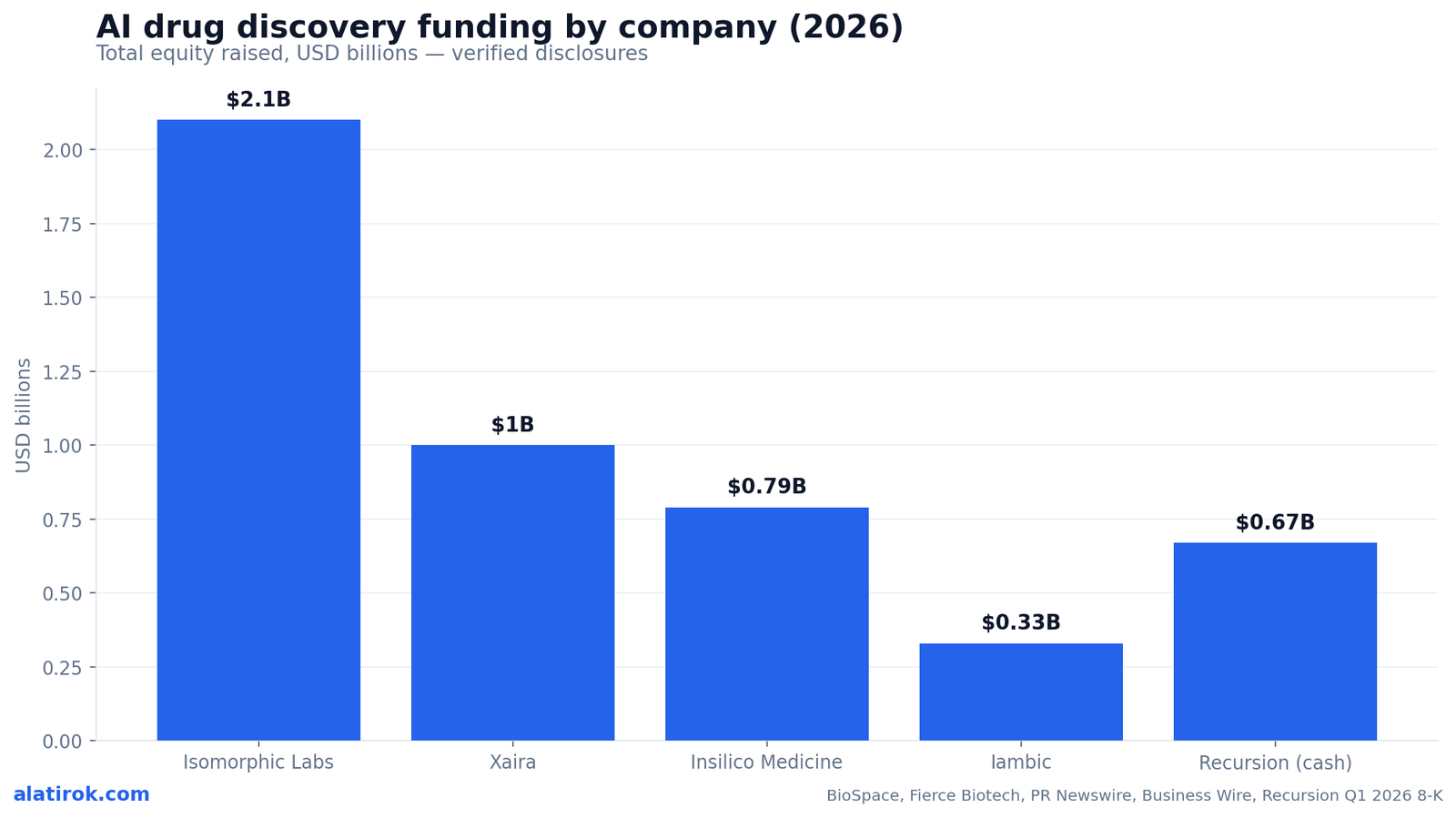
The money tells one story. In May 2026, Alphabet-backed Isomorphic Labs raised a $2.1 billion Series B led by Thrive Capital, on top of nearly $3 billion in headline value from partnerships with Eli Lilly and Novartis. Xaira Therapeutics launched in April 2024 with roughly $1 billion committed — among the largest seed rounds in biotech history. Insilico Medicine went public in Hong Kong in December 2025, raising about $293 million in the city’s largest biotech IPO of the year.
The clinic tells another. The first drug in history with both its target and its molecule designed by generative AI — Insilico’s rentosertib — only cleared Phase 2a in mid-2025, in a 71-patient trial. Isomorphic, for all its funding and modeling firepower, had its first candidate cleared for human testing in January 2026 and has no efficacy data yet. This article compares the five companies defining the category, and is honest about how few have patients on drug.
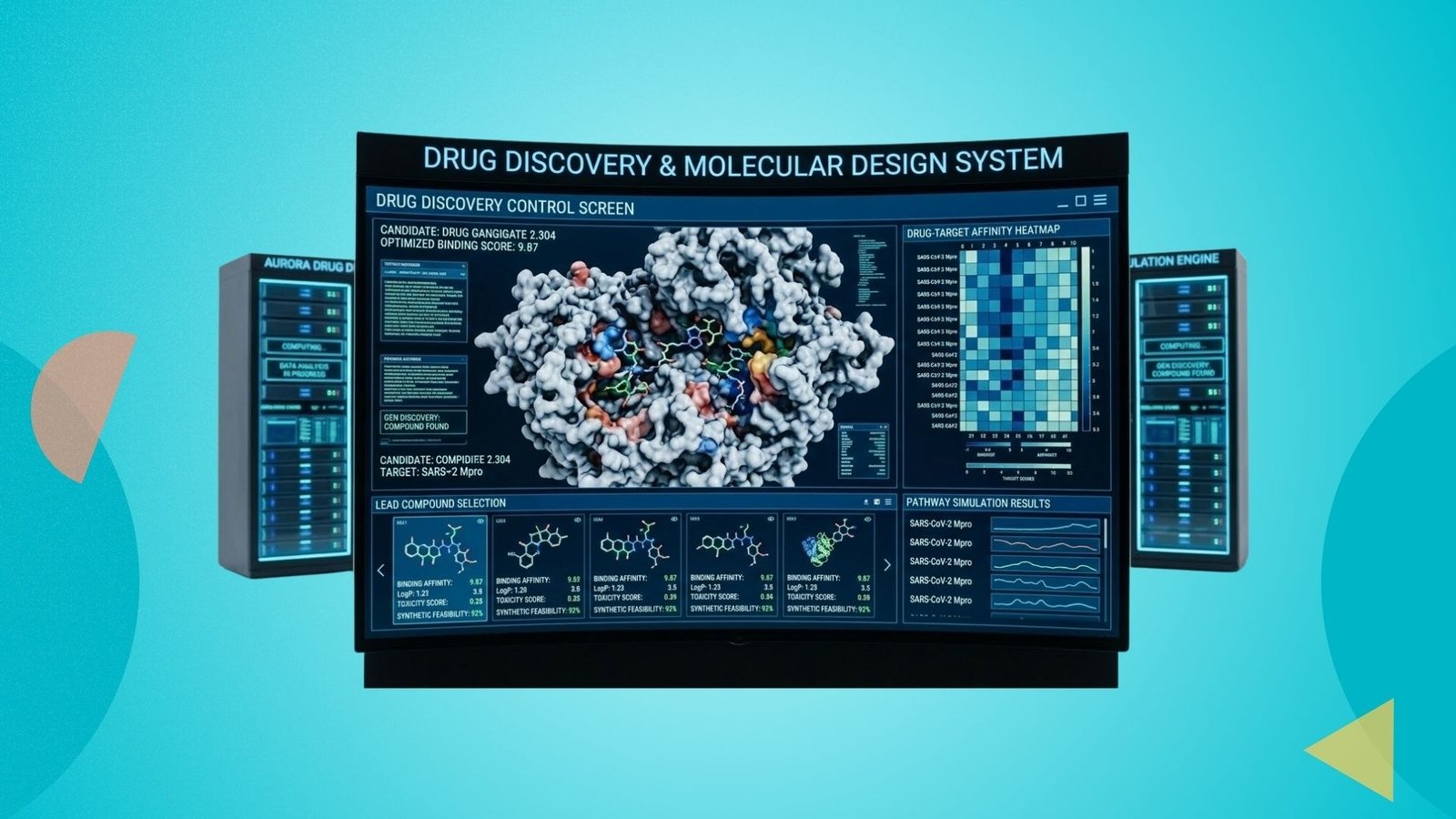
AI drug discovery platforms compared: the five leaders
The five leading AI drug discovery companies split cleanly into two camps: asset-builders with molecules in patients (Recursion, Insilico, Iambic) and platform-builders racing to their first clinical candidate (Isomorphic, Xaira). Confusing the two is the most common mistake investors and operators make in this space.
Isomorphic Labs, spun out of Google DeepMind in 2021, is the purest platform play. Its engine extends AlphaFold 3 into a full drug-design system (branded IsoDDE) and it monetizes through pharma partnerships rather than owning a deep clinical pipeline — though it is now staffing up to run its own trials. Xaira, incubated by ARCH Venture Partners and Foresite Labs and led by former Genentech CSO Marc Tessier-Lavigne, is even earlier: it has publicly focused on building foundation-scale generative models (including a cell model called X-Cell) before naming clinical programs.
Recursion is the industrialized wet-lab giant, running millions of automated cellular experiments to map biology at scale; it absorbed UK-based Exscientia in a 2024 merger to add generative chemistry. Insilico Medicine pairs a generative target-discovery engine (PandaOmics) with a molecule generator (Chemistry42), and has pushed more candidates into the clinic than anyone. Iambic Therapeutics is the focused oncology specialist, using physics-informed AI to design selective small molecules like its brain-penetrant HER2 inhibitor.
A company can have a brilliant platform and zero patients, or a thin platform story and real clinical data. Funding tracks platform hype; survival tracks clinical readouts. Always ask which one a given headline is measuring.
| Company | Founded | Core platform | Model | Most advanced asset |
|---|---|---|---|---|
| Isomorphic Labs | 2021 | IsoDDE (AlphaFold 3 lineage) | Platform / partnerships | ISM8969 — IND cleared Jan 2026 |
| Recursion | 2013 | Recursion OS + Exscientia chemistry | Asset + partnered | Multiple Phase 1/2 oncology |
| Insilico Medicine | 2014 | PandaOmics + Chemistry42 | Asset + partnered | Rentosertib — Phase 2a complete |
| Xaira Therapeutics | 2024 | Foundation models + X-Cell | Platform (pre-clinical) | No disclosed clinical asset |
| Iambic Therapeutics | 2020 | Physics-informed AI (NeuralPLexer) | Asset (oncology) | IAM1363 — Phase 1/1b |
Funding and pharma partnerships: where the billions went
$2.1B
Isomorphic Series B
Led by Thrive Capital, May 2026
~$3B
Lilly + Novartis deal value
Mostly future milestones
$293M
Insilico HK IPO
Largest 2025 HK biotech listing
Across these five companies, AI drug discovery has attracted well over $7 billion in equity and roughly $3 billion in additional partnership value — but the capital is wildly unevenly distributed, and most of the biggest numbers are milestone payments that may never be earned.
Isomorphic Labs sits at the top. Its $2.1 billion Series B (May 2026) drew Alphabet, GV, MGX, Temasek, CapitalG and the UK Sovereign AI Fund alongside lead investor Thrive Capital. Its commercial validation comes from two 2024 pharma deals: Eli Lilly paid $45 million upfront with up to $1.7 billion in milestones, and Novartis paid $37.5 million upfront with roughly $1.2 billion in milestones — nearly $3 billion in potential value, but only about $82.5 million guaranteed.
Xaira’s ~$1 billion seed (April 2024) came from ARCH, Foresite, Sequoia, Lux, NEA, Lightspeed and others. Iambic raised over $100 million in November 2025 from ARK, Regeneron Ventures, Mubadala, the Qatar Investment Authority and Sequoia, bringing its total to roughly $334 million. Insilico has raised more than $500 million in venture capital and added ~$293 million from its Hong Kong IPO, at an implied valuation near $1.6–1.7 billion; it also holds partnerships with Sanofi and Eli Lilly. The pattern is clear: enormous capital is concentrated in the platform companies that have proven the least in humans.
What is actually in clinical trials in 2026
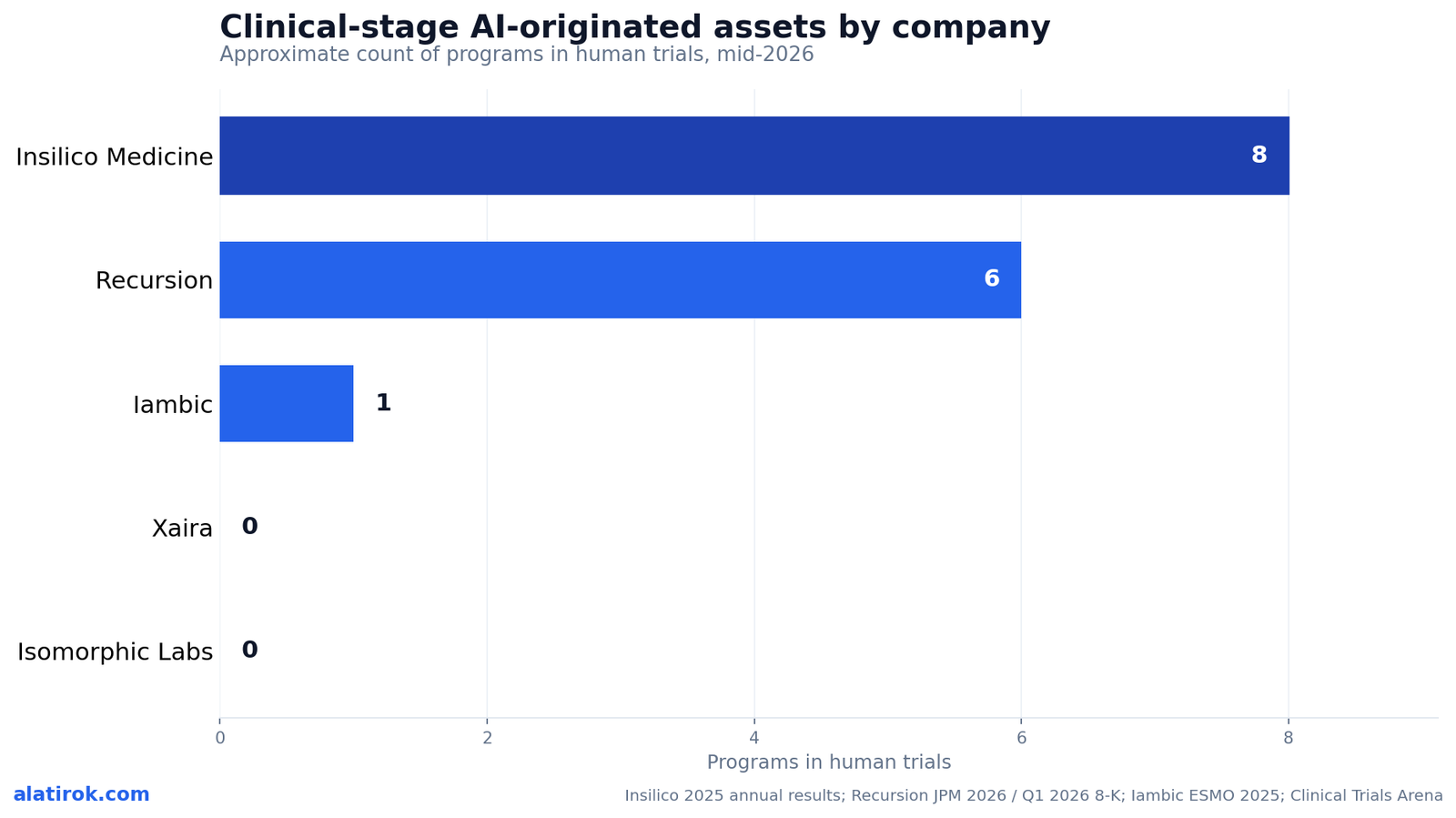
As of mid-2026, only three of the five leaders have molecules in human trials, and exactly one — Insilico’s rentosertib — has completed a randomized Phase 2 study; no AI-designed drug from any of these companies has reported Phase 3 data. This is the reality check the funding headlines obscure.
Insilico is the clinical leader by depth. It has secured IND clearance for 13 programs and initiated three Phase 2 trials. Its flagship, rentosertib (ISM001-055), a TNIK inhibitor for idiopathic pulmonary fibrosis, is the first drug with both target and molecule AI-designed to clear Phase 2a — published in Nature Medicine in 2025. Recursion, post-Exscientia, runs roughly ten clinical and preclinical programs, with named Phase 1/2 oncology assets including REC-617 (CDK7), REC-1245 (RBM39) and REC-4539 (LSD1), plus REC-4881 for familial adenomatous polyposis in a Phase 1b/2 study.
Iambic has its lead asset, IAM1363 — a brain-penetrant HER2 inhibitor — in a Phase 1/1b trial, with early monotherapy activity reported at ESMO in October 2025. Isomorphic only had its first candidate (ISM8969) cleared by the FDA in January 2026 and is recruiting clinical staff for its first-in-human studies. Xaira has no disclosed clinical asset at all. So the honest scoreboard is: one Phase 2 readout, a cluster of Phase 1 oncology programs, and two well-funded labs that have yet to put a molecule into a patient.
“A computer can design a molecule in months. A human body still takes years to tell you whether it works — and Phase 2 is where the AI premium tends to evaporate.”
Surya Koritala, founder of Cyntr and Loomfeed
The rentosertib milestone: AI drug discovery’s first real proof
Rentosertib is the most important clinical result in AI drug discovery to date because it is the first time both the disease target and the drug molecule were generated by AI and then validated in a randomized, placebo-controlled human trial. Everything else in the field is either earlier or partnership-stage.
The Phase 2a GENESIS-IPF study enrolled 71 idiopathic pulmonary fibrosis patients across 22 sites in China. Patients on the 60 mg once-daily dose showed a mean improvement in forced vital capacity (FVC) of +98.4 mL over 12 weeks, versus a mean decline of −20.3 mL in the placebo group — a clinically meaningful direction for a disease where lung function only goes down. Biomarker analysis showed reductions in profibrotic proteins and a rise in the anti-inflammatory marker IL-10. The results were published in Nature Medicine in 2025.
Two caveats keep this from being a victory lap. First, 71 patients over 12 weeks is a signal, not proof — IPF drugs have failed in larger, longer trials before. Second, a single asset clearing Phase 2a validates a workflow, not an entire industry. Insilico itself frames it as the start: it has since gained IND clearance for an inhaled formulation, the world’s first AI-designed candidate to enter a direct-to-lung study. The molecule went from program start to Phase 1 in about 30 months — roughly half the conventional timeline. That speed, not the efficacy magnitude, is the durable claim.
The headline number: +98.4 mL FVC gain on rentosertib 60 mg vs −20.3 mL on placebo over 12 weeks, in 71 IPF patients — the first randomized human proof that an end-to-end AI-designed drug can move a cScoring the AI drug discovery leaders
On a blend of platform strength, clinical progress, capital position and near-term catalysts, Insilico and Recursion lead on proof, Isomorphic leads on potential, and Xaira and Iambic occupy the extremes of earliest-stage and most-focused. No single company wins every axis — which is exactly why the field is still wide open.
These scores weight demonstrated clinical progress heavily, because in drug development a Phase 2 readout is worth more than a brilliant model with no patients. Reasonable people who weight platform optionality higher would rank Isomorphic and Xaira above Iambic. Treat the numbers as a structured opinion, not a verdict.
Insilico Medicine
Best for: Investors who want AI drug discovery with actual patient data
What works
Watch out for
Recursion
Best for: Believers in high-throughput, data-first drug discovery
What works
Watch out for
Isomorphic Labs
Best for: Those betting on AlphaFold-class modeling at scale
What works
Watch out for
Iambic Therapeutics
Best for: Investors who prefer a tight, high-conviction pipeline
What works
Watch out for
Xaira Therapeutics
Best for: Long-horizon believers in foundation-model biology
What works
Watch out for
What to watch next in AI drug discovery
Real platforms, real molecules, unproven at the finish line
The next 18 months will be decided in the clinic, not the data center: the questions that matter are whether rentosertib confirms in a larger trial, whether Isomorphic’s first molecules dose patients on schedule, and whether any AI-originated asset reaches a Phase 3 readout.
Three catalysts deserve a calendar entry. First, Insilico’s larger confirmatory work on rentosertib — a positive larger trial would convert a promising signal into a category-defining result. Second, Isomorphic’s first-in-human starts, expected to ramp through late 2026; the company has said it is staffing up, and the gap between its modeling reputation and its clinical record is the field’s biggest open question. Third, Iambic’s IAM1363 expansion data and its stated goal of three drugs in the clinic during 2026.
The meta-question underneath all of it: does AI compress the timeline and cost of discovery without simply moving the failure point downstream? Early data suggests AI-designed molecules clear Phase 1 (safety) at unusually high rates, but Phase 2 (efficacy) — where most drugs die — has not yet been conquered. Until an AI-originated drug clears Phase 3 and reaches the market, the honest framing is that AI has transformed the front of the pipeline and barely touched the back. The companies that survive to their next readout, with cash and focus intact, will write the next chapter.
Pros
Cons
Builder’s take
I build AI orchestration systems for a living, so I read these pipelines the way I read a benchmark suite — skeptically. Here is what I tell people who ask whether AI drug discovery is real in 2026.
- The funding is real, the molecules are real, but the validation gap is enormous. A computer can design a molecule in months; a human body still takes years to tell you if it works. Phase 2 is where the AI premium evaporates.
- Watch the spread between ‘candidates nominated’ and ‘patients dosed.’ Insilico has nominated 30 preclinical candidates but has three Phase 2 trials; Isomorphic has world-class models and effectively zero human efficacy data. The narrative outruns the clinic by years.
- Rentosertib is the single most important data point in the field — first drug with both target and molecule AI-designed to clear Phase 2a. One 71-patient trial in China is not a platform validation, but it is the only proof we have that the loop closes.
- The platform companies (Xaira, Isomorphic) and the asset companies (Recursion, Insilico, Iambic) are playing different games. Don’t compare a foundation-model lab to a company with patients on drug — they’re priced on completely different risks.
- If you only track one number per company, track cash runway against time-to-readout. Recursion cut 20% of staff to buy runway into 2028. In this field, surviving to your next data readout is the whole game.
Frequently asked questions
AI drug discovery uses machine learning to accelerate steps in developing new medicines — identifying disease targets, designing candidate molecules, and predicting their properties. Generative models propose novel compounds and structure-prediction systems (like AlphaFold 3) model how proteins behave, compressing early discovery from years to months. It does not replace human clinical trials, which still determine whether a drug actually works.
No. As of mid-2026, no drug originated by these AI platforms has been approved or even reported Phase 3 results. The most advanced is Insilico’s rentosertib, the first drug with both target and molecule AI-designed to clear a randomized Phase 2a trial. Approval requires successful Phase 3 studies, which none of the leading AI-discovered candidates have reached yet.
Insilico Medicine is the clinical leader, with IND clearance for 13 programs, three Phase 2 trials, and the only completed Phase 2a study (rentosertib for idiopathic pulmonary fibrosis). Recursion follows with roughly ten clinical and preclinical programs, mostly in early-stage oncology. Iambic has one asset in Phase 1/1b. Isomorphic Labs and Xaira had no human efficacy data at the time of writing.
The leading companies have collectively raised well over $7 billion in equity. Isomorphic Labs raised a $2.1 billion Series B in May 2026; Xaira launched with about $1 billion in 2024; Insilico has raised more than $500 million in venture capital plus ~$293 million from its 2025 Hong Kong IPO; and Iambic has raised roughly $334 million. Pharma partnerships add several billion more in potential milestone payments.
Phase 1 mainly tests safety, where AI-designed molecules already do well because AI optimizes drug-like properties such as solubility and metabolic stability. Phase 2 tests whether the drug actually treats the disease — the stage where most drugs historically fail. AI has not yet shown it improves Phase 2 success rates, so a completed Phase 2a (like rentosertib’s) is the field’s most meaningful validation so far.
Platform companies (like Isomorphic Labs and Xaira) build AI engines and monetize mainly through pharma partnerships, often before owning a deep clinical pipeline. Asset companies (like Recursion, Insilico, and Iambic) use their AI to develop their own drug candidates and advance them into human trials. Platform companies tend to attract larger funding on potential; asset companies are judged on clinical data.
Primary sources
- Isomorphic Labs secures $2.1 billion funding — BioSpace
- Alphabet’s Isomorphic stacks Lilly, Novartis deals worth nearly $3B — Fierce Biotech
- Recursion and Exscientia officially combine — StockTitan
- Recursion lays off 20% of staff after pipeline cutbacks — Fierce Biotech
- A generative AI-discovered TNIK inhibitor for IPF: a randomized phase 2a trial — Nature Medicine
- Insilico Medicine lists on Hong Kong Stock Exchange — PR Newswire
- New AI drug discovery powerhouse Xaira rises with $1B in funding — Fierce Biotech
- Iambic raises over $100M to advance AI-discovered therapeutics — Business Wire
- Iambic shares IAM1363 Phase 1/1b data at ESMO 2025 — Iambic Therapeutics
- Isomorphic Labs prepares to launch trials for AI-designed drugs — Clinical Trials Arena
Last updated: May 31, 2026. Related: Products.