
The only neutral, protocol-literate ranking of the best agentic commerce platforms 2026 — scored on ACP, UCP, and AP2 support, universal cart, structured catalog feeds, and whether agentic checkout is actually live.
What are the best agentic commerce platforms 2026, ranked by protocol readiness?
The best agentic commerce platforms 2026, ranked by protocol readiness, are Shopify (#1), Salesforce Agentforce Commerce (#2), Adobe Commerce (#3), BigCommerce/Commerce (#4), Stripe-native ACP (#5), WooCommerce (#6), and Amazon (#7, intentionally walled). The ranking is not about features or price — it is about which platforms can actually sell to an AI shopping agent today, scored on the protocols that make that possible: the Agentic Commerce Protocol (ACP), the Universal Commerce Protocol (UCP), and the Agent Payments Protocol (AP2).
This matters because the agency-blog rankings you will find elsewhere score these platforms on storefront aesthetics and app marketplaces — the same criteria they used in 2020. None of that tells a commerce architect whether ChatGPT, Gemini, or Copilot can complete a purchase from their catalog without a human ever loading their checkout page. That capability — agentic checkout — is the only thing that distinguishes a platform that is genuinely ready for AI buyers from one that merely shows up in search.
Readiness in 2026 is a stack of four concrete things: a structured catalog feed an agent can read, a universal cart an agent can assemble across the journey, a checkout handoff that completes outside your storefront UI, and a payment-authorization layer that proves the agent had the buyer’s authority. We scored every platform below on all four, plus native support for the two competing transaction protocols (ACP and UCP) and the payment-auth standard (AP2). The result is the only neutral, protocol-literate ranking of the best agentic commerce platforms 2026 we could find.
Each platform earns a readiness score out of 10: 2 points each for native ACP and UCP support, 2 for AP2 / verifiable payment-auth, 1 for a universal cart primitive, 1 for an agent-readable structured catalog feed, and 2 for agentic checkout being live in production (not roadmap). No points for press-release intent.
Which platforms support ACP and UCP? The 2026 readiness matrix
Shopify, Adobe Commerce, and Salesforce Agentforce Commerce support both ACP and UCP natively; WooCommerce ships native ACP with community UCP; BigCommerce backs UCP; Stripe is the ACP reference implementation; and Amazon supports neither on its storefront. The matrix below is the fastest way to see exactly which platforms support ACP and UCP — and, just as importantly, which have the payment-auth and checkout pieces that turn protocol badges into completed transactions.
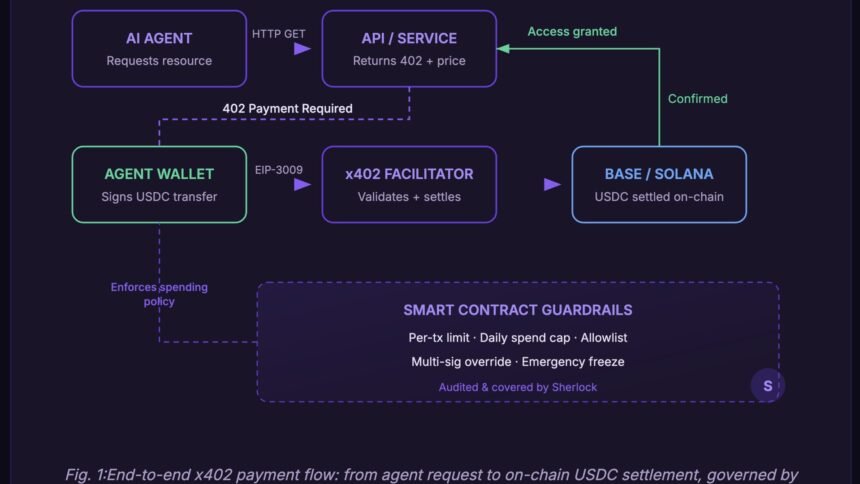
Two protocols are competing for the transaction layer, and the distinction drives the entire ranking. ACP, co-developed by OpenAI and Stripe and released under Apache 2.0, has been live in ChatGPT since September 2025 and powers Instant Checkout, which expanded to all U.S. ChatGPT users on February 16, 2026. UCP, co-developed by Google and Shopify and unveiled at NRF 2026 on January 11, covers the whole journey from discovery to post-purchase and lights up Google Search AI Mode, Gemini, and Microsoft Copilot. AP2 — Google’s Agent Payments Protocol, announced September 16, 2025 and since donated to the FIDO Alliance — sits underneath UCP as the payment-authorization layer, encoding every purchase as three signed mandates.
Read the matrix as a buying tool: the column that separates the winners from the also-rans is ‘agentic checkout live,’ not the protocol-support columns. Plenty of platforms have announced ACP or UCP intent; far fewer have a buyer completing a purchase through an agent in production today.
| Platform | ACP | UCP | AP2 payment-auth | Universal cart | Structured catalog feed | Agentic checkout live | Readiness /10 |
|---|---|---|---|---|---|---|---|
| Shopify | Yes (native) | Yes (co-author) | Yes (UCP-linked) | Yes (Agentic Storefronts) | Yes (Catalog API) | Live | 10 |
| Salesforce Agentforce Commerce | Yes (native) | Yes (native) | Yes (via UCP) | Yes | Yes | Live | 9 |
| Adobe Commerce | Yes (committed Feb 2026) | Yes (committed Feb 2026) | Yes (earlier commitment) | Yes | Yes | Partial / rolling out | 8 |
| BigCommerce / Commerce | Partial (via Stripe) | Yes (endorsed) | Roadmap | Yes (headless APIs) | Yes (Feedonomics) | Partial | 7 |
| Stripe-native ACP | Yes (reference) | Council member | SPT (own primitive) | Yes (per integration) | Merchant-supplied | Live (ChatGPT) | 7 |
| WooCommerce | Yes (10.7 native) | Community / building | Roadmap | Partial (Store API) | Yes (REST/MCP) | Partial / DIY | 6 |
| Amazon | No (storefront) | Council seat, no storefront support | No | Walled (Buy for Me) | Closed | Live in Amazon only | 4 |
1. Shopify — the most agentic-ready commerce platform in 2026
Shopify is the #1 agentic commerce platform of 2026 because it co-authored UCP, ships native ACP, and is the only platform where agentic checkout is live across every major AI surface at scale. As of May 2026 Shopify accounts for roughly 99% of all UCP-verified stores in the public directory, and its Agentic Storefronts dashboard gives merchants protocol-agnostic visibility across ChatGPT (ACP), Microsoft Copilot, Gemini, Perplexity, and the Shop channel from one admin screen.
The mechanics are what put it on top. Merchants set up product data once via the Catalog API, and Shopify surfaces it everywhere agents shop — over a million merchants are onboarding to ACP, and U.S. sellers can be made discoverable in ChatGPT and on Google’s AI surfaces by toggling the relevant agentic channels inside Shopify Admin. Shopify’s own May 2026 analysis reports agentic traffic converting at roughly 50% higher rates than organic search, which is the number that should make a CFO care about this column.
There is a real lock-in trade-off — co-authoring UCP means Shopify’s roadmap is the protocol’s roadmap — but for a retailer optimizing purely for agentic readiness today, nothing else is close.
Pros
Cons
2. Salesforce Agentforce Commerce — enterprise dual-protocol readiness
Salesforce Agentforce Commerce ranks #2 because it has both ACP and UCP live natively, making it the strongest dual-protocol option for mid-to-large retailers already standardized on Salesforce. Salesforce announced Agentforce Commerce ACP integration with Stripe in October 2025, added native UCP support in partnership with Google, and on April 24, 2026 joined the UCP Tech Council alongside Amazon, Meta, Microsoft, and Stripe.
The practical pitch is reach without re-platforming: an Agentforce Commerce merchant can sell into ChatGPT’s ecosystem via ACP and into Google Search AI Mode and the Gemini app via UCP, with Google Pay as a backed payment method, from a single standards-based integration. For enterprises whose CRM, service, and commerce already run on Salesforce, the agentic layer slots in rather than bolts on.
It sits below Shopify only because Shopify co-authored the protocol and operates at a scale of live UCP stores that no enterprise suite currently matches. But for a Fortune 1000 retailer, Salesforce is frequently the more realistic #1.
If you are a mid-to-large retailer already on Salesforce Commerce Cloud, Agentforce Commerce gives you dual-protocol agentic checkout without a platform migration — usually the deciding factor over a greenfield Shopify build.
3-4. Adobe Commerce and BigCommerce — fast-following the protocols
Adobe Commerce (#3) committed in February 2026 to supporting both UCP and ACP on top of an earlier AP2 commitment, and BigCommerce (#4, now branded ‘Commerce’) has endorsed UCP and is unifying with Feedonomics and Makeswift for headless agent interaction. Both are credible, protocol-aware choices; both are a step behind the leaders because their agentic checkout is rolling out rather than fully live at scale.
Adobe’s February 18, 2026 commitment is notable for breadth — UCP, ACP, and AP2 — which means an Adobe Commerce brand can make products discoverable and purchasable through ChatGPT and Gemini while keeping control of the customer relationship and commerce data. Adobe also made MCP a default agent protocol for commerce, signaling it wants agents reading its catalog as a first-class path, not a bolt-on feed.
BigCommerce’s strategy is structural rather than single-product: ‘Commerce’ unifies BigCommerce’s headless APIs, Feedonomics’ product-feed syndication (which keeps catalogs AI-ready across hundreds of channels), and Makeswift’s visual layer. ACP checkout flows through Stripe, and Feedonomics distributes AI-enriched feeds to agentic platforms. It is the right architecture for headless and composable teams, but UCP-native checkout and AP2 are still on the roadmap, which caps the score.
“Readiness in 2026 is a stack of four things — a feed agents can read, a cart they can fill, a checkout that completes outside your UI, and proof the agent had authority to pay.”
Alatirok agentic commerce desk
UCP vs ACP for retailers: which protocol should you prioritize?
For UCP vs ACP, retailers should not choose one — they should prioritize by where their buyers’ agents already live: ACP to reach ChatGPT’s Instant Checkout, UCP to reach Google Search AI Mode, Gemini, and Copilot, and AP2 underneath UCP for verifiable payment authorization. The two are complementary transaction protocols, not substitutes, which is why every platform in the top three supports both.
ACP is the leaner, UI-agnostic standard: OpenAI and Stripe co-developed it, it shipped under Apache 2.0, and it handles agent-driven order creation end to end inside an AI assistant. Its killer distribution is ChatGPT — live since September 2025, with Instant Checkout reaching all U.S. ChatGPT Plus, Pro, and Free users on February 16, 2026, and partners including Etsy, Shopify, Instacart, DoorDash, and PayPal. When Stripe issues a Shared Payment Token, an app like ChatGPT can initiate payment without ever exposing the buyer’s card credentials.
UCP is the broader, full-journey standard: Google and Shopify co-authored it for NRF 2026, and its March 19, 2026 update added Cart, Catalog, and Identity Linking, turning it from a single-item checkout spec into a complete commerce protocol. Its backer list is the widest in the industry — Amazon, American Express, Etsy, Mastercard, Meta, Microsoft, Salesforce, Stripe, Target, Walmart, and Visa — and it is AP2-compatible, integrating Agent2Agent (A2A) and MCP for interoperability. AP2 then carries every purchase as three signed mandates — Intent, Cart, and Payment — as W3C Verifiable Credentials, which is the audit trail that proves a user actually authorized an agent’s spend.
The decision rule is simple. If most of your demand is showing up from ChatGPT, lead with ACP. If it is showing up from Google Search, Gemini, or Copilot, lead with UCP and wire AP2 for payment-auth. If you do not know yet — and most retailers do not — pick a platform that gives you both natively, which is exactly why the matrix scores dual-protocol platforms highest.
Protocol badges are cheap. ‘Agentic checkout live’ is the expensive column — and the data shows custom/headless implementations completing agentic checkouts at roughly 7% versus near-universal success when the platform supplies the boilerplate. Self-build the checkout handoff only if you have the engineering to finish it.
5-7. Stripe-native, WooCommerce, and Amazon — the specialist and the walled garden
Stripe-native ACP (#5) is the right pick for custom builds, WooCommerce (#6) is the most powerful self-hosted option but the riskiest to wire, and Amazon (#7) is a deliberate walled garden that supports neither ACP nor UCP on its storefront. These three are where the ranking stops being about a turnkey platform and starts being about your engineering posture.
Stripe is the ACP reference implementation — businesses not processing with Stripe can still adopt ACP with their existing payment provider, but Stripe is where the protocol is most complete and where Instant Checkout in ChatGPT actually runs. If you are building a bespoke commerce stack rather than buying a platform, Stripe-native ACP plus the Shared Payment Token primitive is the cleanest path to a live agentic checkout. You supply the catalog and cart; Stripe supplies the transaction rail.
WooCommerce is the self-hosted wildcard. WooCommerce 10.3 introduced a native MCP server letting agents like Claude interact directly with stores, and 10.7 shipped native ACP support; UCP is available through community plugins today with first-party support in progress. Because it is self-hosted, agents can technically do more here than on any hosted platform — but the same May 2026 data that rewards boilerplate punishes DIY, and a misconfigured handoff is your problem, not a vendor’s. As of May 2026 only a handful of WooCommerce stores were UCP-verified in the public directory.
Amazon is the anti-protocol. It joined the UCP Tech Council in April 2026, but its storefront supports neither UCP nor ACP. Instead it runs a closed ecosystem: Buy for Me and Alexa for Shopping (the rebrand of Rufus) use a browser-style agent to purchase from external sites, route payment and returns through Amazon, and make the whole thing look like a normal Amazon order. You cannot integrate with that the way you integrate a protocol — you can only make your storefront legible to a browser agent. For a retailer choosing a platform to sell to agents, Amazon is a channel to be discovered on, not a readiness option to build on.
Pros
Cons
What does agentic commerce readiness 2026 actually require?
Sep 2025
ACP live in ChatGPT
Instant Checkout expanded to all U.S. users Feb 16, 2026
Jan 11, 2026
UCP unveiled at NRF 2026
Co-authored by Google and Shopify
~99%
of UCP-verified stores are Shopify
Public directory snapshot, May 2026
~50%
higher conversion on agentic traffic
Shopify’s own May 2026 analysis vs organic search
The verdict: Shopify wins overall, Salesforce wins enterprise, ACP-on-Stripe wins custom builds
Agentic commerce readiness 2026 requires four concrete capabilities — a structured catalog feed, a universal cart, a checkout handoff that completes outside your storefront UI, and a payment-authorization integration — plus native support for at least one transaction protocol (ACP or UCP) and ideally AP2 underneath. A platform that nails the first three but skips payment-auth is discoverable but not auditable; one that has the protocols but no live checkout is a press release, not a product.
Start with the structured catalog feed. An agent cannot recommend or buy what it cannot parse, so your product data needs to be machine-legible and continuously syndicated — this is exactly why Shopify’s Catalog API, Adobe’s MCP-default approach, and BigCommerce’s Feedonomics layer all show up as differentiators. The universal cart is the next layer: agents assemble purchases across a multi-turn conversation, so the platform needs a cart primitive that persists and can be handed between the agent and the merchant. UCP’s March 2026 Cart and Catalog additions exist precisely to standardize this.
The checkout handoff is where most readiness claims die. A buyer must be able to complete the purchase without your storefront UI ever loading — inline in ChatGPT, in Google Search, or in Copilot. That is what ACP’s order-creation flow and Stripe’s Shared Payment Token deliver, and what UCP standardizes across surfaces. Finally, payment authorization is the layer auditors and fraud teams will care about: AP2’s signed Intent, Cart, and Payment mandates are the verifiable proof that the buyer authorized the agent. Almost no store implements AP2 today, which means the platforms that wire it early will be the only ones with a clean answer when the first agentic-fraud disputes arrive.
Builder’s take
I build commerce-adjacent AI systems for a living — Cyntr orchestrates agents, and Loomfeed pipes their output into real feeds — so when retailers ask me which platform is ‘agent-ready,’ I tell them readiness is not a marketing checkbox. It is a stack of four concrete capabilities, and most vendor pages quietly skip the one that matters.
- Readiness is not one switch. It is four: a structured catalog feed agents can read, a universal cart they can assemble, a checkout handoff that completes without your storefront UI, and a payment-auth layer (AP2 mandates or Stripe’s Shared Payment Token) that proves the agent had authority. A platform missing any one of those is ‘discoverable,’ not ‘transactable.’
- Pick the protocol that matches where your buyers’ agents already live. ACP routes you into ChatGPT’s Instant Checkout; UCP routes you into Google Search AI Mode, Gemini, and Copilot. The platforms that win in 2026 support both, because the surface — not the protocol — is what your customer chose.
- Self-hosted is more powerful and more dangerous. WooCommerce can technically do more than any hosted platform because you control the server, but the data says custom and headless implementations complete agentic checkouts at a fraction of the rate of boilerplate ones. Power you have to wire yourself is power most teams will mis-wire.
- Treat Amazon as a channel, not a protocol. Buy for Me and Alexa for Shopping are a walled garden that buys from your site without ever speaking ACP or UCP. You cannot ‘integrate’ with it the way you integrate a protocol — you can only make your storefront legible to a browser agent and hope.
- The payment-auth layer is where audits will land. AP2’s signed Intent, Cart, and Payment mandates are the only artifacts that will let you prove, after a disputed agent purchase, that the buyer actually authorized it. Almost nobody implements it yet. The teams that do early will be the ones still standing when the first agentic-fraud chargebacks hit.
Frequently asked questions
Ranked by protocol readiness, the best agentic commerce platforms 2026 are Shopify (#1, co-author of UCP plus native ACP and live at scale), Salesforce Agentforce Commerce (#2, dual-protocol for enterprise), Adobe Commerce (#3, committed to UCP, ACP, and AP2), BigCommerce/Commerce (#4, UCP-endorsed with Feedonomics feeds), Stripe-native ACP (#5, best for custom builds), WooCommerce (#6, most powerful self-hosted), and Amazon (#7, a walled garden supporting neither protocol on its storefront).
Shopify, Salesforce Agentforce Commerce, and Adobe Commerce support both ACP and UCP natively. WooCommerce ships native ACP (10.7) with community UCP support. BigCommerce endorses UCP and routes ACP checkout through Stripe. Stripe is the ACP reference implementation. Amazon supports neither on its storefront despite holding a UCP Tech Council seat.
ACP, from OpenAI and Stripe, is a lean UI-agnostic transaction protocol whose main distribution is ChatGPT Instant Checkout (live since September 2025). UCP, from Google and Shopify, is a broader full-journey protocol covering discovery through post-purchase across Google Search AI Mode, Gemini, and Copilot, and it is AP2-compatible for payment authorization. They are complementary, not substitutes — retailers should prioritize by where their buyers’ agents already shop and ideally support both.
Yes. Shopify co-authored UCP, ships native ACP, and as of May 2026 accounts for roughly 99% of UCP-verified stores. Its Agentic Storefronts dashboard lets merchants distribute to ChatGPT, Copilot, Gemini, Perplexity, and Shop from one admin screen, and over a million merchants are onboarding to ACP. Shopify reports agentic traffic converting around 50% higher than organic search.
AP2 (Agent Payments Protocol) is Google’s standard for proving an AI agent had authority to make a purchase. Announced September 16, 2025 and since donated to the FIDO Alliance, it encodes every transaction as three signed mandates — Intent, Cart, and Payment — as W3C Verifiable Credentials. It sits underneath UCP as the payment-auth layer and is the audit trail that lets a retailer prove a disputed agent purchase was actually authorized. Very few stores implement it yet, making early adopters better positioned for agentic-fraud disputes.
No. Amazon’s storefront supports neither ACP nor UCP, even though it joined the UCP Tech Council in April 2026. Instead Amazon runs a closed ecosystem — Buy for Me and Alexa for Shopping (formerly Rufus) — that uses a browser-style agent to purchase from external sites and routes payment and returns through Amazon. Retailers can be discovered by these agents but cannot integrate a protocol with Amazon the way they can with Shopify or Salesforce.
Primary sources
- Stripe powers Instant Checkout in ChatGPT and releases the Agentic Commerce Protocol — Stripe
- Buy it in ChatGPT: Instant Checkout and the Agentic Commerce Protocol — OpenAI
- Building the Universal Commerce Protocol (2026) — Shopify Engineering
- Under the Hood: Universal Commerce Protocol (UCP) — Google Developers Blog
- Announcing Agent Payments Protocol (AP2) — Google Cloud
- Adobe Commerce commits to agentic commerce standards — Adobe
- How Agentforce Commerce and Google UCP power agentic shopping — Salesforce
- Commerce supports the Universal Commerce Protocol — BigCommerce
- AI & Agentic Commerce in WooCommerce Roadmap — WooCommerce Developer Blog
- Amazon, Meta, Microsoft, Salesforce and Stripe join the UCP Tech Council — Barchart
- Amazon expands a program that lets customers shop from other retailers’ sites — TechCrunch
- Read Sundar Pichai’s remarks at NRF 2026 — Google
Last updated: June 2, 2026. Related: Commerce.