
Claude Code is Anthropic‘s official CLI for engineering work — a terminal tool that gives Claude full read and write access to your codebase, hooks into your shell, and runs as a long-running agent that can think across multiple files. Anthropic shipped Claude Code in early 2025, and by 2026 it has matured into Anthropic’s flagship developer surface alongside the Anthropic API. The default model is Claude Opus 4.7 with its 1 million-token context window, which means Claude Code can hold an entire mid-size codebase in working memory. Importantly, It ships with first-class Model Context Protocol (MCP) support, hooks for workflow integration, slash commands (skills) for repeatable workflows, and background agent support for long-running tasks. This guide covers what makes Claude Code different from Cursor / Continue / Cline / GitHub Copilot, and what to build with it.
What is Claude Code?
Claude Code is Anthropic’s official command-line tool for agentic software engineering. It’s a terminal-based AI pair programmer that gives Claude full read/write access to your codebase, runs shell commands, edits files, and operates as a long-running agent that can think across multiple files in a single session. Anthropic shipped Claude Code in early 2025, and by 2026 the tool has become Anthropic’s flagship developer surface — used both internally at Anthropic and by hundreds of thousands of external developers.
By default, It uses Claude Opus 4.7 with the 1 million-token context window, which lets it hold mid-size codebases entirely in working memory. The /fast command lets you toggle to Claude Sonnet 4.6 for faster, cheaper interactions when you don’t need the full Opus reasoning depth. The tool’s behavior is qualitatively different from per-turn coding tools — it can hold architectural context across a multi-hour engineering session.
📌 Quick definition. It is Anthropic’s official CLI for agentic engineering — terminal-based, with full codebase access, MCP server support, hooks, slash commands, and background agents. Default model: Claude Opus 4.7. Install: npm install -g @anthropic-ai/claude-code. Docs at docs.claude.com/en/docs/claude-code.
How Claude Code works
Claude Code runs as a terminal application that wraps a conversation with Claude. You run claude in your project directory and Claude gets read access to the file tree by default. Then you talk to it the way you’d talk to a senior engineer pair-programming with you — describe what you want, point to relevant files, accept or reject proposed changes. The interaction pattern is closer to “explain the problem, iterate on the approach” than to single-shot code completion.
# Install Claude Code
npm install -g @anthropic-ai/claude-code

# Authenticate with your Anthropic account
claude # opens browser for OAuth on first run

# Configure MCP servers per project
cat > .claude/mcp.json <<EOF
{
 "mcpServers": {
 "postgres": {
 "command": "mcp-server-postgres",
 "args": ["postgresql://localhost/dev"]
 }
 }
}
EOF

# Add hooks to .claude/settings.json
cat > .claude/settings.json <<EOF
{
 "hooks": {
 "PostToolUse": [{
 "matcher": "Edit|Write",
 "hooks": [{"type": "command", "command": "prettier --write"}]
 }]
 }
}
EOF

# Start a session
claude # interactive
claude -p "find and fix the bug in auth/login.ts" # non-interactive
Permissions and tool access
It uses an explicit permission model. Dangerous operations (running shell commands, editing files, web fetching) require approval before they execute the first time. After approval, similar future operations run automatically. This approval pattern is what makes Claude Code safe for production codebases — you stay in the loop on every meaningful change. Fully autonomous coding agents (Devin, etc.) operate without per-action confirmation; Claude Code defaults to confirmation.
MCP server integration
It ships with first-class Model Context Protocol support. You configure MCP servers in .claude/mcp.json and Claude Code launches them on session start. As a result, Claude can call any MCP server (Postgres, GitHub, Slack, custom) directly during a coding session. Notably, this is how Claude Code reads from your databases, queries your issue tracker, or interacts with internal services without you writing per-integration glue.
Hooks for workflow integration
Hooks are shell commands that fire on specific events (before tool calls, after file edits, on session start). Hooks let you integrate the CLI with formatters (run prettier after edits), test runners (run tests after code changes), git workflows (auto-stage edits), and security scanners (scan diffs before commit). By contrast, IDE-based tools require plugin development for similar integrations. the tool’s hooks are just shell commands — trivial to write, version-controlled per repo.
Claude Code vs Cursor vs other AI coding tools
Several AI-first coding tools compete for the developer surface in 2026. They differ on form factor (CLI vs IDE), permission model (auto-execute vs confirm), and which model they default to. The trade-offs matter more than the headline feature lists.
“It is the closest AI coding tool to working with an actual senior engineer — it asks before doing risky things, holds context across the session, and explains its reasoning when you push back.”
Industry framing, 2026
| Tool | Form factor | Default model | Permission model | Best for |
|---|---|---|---|---|
| Claude Code | Terminal CLI | Claude Opus 4.7 (1M context) | Confirmation per dangerous action | Long-running engineering sessions, codebase-wide changes |
| Cursor | IDE (VS Code fork) | User-configurable (Claude, GPT, Gemini) | Inline accept/reject of suggestions | IDE-native workflow, visual diff review |
| GitHub Copilot Workspace | Web app | GPT-5.x (OpenAI) | Plan-then-execute with review | Github-centric tasks, PR-scoped changes |
| Cognition Devin | Web app + Slack | Proprietary (multi-model) | Fully autonomous | Hands-off background tasks, async PR generation |
| Cline (VS Code) | VS Code extension | User-configurable | Approval per tool call | Free open-source alternative to Cursor |
Advanced Claude Code features in 2026
Several Claude Code capabilities matured throughout 2025 and into 2026. Specifically, four are worth knowing about as a 2026 builder. These go beyond the basic CLI usage and unlock production workflows that solo developers and teams both use.
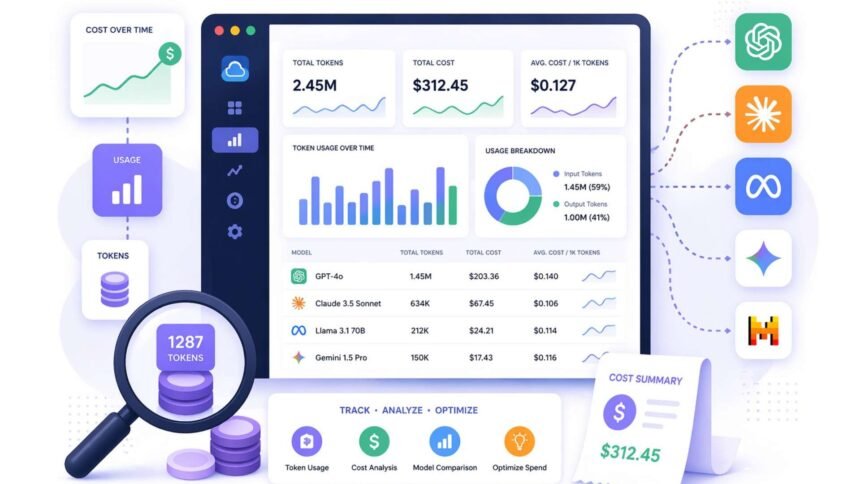
⚠️ What’s still maturing. the tool’s biggest open issue is the cost of long sessions. Specifically, a 1M-context session burns through tokens quickly — heavy users can hit several hundred dollars per month at the default Opus 4.7 tier. Mitigations: use /fast for non-reasoning work, prune context aggressively, batch related changes into single sessions instead of many short ones.
Background agents
It can dispatch background agents — long-running tasks that operate asynchronously while you keep working on something else. You can ask Claude Code to refactor a module, run the test suite, and report back; meanwhile you do other work. As a result, Claude Code blurs the line between synchronous pair-programming and Devin-style async PR generation.
Slash commands and skills
Skills are reusable, named workflows that Claude Code loads on demand. You author a skill once (say, /onboard for setting up a new developer environment, or /release for cutting a release tag) and invoke it whenever needed. Slash commands give you reusable prompts without re-explaining the workflow each time. Skills are version-controlled in .claude/skills/, so the team shares the same set.
What this means for builders
First, if you’re an individual engineer, Claude Code is the most productive AI coding tool available — provided you have an Anthropic API account and the budget for Opus 4.7 sessions. The combination of 1M context + permission gating + MCP support makes Claude Code feel like a senior engineer pair-programming with you, not a code completion tool.
Next, if you build developer tooling for a team, the tool’s MCP support means your internal data sources (databases, issue trackers, monitoring tools) become accessible to every engineer’s Claude Code session. By contrast, a team rolling out IDE-based AI tools usually needs per-IDE integration; Claude Code centralizes via MCP.
Finally, if you ship a product engineers use (database, observability tool, deployment platform), shipping an MCP server makes Claude Code users 10x more efficient with your product. Importantly, this is true for every MCP-compatible client (Claude Desktop, Cursor, Cline), but Claude Code is the highest-volume usage point for serious engineering work.
Builder’s take
I’m writing this article in the CLI. Cyntr‘s entire publisher module (1,200+ lines) and the seven Alatirok articles before this one — all built in the CLI sessions on Opus 4.7 with 1M context. The workflow is: explain what I want, point at relevant files, let Claude propose changes, accept or push back. As a result, this is closer to working with a senior engineer than any AI coding tool I’ve used before.
- The 1M context tier is the moat. Other AI coding tools at 200K context lose architectural awareness in mid-size codebases. Claude Code with Opus 4.7 holds the whole repo + my notes + test output simultaneously. That’s the qualitative shift.
- MCP is the unlock for team adoption. Configure your databases, issue tracker, and monitoring as MCP servers once — every developer’s Claude Code session gets access. Way cleaner than IDE-plugin sprawl.
- Cost discipline matters a lot at this tier. A 1M context session can burn $20-50 in tokens depending on how chatty it is. Use
/fastfor non-reasoning work. Batch related changes into single sessions. Watch the daily spend.
When to reach for something other than Claude Code
Claude Code is the right default for many engineers but not all. Three concrete cases where another tool fits better.
- You don’t actually want a terminal workflow. If your team writes code in VS Code and reviews diffs visually, Claude Code’s CLI strength becomes a fit problem. Cursor is the same model family work in the editor you already use.
- You need fully autonomous delegation. Claude Code keeps you in the loop. For tickets you want to delegate end-to-end without reviewing every step, Cognition Devin or OpenAI Codex (the cloud agent, not the model) are the right tools.
- Your stack has heavy non-text artifacts. Codebases with significant binary assets (game dev, scientific computing with HDF5 datasets, embedded firmware) benefit less from Claude Code’s text-first workflow than from IDE-integrated tooling that understands the asset pipeline.
Frequently asked questions
Anthropic shipped Claude Code in early 2025. Specifically, the initial public release came alongside the Anthropic API enterprise tier announcement, and the tool matured rapidly through 2025-2026 with the addition of MCP support, hooks, slash commands, and background agents. By 2026, Claude Code is Anthropic’s primary developer surface alongside the API itself.
By default, Claude Code uses Claude Opus 4.7 with the 1 million-token context window. Importantly, the /fast command toggles to Claude Sonnet 4.6 for faster, cheaper interactions. Most engineering work — codebase reasoning, multi-file edits, long sessions — benefits from staying on Opus 4.7; quick lookups and simple edits work well at Sonnet’s tier.
Claude Code is a terminal CLI; Cursor is an IDE (a VS Code fork). Specifically, Claude Code wins for long-running engineering sessions where context matters more than visual diffs. By contrast, Cursor wins for developers who prefer an IDE-native workflow with inline accept/reject. Many engineers use both — Claude Code for big architectural work, Cursor for focused edits.
Yes. Specifically, It ships with first-class Model Context Protocol (MCP) support. Configure MCP servers in .claude/mcp.json and Claude Code launches them on session start. As a result, Claude can call any MCP server (Postgres, GitHub, Slack, custom internal tools) directly during a coding session — no per-integration glue code required.
Claude Code itself is a free CLI to install (npm install -g @anthropic-ai/claude-code). Specifically, you pay for the underlying Claude API tokens used during your sessions. Importantly, Anthropic’s Pro and Max subscriptions for Claude.ai include Claude Code access with bundled token limits. Heavy users typically benefit from API billing rather than subscriptions, since Opus 4.7 1M-context sessions can burn through Pro tier limits quickly.
Primary sources
- Anthropic — Claude Code product page
- Claude Code documentation
- Claude Code on npm
- Anthropic — Claude Code best practices
- Anthropic Claude models
Last updated: May 20, 2026. Related: Observability, Ux.