
AI video models are now a real buying category. Teams are no longer asking whether text-to-video works at all; they are asking which model is best for ad creative, cinematic shots, image-to-video, character consistency, and API-driven workflows. This ranked list focuses on 10 real products with public product pages or docs, and compares them on the factors that matter most in 2026: duration, prompt adherence, motion quality, pricing visibility, and API availability. If you are also evaluating still-image systems, see our companion guide: AI image generation comparison 2026.
Why this ranking matters in 2026
1080p
Runway Gen-4 video output
Runway publicly advertises 1080p generation
Native audio
Google Veo 3 capability
Google says Veo 3 can generate video with audio
20s
OpenAI Sora max duration on product page
OpenAI states Sora can generate videos up to 20 seconds
Best overall: Google Veo 3
The market for AI video models has split into three distinct layers: frontier models from major labs, creator-first tools with polished editing workflows, and lower-cost platforms that compete on access and iteration speed. That makes simple quality rankings less useful than they were a year ago. Buyers now need to know whether a model can hold motion across shots, whether it follows prompts without drifting, whether pricing is transparent, and whether the system can be integrated into a production stack through an API.
This list ranks the products that are most relevant right now based on public product information. It does not assume hidden benchmarks or unpublished enterprise features. Where companies publish broad capability claims but not exact limits, the ranking reflects that uncertainty rather than filling in blanks. The result is a practical list for teams choosing a default AI video model in 2026.

📌 Method. Ranking criteria: output quality, prompt adherence, motion realism, workflow maturity, pricing visibility, and API availability based on official product pages and docs.
1. Google Veo 3 — The best overall AI video model for frontier quality and platform reach.
Google’s Veo 3 takes the top spot because it combines frontier-model ambition with unusually broad product packaging. Google presents Veo 3 as its latest video generation model and highlights not only visual generation but also native audio generation, a meaningful differentiator in a market where many tools still require separate sound workflows. Veo is also tied into Google’s broader creative stack through Gemini and Flow, which makes it more than a standalone demo.
For production buyers, the appeal is less about one benchmark and more about ecosystem gravity. A model that sits inside Google’s consumer and creative surfaces has a better chance of becoming a repeatable workflow rather than a one-off experiment. Public pricing and exact duration limits are not as clearly documented on the main model page as some buyers would like, so Veo 3 is strongest for teams that value top-end capability and are comfortable with an evolving product surface.
Google Veo 3 ⭐ Editor’s Pick
Best for: Studios, marketers, and product teams betting on Google’s creative stack
What works
Watch out for
“Veo 3 can generate videos with audio.”
Google DeepMind Veo
2. OpenAI Sora — The most important mainstream entrant, with polished generation and OpenAI distribution.
OpenAI Sora remains one of the most consequential AI video launches because it brought text-to-video into the mainstream OpenAI product orbit. On its official page, OpenAI says Sora can generate videos up to 20 seconds and positions it as a tool for turning text, image, and video inputs into new videos. That combination matters because multimodal input flexibility is increasingly the baseline for serious creative work.
Sora ranks just behind Veo 3 because OpenAI has brand reach, a large user base, and a strong record of turning research systems into broadly used products. The public product page is clear on the 20-second duration point, but less explicit on API availability for developers in the way infrastructure buyers often want. For creators already standardized on OpenAI accounts and workflows, Sora is one of the easiest high-profile options to evaluate.
OpenAI Sora
Best for: Creators and teams already using OpenAI products
What works
Watch out for
📌 What stands out. OpenAI’s official Sora page states that the product can generate videos up to 20 seconds.
3. Runway Gen-4 — The best creator workflow pick for teams that need generation plus editing in one place.
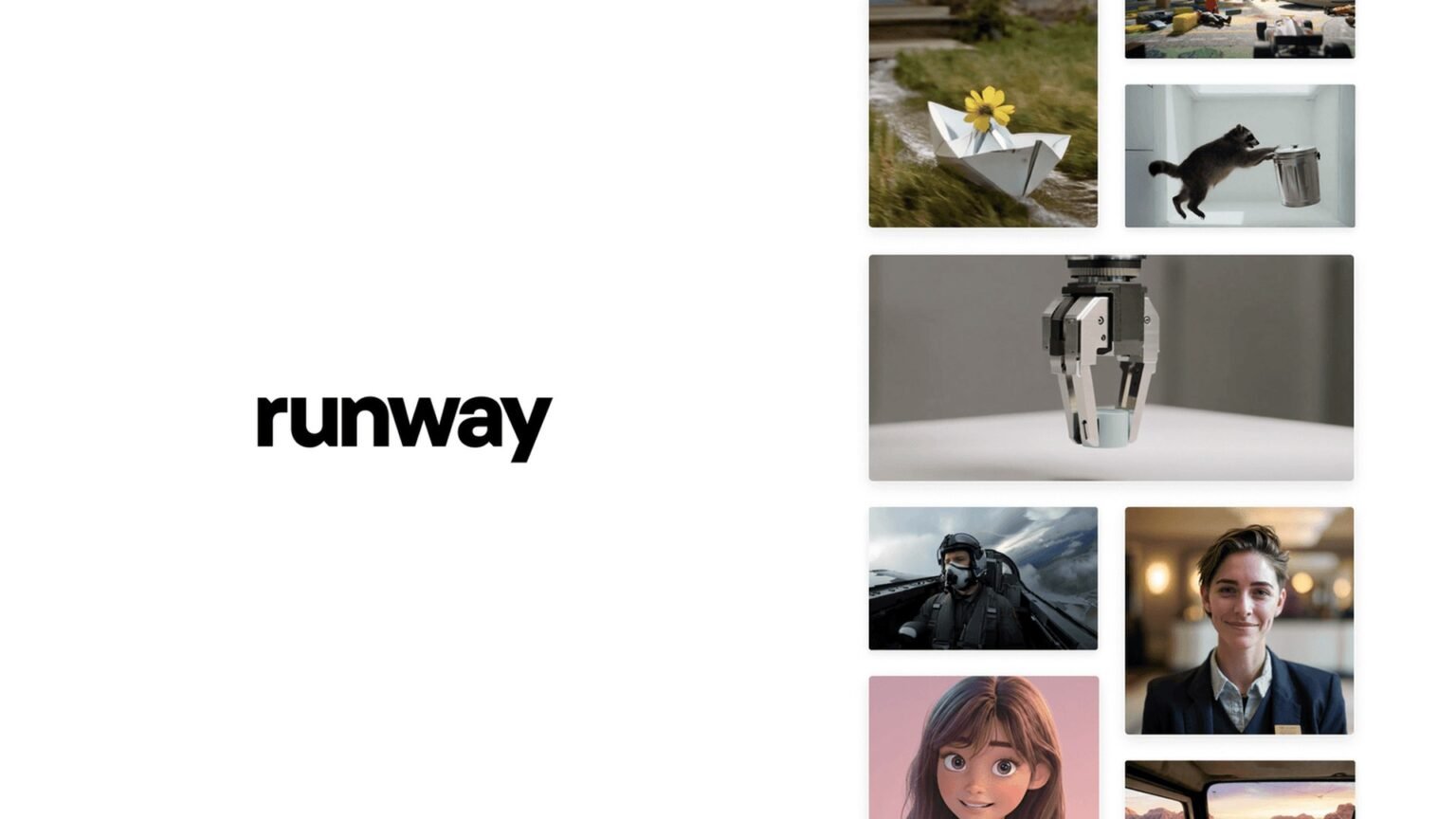
Runway has earned its place by treating AI video as a product category, not just a model release. Its Gen-4 page emphasizes consistent characters, locations, and objects across scenes, which gets at one of the hardest practical problems in generative video: keeping outputs usable across a sequence rather than producing a single impressive clip. Runway also publicly advertises 1080p output, a concrete spec buyers can verify.
Gen-4 ranks highly because Runway offers a mature creative environment around the model itself. That matters for agencies and in-house teams that care about iteration speed, collaboration, and post-generation editing. It lands below Veo 3 and Sora mainly because the frontier labs still have more gravity at the model layer, but Runway is arguably the most workflow-complete option in this list.
Runway Gen-4
Best for: Agencies, filmmakers, and in-house creative teams
What works
Watch out for
4. Luma Dream Machine — Fast, accessible, and still one of the easiest ways to get impressive motion quickly.
Luma’s Dream Machine helped define the fast-iteration segment of AI video. The product is built around approachable generation from text and images, and Luma has consistently emphasized speed and usability. That makes it attractive for creators who want to test concepts rapidly without stepping into a heavier studio workflow.
Dream Machine ranks above several newer or less globally visible rivals because Luma has built a recognizable product with a clear identity. It is not positioned as the most enterprise-native option in this list, but for solo creators, design teams, and social content pipelines, ease of use still counts for a lot. Public API and exact pricing details should be checked against current Luma materials before committing at scale.
Luma Dream Machine
Best for: Solo creators, social teams, and concept development
What works
Watch out for
5. Pika 2.0 — The most consumer-friendly pick for fast creative experimentation.
Pika has stayed relevant by focusing on accessibility and shareable creative workflows. Its product experience is aimed at making video generation feel playful and immediate rather than intimidating. That positioning has helped it maintain mindshare even as larger labs entered the category.
Pika 2.0 ranks in the middle because it is easy to recommend for experimentation, short-form content, and lightweight marketing use cases, but it is less clearly the default for teams that need robust API access or the deepest production controls. For many buyers, that is fine. Not every AI video workflow needs to look like a studio pipeline.
Pika 2.0
Best for: Short-form creators, marketers, and casual creative teams
What works
Watch out for
6. Kling — A serious contender with strong output reputation and growing international relevance.
Kling has become one of the most talked-about video models outside the US frontier-lab cluster. The product has built a reputation for visually strong outputs and has helped push the market toward more global competition. Its official site gives buyers a direct place to evaluate the product rather than relying only on social clips.
Kling ranks here because it appears highly competitive on output quality, but buyers outside its core markets may still encounter more friction around access, documentation depth, or workflow familiarity than they would with OpenAI, Google, or Runway. Even so, it belongs on any serious 2026 shortlist.
Kling
Best for: Advanced users exploring globally competitive video models
What works
Watch out for
7. Hailuo AI — A credible fast-moving option from MiniMax for broad creative experimentation.
Hailuo AI is part of the broader MiniMax push into generative media and deserves attention because it gives users another route into modern video generation outside the biggest Western platforms. The official MiniMax site presents Hailuo as part of its AI product lineup, and the product has gained visibility among users looking for alternatives with different access patterns and model behavior.
Its ranking reflects a familiar tradeoff in this market: interesting capability and momentum, but less universally standardized documentation and enterprise packaging than the top three. For experimentation-heavy teams, that may not matter. For procurement-led organizations, it usually does.
Hailuo AI
Best for: Experimenters and globally distributed creative teams
What works
Watch out for
8. MiniMax Video — Worth watching for buyers tracking the broader MiniMax model stack.
MiniMax Video is relevant because MiniMax is not approaching video as an isolated novelty. It is building a broader multimodal model stack, and that can matter for teams that want one vendor relationship spanning text, voice, and video. The official MiniMax site is the right starting point for evaluating that broader platform story.
This model ranks below Hailuo largely because public product branding and positioning can be less immediately clear to outside buyers than more consumer-facing names. Still, platform breadth is a real advantage when teams want to consolidate vendors.
MiniMax Video
Best for: Teams evaluating broader MiniMax platform adoption
What works
Watch out for
9. Genmo — A developer-interest option with an open and experimental reputation.
Genmo remains notable because it has appealed to technically curious users and developers who want to explore generative video outside the most polished consumer shells. Its official site gives it a clear public presence, and the company has been part of the conversation around more open experimentation in video generation.
Genmo ranks lower not because it lacks relevance, but because the market has shifted toward products with stronger packaging, clearer commercial positioning, and broader mainstream adoption. For developers and researchers, though, Genmo can still be a meaningful option to track.
Genmo
Best for: Researchers, developers, and technically curious creators
What works
Watch out for
⚠️ Best fit. Genmo is more compelling for technically engaged users than for buyers who want a turnkey enterprise-standard video suite.
10. Wan by Alibaba — A model family to watch, especially for buyers tracking Alibaba Cloud’s AI stack.
Wan earns the final slot because Alibaba has the scale to matter in generative media, and its model family is relevant to anyone tracking the Chinese cloud and model ecosystem. The official Alibaba Cloud model pages provide a real anchor for evaluation, which is more useful than relying on reposted clips or secondhand summaries.
It ranks tenth because public global mindshare, workflow familiarity, and buyer-facing packaging still trail the leaders in this list. That said, dismissing it would be a mistake. In AI video, platform power often shows up first in regional adoption and later in broader enterprise procurement.
Wan
Best for: Teams monitoring Alibaba’s model ecosystem and regional AI infrastructure
What works
Watch out for
Meta summary: how the top AI video models compare
Runner-up: OpenAI Sora
The short version is that Google Veo 3 and OpenAI Sora lead on frontier-model gravity, Runway Gen-4 leads on workflow maturity, and Luma plus Pika remain strong picks for speed and accessibility. Kling, Hailuo, MiniMax Video, Genmo, and Wan matter because the category is no longer controlled by a small set of US vendors.
One caution for buyers: public documentation quality still varies widely. If API access, exact duration limits, or pricing predictability are critical, verify those points directly in current vendor docs before making a platform commitment.
Pros
Cons
| Rank | Model | Best for | Public duration note | Pricing visibility | API availability visibility |
|---|---|---|---|---|---|
| 1 | Google Veo 3 | Frontier quality and ecosystem reach | Not clearly specified on main model page | Limited on main model page | Not clearly specified on main model page |
| 2 | OpenAI Sora | Mainstream multimodal creation | Up to 20 seconds | Tied to OpenAI product access | Not clearly specified on main product page |
| 3 | Runway Gen-4 | Creative workflow teams | Check current Runway plan details | Visible through Runway plans | Runway offers developer platform materials |
| 4 | Luma Dream Machine | Fast iteration | Check current product details | Check current plan details | Check current docs |
| 5 | Pika 2.0 | Accessible short-form creation | Check current product details | Check current plan details | Less central to product story |
| 6 | Kling | Alternative high-quality generation | Check current product details | Check current plan details | Check current docs |
| 7 | Hailuo AI | Global experimentation | Check current product details | Check current plan details | Check current docs |
| 8 | MiniMax Video | Platform-level evaluation | Check current product details | Check current plan details | Check current docs |
| 9 | Genmo | Developer experimentation | Check current product details | Check current plan details | Check current docs |
| 10 | Wan | Alibaba ecosystem tracking | Check current product details | Check current plan details | Check current docs |
Frequently asked questions
Based on publicly documented product positioning, Google Veo 3 is the best overall pick in this ranking because Google says it can generate video with audio and has integrated the model into products like Gemini and Flow. You can review Google’s official model page at deepmind.google/models/veo/.
OpenAI’s official Sora page says the product can generate videos up to 20 seconds. See the product page at openai.com/sora.
Runway Gen-4 is the strongest fit for many creative teams because Runway emphasizes consistency across characters, locations, and objects, and wraps the model in a broader production workflow. Start with runwayml.com and the Gen-4 product materials there.
API availability varies widely. Some vendors emphasize consumer or studio workflows more than developer access on their public product pages. If API access is a requirement, check the vendor’s official docs or developer pages directly before buying, such as Runway or the relevant official documentation linked from each company’s main site.
Primary sources
- OpenAI Sora — OpenAI
- Google DeepMind Veo — Google DeepMind
- Runway — Runway
- Luma Dream Machine — Luma AI
- Pika — Pika
- Kling — Kuaishou
- MiniMax — MiniMax
- Genmo — Genmo
- Alibaba Cloud — Alibaba Cloud
Last updated: May 20, 2026. Related: Agent Infrastructure.