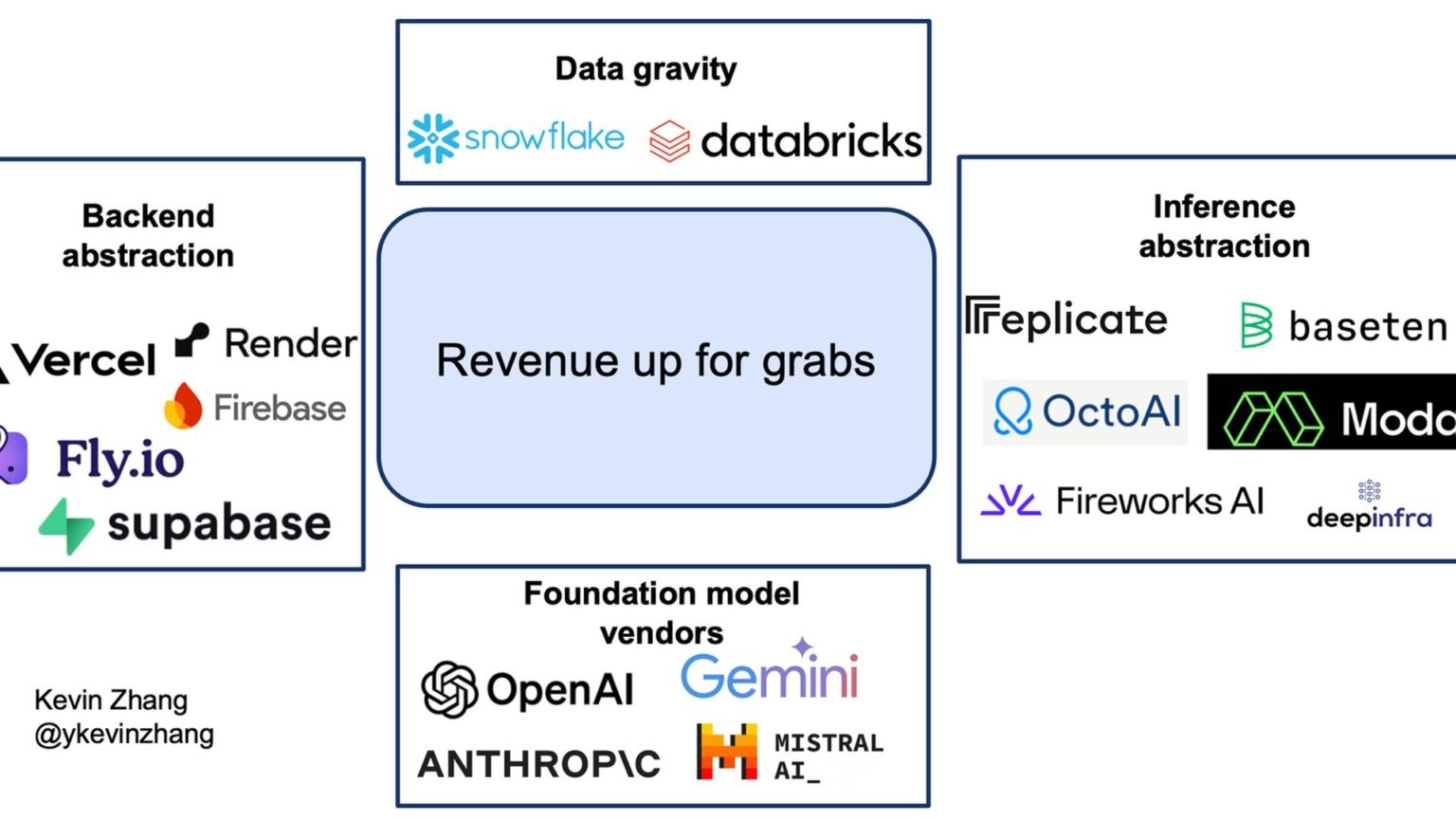

The market for AI inference providers has split into distinct camps: programmable serverless GPU platforms, model-hosting APIs, and vertically integrated inference stacks tuned for speed. Modal, Replicate, Fireworks AI, Groq, and Together AI are all credible choices, but they are not interchangeable. This comparison looks at what each platform actually offers from official docs and product pages, then maps those capabilities to real buying criteria: latency, throughput, batching, model breadth, pricing transparency, and developer ergonomics. If you are also benchmarking token economics, see our related guides to LLM API pricing in 2026 and open-weight models for agents.
The market has matured, but the tradeoffs are sharper
500+
Open-source models listed by Together AI
Together markets access to more than 500 open-source models
800 tok/s
Groq published speed for Llama 3.1 8B
Shown on Groq’s API landing page
200+
Fireworks AI serverless models
Published on Fireworks pricing page
In 2026, the question is no longer whether you can get hosted inference for open or proprietary-adjacent model workflows. The real question is what kind of infrastructure contract you want. Some teams want a dead-simple API over a catalog of models. Others want direct control over containers, autoscaling, and custom runtimes. A third group cares almost entirely about latency and tokens per second for interactive agents.
That is why these five vendors are worth comparing side by side. Modal is best understood as programmable serverless compute with strong GPU support, not just a model endpoint vendor. Replicate makes model execution and hosting accessible through a straightforward API and broad public model ecosystem. Fireworks AI emphasizes fast inference for open models with serverless and dedicated options. Groq pushes a differentiated hardware story around its LPU system and publishes model speed claims prominently. Together AI offers a broad open-model platform spanning inference, fine-tuning, and related infrastructure.
📌 How to read this comparison. Where vendors publish exact speed or pricing figures, those are cited from official pages. Where they do not, this review avoids inventing numbers and evaluates positioning, product design, and documented capabilities instead.
Modal review: best for programmable inference infrastructure
Verdict: Modal is the strongest choice for teams that want inference as part of a broader programmable compute stack rather than a narrow model API. Its pitch is serverless GPU infrastructure with Python-native workflows, custom containers, autoscaling, scheduled jobs, queues, and web endpoints. That makes it attractive for agent backends, multimodal pipelines, and custom model serving where the application logic matters as much as the model itself.
Modal’s official docs emphasize primitives such as functions, classes, web endpoints, volumes, queues, sandboxes, and GPU configuration. The platform also documents features aimed at production operations, including autoscaling controls, concurrency, and lifecycle tuning. For teams trying to reduce cold-start pain, Modal exposes controls like min_containers and container lifecycle settings in its docs, which is more operationally explicit than many API-first inference vendors.
The tradeoff is that Modal is not the simplest path if all you want is a single hosted text-generation endpoint with a fixed catalog and token-metered billing. It is closer to a developer platform for AI workloads. That flexibility is a strength for engineering-heavy teams and a source of complexity for buyers who prefer a turnkey inference API.
Modal ⭐ Editor’s Pick
Best for: Engineering teams building agent backends, custom model serving, and GPU-heavy workflows
What works
Watch out for
Pros
Cons
import modal

app = modal.App("inference-endpoint")
image = modal.Image.debian_slim().pip_install("vllm")

@app.function(image=image, gpu="A10G", min_containers=1)
@modal.web_endpoint(method="POST")
def infer(prompt: str):
    return {"prompt": prompt, "status": "served"}
“Modal gives developers direct control over the runtime shape of inference, which is often more valuable than shaving a few cents off token pricing.”
Alatirok editorial assessment based on Modal docs and product pages
Replicate review: best for simple model hosting and API consumption
Verdict: Replicate remains one of the easiest platforms to understand and use. Its core value is simplicity: pick a model, call it through a predictable API, or deploy your own model using Cog. For teams that want to move quickly without designing their own serving stack, Replicate is still one of the cleanest developer experiences in the market.
Replicate’s public product surface is unusually approachable. The company documents how to run models via API, stream output, and deploy custom models with Cog, its open-source packaging tool. That makes Replicate especially useful for image, video, speech, and multimodal workflows where developers may want access to a wide variety of community and first-party model endpoints without managing infrastructure directly.
The limitation is that Replicate is less opinionated around high-throughput LLM serving than vendors built specifically around optimized text-generation infrastructure. It is excellent for breadth and ease of use, but buyers focused on squeezing maximum tokens per second, advanced batching, or dedicated low-latency serving may find stronger fits elsewhere.
Replicate
Best for: Startups and product teams shipping quickly with hosted model APIs
What works
Watch out for
📌 Why teams still like Replicate. Replicate has one of the lowest-friction paths from ‘I found a model’ to ‘I have an API endpoint,’ especially for multimodal and creator-oriented use cases.
curl -s -X POST \
  -H "Authorization: Token $REPLICATE_API_TOKEN" \
  -H "Content-Type: application/json" \
  -d '{"input":{"prompt":"A concise summary of this article"}}' \
  https://api.replicate.com/v1/predictions
Fireworks AI review: best for high-performance open-model inference
Verdict: Fireworks AI is one of the strongest choices when your priority is fast, production-grade inference for open-source models with a more purpose-built serving layer than a general serverless platform. The company explicitly offers serverless inference, on-demand deployments, and dedicated deployments, which gives buyers multiple ways to balance cost, isolation, and performance.
Fireworks publishes one of the clearer infrastructure menus in this category. Its pricing page lists serverless models, on-demand deployments, and dedicated deployments, and it highlights support for text, speech, and image generation. It also documents features such as function calling, structured outputs, and compatibility patterns that make it easier to slot into existing LLM application stacks.
For teams comparing cold starts and batching, Fireworks benefits from being designed around inference rather than general compute. The company also talks openly about throughput and optimization in its product materials. The caveat is that teams needing maximum runtime customization or arbitrary Python execution may still prefer Modal, while teams chasing the absolute lowest interactive latency may still look hard at Groq.
Fireworks AI
Best for: Teams serving open-weight LLMs in production with performance and deployment flexibility in mind
What works
Watch out for
Pros
Cons
Groq review: best for ultra-low-latency interactive apps
Verdict: Groq is the most differentiated vendor in this comparison because it is selling not just an API but a hardware-and-software stack built around its LPU architecture. If your application lives or dies on latency and streaming speed, Groq deserves serious attention.
Groq’s API landing page prominently publishes speed figures for supported models, including token-per-second numbers. That level of public performance positioning is unusual and useful. The company also offers an OpenAI-compatible API, which lowers migration friction for teams already built around common chat-completions patterns.
The main question with Groq is breadth versus specialization. It is compelling when low-latency generation is the core requirement, especially for voice agents, interactive copilots, and real-time UX. But buyers who need the broadest model marketplace, custom runtime control, or generalized GPU workflows may find the platform narrower than Modal or Together. Groq is best viewed as a specialist with a very strong specialty.
Groq
Best for: Voice agents, interactive copilots, and latency-sensitive chat interfaces
What works
Watch out for
⚠️ What Groq optimizes for. Groq is easiest to justify when latency is a product requirement, not just a nice-to-have. If your workload is mostly asynchronous batch generation, its edge matters less.
curl https://api.groq.com/openai/v1/chat/completions \
  -H "Content-Type: application/json" \
  -H "Authorization: Bearer $GROQ_API_KEY" \
  -d '{
    "model": "llama-3.1-8b-instant",
    "messages": [{"role": "user", "content": "Summarize the tradeoffs among inference providers."}]
  }'
“Groq has done more than most vendors to make speed a first-class product claim rather than a vague marketing promise.”
Based on Groq API product pages
Together AI review: best for breadth across open models and workflows
Verdict: Together AI is a strong platform for teams that want broad access to open-source models and adjacent capabilities such as fine-tuning and training in one vendor relationship. It is one of the most expansive open-model platforms in this group.
Together’s product pages market access to more than 500 open-source models and span serverless inference, dedicated endpoints, fine-tuning, and training infrastructure. That breadth matters for teams standardizing on open weights across multiple use cases rather than optimizing a single endpoint. It also makes Together a practical option for organizations that expect to move from API consumption into customization over time.
The tradeoff is focus. Together does many things well, but its value proposition is broader than ‘fastest inference’ or ‘most programmable runtime.’ Buyers who already know they need either extreme low latency or deep infrastructure control may prefer Groq or Modal respectively. Together is strongest when model choice and platform breadth are the deciding factors.
Together AI
Best for: Organizations standardizing on open-source models across multiple teams and workloads
What works
Watch out for
Pros
Cons
Which should you pick?
Best overall: Modal
Our editorial recommendation is Modal for most serious product teams building AI systems in 2026. That is not because it is the cheapest or the simplest in every case. It is because it offers the best long-term control surface for teams that expect inference to become part of a larger application architecture. If you are building agents, retrieval pipelines, multimodal processing, scheduled jobs, or custom model-serving logic, Modal gives you room to grow without forcing an early platform migration.
There are still clear reasons to choose the others. Pick Replicate when speed of adoption and API simplicity matter most. Pick Fireworks AI when you want a more inference-native platform for open models with flexible deployment modes. Pick Groq when latency is the product. Pick Together AI when breadth across open models and adjacent workflows matters more than any single benchmark.
| Use case | Best pick | Why | Runner-up |
|---|---|---|---|
| Custom agent backend with queues, jobs, and model serving | Modal | Best programmable infrastructure and runtime control | Fireworks AI |
| Fastest path to shipping with a hosted model API | Replicate | Simple API and broad model access | Together AI |
| Production open-weight LLM serving | Fireworks AI | Inference-first platform with serverless and dedicated options | Together AI |
| Real-time voice or ultra-low-latency chat | Groq | Strong public speed positioning and low-latency focus | Modal |
| Standardizing on many open-source models across teams | Together AI | Broad model catalog plus fine-tuning and training options | Fireworks AI |
| Need maximum flexibility over containers and execution environment | Modal | Customizable serverless GPU runtime | Together AI |
Frequently asked questions
For latency-sensitive applications, Groq is the clearest specialist in this group because it publicly emphasizes high token-generation speeds on its API product pages. If you need low latency plus more runtime control, Modal is also worth evaluating.
That depends on what you mean by best. Fireworks AI is a strong choice for performance-oriented open-model serving, while Together AI stands out for breadth across open-source models and related workflows. For custom deployments with more infrastructure control, Modal is often the better fit.
Yes, but with different levels of abstraction. Replicate, Fireworks AI, Groq, and Together AI all market API-based inference directly. Modal also supports web endpoints and model serving, but it is better understood as a programmable compute platform rather than only a model API.
Primary sources
- Modal homepage — Modal
- Modal docs — Modal
- Replicate homepage — Replicate
- Cog by Replicate — GitHub
- Fireworks AI homepage — Fireworks AI
- Fireworks AI pricing — Fireworks AI
- Groq homepage — Groq
- Groq docs — Groq
- Together AI homepage — Together AI
- Together AI inference — Together AI
Last updated: May 20, 2026. Related: Agent Infrastructure.