
This LLM evaluation strategy decision tree walks through when to use offline vs online evaluations, LLM-as-judge vs rule-based scoring, and golden sets vs synthetic data. Three evaluation modes now dominate production LLM work: offline test sets, online production signals, and human review loops. The hard part is deciding when each should lead. This decision tree walks through the most common product and engineering scenarios, then recommends the right mix of offline vs. online evals, rule-based checks vs. LLM-as-judge, golden sets vs. synthetic data, and manual review vs. automation. If you are also comparing tooling, see alatirok’s guides to AI agent evaluation tools, LangSmith vs. Langfuse, and why SWE-Bench does not predict engineering value.
Start here: choose the failure mode before the metric
Default principle: layer evals by risk and speed
Most teams begin with the wrong question. They ask which metric to use before they define what failure actually looks like in their product. For an extraction pipeline, failure may mean malformed JSON or a missing field. For a customer support copilot, it may mean policy violations, hallucinated refunds, or latency spikes. For a coding agent, it may mean low task completion despite strong benchmark scores. Your LLM evaluation strategy should start with the dominant failure mode, then work backward to the cheapest reliable signal.
A useful rule is to match the evaluation method to the cost of being wrong. Low-risk prompt tuning can lean on fast offline checks and a small golden set. High-risk production systems need layered evaluation: offline regression tests before release, online monitoring after release, and targeted human review for edge cases. If you are still deciding which platforms support those layers, alatirok’s coverage of AI agent evaluation tools and LLM observability stacks is the right companion read.
The decision tree below assumes one practical constraint: no single evaluator is enough. Rule-based checks are excellent for deterministic requirements. LLM-as-judge can capture semantic quality that regexes cannot. Human review remains necessary where taste, policy nuance, or business context matter. The winning strategy is usually a stack, not a single score.
📌 Decision rule. Use the cheapest evaluator that can reliably detect the failure you care about. Add more expensive layers only when the cheaper one misses too much.
“The right eval is the one that catches the failure mode you can least afford in production.”
Alatirok editorial guidance
If you need fast feedback on prompt changes
Best path: offline + golden set + mostly automated scoring
Choose offline evals first, with a small golden set and mostly automated scoring. Prompt iteration is a speed problem. You want a repeatable set of representative examples that can run on every prompt or model change without waiting for production traffic. This is where a curated golden set of 30 to 200 examples often beats a giant benchmark because it reflects your actual task.
For scoring, use rule-based checks wherever the output can be validated deterministically, and add LLM-as-judge only for dimensions like helpfulness, completeness, or tone. LangSmith documents dataset-backed evaluations and experiment comparison workflows, while OpenAI’s Evals framework is designed for benchmarking model and system behavior against task-specific examples. Both are useful references for building a prompt iteration loop that is fast enough to run often.
Keep human review light here. A quick spot-check of failures is usually enough to verify whether the automated evaluator is aligned. If every prompt tweak requires a full manual pass, your team will stop iterating. For more on tool choices, cross-check this branch with alatirok’s evaluation tools roundup.
Pros
Cons
{
  "branch": "fast_prompt_feedback",
  "recommended_stack": {
    "eval_mode": "offline",
    "dataset": "small_golden_set",
    "primary_scorer": "rule_based",
    "secondary_scorer": "llm_as_judge",
    "human_review": "spot_check_failures"
  }
}
If you need regression testing before every release
Best path: offline regression suite with deterministic gates
Favor offline evals with a versioned golden set, plus a thin layer of synthetic cases to cover known edge conditions. Regression testing is about protecting behavior you already know matters. That makes golden data the backbone. Synthetic examples are useful when you need to stress a parser, policy boundary, or tool-calling path that is underrepresented in historical traffic.
This branch should lean harder on rule-based checks than prompt experimentation does. Release gates need consistency. If the output must include a citation, a schema field, a tool call, or a refusal under certain conditions, deterministic checks are the right first line. LLM-as-judge can still score semantic quality, but it should not be the only release gate for high-stakes behavior.
Manual review belongs on the failures and the deltas, not the whole suite. Review the examples that changed from pass to fail, the examples with evaluator disagreement, and the examples tied to high-value workflows. If your team is using benchmark-style coding tasks as a release proxy, it is worth reading alatirok’s analysis of why SWE-Bench does not predict engineering value before you overfit your release process to a leaderboard.
Pros
Cons
⚠️ Release-gate caution. Do not use a single LLM-as-judge score as your only ship/no-ship gate for policy, compliance, or schema-critical workflows.
If you are shipping to production and need live quality signals
Best path: online evals layered on top of offline baselines
Choose online evals as the primary layer, but only after you already have an offline baseline. Production introduces distribution shift, user behavior, tool failures, latency variance, and prompt injection attempts that no offline suite fully captures. Online evaluation should track business outcomes, user feedback, trace-level failures, and sampled model outputs for review.
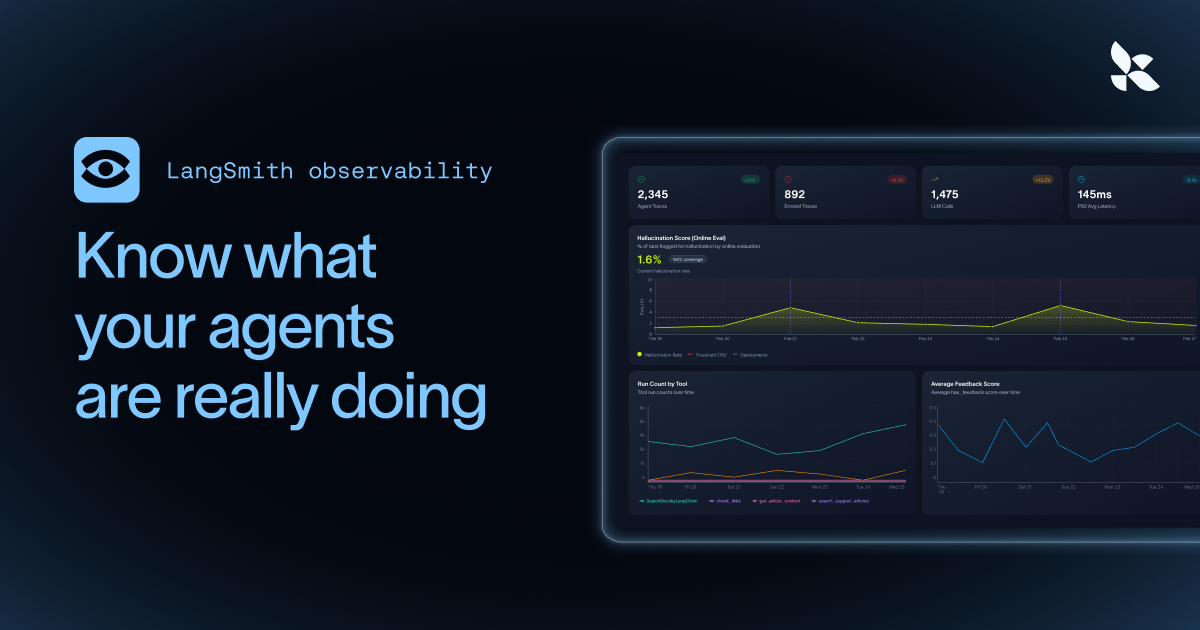
This branch usually needs a mix of rule-based monitors and LLM-as-judge on sampled traces. Rule-based checks can flag schema violations, tool errors, latency thresholds, and refusal rates. LLM-as-judge can score answer quality, groundedness, or policy adherence on a sample of real interactions. Langfuse documents tracing, scores, datasets, and prompt management, while LangSmith documents online evaluation and observability patterns for LLM applications. Those capabilities matter more in production than benchmark dashboards do.
Human review should be targeted and ongoing. Review low-confidence outputs, high-value accounts, policy-sensitive interactions, and examples where automated evaluators disagree. If you are deciding between observability stacks, alatirok’s LangSmith vs. Langfuse guide is the natural next step.
Pros
Cons
# Example production-eval layers
# 1) deterministic monitors
# 2) sampled judge scoring
# 3) human review queue for flagged traces

echo "track latency, tool errors, schema failures, user thumbs, and sampled quality scores"
If you need offline benchmarks for model selection
Best path: benchmark candidates offline, but anchor on your own data
Use offline evals with a hybrid dataset: part golden set from your own workload, part external benchmark only where it maps to your task. This branch is about comparing candidate models, prompts, or agent architectures before deployment. The mistake is treating public benchmark scores as a substitute for product-specific evaluation.
For scoring, combine rule-based checks for objective requirements with LLM-as-judge for semantic quality. Keep manual review focused on close calls between top candidates. OpenAI’s Evals framework exists for task-specific evaluations, and Hugging Face’s Evaluate library provides a broad set of metrics and evaluation tooling. Those are useful building blocks, but they do not remove the need for your own representative data.
This is also the branch where teams most often overread coding and reasoning leaderboards. A model that performs well on a benchmark may still underperform in your retrieval stack, your tool-calling environment, or your latency budget. That is why alatirok’s SWE-Bench critique matters beyond coding agents: benchmark success and engineering value are related, but not interchangeable.
Pros
Cons
“Public benchmarks are useful filters, not final answers.”
Alatirok editorial guidance
If your output is structured or schema-bound
Best path: deterministic checks first, semantic scoring second
Default to rule-based evaluation, offline tests, and a golden set expanded with synthetic edge cases. Structured output is where deterministic validation shines. If the model must return valid JSON, fill required fields, obey type constraints, or call tools with the right arguments, you should treat those as software correctness checks first and language quality checks second.
LLM-as-judge still has a role, but it is secondary. Use it to score whether extracted values are semantically correct when multiple phrasings are possible, or whether a summary preserved the right facts even if the schema validates. Human review should focus on ambiguous cases like fuzzy entity resolution, not on basic schema compliance. If you are building agents that chain tools, this branch often overlaps with the infrastructure concerns covered in alatirok’s broader agent systems reporting, including evaluation tooling and observability coverage.
The practical advantage here is cost control. Deterministic validators are cheap, reproducible, and easy to wire into CI. They also make failures easier to debug than a single holistic quality score.
Pros
Cons
import json

def is_valid_order(payload: str) -> bool:
    try:
        obj = json.loads(payload)
    except json.JSONDecodeError:
        return False
    required = {"customer_id", "items", "total"}
    return required.issubset(obj.keys()) and isinstance(obj["items"], list)
If your output is creative, open-ended, or style-sensitive
Best path: judge models for scale, humans for calibration
Lean toward LLM-as-judge plus manual review, with offline evals for iteration and online signals once users are involved. Creative outputs rarely have a single correct answer, which makes strict rule-based scoring too narrow. You still may use rules for banned content, length, or formatting, but quality itself is usually comparative and subjective.
A strong pattern is pairwise evaluation: compare candidate outputs against each other rather than scoring each in isolation. LLM-as-judge can rank relevance, coherence, tone match, or brand fit, but human review remains essential to calibrate the judge and catch subtle failures. Anthropic’s documentation on evaluation and OpenAI’s cookbook materials on eval patterns both reinforce the need for task-specific criteria rather than generic quality labels.
Once the feature is live, add online metrics such as user preference, engagement, or edit rate. Those are often more meaningful than any offline creativity score. If your product sits inside a broader agent workflow, it is also worth reading alatirok’s adjacent infrastructure coverage to avoid optimizing a generation metric that does not improve the end-to-end task.
Pros
Cons
📌 Creative-output rule. For open-ended generation, use automated judges to narrow options and humans to calibrate taste, policy nuance, and brand fit.
If your team has little historical data
Best path: bootstrap with a small golden set, then grow from traffic
Start with a small hand-built golden set and extend it with synthetic examples. Teams early in a product cycle often assume they need large datasets before they can evaluate anything. In practice, a carefully chosen set of real examples from design docs, support transcripts, internal workflows, or manually authored edge cases is enough to begin.
Use offline evals first because they are easier to control while the product is still changing quickly. Favor rule-based checks where possible, then add LLM-as-judge for semantic dimensions you cannot score deterministically. Manual review matters more in this branch because your evaluator itself is still being shaped.
Synthetic data is helpful here, but it should be treated as scaffolding, not truth. Generate examples to cover obvious corners, then replace them over time with real production traces and user interactions. This is also where observability tools become useful earlier than many teams expect, because they help turn live traffic into future golden data. Alatirok’s observability guide is relevant once you move from prototype to production.
Pros
Cons
If your team has lots of production traffic but limited reviewer time
Best path: triage first, review second
Choose online evals with sampling, risk-based routing, and a combination of rule-based filters plus LLM-as-judge triage. High-traffic systems create more examples than humans can inspect. The goal is not to review everything. It is to review the slices most likely to hide costly failures.
A practical pattern is to route traces into buckets: deterministic failures, high-value sessions, low-confidence outputs, policy-sensitive interactions, and random samples for drift detection. Rule-based checks catch obvious breakage at scale. LLM-as-judge can prioritize the ambiguous cases that deserve human attention. This is where observability products earn their keep by connecting traces, scores, metadata, and annotation workflows.
Manual review should become a queue, not an ad hoc exercise. Reviewers should see why an item was flagged and what prior examples look similar. If your stack is still immature, start with a smaller number of clearly defined review categories rather than a sprawling taxonomy no one can maintain.
Pros
Cons
If you operate in a high-risk or regulated workflow
Best path: layered controls with human escalation
Use a layered strategy: offline regression tests, rule-based policy gates, online monitoring, and mandatory human review for sensitive cases. In regulated or high-risk settings, the question is not just whether the answer is good. It is whether the system can demonstrate consistent controls, traceability, and escalation paths.
This branch should be skeptical of pure LLM-as-judge setups. Judge models can be useful for secondary scoring, but deterministic checks and documented review procedures need to lead. Golden sets should include policy and refusal cases, while synthetic examples can stress adversarial or rare scenarios. Production monitoring should track not only quality but also auditability: what prompt ran, what tools were called, what output was shown, and what intervention occurred.
Human review is not optional here. The right design is usually selective escalation, not blanket review, but there must be a clear path for exceptions and overrides. If your organization is also thinking about governance and provenance layers around AI systems, this evaluation branch should connect to those controls rather than sit apart from them.
Pros
Cons
⚠️ High-risk default. In regulated or safety-sensitive workflows, automated evals support human oversight; they do not replace it.
If you are evaluating agents, not just single-turn prompts
Best path: evaluate trajectories, not just final answers
Shift from answer scoring to trajectory evaluation. Agent systems fail in more places: planning, tool selection, memory use, retries, side effects, and final answer quality. That means your LLM evaluation strategy should combine offline task suites with online trace analysis, and should score intermediate steps as well as outcomes.
Use rule-based checks for tool-call validity, step counts, latency, and side-effect constraints. Add LLM-as-judge for plan quality, reasoning adequacy where exposed, and final answer usefulness. Golden sets should include representative tasks and expected success criteria; synthetic tasks can probe failure modes like looping or unnecessary tool use. Human review is especially valuable on failed trajectories because it reveals whether the issue was planning, retrieval, tool execution, or evaluator design.
This is the branch where generic benchmark enthusiasm is most dangerous. Agentic performance often depends on environment design and orchestration, not just model capability. Alatirok’s agent evaluation tools guide and benchmark critique are both directly relevant here.
Pros
Cons
If you need a default stack and do not want to overengineer
Best default: small golden set, deterministic checks, selective judging, weekly review
Start with a four-part baseline. First, build a small golden set of representative tasks. Second, add rule-based checks for anything deterministic. Third, use LLM-as-judge only for semantic dimensions the rules cannot capture. Fourth, review a sample of failures manually every week. This stack is simple enough for a small team and robust enough to reveal where you need more sophistication.
Then add layers only when the product demands them. Add online evals when you have meaningful traffic. Add synthetic data when edge cases are underrepresented. Add stricter release gates when regressions become costly. Add richer observability when debugging traces becomes the bottleneck. The mistake is building a giant evaluation program before you know which branch of the decision tree actually matters for your product.
A good evaluation strategy is not the one with the most dashboards. It is the one that changes engineering decisions. If a score does not help you ship, block, debug, or prioritize work, it is probably noise.
Pros
Cons
“If an evaluation score does not change a shipping, blocking, debugging, or prioritization decision, it is probably not the right score.”
Alatirok editorial guidance
| Decision branch | Primary eval mode | Primary scorer | Dataset default | Human review default | Recommendation |
|---|---|---|---|---|---|
| Fast prompt changes | Offline | Rule-based + LLM-as-judge | Small golden set | Spot-check failures | Optimize for speed and repeatability |
| Regression testing | Offline | Rule-based first | Versioned golden set + synthetic edge cases | Review deltas and disagreements | Use deterministic release gates |
| Production quality | Online | Rule-based monitors + sampled judge scoring | Real traffic | Targeted ongoing review | Track drift and user-facing failures |
| Model selection | Offline | Hybrid scoring | Golden set + relevant benchmarks | Review close contenders | Do not rely on public benchmarks alone |
| Structured output | Offline | Rule-based | Golden set + synthetic edge cases | Ambiguous cases only | Validate correctness mechanically |
| Creative output | Offline then online | LLM-as-judge | Golden set | Calibrate with humans | Use pairwise preference where possible |
| Little historical data | Offline | Rules where possible | Hand-built golden set + synthetic | Higher-touch early review | Bootstrap, then replace with real traces |
| High traffic, few reviewers | Online | Rules + judge triage | Sampled production traces | Risk-based queue | Triage before review |
| High-risk workflow | Layered offline + online | Rule-based first | Golden set + adversarial synthetic | Mandatory escalation path | Automated evals support human oversight |
| Agent evaluation | Offline + online traces | Rules + trajectory judging | Task suite + real traces | Review failed trajectories | Score steps, tools, and outcomes |
Frequently asked questions
For most teams, the best starting point is a small task-specific golden set, deterministic checks for anything machine-verifiable, selective LLM-as-judge scoring for semantic quality, and periodic human review of failures. This aligns with the evaluation patterns documented by OpenAI Evals and the dataset-driven workflows described by LangSmith.
Use rule-based evaluation when correctness can be checked deterministically, such as JSON validity, required fields, tool-call arguments, or exact-match constraints. Use LLM-as-judge when you need to score semantic qualities like helpfulness, completeness, tone, or pairwise preference between open-ended outputs. Anthropic’s evaluation guidance and OpenAI’s eval documentation both support task-specific criteria rather than one universal metric: Anthropic Docs, OpenAI Docs.
You usually need both. Offline benchmarks and golden sets are best for fast iteration, regression testing, and model selection before release. Online evals are necessary once real users, tool failures, and distribution shift enter the picture. Langfuse and LangSmith both document production tracing and evaluation workflows that illustrate why live monitoring matters after launch: Langfuse Docs, LangSmith Docs.
Synthetic datasets are useful for bootstrapping coverage and stress-testing edge cases, but they should not be your only source of truth. They work best alongside a golden set built from real tasks and, later, production traces. OpenAI’s Evals framework and Hugging Face’s Evaluate library are both useful for building repeatable evaluation pipelines, but neither removes the need for representative real-world data.
Primary sources
- OpenAI Evals guide — OpenAI
- OpenAI Evals GitHub repository — GitHub
- LangSmith documentation — LangChain
- LangSmith product page — LangChain
- Langfuse documentation — Langfuse
- Hugging Face Evaluate documentation — Hugging Face
- Anthropic documentation — Anthropic
Last updated: May 21, 2026. Related: Observability.