
A workflow-by-workflow review of the AI marketing tools that hold up in production in 2026 – content, SEO/GEO, ads, analytics, and the new agentic platforms – with honest notes on quality and brand risk.
The state of AI marketing tools in 2026
91%
marketers using AI
Up from 63% a year earlier (Jasper, n=1,400)
41%
can prove AI ROI
Down from 49% – measurement lags usage
2-3x
return for measurers
60% of teams with adapted measurement
65%
have an AI role
Designated AI responsibility on the team
The best AI marketing tools in 2026 are no longer single-purpose writing assistants – they are workflow-specific systems for content, SEO/GEO, ads, analytics, and increasingly autonomous campaign execution, and the right stack is a portfolio of two to four of them, not one platform that claims to do everything. Adoption has effectively maxed out: in Jasper’s 2026 survey of 1,400 marketers, 91% reported actively using AI in their work, up from 63% a year earlier, and 65% of teams now have a designated AI role.
The productivity story is real but uneven. Among Jasper’s respondents, 50% said they bring work to market faster, 45% have lowered operating costs, and 75% of AI users report higher job satisfaction. Yet only 41% can actually prove AI ROI – down from 49% the year before – because measurement has not kept pace with usage. The teams that have adapted their measurement see real returns: 60% of them report 2-3x or higher.
The center of gravity has shifted from ‘generate me some copy’ to ‘run this workflow.’ Pure copywriting tools are being commoditized by free frontier models, so the survivors have either gone deep on a workflow (ad scoring, on-page SEO) or moved up the stack into agents and orchestration. That is the lens this review uses: judge each tool by the job it does, not by the breadth it advertises.
Scores below weight production reliability, brand-voice control, and honest cost over demo polish. A 9 means it survives daily use on real campaigns; a 7 means it works but needs supervision or a workaround.
Content and copy: Jasper, Copy.ai, and Writer
For content and copy, Jasper is the strongest pick for marketing teams that need brand-consistent output at scale, Writer wins for regulated enterprises that need house-style enforcement, and Copy.ai has largely left copywriting behind to become a go-to-market workflow platform. All three sit on top of frontier LLMs; what you pay for is the marketing layer, governance, and integrations around the model – not the raw generation.
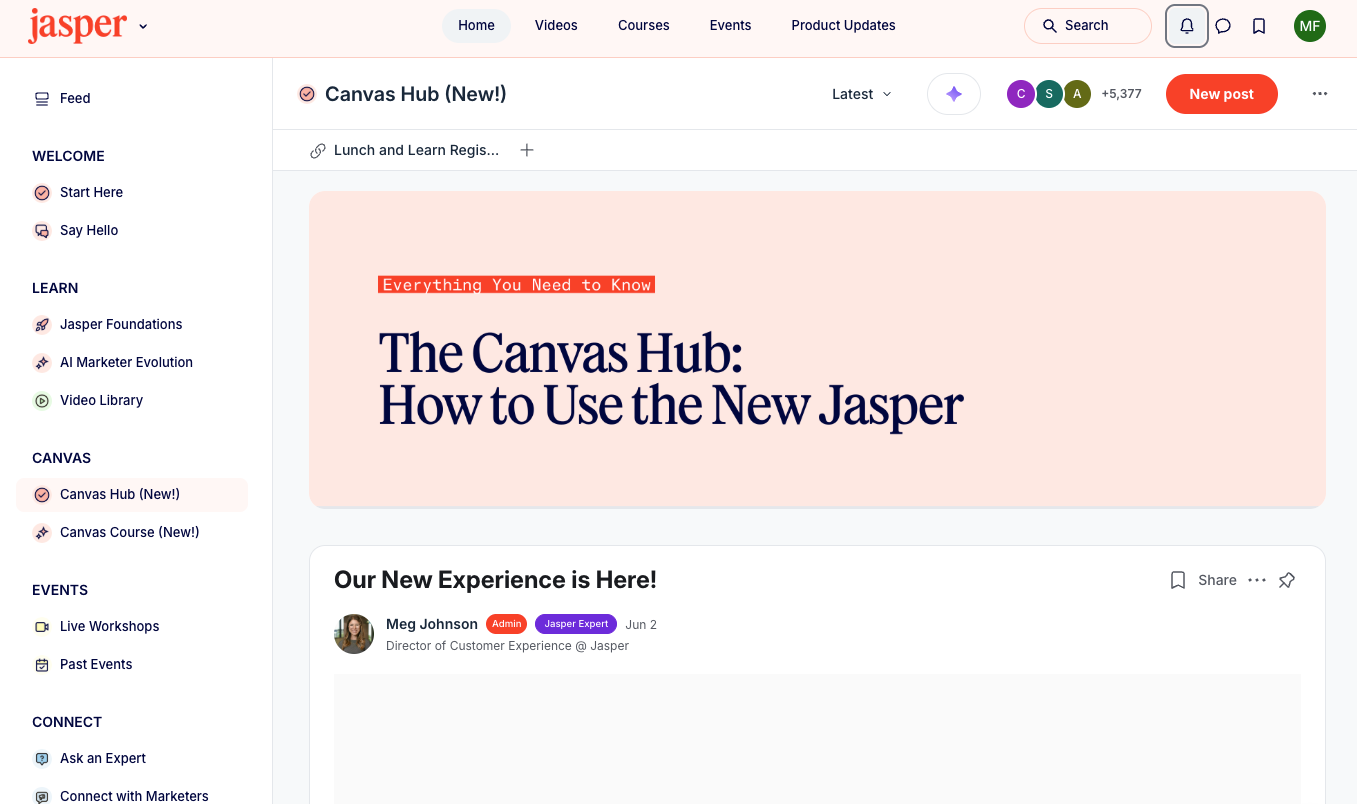
Jasper repositioned in February 2026 as a multi-agent platform with 100+ specialized agents, a Canvas workspace for mapping campaigns from strategy down to individual assets, and Content Pipelines that chain research, creation, localization, and optimization. Its Jasper IQ brand layer learns from your brand guides and product facts to keep output on-brand. Pricing is Creator at $49/mo ($39 annual), Pro at $69/mo ($59 annual), and custom Business plans reported to start around $250+/mo. The honest caveat: Jasper is remarkably good at first drafts but still needs human editing for flow and repetition, and at high volume the cost adds up fast.
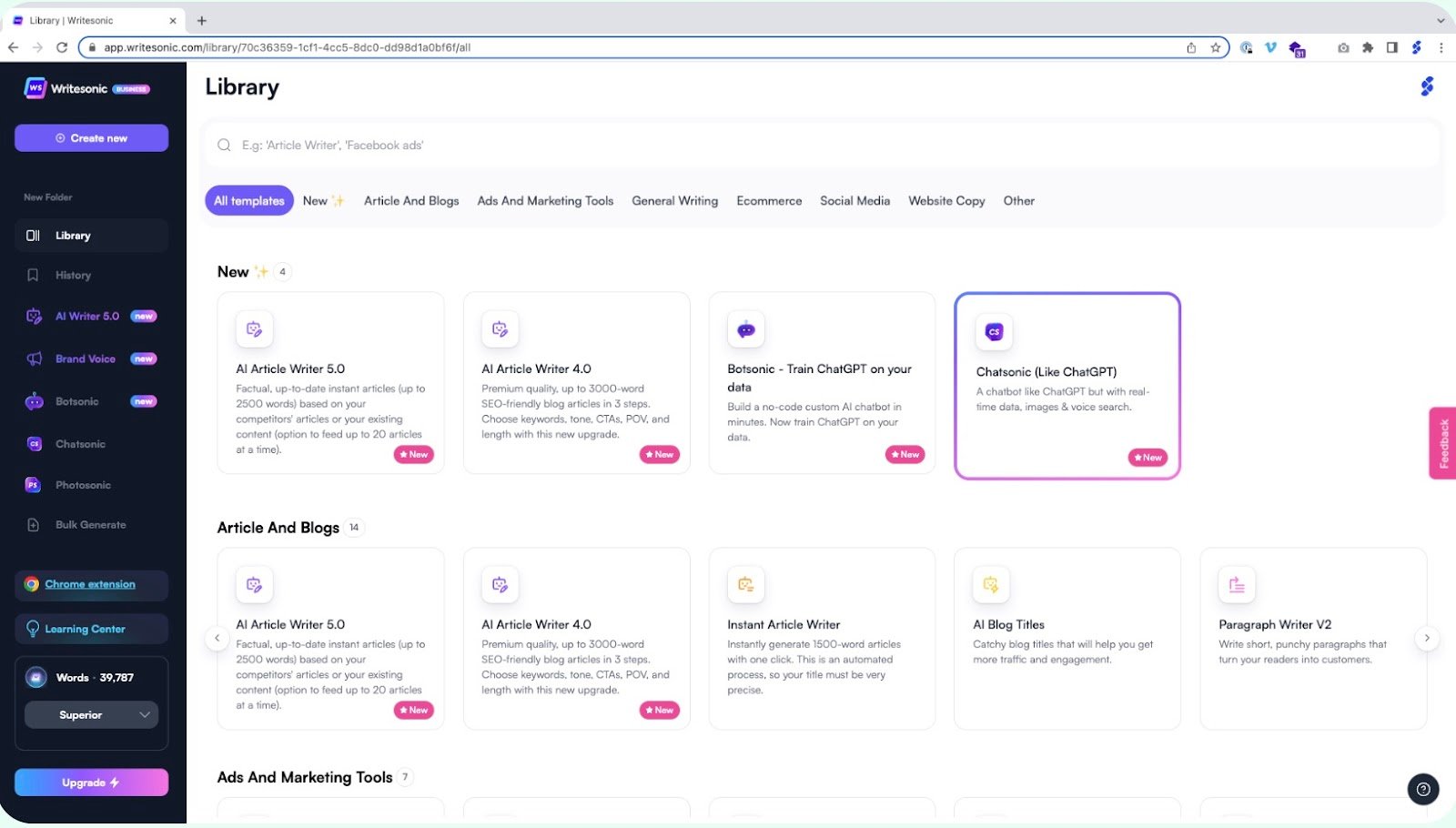
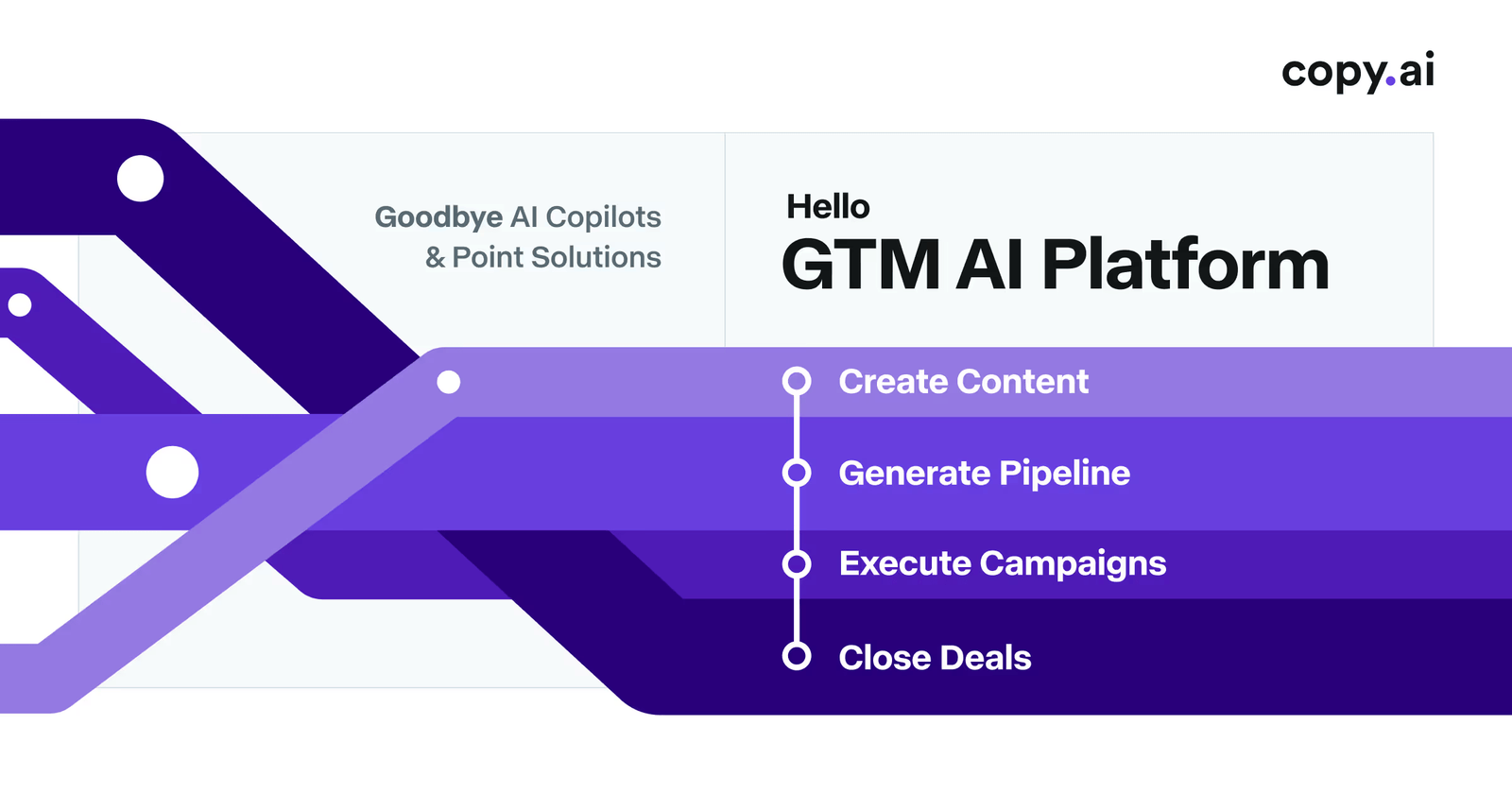
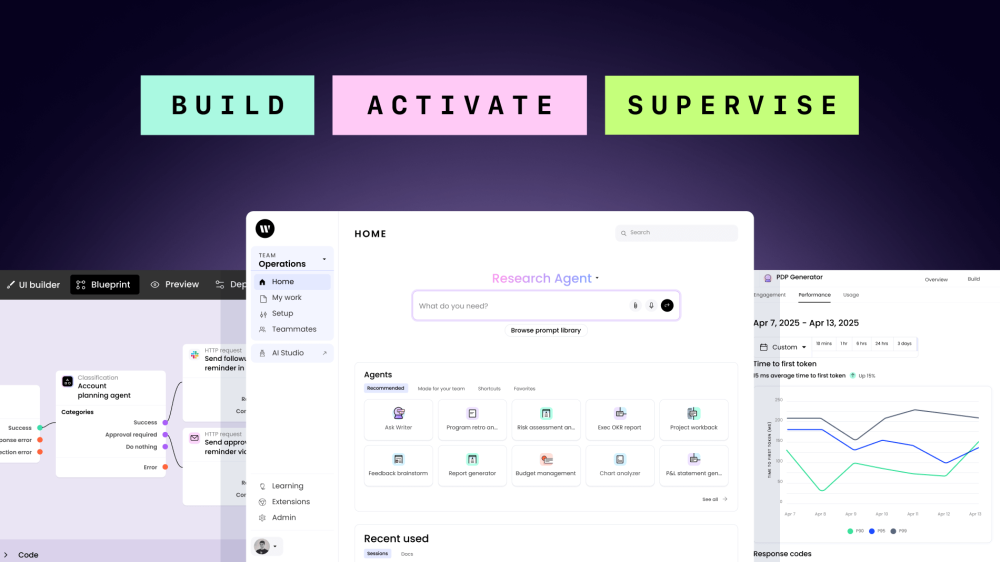
Writer (writer.com) is the enterprise play, with house-style enforcement, a snippet library, and a self-hosted-friendly posture that lands it inside firms like Deloitte and Accenture. It is less about creative spark and more about making 500 people sound like one brand without legal flagging every line. Copy.ai, meanwhile, dropped its free writing tier in 2024 and repositioned as a ‘Go-to-Market AI Platform’ built around workflow credits and seats; it reports 17 million users as of early 2026 but now targets revenue-ops and sales teams more than solo copywriters. If you came for copywriting, Copy.ai is no longer aimed at you – and a frontier chatbot may do the drafting just as well for less.
The unavoidable brand-risk reality across all three: AI output is confident even when wrong, and tone drift is subtle. Jasper’s own survey ranks output quality and brand/legal/compliance review as two of the top three barriers to scaling. Treat these tools as fast first-drafters with a human editor on every public-facing asset.
Jasper
Best for: Marketing teams producing on-brand content across many channels
What works
Watch out for
Writer
Best for: Regulated and large enterprises needing house-style governance
What works
Watch out for
Copy.ai
Best for: RevOps and sales teams automating GTM workflows, not solo writers
What works
Watch out for
SEO and GEO: the search game split in two
In 2026, search optimization splits into classic SEO (ranking in Google’s links) and generative engine optimization, or GEO (getting cited inside ChatGPT, Gemini, Perplexity, and Google AI Overviews) – and you now need tooling for both because the two channels increasingly disagree on which pages win. Surfer SEO remains the on-page workhorse, Semrush and Ahrefs hold the keyword and backlink layers, and a new GEO tier (Profound, Semrush AI Visibility, Goodie AI) tracks whether AI engines actually mention you.
The shift is structural, not cosmetic. AI Overviews now appear in at least 16% of all Google searches, ChatGPT reaches over 800 million weekly users, and the Gemini app has surpassed 750 million monthly users. When an AI synthesizes the answer, there is no list of ten blue links to climb – either it cites you or it doesn’t. Search Engine Land reports that 40-60% of AI-cited sources change month to month, so visibility is volatile and demands continuous monitoring rather than a one-time audit.
What actually moves the needle on GEO is unglamorous: entity clarity (consistent brand descriptions across your site, LinkedIn, Crunchbase, and review sites), extractable content (self-contained paragraphs that front-load the answer, clear headings, concrete stats over vague claims), and presence on the sources LLMs lean on – Reddit, LinkedIn, and YouTube ranked among the top cited sources for major LLMs. Structured data (JSON-LD that mirrors visible content) and solid technical accessibility for AI crawlers round it out. Note the irony for marketers: the house style that wins GEO – lead with the answer, be specific – is the same one good editors have always wanted.
On tooling, Semrush’s Enterprise AIO and AI Visibility toolkit track mentions, sentiment, and share of voice across AI platforms; Profound monitors visibility across every major engine; and Goodie AI (from $495/mo) pairs cross-engine tracking with optimization guidance. The honest caveat: GEO measurement is young, vendors define ‘visibility’ differently, and no tool can promise placement – AI engines change their citation behavior without notice.
| Workflow | Lead tools | What it does | Watch-out |
|---|---|---|---|
| On-page SEO | Surfer SEO | Scores drafts on keyword coverage, readability, structure | Can encourage over-optimization if followed blindly |
| Keywords & backlinks | Semrush, Ahrefs | Keyword research, rank tracking, largest backlink index | Premium pricing; data is directional, not gospel |
| GEO / AI visibility | Profound, Semrush AI Visibility, Goodie AI | Tracks brand mentions, sentiment, share of voice in AI answers | Young category; citations churn 40-60% monthly |
| AI content briefs | Jasper, ContentShake AI | Outlines and full drafts grounded in SEO data | Needs human editing; risk of generic output |
Ads: where prediction beats prose
For advertising, the AI marketing tools that actually pay for themselves are the predictive ones – Anyword scores ad copy before you spend, AdCreative.ai scores copy and creative together, and broad optimizers like Albert.ai tune live spend – because predicting performance is a narrow, data-rich problem a specialist model does far better than a general chatbot. This is the workflow where AI’s edge is most measurable.
Anyword’s Predictive Performance Score rates every piece of copy 0-100 based on more than $250M in historical ad spend, and the company claims 82% accuracy at picking the winner between two variants. You can train the engine on your own campaign data for predictions tuned to your audience, and 2026 updates add image-copy performance forecasting. Pricing runs Starter $49/mo, Data-Driven $99/mo, and Business $499/mo. AdCreative.ai takes a different angle – generating ad copy and visual creative together and scoring both – with a credit-based model starting around $29/mo (Starter) and ~$59/mo (Professional), and a Creative Scoring AI it markets at 90%+ accuracy.
At the optimization layer, Albert.ai autonomously manages spend across Google, Meta, YouTube, and Bing; its widely cited Harley-Davidson case study reported a 2,930% increase in leads per month. Treat any single case study as a ceiling, not an average – but the category logic is sound: media buying is a continuous optimization problem, exactly where autonomous systems shine.
The brand-risk caveat in ads is sharper than in content because mistakes are public and paid. AI-generated creative can drift off-brand or into legally dubious claims, and predictive scores reflect past patterns – they do not understand a new product, a sensitive moment, or a regulatory line. Keep predictive scoring in the loop for ranking variants, but keep a human on approval and on the claims.
Pros
Cons
Analytics and intelligence: making sense of the firehose
On the analytics side, AI marketing tools in 2026 are most useful for synthesis and pattern-finding – turning session replays, brand mentions, and competitor moves into briefs a human can act on – rather than for autonomous decision-making on spend or strategy. The value is compression: less time staring at dashboards, more time deciding.
FullStory uses AI to stitch cursor moves, clicks, and page visits into visitor ‘stories’ it compares across thousands of sessions to surface UX friction, with customers like Gap, Forbes, and Icelandair. Brand24 scours news, social, blogs, and forums for mentions with sentiment analysis (clients include Uber and Intel), and Browse AI runs scheduled web scrapes to monitor competitor pricing, reviews, and product changes – used by teams at Adobe, Amazon, Salesforce, and HubSpot. For ad-hoc intelligence, research tools like Paradigm AI pull and summarize company and competitor data into spreadsheets.
The honest limit is attribution. GA4 and Search Console were built for the blue-link world and are weak at tracking AI-referral traffic – and remember only 41% of marketers can prove AI ROI at all. AI analytics is excellent at describing what happened and decent at suggesting why; it is still unreliable at autonomously deciding what to do next with real budget. Use it to brief the human, not to replace them.
Attribution is the weak link. AI tools can summarize behavior beautifully, but classic analytics still can’t see most AI-referral traffic – so ‘AI ROI’ remains hard to prove for the majority of teamsAgentic campaign tools: real, shipping, and over-hyped
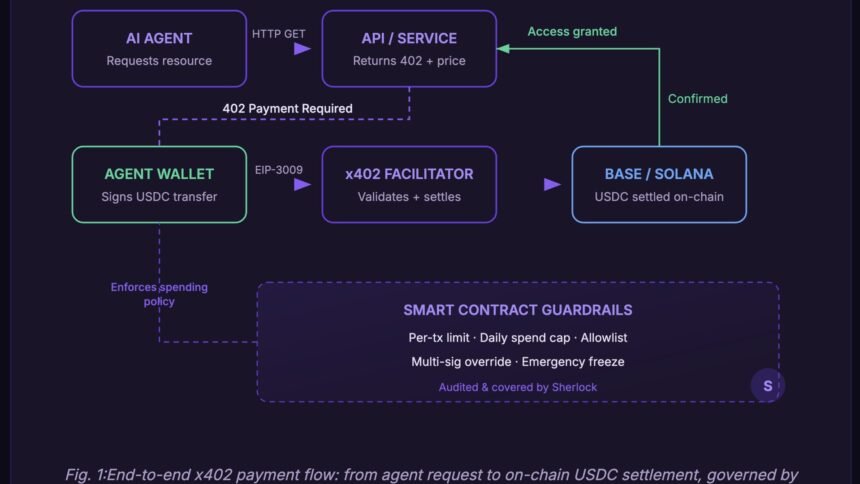
Agentic marketing platforms – autonomous systems that execute multi-step campaigns from a goal rather than a script – are genuinely shipping in 2026, with Salesforce Agentforce, HubSpot Breeze, and specialist platforms like Tofu leading, but their autonomy is only as good as your data and guardrails. The promise is that you set an objective (‘increase repeat purchases 20%’) and the system decides the steps; the reality is closer to a very capable junior team that still needs supervision.
The traction is not vapor. Salesforce reports more than $540M in Agentforce ARR as of early 2026 with 3,000+ paying customers, running autonomous agents for lead scoring, campaign optimization, and engagement natively on CRM data – though it requires meaningful Salesforce infrastructure and carries enterprise costs. HubSpot Breeze embeds content, social, and prospecting agents into the HubSpot interface (reported around $800/mo for mid-market teams) and is the smoothest option if you already live in HubSpot. Specialists go deeper on personalization: Tofu’s case studies cite RingCentral cutting content-creation time 80% and Vividly scaling ABM from 20 to 650 accounts (a 32x jump), while builders like Gumloop and Relevance AI let you assemble custom agents, and ActiveCampaign ($49/mo) packs 30+ agents around email.
Why the urgency? Gartner projects that 90% of B2B purchases will be influenced by AI agents within three years – which means your buyers’ agents will increasingly evaluate you, raising the stakes on both your GEO presence and your own automation. But ‘autonomous’ is doing a lot of work in the marketing copy. These platforms need clean CRM data, clear objectives, and tight policy boundaries; without them, autonomy just produces mistakes faster and at scale. The pattern that works in production is human-on-the-loop: agents draft, route, and propose; a person approves anything that ships or spends.
Salesforce Agentforce
Best for: Enterprises with mature Salesforce CRM data
What works
Watch out for
HubSpot Breeze
Best for: Mid-market teams inside the HubSpot ecosystem
What works
Watch out for
Tofu
Best for: B2B teams running account-level personalized campaigns
What works
Watch out for
How to assemble a stack that actually works
The winning 2026 stack is workflow-matched and small: one content tool with brand controls, one SEO plus one GEO tracker, one predictive ad tool, one analytics-synthesis tool, and at most one agentic platform – tied together with clear human approval gates. Resist the urge to buy a single suite that claims to do all of it; you will overpay for breadth and underperform on every individual job.
Sequence the rollout by where you bleed time. Most teams get the fastest payback from predictive ad scoring (it directly protects spend) and content drafting (the highest-volume task), then layer in GEO monitoring as a new channel, and only then evaluate an agentic platform once the underlying data and processes are clean. Adding autonomy on top of messy data and undefined approval flows is how teams generate impressive-looking mistakes.
Budget realistically for the parts vendors gloss over: the brand/legal/compliance review that Jasper’s survey flags as the top scaling barrier, the editor time to fix tone drift, and the measurement work needed to actually prove ROI (remember, most teams can’t). The tools are good enough to be genuinely useful and not good enough to be left alone – and pretending otherwise is the single most expensive mistake in AI marketing right now.
A pragmatic starter stack (lean team)
Content drafting via a frontier chatbot or Jasper Creator; Surfer SEO for on-page; one GEO tracker (Semrush AI Visibility or Profound); Anyword Starter for ad-copy scoring; Brand24 for mention monitoring. Human editor approves every public asset. Roughly $200-400/mo plus seats.An enterprise stack (regulated / large org)
Writer for governed content; Semrush Enterprise AIO for SEO + AI visibility; AdCreative.ai or Anyword Business for paid; FullStory for behavioral analytics; Salesforce Agentforce or HubSpot Breeze for agentic execution – with policy guardrails and human-on-the-loop approval on anything that ships or spends.Builder’s take
I run Cyntr, an agent-orchestration runtime, and I build the content engine behind Loomfeed – so I buy and break these tools for a living, not just read the spec sheets. The honest read for 2026: AI is now table stakes in marketing, but the gap between a demo and a deploy is wider than vendors admit.
- Pick tools by workflow, not by hype. A purpose-built ad scorer beats a general LLM at predicting ad performance, and a general LLM beats a ‘marketing suite’ at raw drafting. Stop expecting one platform to win every stage.
- Budget for the review tax. Brand, legal, and compliance review is now the number-one bottleneck to scaling AI – per Jasper’s 2026 survey of 1,400 marketers – so the tool’s governance and brand-voice controls matter more than its raw output quality.
- Treat GEO as a real channel, not a checkbox. With AI Overviews in ~16% of searches and ChatGPT at 800M+ weekly users, getting cited in AI answers is now a distinct discipline from blue-link SEO – and the citation set churns 40-60% month to month, so it needs continuous monitoring.
- Be skeptical of ‘autonomous.’ Agentic platforms like Agentforce and Breeze are real and shipping, but they need clean CRM data and tight guardrails. Autonomy without policy is just faster mistakes – keep a human on the publish button.
Frequently asked questions
There is no single best tool – the strongest stack is matched to workflows: Jasper or Writer for content, Surfer plus a GEO tracker like Profound or Semrush AI Visibility for search, Anyword or AdCreative.ai for ads, FullStory or Brand24 for analytics, and Salesforce Agentforce or HubSpot Breeze for agentic execution. Most effective teams run two to four of these, not one suite.
Yes for marketing teams that need brand-consistent content at scale. Jasper’s 2026 relaunch as a multi-agent platform adds 100+ agents, a Canvas workspace, and Content Pipelines, with brand controls via Jasper IQ. Pricing is $49/mo (Creator), $69/mo (Pro), and custom Business plans from around $250+/mo. Output still needs human editing, and costs scale with volume.
GEO is the practice of getting your brand cited inside AI answers from ChatGPT, Gemini, Perplexity, and Google AI Overviews. With AI Overviews in about 16% of searches and ChatGPT at 800M+ weekly users, it is now a distinct channel from blue-link SEO. You need it if AI search is a meaningful path for your audience – and the cited sources churn 40-60% monthly, so it requires ongoing monitoring.
Not safely yet. Agentic platforms like Agentforce and HubSpot Breeze can execute multi-step campaigns from a goal, but they depend on clean CRM data and tight guardrails. The pattern that works in production is human-on-the-loop: agents draft, route, and propose, while a person approves anything that ships or spends money.
Directionally useful, not gospel. Anyword claims 82% accuracy at picking the winning variant based on $250M+ in ad spend data, and AdCreative.ai markets 90%+ creative scoring accuracy – but these are vendor-reported figures, not independent audits. Scores reflect past patterns and are blind to new products or sensitive context, so use them to rank variants and keep a human on approvals.
The top three barriers marketers report are brand/legal/compliance review, inconsistent output quality, and data and privacy risk. AI output is confident even when wrong, tone drift is subtle, and AI creative can drift off-brand or into risky claims. Budget for editor and review time, and never leave public-facing or paid assets fully unsupervised.
Primary sources
- Best AI Agents for Marketing in 2026 — Tofu
- 30 best AI marketing tools for 2026 — Marketer Milk
- Jasper Plans & Pricing — Jasper
- Introducing the New Jasper: First Multi-Agent Platform for Marketers — Jasper
- The State of AI in Marketing 2026 — Jasper
- Copy.ai: Go-to-Market AI Platform — Copy.ai
- What is Anyword? A complete overview for marketers in 2026 — eesel AI
- What is Generative Engine Optimization (GEO)? — Search Engine Land
- Agentic Marketing Platform: Next-Gen Marketing Cloud — Salesforce
- Best Generative Engine Optimization (GEO) Tools 2026 — SitePoint
Last updated: May 31, 2026. Related: Products.