
A builder’s organized recap of every AI-agent announcement from the June 2 keynote, sorted by where it ships and exactly when you can use it.
What did Microsoft Build 2026 announce for AI agents?
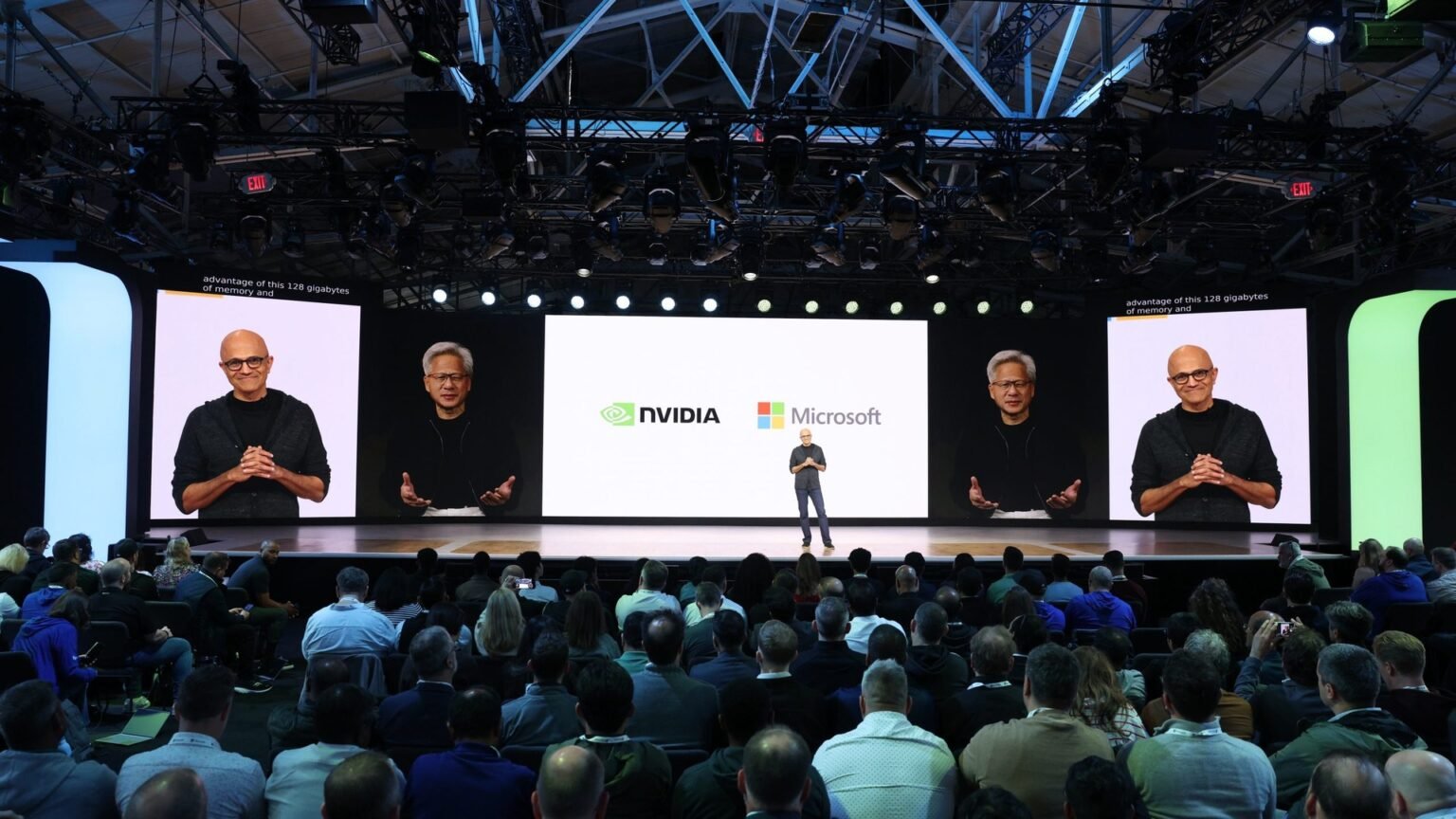
At Microsoft Build 2026, the company repositioned AI agents from a Copilot feature into a platform tier that spans Windows, the Microsoft 365 Copilot surface, GitHub, and Microsoft Foundry, and it backed that shift with a mix of generally available, public preview, and announced-only releases. The keynote ran on June 2, 2026, from Fort Mason in San Francisco, with Satya Nadella framing the year’s theme as a move from assistants that respond to prompts to agents that run the work.
The problem for builders is that the news broke as scattered hot-takes, each one blurring whether a thing shipped, entered preview, or merely got a slide. This recap fixes that. Every Microsoft Build 2026 AI agents announcement below is grouped by where it lives and labeled with its real status and date as the sources stated them. Where Microsoft’s own pages and the press conflict — and on a couple of points they do — the conflict is flagged rather than smoothed over.
Three structural bets define the Microsoft Build 2026 AI agents story. First, Windows itself becomes an agent host with an open-sourced framework and a curated store. Second, Microsoft is decoupling from a single model supplier across both consumer Copilot and developer Copilot. Third, Foundry is consolidating into the control plane where production agents are built, governed, and shipped. The sections that follow walk each one in turn.
What is the Windows Agent Framework and runtime?
The Windows Agent Framework (WAF) is Microsoft’s open-source, MIT-licensed stack that lets AI agents run as native, first-class processes inside Windows, paired with a Windows Agent Runtime that manages each agent’s lifecycle, memory, and permissions. WAF reached version 1.0 on April 2, 2026, and was open-sourced under the MIT license at Build; the Windows Agent Runtime entered preview with Insider access in June. This is the clearest sign that Windows is being repositioned as an agent platform rather than a host for bolt-on Copilot panels.
Architecturally, the runtime ships as a background service built on Windows Runtime (WinRT) underpinnings, adding an agent registration service, a cross-agent communication bus, and a memory service for persistent context across sessions. A rule engine enforces granular access controls — the gate between an agent and the files, apps, or APIs it can touch. Agents are described in YAML manifests covering their intents, actions, and safety constraints, which means an agent definition can be versioned in Git alongside application code.
To distribute these agents, Microsoft announced the Windows Agent Store, a curated marketplace with security reviews where agents live as installable, first-class citizens of the OS. The headline term for developers is an 85% revenue share. Tooling rounds it out: Visual Studio 2026 gains an Agent Designer that emits the YAML manifests, and a command-line tool packages an agent into a single distributable executable.
Windows Agent Framework v1.0: generally available and open-source (April 2, 2026). Windows Agent Runtime: public preview via Windows Insiders (June 2026). Windows Agent Store and the 85% revenue share: announced at Build, not yet broadly open. Treat the runtime and store as preview-grade until Microsoft publishes a GA date.
Is Copilot now multi-model, and what is GPT-5.5 Instant?
Yes — Microsoft made both its consumer and developer Copilot products multi-model at Build 2026, so tenants can route work to different engines, and GPT-5.5 Instant is the new fast OpenAI model that landed in Microsoft 365 Copilot in May 2026 for quick, everyday responses. The strategic message is that Copilot is no longer hardwired to a single supplier; it is an orchestration layer that picks a model by speed, cost, or quality.
On the Microsoft 365 Copilot side, GPT-5.5 Instant became available in May 2026 across Word, Excel, Outlook, and Teams, reaching Microsoft 365 Copilot users with priority access and Copilot Chat users with standard access. Microsoft has paired model choice with federated Copilot connectors built on the Model Context Protocol (MCP), which query partner systems live at prompt time so answers reflect current data rather than a stale index. Named launch partners include Canva, HubSpot, Linear, LSEG, Moody’s, and Notion; the connectors rolled out to users from late April and reached general availability across tenants through late May 2026.
On the GitHub Copilot side, Microsoft is rebuilding Copilot as an agent-first, multi-model platform in which Anthropic’s models — not only OpenAI’s — are selectable inside the orchestration layer, and a new model-rules capability lets organizations target which models their developers can use. The practical takeaway: model choice is now a governance setting, not a per-user toggle, so plan your allow-list before rollout.
| Surface | Capability | Status | Date |
|---|---|---|---|
| Microsoft 365 Copilot | GPT-5.5 Instant (fast OpenAI model) | Generally available | May 2026 |
| Microsoft 365 Copilot | Federated MCP connectors (Canva, HubSpot, Notion, etc.) | Generally available across tenants | Late May 2026 |
| GitHub Copilot | Multi-model orchestration incl. Anthropic models | Available / rolling out | June 2, 2026 |
| GitHub Copilot | Model rules (admins target models to orgs) | Changelog-announced | Late May 2026 |
What is Project Polaris and does it replace OpenAI in GitHub Copilot?
Project Polaris is Microsoft’s in-house coding model that will replace GPT-4 Turbo as the default engine for GitHub Copilot subscribers starting in August 2026, reducing Copilot’s reliance on OpenAI for its baseline coding workload. It is a mixture-of-experts architecture with sub-modules tuned for specific languages and frameworks, and Microsoft says it outperforms GPT-4 Turbo on standard coding benchmarks such as HumanEval and MBPP, with notable gains in lower-resource languages like Rust and Haskell.
Polaris is part of a broader push of Microsoft AI (MAI) models that surfaced at Build, including MAI-Thinking-1 for reasoning, MAI-Image-2.5 for image generation and editing, MAI-Transcribe-2 for speech-to-text with diarization, and MAI-Voice-2 for multilingual text-to-speech — all in public preview in Foundry. Together they signal Microsoft building a full in-house model stack rather than reselling a single partner’s catalog.
Two operational details matter more than the benchmark chart. First, the swap is a default change: Microsoft has described an automatic migration in August with an optional fallback window, so the safe move is to test Polaris on a representative repo before that cutover, not after. Second, the GitHub Copilot app — the new agent-native desktop control center — entered technical preview at Build for existing Copilot Pro, Pro+, Business, and Enterprise subscribers, while GitHub Copilot Workspace exited beta and reached general availability at the event.
“Swapping GPT-4 Turbo for an in-house model as the Copilot default isn’t a benchmark story. It’s a margin and supply-chain decision wearing a benchmark’s clothes.”
Surya Koritala, founder of Cyntr and Loomfeed
What changed in Microsoft Foundry for building agents?
Microsoft Foundry became the consolidated control plane for building, grounding, governing, and shipping production agents at Build 2026, with several core pieces reaching general availability and a larger set landing in public preview. The clearest GA signals were Foundry IQ Knowledge Bases for SLA-backed retrieval, the Foundry Toolkit for VS Code for template-based creation and local debugging, and Fireworks AI models available on Foundry with enterprise SLAs.
On the runtime side, Hosted Agents in Foundry Agent Service — a managed runtime for production agents with sandboxed sessions, state, and filesystem access, deployable framework-agnostically across the Microsoft Agent Framework, the GitHub Copilot SDK, and LangGraph — was positioned for general availability by early July 2026. Publishing Foundry agents to Microsoft Teams and Microsoft 365 Copilot was described as planned GA in June 2026. Memory in Foundry Agent Service (procedural, user, and session memory) entered public preview, with Microsoft citing a 7 to 14 percentage-point absolute success-rate gain from procedural memory.
Governance is where Microsoft made its sharpest land-grab. It open-sourced ASSERT, which turns written policies into executable agent evaluations, and the Agent Control Specification (ACS), a portable YAML contract that enforces runtime controls at defined checkpoints. Both are framework-neutral by design, which is Microsoft trying to set the standard for agent governance the way it once did for developer tooling. Supporting previews included Toolboxes for a single managed tool endpoint, Skills as a versioned MCP-discoverable catalog, plus tracing, rubric-based evaluation, and guided guardrail setup.
Foundry releases by status (Build 2026)
Generally available: Foundry IQ Knowledge Bases; Foundry Toolkit for VS Code; Fireworks AI on Foundry; Voice Live (for prompt agents). Public preview: Memory in Foundry Agent Service; Foundry IQ Serverless; Toolboxes; Tracing and Evaluations; Rubric Evaluator; Guided Guardrail Setup; the four MAI models. Open source: ASSERT; Agent Control Specification. Targeted GA: Hosted Agents in Foundry Agent Service (early July 2026); Teams + Microsoft 365 Copilot publishing (June 2026). Limited access: Web IQ (sub-200 ms web grounding, zero data retention).Is Microsoft Agent 365 generally available, and what does it govern?
Yes — Microsoft Agent 365, the enterprise control plane for AI agents, reached general availability on May 1, 2026, ahead of Build, priced at $15 per user per month as a standalone offering and also bundled into the Microsoft 365 E7 SKU. It provides registration, access control, inventory, interoperability, and security for agents, with management surfaced directly in the Microsoft 365 admin center. (One Build recap omitted Agent 365 from its list; the GA date and pricing are confirmed by dedicated coverage and Microsoft’s Ignite 2025 origin for the product, so treat May 1 as the operative date.)
Crucially, Agent 365 governs more than Microsoft’s own agents. At GA it added registry sync to import agents from AWS Bedrock and Google’s Gemini Enterprise Agent Platform into a single inventory, and it began surfacing and optionally blocking unmanaged local agents on Windows endpoints through Microsoft Defender and Intune. Initial local support targeted third-party runtimes, with a roadmap toward GitHub Copilot CLI and Claude Code. A new Windows 365 for Agents Cloud PC class — purpose-built for agentic workloads — arrived in public preview alongside it.
The connective tissue across all of this is the Agent Control Specification and Microsoft’s broader IQ context layer (Work IQ from Microsoft 365 signals, Fabric IQ for business data, and Web IQ for grounding), which feed agents real workplace knowledge. Microsoft also previewed Microsoft Scout, an always-on personal agent, and Project Solara, a platform for agent-first devices — both forward-looking rather than shippable today.
Pros
Cons
Build 2026 AI agent announcements: a timeline and status table
Build 2026 made agents a platform tier, but read the status labels before you commit
The fastest way to act on Build 2026 is to read every AI-agent announcement against one question: can I deploy it today, only in preview, or not yet? The table below collapses the keynote into that single view, ordered roughly by how production-ready each item is, so you can separate what to pilot this quarter from what to merely track.
Two planning notes. Dates labeled ‘targeted’ or ‘planned’ came from keynote slides and blog posts, not shipped release notes — pin them in writing before committing a sprint. And remember that GA in one surface does not imply GA everywhere: GPT-5.5 Instant is GA in Microsoft 365 Copilot, but the GitHub Copilot app carrying related agent features is only in technical preview.
| Announcement | What it is | Status | Date / target |
|---|---|---|---|
| Microsoft Agent 365 | Enterprise control plane for AI agents ($15/user/mo) | Generally available | May 1, 2026 |
| GPT-5.5 Instant in M365 Copilot | Fast OpenAI model for everyday tasks | Generally available | May 2026 |
| Federated Copilot connectors (MCP) | Live partner data at prompt time | GA across tenants | Late May 2026 |
| Windows Agent Framework v1.0 | Open-source native agent runtime stack | GA + open-sourced (MIT) | April 2, 2026 |
| Foundry IQ Knowledge Bases | SLA-backed agent retrieval/grounding | Generally available | June 2, 2026 |
| GitHub Copilot Workspace | Agentic programming environment | GA (exited beta) | June 2, 2026 |
| GitHub Copilot app | Agent-native desktop control center | Technical preview | June 2, 2026 |
| Windows Agent Runtime | OS-level agent execution APIs | Public preview (Insiders) | June 2026 |
| Memory in Foundry Agent Service | Procedural/user/session memory | Public preview | June 2, 2026 |
| MAI models (Thinking-1, Image-2.5, etc.) | In-house model family in Foundry | Public preview | June 2, 2026 |
| Hosted Agents in Foundry Agent Service | Managed production agent runtime | Targeted GA | Early July 2026 |
| Foundry → Teams / M365 publishing | Publish Foundry agents to Copilot surfaces | Planned GA | June 2026 |
| Project Polaris | In-house MoE coding model for Copilot | Announced; default migration | August 2026 |
| Windows Agent Store | Curated agent marketplace (85% rev share) | Announced | Build 2026 |
| ASSERT + Agent Control Specification | Open governance + eval contracts | Open source | June 2, 2026 |
Builder’s take
I build agent infrastructure for a living (Cyntr and Loomfeed), so I read these keynotes for what actually ships, not the sizzle reel. Build 2026 was the moment Microsoft stopped treating agents as a Copilot feature and started treating them as a platform tier. Three things stood out to me:
- The open-sourcing of the Windows Agent Framework and the Agent Control Specification matters more than any single demo. An MIT-licensed runtime plus a portable YAML governance contract is Microsoft trying to own the agent equivalent of POSIX. If you ship agents anywhere, read the ACS spec before you assume your control plane is differentiated.
- Project Polaris is the quiet story. Swapping GPT-4 Turbo for an in-house mixture-of-experts model as the Copilot default in August is a margin and supply-chain decision dressed as a benchmark win. Watch whether the August auto-migration degrades anyone’s workflow before you celebrate the Rust and Haskell gains.
- The status soup is the real trap. ‘Available at Build’ meant GA for Copilot Workspace, technical preview for the GitHub Copilot app, and ‘planned GA in June’ for Foundry-to-Teams publishing. I do not green-light a roadmap on a keynote slide. Pin the exact GA date in writing before you commit a sprint to anything below.
Frequently asked questions
Microsoft Build 2026 ran June 2-3, 2026, at the Fort Mason Center in San Francisco. Satya Nadella delivered the opening keynote on June 2, framing the year’s theme as a shift from AI assistants that respond to prompts to AI agents that autonomously run the work.
Project Polaris, Microsoft’s in-house mixture-of-experts coding model, is set to replace GPT-4 Turbo as the default engine for GitHub Copilot subscribers starting in August 2026 via an automatic migration with an optional fallback window. It reduces reliance on OpenAI for the baseline coding workload, but OpenAI and other models remain selectable inside Copilot’s multi-model orchestration layer.
Yes. The Windows Agent Framework reached version 1.0 on April 2, 2026, and was open-sourced under the MIT license at Build 2026. It provides the runtime, agent registration, a cross-agent communication bus, and memory services so agents can run as native processes inside Windows. The companion Windows Agent Runtime entered public preview via Windows Insiders in June 2026.
Microsoft Agent 365 reached general availability on May 1, 2026, priced at $15 per user per month as a standalone offering, and is also bundled into the Microsoft 365 E7 SKU. It is an enterprise control plane that registers, secures, and inventories agents — including third-party agents imported from AWS Bedrock and Google’s Gemini Enterprise Agent Platform — with management in the Microsoft 365 admin center.
Multi-model Copilot means both Microsoft 365 Copilot and GitHub Copilot can route work to different models rather than a single supplier. In Microsoft 365 Copilot, GPT-5.5 Instant became generally available in May 2026, and GitHub Copilot’s orchestration layer now includes Anthropic models alongside OpenAI’s, with admin model-rules to target which models an organization can use.
Foundry consolidated into the control plane for production agents. Generally available pieces included Foundry IQ Knowledge Bases and the Foundry Toolkit for VS Code. Public previews included Memory in Foundry Agent Service and four MAI models. Microsoft also open-sourced ASSERT (policies to evals) and the Agent Control Specification. Hosted Agents in Foundry Agent Service was targeted for GA by early July 2026, and publishing agents to Teams and Microsoft 365 Copilot was planned for GA in June 2026.
Primary sources
- Microsoft Build 2026 official news hub — Microsoft
- What’s new in Microsoft Foundry — Build Edition — Microsoft Foundry Blog
- GitHub Copilot app: the agent-native desktop experience — The GitHub Blog
- Available today: GPT-5.5 Instant in Microsoft 365 Copilot — Microsoft Community Hub
- Federated Copilot connectors — bringing real-time enterprise data into Microsoft 365 Copilot — Microsoft Community Hub
- Microsoft Agent 365 Hits General Availability With Local AI Agent Controls — WinBuzzer
- GitHub Copilot Replaces GPT-4 With Project Polaris, Ships Multi-Agent VS Code at Build — Tech Times
- Build 2026: Microsoft Announces GitHub Copilot App — Thurrott.com
Last updated: June 2, 2026. Related: Agent Infrastructure.