
A merchant readiness decision guide: the data, payment rails, and channel toggles your store needs before AI shopping agents start checking out on a buyer’s behalf.
Is your store ready for AI shopping agents right now?
33%
of ecommerce businesses actively preparing for agentic deployment
vs 57% merely exploring; Pattern Group, 2025 (attributed)
4
AI channels live by default via Shopify Agentic Storefronts
ChatGPT, Copilot, Google AI Mode, Gemini (Shopify, Mar 2026)
Mar 24, 2026
Shopify Agentic Storefronts rollout week
Free, managed from Shopify Admin
Most stores are discoverable but not transactable: an AI shopping agent can find your products, but it abandons the purchase the moment your data, payment rails, or policies are ambiguous. Readiness in 2026 is no longer a marketing question about whether you appear in ChatGPT or Google AI Mode. It is an infrastructure question about whether an autonomous agent can read your catalog, trust your prices, and complete a checkout without a human untangling a contradiction.
The shift happened fast. Shopify began rolling out Agentic Storefronts to all merchants the week of March 24, 2026, making products discoverable across ChatGPT, Microsoft Copilot, AI Mode in Google Search, and the Gemini app, managed centrally from Shopify Admin with no extra transaction fees beyond standard processing rates, according to Shopify’s own announcement. The plumbing got easy. The data hygiene did not.
The honest market picture is that capability is outrunning readiness. A 2025 Pattern Group study cited across the trade press found that while roughly 57% of ecommerce businesses were exploring AI agent use cases, only about 33% were actively preparing for deployment. Treat that gap as opportunity: the merchants who get their agent-ready product data right early win the agent’s trust before their competitors even structure a return policy.
This guide is a decision framework, not a hype piece. We will walk the readiness checklist, decode the three protocols you keep hearing about (ACP, UCP, and AP2), map what to do per platform, and end with a clear verdict on where a real merchant should start this quarter.

The AI shopping agents readiness checklist and decision table
A store is ready for AI shopping agents when five things are true: structured product data is complete, returns and shipping are machine-readable, an agentic payment rail is enabled, channel toggles are switched on deliberately, and catalog responses are fast and consistent. Score yourself honestly against each before you flip a single channel live.
The unifying principle is that agents reconcile rather than browse. As coverage from nshift and others has stressed, an agent cross-checks your product page against your feed against your checkout API, and a single mismatch can be enough for it to treat the catalog as unreliable and downrank it. Humans forgive vague copy; agents route around it.
Multiple 2026 commerce guides report that Google and major LLMs now effectively require MerchantReturnPolicy and OfferShippingDetails inside the product offer; without them an agent cannot guarantee total cost or return terms and may skip the listing entirely. These are real schema.org types, but the ‘mandatory since January 2026’ framing comes from secondary trade analysis, not a single official decree, so confirm current requirements in Google Merchant Center before you treat it as gospel.
| Readiness pillar | What ‘ready’ looks like | Common failure mode |
|---|---|---|
| Structured product data | Titles, descriptions, variants, images, price, product taxonomy, GTIN/MPN all complete and literal | Marketing prose with no GTIN or category; variants buried in descriptions |
| Returns and shipping clarity | MerchantReturnPolicy and OfferShippingDetails present in JSON-LD on every offer | Vague ‘3-5 day’ text the agent cannot parse into a delivery promise |
| Agentic payment rail | ACP or UCP checkout enabled; you remain Merchant of Record | Discoverable but no agentic checkout path; agent links out and drops off |
| Channel toggles | Deliberately enabled per surface where your buyers are | All channels off, or all on with none verified end-to-end |
| Speed and consistency | Catalog/checkout API responses fast and identical across surfaces | Slow endpoints and price/inventory drift between feed and page |
Make your product data legible to AI shopping agents
The single highest-leverage move is converting human-facing product copy into machine-readable structured data, because AI shopping agents query fields, not paragraphs. Shopify’s enterprise guidance frames the problem plainly: most product data was built for humans browsing a page, and there is a gap between what renders well for a shopper and what an agent can actually consume.
Concretely, audit every listing for the fields agents depend on: complete titles and descriptions in specific, literal language; full variant options; multiple clean images; price; a correct product taxonomy; and identifiers like GTIN or MPN. Use custom metafields for attributes such as material and dimensions. On Shopify, the Catalog feature syndicates this data to AI platforms via direct API, so the quality of your catalog mapping is the quality of your agent presence.
Then express policy as data. Put valid JSON-LD Product schema on every product page, and crucially include the MerchantReturnPolicy and OfferShippingDetails objects so an agent can compute true landed cost and return risk. A dedicated FAQ section helps too: question-and-answer formatting is one of the structures answer engines like Perplexity parse most reliably.
The payoff is measurable, with caveats. Shopify’s enterprise blog reports that orders flowing to Shopify stores from AI search queries rose roughly 11x between January 2025 and January 2026, with AI-driven traffic up about 7x, and that ChatGPT referral traffic converted at 1.81% versus 1.39% for non-branded organic search, a roughly 31% higher conversion rate. These are platform-reported figures from a vendor with an interest in the narrative, so read them as directional rather than universal.
Minimum viable JSON-LD for an agent-ready offer
At a baseline, ship Product schema with name, full description, and an image array, plus an Offer containing price, priceCurrency, availability, hasMerchantReturnPolicy (MerchantReturnPolicy), and shippingDetails (OfferShippingDetails). Add AggregateRating where you have real reviews; agents use it as a trust and ranking signal. Validate every page before launch rather than assuming your theme emits clean markup.Why ‘literal’ beats ‘clever’ in product titles
An agent matching a buyer’s intent (‘waterproof hiking boots, men’s size 11, under $150’) scores your listing on explicit attributes. A title like ‘Trailblazer Pro’ tells it nothing; ‘Men’s Waterproof Hiking Boot, Vibram Sole, Size 11’ tells it everything. Save the brand poetry for the description and front-load the literal attributes agents filter on.Decode the rails: ACP, UCP, and AP2 for merchants
You do not pick one protocol and lose the others; ACP and UCP power different AI surfaces, and AP2 sits underneath as a payment-authorization layer, so the practical answer for most merchants is to support more than one over time. Here is the plain-English division of labor.
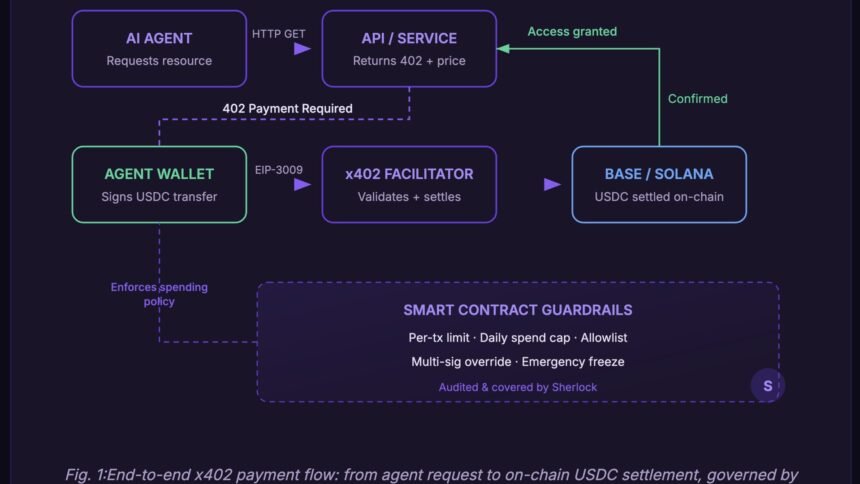
The Agentic Commerce Protocol (ACP), maintained by OpenAI and Stripe, standardizes the checkout conversation between an agent and a merchant and powers Instant Checkout inside ChatGPT. Its Shared Payment Token is a single-use, time-bound, amount-restricted credential, and settlement, refunds, chargebacks, and compliance all remain with the merchant. Stripe’s Agentic Commerce Suite lets you connect your catalog and choose agents from the Stripe Dashboard, with Radar supplying fraud signals and order events flowing back to your existing stack; Stripe has said existing Stripe merchants can enable agentic payments by updating as little as one line of code in their integration.
Google’s Universal Commerce Protocol (UCP), co-developed with Shopify, aims at the broader shopping journey across Search AI Mode, the Gemini app, and Google Shopping. Its March 19, 2026 update added three optional capabilities, summarized in Google’s announcement: Cart (agents add multiple items to a basket from a single store), Catalog (agents fetch real-time variants, inventory, and pricing), and Identity Linking (shoppers carry the same loyalty and member benefits they would get logged in on your site). Crucially, you remain the seller of record, and Google said a simplified UCP onboarding flow in Merchant Center is rolling out over the coming months, with Salesforce, Stripe, and Commerce Inc named as platform partners.
AP2, the Agent Payments Protocol Google announced on September 16, 2025 with sixty-plus partners, operates one layer down: it defines how an agent and the payment network exchange trust using cryptographically signed Mandates. Google has stated UCP is compatible with AP2, A2A, and MCP. For a deeper, side-by-side breakdown of token versus mandate models, see our companion piece, Agentic Payment Protocols Compared.
“Agents reconcile rather than browse. The first contradiction they find between your page, your feed, and your checkout gets your catalog quietly downranked, no error message, no second chance.”
Surya Koritala, founder of Cyntr
| Protocol | Backers | Primary surfaces | What it standardizes | Merchant of Record |
|---|---|---|---|---|
| ACP | OpenAI and Stripe | ChatGPT Instant Checkout | The agent-to-merchant checkout conversation | Merchant retains settlement, refunds, chargebacks |
| UCP | Google and Shopify | Google AI Mode, Gemini, Google Shopping | The fuller journey: cart, catalog, identity/loyalty | Retailer remains seller of record |
| AP2 | Google and 60+ payment partners | Payment-network layer beneath agents | Signed Mandates for payment authorization | Payment authorization, not the sale itself |
What to do per platform: a deliberate channel toggle plan
Turn channels on where your buyers already shop, verify one end-to-end before adding the next, and resist the urge to flip all four toggles at once. Shopify abstracts both ACP and UCP behind Agentic Storefronts, so on Shopify the protocol work is largely handled, but the data and policy work is still yours, and a half-configured channel is worse than a channel that is off.
For ChatGPT, lean on ACP: confirm Instant Checkout completes, prices and inventory match your feed, and order events land in your operations stack. For Google AI Mode and Gemini, lean on UCP: complete your Merchant Center data, enable Cart and Catalog so agents can build multi-item baskets and read live inventory, and configure Identity Linking if loyalty is part of your margin story. For Microsoft Copilot, follow the same data discipline and note that Shopify has said Shop Pay is coming to Copilot. If you are not on Shopify, Stripe’s Agentic Commerce Suite or a UCP platform partner like Salesforce or Commerce Inc gives you a comparable on-ramp.
Trade guidance in 2026 advises keeping catalog and checkout API responses fast, with some sources citing a sub-200ms target, because agents abandon slow or inconsistent endpoints in ways human shoppers never would. Treat your agentic endpoints like a payments API, not a marketing page.
ChatGPT (ACP) checklist
Enable agentic payments via your Stripe integration; confirm the Shared Payment Token flow completes a real test purchase; verify price, availability, and variants match your feed exactly; confirm order events and refunds route correctly since you remain Merchant of Record.Google AI Mode / Gemini (UCP) checklist
Complete Merchant Center data and JSON-LD; enable Cart and Catalog; decide whether Identity Linking for loyalty is worth configuring; confirm you appear as seller of record; watch for the simplified onboarding flow Google said is rolling out over the coming months.Microsoft Copilot checklist
Same structured-data and policy discipline as the others; if on Shopify, manage the toggle from Shopify Admin and watch for Shop Pay support that Shopify has indicated is coming to Copilot.Not on Shopify?
Use Stripe’s Agentic Commerce Suite (connect catalog, pick agents in the Dashboard, Radar fraud, order events) or a UCP platform partner. You still own the data hygiene; the platform owns the protocol translation.Where merchants should start: the readiness verdict
Get the data right, then turn on one channel and prove it works.
Start with data and policy, not channels: fix structured product data, MerchantReturnPolicy, and OfferShippingDetails first, then enable one payment rail on the single surface where your buyers already are. Discoverability is increasingly free and default; trust is what you have to earn, and an agent earns it from clean, consistent, fast data.
If you are on Shopify, the sequence is: complete your Catalog data, validate JSON-LD on every page, enable Agentic Storefronts for one channel, run a real test purchase end-to-end, then expand. If you are not on Shopify, start with Stripe’s Agentic Commerce Suite or a UCP platform partner and apply the same discipline. Either way, the work that moves the needle is unglamorous catalog hygiene, and that is precisely why most stores will skip it and lose the agent’s trust to a competitor who did not.
Builder’s take
I build Cyntr, an agent orchestration runtime, so I spend my days watching agents fail at exactly the kind of brittle, human-shaped interfaces most storefronts still ship. The pattern that decides whether an agent buys from you is boringly consistent: it trusts structured truth and abandons ambiguity. That is the whole game in 2026.
- Treat your product feed as an API contract, not marketing copy. An agent reconciles your page, your feed, and your checkout, and the first mismatch it finds gets your catalog quietly downranked, no error message, no second chance.
- Channel toggles are the easy 20%. The hard 80% is the same data hygiene work you have deferred for years: return policy, shipping windows, variant inventory, and GTINs expressed as machine-readable fields, not prose.
- Pick the surface where your buyers already are and turn that one channel on first. I would rather see a store nail ChatGPT discovery than half-configure four channels and trust none of them.
- Latency is a ranking signal now. Agents abandon slow endpoints the way humans never would, so a 600ms catalog call is not a UX nit, it is a lost sale before a human ever sees the cart.
Frequently asked questions
It means an autonomous agent can discover your products, read your catalog and policies as structured data, trust that prices and inventory are consistent across your page, feed, and checkout, and complete a purchase via an agentic payment rail without a human resolving contradictions. Discoverability alone is not readiness; transactability and data trust are.
No. ACP (OpenAI and Stripe) powers ChatGPT checkout, UCP (Google and Shopify) covers Google AI Mode, Gemini, and Shopping, and AP2 is a payment-authorization layer beneath agents that Google says is compatible with UCP. Most merchants should plan to support more than one over time, starting with the surface where their buyers already shop.
Both are schema.org types that let an agent compute true landed cost and return risk. Multiple 2026 commerce guides report that Google and major LLMs now effectively require them in the product offer, and that listings missing them can be treated as high-friction and skipped. Confirm current requirements in Google Merchant Center, since the strict framing comes from trade analysis rather than one official decree.
Largely yes for the protocol plumbing. Shopify’s Agentic Storefronts abstract both ACP and UCP and rolled out the week of March 24, 2026, managed from Shopify Admin with no extra transaction fees beyond standard processing. But the structured product data, return and shipping policy, and end-to-end checkout verification are still your responsibility.
Generally yes. Under ACP, settlement, refunds, chargebacks, and compliance remain with the merchant; under UCP, Google states retailers remain the seller of record. The agent and the platform handle discovery and the checkout conversation, but the commercial relationship and obligations stay with you.
Start with data and policy before channels. Complete and validate your structured product data, add MerchantReturnPolicy and OfferShippingDetails, then enable one payment rail on the single surface where your buyers already are, run a real test purchase end-to-end, and expand only after it works. Clean, fast, consistent data is what earns an agent’s trust.
Primary sources
- Universal Commerce Protocol updates improve AI shopping for retailers — Google
- Introducing the Agentic Commerce Suite — Stripe
- Millions of merchants can sell in AI chats — Shopify
- OpenAI’s ACP and Google’s UCP: What’s the difference? — Checkout.com
- Agentic-Ready Product Data: How to Get It and the Cost of Inaction — Shopify
- The Agentic Commerce Checklist Every Merchant Needs Now — PYMNTS
Last updated: May 31, 2026. Related: Commerce.