
Hard benchmark data on whether you can point ChatGPT or Claude at your contracts, or whether you need a vertical tool like LegalOn.
Purpose-built legal AI vs general LLM: the short answer
The purpose-built legal AI vs general LLM question has a data-backed answer in 2026, and it is not the one most directory listicles give you. For precision-critical contract review, a purpose-built legal AI beats a raw general LLM like ChatGPT or Claude on accuracy and speed — but for horizontal work like summarizing or brainstorming, the general model is genuinely good enough. The deciding factor is not which model is smarter; it is whether your task needs citation grounding, repeatable standards, and absence checking, or whether a fluent first draft is the whole job.
Here is the buyer’s question nobody is answering directly: can you just point ChatGPT or Claude at your contracts, or do you need a specialized tool? Most ranking pages dodge it by comparing one vendor against another. We are going to answer it head-on, lead with the only large public benchmark that tests it directly — LegalOn’s 2026 Contract Review Benchmark — and then generalize into a reusable rubric for any vertical AI vs horizontal foundation model decision.
The headline numbers frame the whole debate. In LegalOn’s 2026 study, the purpose-built tool was compared against 11 general-purpose models across 3,282 contracts and 21 precision-critical guidelines. It ranked first across every provision type, and it ran 17x faster than Claude Opus 4.6, the strongest general model in the test. Those two facts — first on accuracy, 17x on speed — are what we unpack below.
What is purpose-built legal AI, and how is it different from a general LLM?
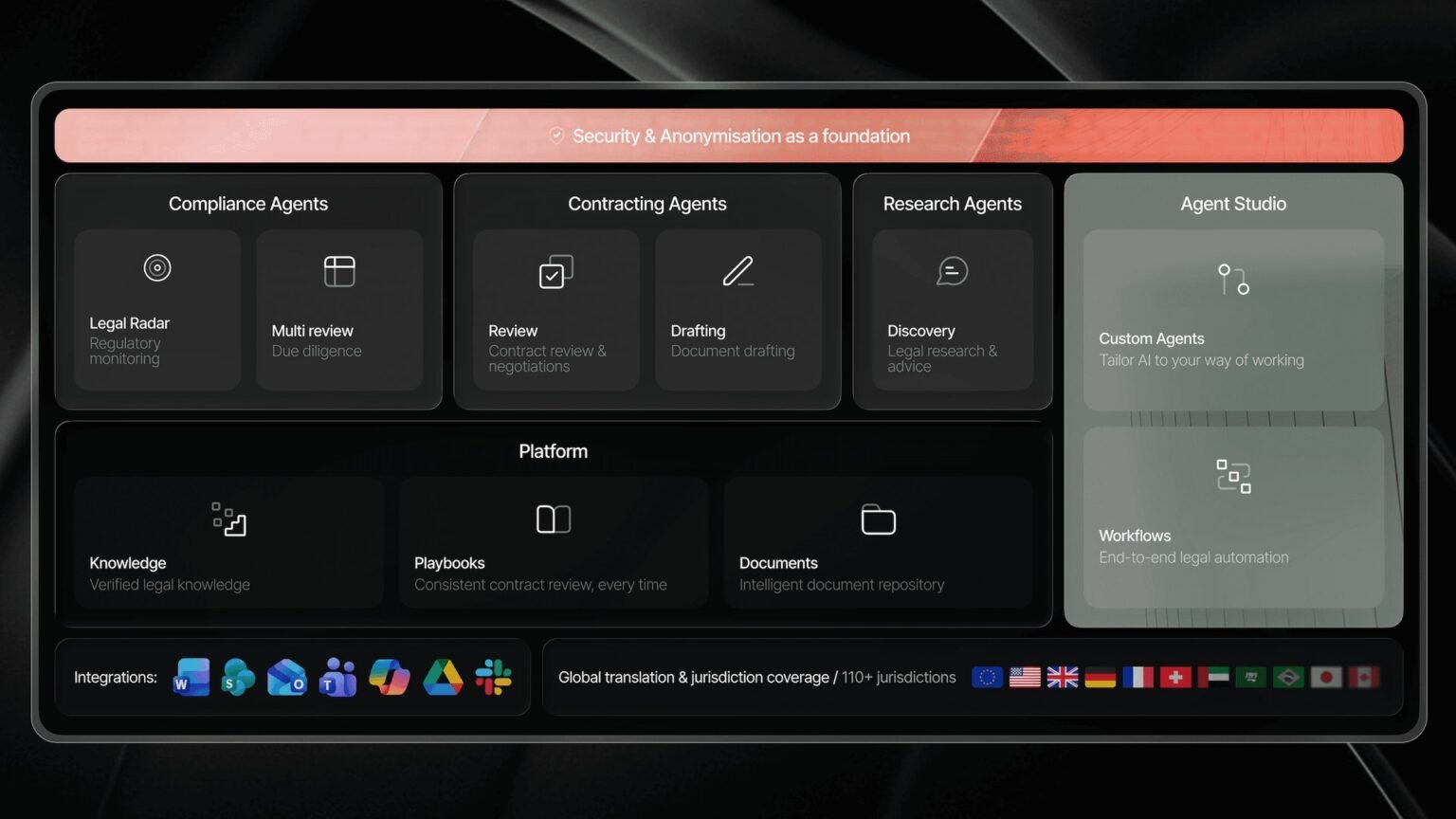
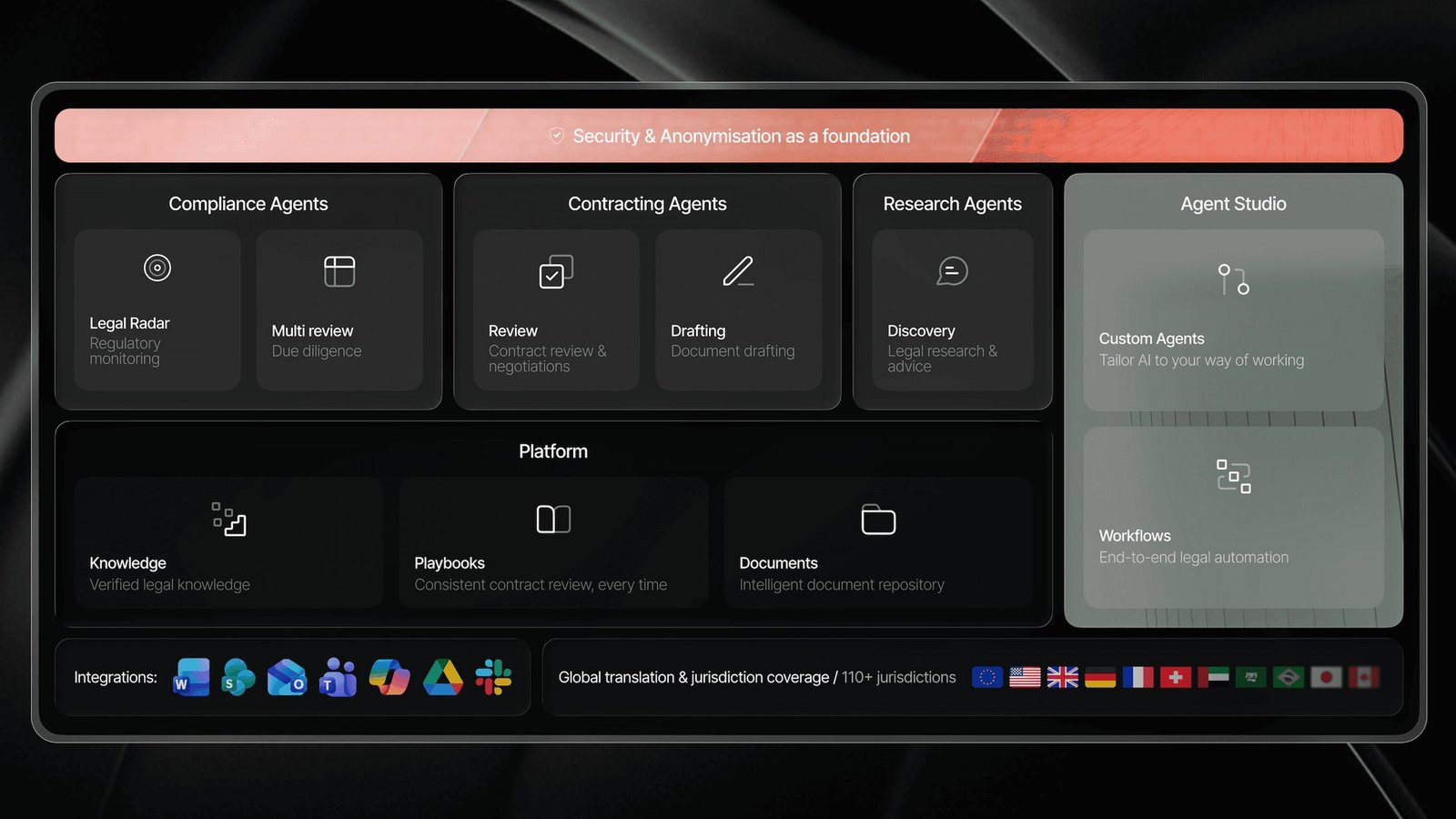
A purpose-built (vertical) legal AI is a frontier base model wrapped in a legal-specific harness: domain fine-tuning or prompting, a curated legal corpus for retrieval, enforced review playbooks, and character-level citation verification against the source document. A general LLM is the raw horizontal model — ChatGPT, Claude, Gemini — with none of that scaffolding. The distinction matters because the two share the same engine but behave completely differently on legal work.
The most important thing to understand in 2026 is that vertical legal players do not compete with the base model — they ride it. LegalOn published ‘Smarter Contract Review with GPT-5.4′ the moment that model shipped, measuring a 21% drop in total errors (from 129 to 102) and overall accuracy climbing from 73.9% to 79.4% just by swapping the underlying model. When a better base model arrives, the vertical tool inherits the gains and keeps its harness advantage on top.
GC AI describes the architecture plainly: the language model, augmented with legal-specific prompting and retrieval from a legal corpus, performs the review, and the platform adds character-level citation against the source document — verification that raw LLM output cannot provide. That citation discipline is the difference between a confident-sounding answer and one a lawyer can actually trust and defend.
Both LegalOn and GC AI build on OpenAI and Anthropic frontier models, then fine-tune and add verification. The moat is the harness — playbooks, citation grounding, absence checks — not the weights. That is why a vertical can outperform the same base model running raw.
LegalOn vs Claude contract review benchmark: where general LLMs fail
In the LegalOn vs Claude contract review benchmark, general LLMs failed specifically on five precision-critical patterns: identifying the right clause, applying numeric thresholds, handling multi-part requirements, resolving cross-references, and — most damagingly — absence checks, where the model must flag a clause that should be present but is missing. These are exactly the tasks where a fluent paragraph of prose is worse than useless, because it sounds authoritative while being wrong.
Absence checking is the failure mode worth dwelling on. A general LLM reviews what is on the page; it reasons over text it can see. Negative-space reasoning — noticing that a mutual indemnity, a limitation-of-liability cap, or a survival clause is simply not there — is a categorically different task, and it is where the raw models in the benchmark stumbled most. A missing clause carries the same legal risk as a badly drafted one, and it is invisible to a tool that only summarizes what it reads.
The other failures compound in real contracts. Numeric thresholds (a 30-day cure period versus 45, a $5M cap versus $5M per claim) require exact extraction, not paraphrase. Multi-part requirements (‘written notice, by courier, within ten business days’) break when a model collapses three conditions into one. Cross-references (‘subject to Section 7.2’) demand the model actually follow the pointer. Independent testing referenced across 2026 coverage found general-purpose text accuracy topping out around 90% even on short documents — fine for a draft, dangerous for a contract where the 10% includes the clause that matters.
None of this means the general models are bad. Claude Opus 4.6 was the strongest general performer in the benchmark, and Anthropic has since shipped Opus 4.8 (May 28, 2026) with sharper judgment and stronger agentic reasoning. The point is narrower and more useful: even the best horizontal model, run raw, lacks the legal-specific guardrails that precision review demands.
Specialized legal AI vs ChatGPT contract review: the decision matrix
Use this matrix to decide between specialized legal AI vs ChatGPT contract review at the task level. The pattern: general LLMs pass on fluent, horizontal work and fail on precision, verification, and negative-space reasoning — the parts that actually carry legal risk. Marks reflect the failure modes reported in the 2026 benchmark; ‘partial’ means usable as a first draft but not reliable without human rework.
Read the matrix as a routing guide, not a scoreboard. The rows where the general LLM says ‘fail’ are the rows that should push you toward a vertical tool. The rows where it says ‘pass’ are tasks you can confidently hand to ChatGPT or Claude today — and where paying for a specialist would be over-buying.
| Review capability | General LLM (ChatGPT / Claude, run raw) | Purpose-built legal AI (LegalOn-type) |
|---|---|---|
| Specific clause identification | Partial — finds obvious clauses, misses nuanced ones | Pass — ranked first across all provision types |
| Numeric thresholds (cure periods, caps) | Fail — paraphrases instead of extracting exactly | Pass — tuned to flag exact threshold deviations |
| Multi-part requirements | Fail — collapses conditions, drops parts | Pass — checks each component against playbook |
| Cross-references (“subject to §7.2”) | Fail — rarely follows the pointer reliably | Pass — resolves references within the document |
| Absence / omission checks | Fail — reviews only what is present | Pass — flags clauses that should exist but don’t |
| Citation verification | Fail — no grounding, can fabricate support | Pass — character-level citation to source |
| Speed at scale | Baseline | Pass — ~17x faster than Claude Opus 4.6 |
| Verdict: good enough? | Yes for horizontal drafting; No for precision review | Yes for precision, auditable, repeatable review |
Is a general-purpose LLM good enough for contract review?
A general-purpose LLM is good enough for contract review when the work is horizontal and low-stakes: summarizing a contract for a non-lawyer, brainstorming negotiation positions, drafting plain-language explanations, or first-pass triage. It is not good enough as the system of record for precision review, where confidentiality, citation grounding, and repeatable standards apply. That line is the whole answer to the question.
There is also a confidentiality dimension that has nothing to do with accuracy. Uploading client or counterparty contracts into a consumer AI tool can breach confidentiality obligations unless you are on an enterprise plan with a zero-retention policy. Vertical legal platforms are built around that posture — auditability, access controls, and data handling that privileged work requires — which is a separate reason the ‘just use ChatGPT’ shortcut breaks down in regulated settings.
Adoption signals back this up. GC AI reports serving 1,700+ in-house legal teams across 53 countries and, per its December 2025 customer survey, 21% greater perceived accuracy than generalist AI on the same legal tasks. Teams that could use a chatbot for free are paying for verticals — a strong revealed preference that the harness, not the raw intelligence, is what they actually need.
Pros
Cons
“A general LLM reviews what is on the page. A vertical legal AI also reviews what should be on the page and isn’t — and that negative-space reasoning is where the price is justified.”
The specialized-vs-horizontal divide, in one sentence
Vertical AI agent vs horizontal foundation model: a reusable rubric
The legal case generalizes. Choose a vertical AI agent over a horizontal foundation model whenever the task requires verifiable grounding, domain-specific failure handling, repeatable standards, or negative-space reasoning. Stick with the raw foundation model when fluency and flexibility are the whole job. Legal contract review just happens to be the cleanest public benchmark of this universal trade-off.
Run any AI-build decision through five questions. One: does a wrong-but-confident answer carry real cost? Two: must every claim be traceable to a source (citation verification)? Three: are there domain-specific failure modes — like absence checks — that a general model has never been optimized for? Four: do you need a repeatable, enforceable standard across many users and documents? Five: does throughput change the deployment model, so faster means reviewing everything instead of triaging? Three or more ‘yes’ answers, and you want a vertical.
The counterintuitive part for builders is that picking vertical does not mean abandoning frontier models — it means wrapping them. The strongest vertical players ship on the newest base model within days (LegalOn on GPT-5.4 is the proof) and layer their harness on top. The base model is the rising tide; the harness is the boat. As I tell founders building on Cyntr, the question is never ‘vertical or foundation model’ — it is ‘how thick does my harness need to be for this domain’s failure modes,’ and in legal the honest answer is: thick.
Wrong answers are costly? Claims must be cited? Domain-specific failure modes (e.g. absence checks)? Need a repeatable enforced standard? Does speed change the deployment model? Three or more yes → build or buy a vertical. Mostly no → the raw frontier model is good enough.
Best AI for contract review 2026: specialized vs general verdict
Vertical for precision review, horizontal for everything fluent
For the best AI for contract review in 2026, the specialized-vs-general verdict is a split decision by task, not a single winner. Purpose-built legal AI is the right call for precision, auditable, high-volume review; a general LLM (ChatGPT, Claude, Gemini) is the right call for horizontal drafting, summarization, and exploration. Buying one when you need the other is the actual mistake — and it cuts both ways.
If you are an in-house team or firm running real contract volume against a standard, the benchmark math is decisive: first-place accuracy plus 17x throughput means you can review every agreement, not just the ones that scared you. If you are a founder, solo operator, or non-legal team using AI to understand a contract or draft a note, paying for a vertical is over-buying — the frontier model is genuinely good enough, provided you respect confidentiality and treat the output as a draft.
The trap to avoid is the listicle framing of ‘tool A vs tool B’ before you have answered the prior question of vertical vs horizontal. Settle that first using the five-question test, then — and only then — compare specific vendors within the tier you actually need.
Builder’s take
I build vertical AI agents for a living (Cyntr orchestrates domain-specific agents; Loomfeed runs its own intent-routed assistant), so the specialized-vs-horizontal question is the one I argue about every week. The legal benchmarks are the cleanest public proof of a pattern that holds everywhere I’ve shipped agents.
- The base model is a commodity input, not the product. LegalOn riding GPT-5.4 the moment it shipped is the tell: the moat is the harness around the model (playbooks, citation verification, absence checks), not the weights.
- ‘Absence checks’ is the killer feature nobody markets well. A raw LLM reviews what’s on the page; it almost never reliably flags the indemnity clause that should be there and isn’t. That negative-space reasoning is where vertical tooling earns its price.
- Speed is a real moat, not a vanity metric. The 17x figure means a different deployment model entirely: you can run every contract through review, not just the scary ones. Horizontal models force triage; vertical throughput removes it.
- The honest rule I give founders: if the task is horizontal (summarize, brainstorm, draft an email), use the frontier model directly. The second confidentiality, auditability, or repeatable standards enter the picture, you are building or buying a vertical, whether you admit it or not.
Frequently asked questions
They can produce a useful first-pass summary or plain-language explanation, so for horizontal, low-stakes work they are good enough. But run raw, they fail on precision-critical patterns — numeric thresholds, multi-part requirements, cross-references, and especially absence checks (a missing clause). In LegalOn’s 2026 benchmark across 3,282 contracts, general models trailed a purpose-built tool on every provision type. Use them for understanding a contract; don’t rely on them as the system of record for precision review.
Yes, for contract review specifically. In LegalOn’s 2026 Contract Review Benchmark against 11 general-purpose models across 3,282 contracts and 21 precision-critical guidelines, the purpose-built tool ranked first across all provision types. GC AI separately reports 21% greater perceived accuracy than generalist AI on the same legal tasks. The gain comes from fine-tuning, enforced playbooks, and citation verification layered on top of the same frontier base models.
In the 2026 benchmark, the purpose-built tool ran about 17x faster than Claude Opus 4.6, the strongest general model tested. Speed at that scale changes the deployment model: instead of triaging only high-risk contracts, a team can route every agreement through review. Throughput, not just accuracy, is a real reason verticals win for high-volume contract work.
Five things, per the 2026 benchmark: specific clause identification, numeric thresholds (cure periods, liability caps), multi-part requirements, cross-references, and absence checks. Absence checks are the most dangerous gap — a raw LLM reviews what’s on the page but rarely flags a clause that should exist and is missing. General models also lack citation grounding, so they can sound authoritative while being wrong.
When the work is horizontal and low-stakes: summarizing a contract for a non-lawyer, brainstorming negotiation positions, drafting plain-language notes, or first-pass triage. Once confidentiality, auditability, citation grounding, or a repeatable enforced standard matter, a specialized tool becomes the honest recommendation. Also mind confidentiality — uploading client contracts to a consumer tool can breach obligations without an enterprise zero-retention plan.
Yes. Vertical players build on OpenAI and Anthropic frontier models, then fine-tune on legal data and add citation verification and playbooks. They ride the newest base model fast — LegalOn published a GPT-5.4 analysis showing a 21% error reduction simply from the model upgrade. The base model is a commodity input; the legal-specific harness is the actual product and the source of the accuracy edge.
Primary sources
- AI Contract Review Software: Complete 2026 Buyer’s Guide (2026 Benchmark) — LegalOn Technologies
- Smarter Contract Review with GPT-5.4 — LegalOn Technologies
- AI Contract Review for In-House Counsel: The 2026 Guide — GC AI
- Choosing Legal AI for Contract Review: What to Look for & Avoid — Harvey
- Can Gemini Review a Contract? A Practical Guide — Spellbook
- Introducing Claude Opus 4.8 — Anthropic
Last updated: June 6, 2026. Related: Products.