
A neutral, pick-by-job ranking of NHI and AI-agent identity platforms, mapped to your actual risk surface and the 2026 consolidation wave that decides who survives.
What are the best non-human identity security tools in 2026?
The best non-human identity security tools 2026 buyers should shortlist are Astrix (now Cisco), Oasis Security, Aembit, GitGuardian, Entro, ConductorOne, Clutch, and Token Security — but the right pick depends entirely on your dominant risk surface, not on a leaderboard. A tool built to discover OAuth sprawl across SaaS is the wrong tool for authorizing an agent’s call to an internal database, and vice versa. So we ranked by job, not by hype.
Here is what every other Page-1 result misses: in 2026, the dominant non-human identity is no longer a CI/CD secret or a service account — it is an AI agent. Agents authenticate to APIs, spin up sub-agents, call MCP servers, and act on behalf of a human, all in seconds. That single shift broke the old NHI taxonomy and triggered a consolidation wave that decides which of these vendors you can safely bet on for three years.
The scale is not subtle. Rubrik Zero Labs puts the NHI-to-human ratio at roughly 45:1 in the modern enterprise, and Entro Labs measured 144:1 in cloud-native and DevOps environments. Meanwhile the governance gap is brutal: industry research cited across 2026 NHI reports finds 47% of NHIs are more than a year old with no credential rotation, 97% carry excessive privilege, and only 15% of organizations feel highly confident they can prevent an NHI-based attack. Cisco, justifying its Astrix deal, noted only about 24% of organizations can properly control agent actions with guardrails and monitoring.
This guide ranks eight platforms by the four risk surfaces they actually serve — SaaS OAuth-sprawl discovery, secretless workload-to-workload auth, agent-runtime authorization, and inventory/discovery — and adds the column no marketing blog will give you: will this vendor survive consolidation?
We scored each tool on fit to a specific risk surface, agent-native depth, credential model (discovery vs vaulting vs secretless), and consolidation posture (acquired / independent / freshly funded). There is no single winner — there is a best tool for your job. Funding and acquisition figures are from primary sources cited at the end.
NHI security platforms compared: the pick-by-job table
If you only read one thing, read this table — it maps each platform to its primary job, credential model, agent-native depth, and consolidation status, with real funding and acquisition figures inline. Match the “primary job” column to your loudest pain, then sanity-check the “consolidation status” column before you sign a multi-year deal.
The pattern that jumps out: the discovery-and-governance camp (Astrix, Oasis, Entro, GitGuardian, Token, Clutch) answers “what NHIs do I have and who owns them,” while the enforcement camp (Aembit, ConductorOne, and SGNL inside CrowdStrike) answers “should this identity be allowed to do this, right now.” Most mature 2026 programs end up running one from each camp — but almost nobody needs two from the same camp.
Two of the highest-profile NHI vendors are now inside larger platforms: Astrix (Cisco) and SGNL (CrowdStrike, ~$740M, Jan 2026). Acquired tools gain reach but can be repriced into a bundle and lose roadmap independence. If best-of-breed agility matters more than platform consolidation, weight the independent vendors accordingly.
| Tool | Primary job / risk surface | Credential model | Agent-native | Consolidation status | Best for |
|---|---|---|---|---|---|
| Astrix (Cisco) | SaaS-to-SaaS OAuth & API-key discovery + governance | Discovery + secrets mgmt | Yes | Acquired by Cisco ~$400M (May 2026) | Enterprises drowning in SaaS OAuth grants |
| Oasis Security | Cloud + SaaS NHI governance, JIT agent access | Discovery + just-in-time | Yes | Independent; $120M Series B (Mar 2026), $195M total | Agentic access management at Fortune-500 scale |
| Aembit | Secretless workload-to-workload & agent auth | Secretless identity broker | Yes | Independent; ~$59.6M raised (CrowdStrike investor) | Eliminating long-lived secrets between workloads/agents |
| GitGuardian | Secrets detection + NHI governance in the SDLC | Detection + lifecycle | Yes | Independent; $50M Series C (Feb 2026), $106M total | Dev-first secrets-to-NHI programs |
| Entro Security | Contextual NHI + secrets inventory with ownership | Discovery + lifecycle | Yes | Independent; $18M Series A, ~$24M total | Linking every secret/agent to an accountable owner |
| ConductorOne | Agent-runtime access & tool-call authorization | Vaulting + policy | Yes | Independent; AI Access Mgmt early preview (Mar 2026) | Governing access to AI tools, agents & MCP |
| Clutch Security | Universal NHI discovery + Zero Trust lineage | Discovery + lineage | Partial | Independent; $20M Series A, $28.5M total | One inventory across cloud, CI/CD & secrets |
| Token Security | Machine-first identity from legacy apps to agents | Discovery + governance | Yes | Independent; $20M Series A, ~$27M total | Mixed legacy + agentic machine identity estates |
Astrix vs Oasis vs Entro vs Aembit: which fits your risk surface?
Astrix vs Oasis vs Entro vs Aembit is the comparison most buyers actually run — and the honest answer is they barely compete, because each owns a different risk surface. Astrix is for SaaS OAuth and API-key sprawl. Oasis is for cloud-and-SaaS NHI governance with just-in-time agent access. Entro is for contextual inventory that ties every secret and agent to an owner. Aembit is for secretless workload-and-agent authentication. Picking by feature checklist is how teams buy the wrong one.
Astrix, founded around 2021, became the most established SaaS-NHI discovery platform — strong when your blast radius is hundreds of OAuth grants and third-party app tokens. Cisco’s ~$400M acquisition (announced May 4, 2026) folds it into Cisco Identity Intelligence, Secure Access, and Duo IAM. That is great if you are a Cisco shop; it is a yellow flag if you want a vendor whose only job is NHI and whose roadmap answers to no bundle.
Oasis, founded in 2022 by Danny Brickman and Amit Zimerman, raised a $120M Series B led by Craft Ventures in March 2026 (with Cyberstarts, Sequoia, and Accel), pushing total funding to $195M. Its wedge is “agentic access management” — intent-based, just-in-time access for agents and machines — and it reports new-ARR growth of roughly 5x year over year, mostly to Fortune-500 customers. If your problem is governing thousands of agent identities at enterprise scale, Oasis is the strongest independent bet on this list.
Aembit is the architectural outlier. It is secretless: a policy-based identity broker that authenticates workloads and agents without issuing long-lived secrets at all. Its 2026 GA of IAM for Agentic AI introduced Blended Identity — evaluating the agent and the human operating it in a single request-time policy decision — plus an MCP Authorization Server and MCP Identity Gateway. Notably, CrowdStrike is an Aembit investor, so watch that relationship. Aembit answers a fundamentally different question than Astrix: not “what tokens exist” but “should this workload get a credential right now, and for exactly this call.”
“Astrix tells you what NHIs exist. Aembit makes sure no long-lived secret exists to leak in the first place. Those are not competitors — they are two halves of a program.”
Alatirok analysis
Ranked: the 8 best non-human identity security tools 2026
Below is our ranked shortlist of the best non-human identity security tools 2026 teams are evaluating, each with a one-line verdict and the trade-offs that matter. Ranking is by overall 2026 relevance and breadth of fit, but remember the table above: a lower-ranked tool can be the right #1 pick for your specific risk surface.
We weighted agent-native depth heavily, because the 2026 inflection is agents — and we factored consolidation status, because a tool’s independence (or lack of it) changes your three-year risk.
Oasis Security
Best for: Enterprise agentic access management at scale
What works
Watch out for
Astrix (Cisco)
Best for: Enterprises drowning in SaaS-to-SaaS OAuth grants
What works
Watch out for
Aembit
Best for: Secretless workload-to-workload and agent authentication
What works
Watch out for
GitGuardian
Best for: Secrets-to-NHI programs anchored in the SDLC
What works
Watch out for
ConductorOne
Best for: Governing access to AI tools, agents, and MCP connections
What works
Watch out for
Entro Security
Best for: Ownership attribution across NHIs and secrets
What works
Watch out for
Token Security
Best for: Mixed legacy + agentic machine-identity environments
What works
Watch out for
Clutch Security
Best for: One NHI inventory across cloud, CI/CD, and secrets
What works
Watch out for
Pros
Cons
How do you secure AI agent identities in 2026?
You secure AI agent identities by giving every agent its own scoped identity, eliminating long-lived secrets in favor of just-in-time or secretless credentials, authorizing each tool call at request time, and logging every action to an immutable audit trail. Discovery is step zero; the durable controls are short-lived credentials and per-call authorization that considers both the agent and the human behind it.
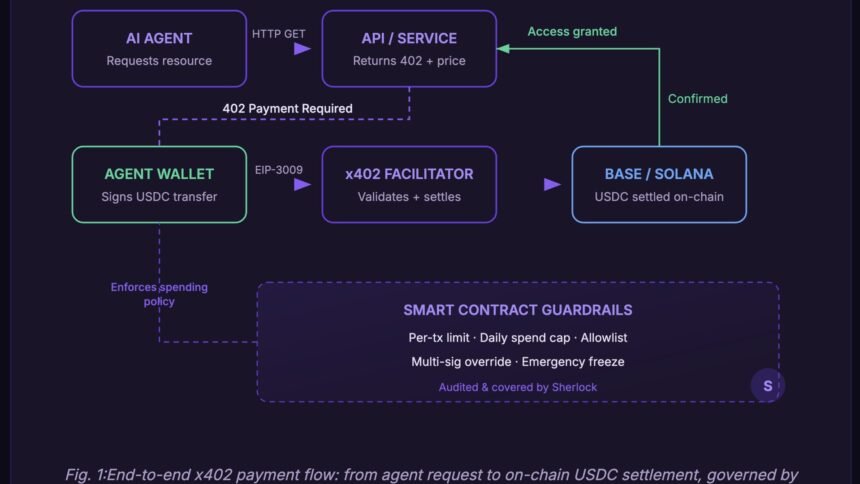
Concretely, a 2026 agent-identity program layers five controls. First, a workload-identity standard like SPIFFE/SPIRE so every agent and service has a cryptographically attested identity instead of a shared key. Second, delegated authorization via OAuth for AI agents so an agent acts on a human’s behalf with narrowly scoped, revocable tokens. Third, request-time policy — an Aembit-style broker or a Rego policy engine — that decides whether this agent, run by this user, can touch this resource now.
Fourth, provenance and bot-attestation at the edge: FIDO-grade cryptographic identity for the humans, and Web Bot Auth so downstream services can verify a signed, identifiable agent rather than guessing. Fifth, an immutable audit log capturing every credential issuance and tool call, because in an agentic incident, “who did what, on whose behalf, with which token” is the only question that matters. No vendor on this list does all five — which is exactly why you buy by job.
The trap to avoid: treating “rotate secrets faster” as the answer. Rotation shrinks the window, but the agentic answer is to stop minting long-lived secrets at all. That is why the secretless and just-in-time models (Aembit, Oasis) are structurally ahead of pure detection for the agent era.
The 2026 mental model: discovery tells you what exists, governance tells you who owns it, and enforcement decides — per call — whether it’s allowed. A complete program needs all three, but you rarelyWill these NHI security vendors survive the 2026 consolidation wave?
Expect more acquisitions: Cisco bought Astrix (~$400M) and CrowdStrike bought SGNL (~$740M) within months, and the well-funded independents — Oasis, GitGuardian, Aembit — are the most likely to either lead the next wave or be the next targets. The smaller raises (Clutch, Entro, Token) face the steepest survive-or-sell pressure, which is not automatically bad — an acquisition can be a soft landing into a platform you already run.
Here is the buyer’s calculus. Acquired vendors (Astrix inside Cisco, SGNL inside CrowdStrike) trade roadmap independence for platform reach and balance-sheet safety — ideal if you already run that platform, risky if you want best-of-breed agility or fear bundle repricing. Independents with deep war chests (Oasis at $195M total, GitGuardian at $106M) have the runway to stay independent and the profile to be acquired at a premium — a relatively safe bet either way. Earlier-stage independents (Clutch, Entro, Token) are higher-upside, higher-variance: great products, thinner cushions.
My rule: never let consolidation status be the only factor, but never ignore it either. If the tool is the best fit for your dominant risk surface and the vendor has either a strong platform parent or a $100M+ war chest, the consolidation risk is manageable. If you are betting on a thin-cushioned independent, negotiate source-code escrow, data-export guarantees, and contractual price protection up front.
Safest continuity: Astrix (Cisco) and SGNL (CrowdStrike) — already inside platforms. Strong independents likely to stay or sell at a premium: Oasis, GitGuardian, Aembit. Higher-variance independents: Clutch, Entro, Token — buy the product, but protect yourself contractually.
Best non-human identity security tools 2026: the verdict
There is no single best NHI tool — there is a best tool for your dominant risk surface
For most enterprises in 2026, the best non-human identity security tools to shortlist are Oasis (agentic governance), Astrix/Cisco (SaaS OAuth discovery), and Aembit (secretless enforcement) — but the genuinely correct answer is the one that matches your loudest risk surface. Buy by job, not by leaderboard, and assume you will eventually run one discovery-and-governance tool alongside one enforcement layer.
If your blast radius is SaaS OAuth sprawl, start with Astrix. If it is governing a fleet of agents at enterprise scale, start with Oasis. If it is workloads and agents trading long-lived secrets, start with Aembit. If you are a dev-led org sitting on a secrets-detection foundation, GitGuardian is the natural on-ramp. Map the tool to the surface, weight the consolidation risk, and ignore any list — including the incumbent ones on Page 1 — that hands you a single ‘winner.’
Builder’s take
I run Cyntr, an AI orchestration engine, and Loomfeed. Every cycle, my agents mint and burn credentials against dozens of third-party APIs. So this market is not abstract to me — it is the thing standing between a leaked token and a very bad day. Here is what I tell other founders:
- Buy for your dominant risk surface, not the demo. If your pain is OAuth grants to 200 SaaS apps, an Astrix-class discovery tool beats a secretless broker. If it is agents calling internal services, the reverse is true. Few teams need both vendors yet — pick the one that matches where your blast radius actually is.
- Treat the consolidation wave as a feature, not a footnote. Cisco bought Astrix, CrowdStrike bought SGNL. Acquired vendors get platform muscle but lose roadmap independence and often get repriced into a bundle. Independent vendors move faster but carry acquisition risk. Underwrite both.
- Secretless beats rotate-faster. The whole point of agentic identity is to stop issuing long-lived secrets at all. If a tool’s headline feature is ‘we rotate your keys more often,’ you are buying a better mop, not fixing the leak.
- Discovery is table stakes; authorization at request time is the moat. Knowing you have 40,000 NHIs is step zero. Deciding, per call, whether *this* agent run by *this* human can touch *this* resource right now — that is the hard part, and where I would spend budget in 2026.
Frequently asked questions
The leading NHI security platforms in 2026 are Astrix (now part of Cisco), Oasis Security, Aembit, GitGuardian, Entro, ConductorOne, Clutch, and Token Security. There is no single winner — the best tool depends on your dominant risk surface: SaaS OAuth discovery (Astrix), enterprise agentic access governance (Oasis), secretless workload and agent authentication (Aembit), or secrets-to-NHI programs in the SDLC (GitGuardian).
A non-human identity is any digital identity used by software rather than a person — service accounts, API keys, OAuth tokens, certificates, secrets, and now AI agents. In 2026, NHIs outnumber human identities by roughly 45-to-1 in the typical enterprise and up to 144-to-1 in cloud-native environments, and AI agents have become the fastest-growing and highest-risk category of NHI.
Give every agent its own scoped, cryptographically attested identity (for example via SPIFFE/SPIRE), replace long-lived secrets with just-in-time or secretless credentials, authorize each tool call at request time considering both the agent and the human behind it, attest the agent at the edge (Web Bot Auth), and log every action to an immutable audit trail. No single vendor delivers all five, which is why teams buy by job.
They serve different jobs. Astrix is best for SaaS-to-SaaS OAuth and API-key discovery. Oasis is best for governing AI agents and machine identities at enterprise scale with just-in-time access. Entro is best for contextual inventory that ties every secret and agent to an owner. Aembit is best for secretless workload and agent authentication. Match the tool to your loudest risk surface rather than comparing feature checklists.
Cisco agreed to acquire Astrix Security for roughly $400M (announced May 4, 2026), folding it into Cisco Identity Intelligence, Secure Access, and Duo IAM. CrowdStrike agreed to acquire SGNL for nearly $740M (announced January 2026) for real-time, AI-driven access orchestration. These deals signal an active consolidation wave, so buyers should weigh a vendor’s independence or platform parent before signing multi-year contracts.
Secret rotation shortens the lifetime of long-lived credentials so a leaked token is valid for less time. Secretless, by contrast, never issues a long-lived credential at all — a policy-based broker like Aembit grants a short-lived, scoped credential at request time after verifying the workload or agent. For the agentic era, secretless and just-in-time models are structurally ahead of detection-and-rotation because they remove the standing secret that could leak in the first place.
Primary sources
- Cisco Announces Intent to Acquire Astrix Security — Cisco Blogs
- Cisco Moves to Acquire Astrix Security to Tackle Non-Human Identity Risks — SecurityWeek
- Oasis Security Raises $120M Series B to Secure the Rise of Enterprise AI Agents — Calcalist (Ctech)
- Oasis Security raises $120M to secure nonhuman identities across AI and cloud — SiliconANGLE
- GitGuardian Raises $50M Series C to Address Non-Human Identities Crisis — GitGuardian
- CrowdStrike to Acquire SGNL to Transform Identity Security for the AI Era — CrowdStrike
- CrowdStrike to buy identity startup SGNL for nearly $740M — CyberScoop
- Aembit IAM for Agentic AI Is Now Generally Available — Aembit
- ConductorOne unveils AI Access Management to accelerate secure AI adoption — Help Net Security
- Clutch Security Raises $20M Series A for Non-Human Identity Security — Clutch Security
- Token Security raises $20M to secure enterprises’ machine identities — PR Newswire
- Entro Security Announces $18M Series A for NHI Lifecycle Management — Business Wire
- The Non-Human Identity Crisis: Why Your Machine Identities Are Your Biggest Governance Gap — The Hacker News
Last updated: June 2, 2026. Related: Identity Provenance.