
A primitive-for-primitive comparison of the two enterprise agent control planes — identity, registry, policy enforcement, data model, and regulated-industry depth — for platform buyers who need to pick one in 2026.
Gemini Enterprise vs Agent 365: which one actually governs agents?
Both Gemini Enterprise and Agent 365 are genuine agent control planes — but they govern fundamentally different things: Agent 365 governs agents that run inside your Microsoft 365 tenant under existing user permissions, while Gemini Enterprise governs agents that reach your enterprise data through connectors and federation. That single architectural fork decides most of the comparison, so read this as a primitive-for-primitive evaluation, not a productivity-suite beauty contest. This Gemini Enterprise vs Agent 365 comparison weighs both on governance, reach, and lock-in.
Microsoft Agent 365 reached general availability on May 1, 2026 at $15 per user per month standalone, and is also bundled into the new Microsoft 365 E7 suite at $99 per user per month. It is a governance layer, not an agent builder: it gives every agent an Entra Agent ID, inventories them in a registry surfaced through the Microsoft 365 Admin Center, and extends Defender, Purview, and Entra Conditional Access to cover agent activity the same way they cover human users.
Google’s Gemini Enterprise Agent Platform, announced in 2026 and detailed at Google Cloud Next, ships three governance primitives as first-class platform capabilities: Agent Identity, Agent Registry, and Agent Gateway. The Gateway is a real policy enforcement point that applies IAM, Semantic Governance, and Model Armor at the network layer before any tool call lands, and exports telemetry to Agent Observability.
The rest of this article lines the two control planes up primitive-for-primitive — identity, registry, policy/PEP, data model, autonomous-agent support, and regulated-industry depth — so a platform buyer can answer the only question that matters: pick which one, and when.
Agent Registry vs Entra Agent ID: how is each agent identified?
Entra Agent ID makes each agent a directory object that lives alongside human accounts and inherits Conditional Access and access reviews; Google Agent Identity issues each agent a SPIFFE ID backed by auto-provisioned, 24-hour X.509 certificates — workload identity, not a directory account. This is the deepest technical difference between the two control planes, and it predicts almost everything downstream.
On the Microsoft side, an Agent 365 license gives each AI agent its own Microsoft Entra Agent ID for identity, lifecycle, and access management. Because the agent is a first-class directory principal, the same tools that govern people — Conditional Access policies, Identity Governance access packages and reviews, session revocation — apply to agents with no new control surface. At GA, most agents operate under an On-Behalf-Of (OBO) flow, inheriting the permissions of the licensed user they act for.
Google takes the workload-identity route. Per Google’s documentation, Agent Identity assigns each agent a unique SPIFFE ID of the form spiffe://TRUST_DOMAIN/resources/SERVICE/RESOURCE_PATH, strongly attested and tied to the agent’s lifecycle. Credentials are X.509 certificates auto-provisioned on the agent with 24-hour validity, plus access tokens cryptographically bound to that certificate to prevent token theft. Crucially, these identities are not shared across workloads, cannot be impersonated, and disallow long-lived keys — a sharper non-human identity model than a directory account.
The practical read: if your governance team thinks in terms of directory objects, Conditional Access, and access reviews, Entra Agent ID slots into muscle memory. If your platform team thinks in terms of workload identity, mutual TLS, and short-lived certs, Google’s SPIFFE-based model is the more idiomatic fit — and the one that more naturally supports agents that act as themselves rather than on behalf of a person.
| Governance primitive | Microsoft Agent 365 | Google Gemini Enterprise |
|---|---|---|
| Agent identity | Entra Agent ID — directory object beside human accounts; OBO delegation; Conditional Access applies | Agent Identity — SPIFFE ID + auto-provisioned 24h X.509 certs; tokens bound to cert; no long-lived keys |
| Registry / inventory | Agent Registry surfaced in M365 Admin Center — creator, permissions, activity | Agent Registry — central catalog for agents, tools, and MCP servers across Google Cloud |
| Policy / enforcement point | Defender SPM + Purview classifiers/DLP + Entra Conditional Access (identity-plane enforcement) | Agent Gateway as PEP — IAM + Semantic Governance + Model Armor at the network layer |
| Runtime threat protection | Defender detection for prompt manipulation, model tampering, agent attack chains | Model Armor — prompt injection, tool poisoning, sensitive-data-leakage protection on the gateway |
| Data model | In-tenant: agents act under existing M365 permissions; data stays in your tenant | Connector-federated: ingests/mirrors M365 and other data outside your M365 tenant |
| Autonomous agents | Own-identity autonomous agents remain in the Frontier preview programme | Agent Identity already issues non-delegated agent principals (acts as itself) |
| Regulated-industry depth | Purview-anchored HIPAA, SOC 2, FINRA, FedRAMP, CMMC evidence in-tenant | Multi-cloud reach; compliance for federated data shifts more to the customer |
Does Gemini Enterprise have an agent control plane — and how does its policy enforcement differ?
Yes — Gemini Enterprise has a true agent control plane, and its enforcement model is more network-centric than Microsoft’s: every agent tool call routes through Agent Gateway, which applies IAM, Semantic Governance, and Model Armor before the request reaches downstream services. Where Microsoft enforces governance primarily at the identity and data planes, Google enforces it at a dedicated choke point in the traffic path.
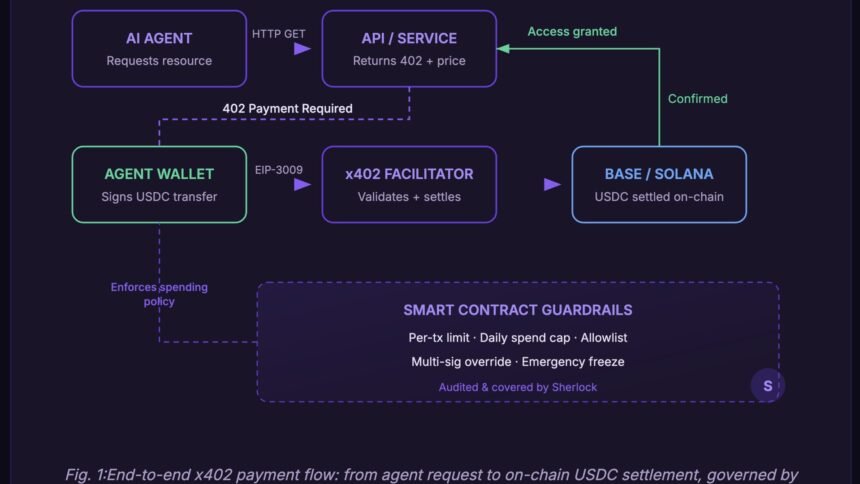
Agent Gateway is the heart of the difference. Google describes it as a centralized control point for routing and authorizing agent traffic, where you can delegate authorization to Identity-Aware Proxy, to Model Armor, or to a custom authorization service. When used with Agent Gateway, end-user credentials are encrypted by the auth manager and decrypted only at the gateway — so policy, not the agent, holds the keys. Semantic Governance adds an intent layer on top of IAM, checking that agent actions match user intent and organizational constraints rather than just whether a principal holds a permission.
Model Armor is Google’s runtime guardrail, configurable on the gateway to defend against prompt injection, tool poisoning, and sensitive-data leakage. That makes Gemini Enterprise’s stack explicitly defense-in-depth at the request layer: identity proves who the agent is, IAM and Semantic Governance decide what it may do, and Model Armor inspects the content of what flows through.
Microsoft’s enforcement is distributed across its existing stack rather than concentrated in one gateway. Per Microsoft’s agentic security strategy, Defender provides exposure management and detection for prompt manipulation and agent attack chains, Purview classifies and applies DLP to agent-drafted content and labeled files, and Entra Conditional Access scopes access and can revoke sessions. The strength is that these are mature, audited, regulator-recognized tools; the trade-off is there is no single network PEP you point everything through — governance is a property of the platform, not a box in the path.
Agent 365 governs at the identity and data planes using Defender + Purview + Entra; Gemini Enterprise governs at the network plane using Agent Gateway + Model Armor + IAM. Same goal, different choke point.
Agent Registry vs Entra Agent ID for inventory: where do you see every agent?
Both platforms ship a registry, but they catalog different scopes: Microsoft’s Agent Registry inventories agents inside your M365 tenant through the Admin Center, while Google’s Agent Registry catalogs agents, tools, and MCP servers across Google Cloud — a broader, more developer-facing surface. If your governance pain is shadow agents and oversharing, both solve it; the question is which sprawl you are trying to see.
Microsoft’s registry treats agents like standard IT assets. It surfaces agent inventory in the Microsoft 365 Admin Center showing each agent’s creator, access permissions, and activity level, so IT and security can manage agents in the same console they already use for users and devices. Because identity, registry, and policy all converge on Entra and the Admin Center, the operating model is unified for organizations already centered on Microsoft 365.
Google’s Agent Registry is a centralized catalog to store, discover, and govern servers, tools, and AI agents in Google Cloud, explicitly spanning both no-code and pro-code agents under a consistent model for identity, security, and auditing. The inclusion of MCP servers and tools — not just agents — reflects a builder-platform worldview: you are governing an entire agentic supply chain, not only the finished agents.
For a buyer, the registry choice mirrors the identity choice. Microsoft’s registry is strongest when your agents are built and consumed inside Microsoft 365 and you want one admin pane. Google’s registry is strongest when you have a heterogeneous fleet of pro-code agents, custom tools, and MCP servers that need a single catalog regardless of where they run.
Does Gemini Enterprise have an agent control plane that keeps data in-tenant?
No — and this is the most consequential difference for regulated buyers: Gemini Enterprise reaches Microsoft 365 and other enterprise data through connectors that mirror data outside your M365 tenant, whereas Agent 365 keeps data in-tenant under existing permissions. The control planes are comparable; the data models are not, and that gap drives the compliance verdict.
Microsoft’s compare page is explicit that with Copilot and Agent 365, data is handled within your tenant using existing permissions, and an agent only returns information the user already has rights to see. Purview controls — sensitivity labels, DLP, audit, retention — apply automatically as agents touch business data, which is why Microsoft positions the Purview + Agent 365 combination as audit-ready against HIPAA, SOC 2, FINRA, FedRAMP, and CMMC on day one.
Gemini Enterprise, by contrast, ingests or federates M365 data through connectors, which can create a copy of that data outside the Microsoft 365 tenant boundary. Google offers strong governance for that federated data — Agent Gateway, Model Armor, IAM, VPC Service Controls, and data-residency options — but the act of mirroring data shifts more of the compliance burden onto the customer to configure and prove. For a multi-cloud or Google-Workspace-native shop, that federation is a feature; for a single-tenant regulated M365 shop, it is new attack and audit surface.
This is the cleanest decision rule in the entire comparison. If your most sensitive data already lives in Microsoft 365 and your auditors care where copies of it land, keeping data in-tenant is a structural advantage you cannot configure your way back to. If your data is already spread across clouds and SaaS, Gemini Enterprise’s connector-federation model meets reality where it is.
“The control planes are comparable. The data models are not — and the data model is what your auditor signs off on.”
Alatirok analysis
Autonomous agents: Frontier preview vs agents that act as themselves
Today, Agent 365 fully governs only agents acting on behalf of a licensed human; fully autonomous agents with their own identity, mailbox, and principal remain in Microsoft’s Frontier preview programme — while Google’s Agent Identity already issues non-delegated agent principals that act as themselves. If your roadmap depends on agents that operate without a human owner, this is the sharpest dividing line.
Under Agent 365’s GA model, a single $15/user license covers every agent operating on behalf of that user through OBO delegation, which is elegant for assistant-style agents but means the agent borrows a person’s identity rather than holding its own. SAMexpert and others note that autonomous agents — those with a dedicated mailbox, OneDrive, org-chart presence, and a principal like agent@yourtenant.onmicrosoft.com — stay in preview, with their eventual GA licensing model still undetermined.
Google’s SPIFFE-based Agent Identity was built for the act-as-itself case from the start. Because each agent gets its own strongly attested identity and short-lived certificates rather than a borrowed user token, a Gemini Enterprise agent can be a first-class principal in IAM policies without impersonating a human. For teams designing genuinely autonomous, long-running agents, that is available today rather than gated behind a preview.
Be clear-eyed about the trade-off, though. Microsoft’s caution is partly a governance stance: an autonomous agent with its own mailbox is a powerful and risky object, and Microsoft is staging it deliberately behind Frontier. Google’s openness gives you autonomy sooner but puts more design responsibility on you to scope what a self-acting agent may touch.
Pros
Cons
Best enterprise agent governance platform 2026: pick X if…
In-tenant regulated depth vs multi-cloud workload identity
Pick Agent 365 if your agents and crown-jewel data live in Microsoft 365 and you operate under HIPAA, FINRA, FedRAMP, or CMMC; pick Gemini Enterprise if your fleet is pro-code, multi-cloud, and you need workload-grade agent identity and a single network policy enforcement point. There is no universal winner — the right choice is dictated by your data gravity and your agent architecture, not by which suite you prefer for email.
Choose Agent 365 when regulated depth and in-tenant data are non-negotiable. The combination of Entra Agent ID for human-grade identity governance, Purview for classification and audit, Defender for threat detection, and data that never leaves your tenant is the deepest regulated-industry stack on the market today, and it reuses controls your auditors already recognize. The catch to budget for: the $15/user seat governs identity only — building and running agents still bills through Copilot Studio or Foundry on Azure consumption.
Choose Gemini Enterprise when reach and engineering control matter more than staying inside one tenant. SPIFFE-based Agent Identity with auto-rotating certificates is the more credible non-human identity story for a multi-cloud, ADK/Vertex-native fleet; Agent Gateway gives you one PEP to route and inspect every tool call; and Model Armor plus Semantic Governance add runtime and intent-level controls in the traffic path. The cost is the connector-federation data model, which mirrors data outside M365 and shifts more compliance proof onto you.
If you are genuinely undecided, sequence the decision: answer the data-residency and regulated-depth question first, because it is the hardest to reverse, then layer the identity-model and autonomous-agent questions on top. Most buyers find that once data gravity is settled, the rest of the primitive-for-primitive comparison falls into place.
Builder’s take
I run agents in production across both ecosystems, so this is the comparison I actually wanted before any vendor compare page existed. The honest framing: these are not the same product class wearing different logos. One governs agents where your data already lives; the other governs agents that reach into your data from the outside.
- Decide your data-gravity question first. If your crown-jewel content lives in M365 and you operate under HIPAA, FINRA, FedRAMP, or CMMC, Agent 365 keeping data in-tenant under existing permissions is a structural advantage you cannot buy back with config.
- If your agents are pro-code, multi-cloud, and built on ADK/Vertex, Google’s SPIFFE-based Agent Identity with auto-rotating X.509 certs is the more credible non-human identity story — it looks like workload identity, not a directory account.
- Watch the seat-vs-runtime trap on both sides. Agent 365’s $15/user governs identity, but build and execution still bill through Copilot Studio or Foundry on Azure consumption. Gemini Enterprise’s Agent Gateway is a real PEP, but Model Armor and connector federation add cost and compliance surface.
- The autonomous-agent gap is the real tell. Agent 365 still parks fully autonomous agents (their own mailbox, their own principal) in the Frontier preview; Google’s Agent Identity already issues non-delegated agent principals today. If you need agents that act as themselves, that’s a hard fork in the road.
- Neither replaces a defense-in-depth posture. A control plane that registers and authenticates agents is necessary, not sufficient — you still need runtime guardrails, audit pipelines, and red-teaming on top.
Frequently asked questions
The core difference is the data model. Microsoft Agent 365 governs agents that run inside your Microsoft 365 tenant under existing user permissions, keeping data in-tenant. Google Gemini Enterprise governs agents that reach your data through connectors that can mirror it outside the M365 tenant. Both are real agent control planes, but Agent 365 is identity- and data-plane centric (Entra + Purview + Defender) while Gemini Enterprise is network-plane centric (Agent Gateway + Model Armor + IAM).
Yes. The Gemini Enterprise Agent Platform ships three first-class governance primitives — Agent Identity, Agent Registry, and Agent Gateway. Agent Gateway acts as a policy enforcement point that applies IAM, Semantic Governance, and Model Armor to every agent tool call before it reaches downstream services, and exports telemetry to Agent Observability. It is a genuine control plane, not just a model endpoint.
Entra Agent ID makes each agent a directory object alongside human accounts, so Conditional Access and access reviews apply directly; most agents act via On-Behalf-Of delegation today. Google Agent Identity assigns each agent a SPIFFE ID backed by auto-provisioned, 24-hour X.509 certificates with tokens bound to the certificate. Microsoft’s model fits directory-centric governance teams; Google’s fits workload-identity and multi-cloud teams and more naturally supports agents that act as themselves.
Microsoft Agent 365 reached general availability on May 1, 2026 at $15 per user per month standalone, and is also bundled into the Microsoft 365 E7 suite at $99 per user per month. The seat covers governance — identity, registry, and the Defender/Purview/Entra controls — for agents acting on behalf of a licensed user. Building and running agents bills separately through Copilot Studio or Microsoft Foundry on Azure consumption.
For HIPAA, FINRA, FedRAMP, or CMMC organizations whose data already lives in Microsoft 365, Agent 365 is generally the stronger choice because it keeps data in-tenant under existing permissions and uses Purview, Defender, and Entra controls that auditors already recognize. Gemini Enterprise can serve regulated workloads too, but its connector-federation model mirrors data outside the M365 tenant, which shifts more compliance configuration and proof onto the customer.
Gemini Enterprise’s Agent Identity already issues non-delegated agent principals that act as themselves today, using SPIFFE IDs and short-lived certificates. Microsoft Agent 365 at GA fully governs agents acting on behalf of a licensed human via OBO; fully autonomous agents with their own mailbox, identity, and principal remain in Microsoft’s Frontier preview programme, with GA licensing for them still undetermined. If acting-as-itself autonomy is a hard requirement now, Google has the edge.
Primary sources
- Introducing Gemini Enterprise Agent Platform — Google Cloud Blog
- Govern your agents — Gemini Enterprise Agent Platform — Google Cloud Documentation
- Agent Identity overview — Google Cloud Documentation
- Agent 365 Licensing: What It Covers and Costs — SAMexpert
- Agent 365: Microsoft’s Enterprise AI Control Plane explained — Rob Quickenden
- Compare Copilot vs. Gemini Enterprise — Microsoft
- Microsoft outlines agentic AI security strategy with new Defender, Entra and Purview capabilities — SiliconANGLE
- Google Cloud Next 2026: The Agentic Enterprise Control Plane Comes into View — Bain & Company
Last updated: June 3, 2026. Related: Governance.