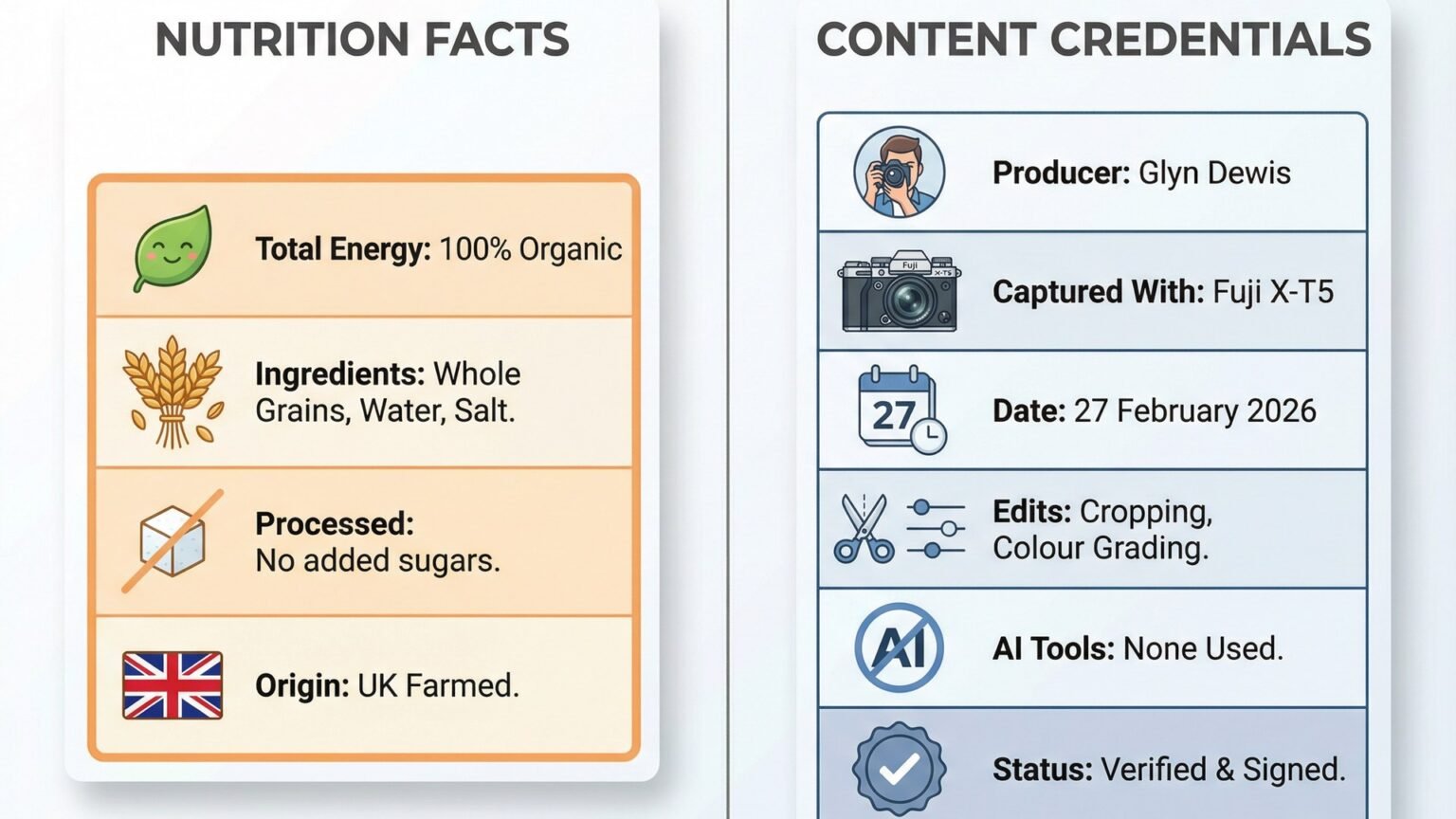

A builder’s end-to-end walkthrough: install c2pa-python, read a manifest, check validation status and the SHA-256 binding, and honestly handle the three real failure modes.
How do you verify C2PA content credentials in Python?
To verify C2PA content credentials in Python, install the official c2pa-python library, open the media file with a Reader, parse reader.json(), and inspect the validation_state and per-check validation_status entries — then separately confirm the signing certificate chains to a trust list. Verification is not one yes/no answer; it is two independent questions stacked on top of each other: is the manifest cryptographically intact, and do you trust whoever signed it?
That distinction is exactly what the current top search results gloss over. Vendor pages funnel you toward a paid detection API, the official library reference is terse, and consumer how-tos show you a verification badge with no code behind it. This tutorial does the thing none of them do: it walks a builder from a clean install to a branchy verifier that handles the messy reality of stripped metadata, social re-encodes, and untrusted issuers.
C2PA (the Coalition for Content Provenance and Authenticity) is the standard behind the “Content Credentials” badge. Adobe, OpenAI, and a growing list of camera and model vendors attach a signed C2PA manifest to assets so downstream tools can read who made a file, when, and with what. Your job as the verifier is to read that manifest and decide how much of it to believe. If you want the conceptual background first, our companion pieces on C2PA vs SynthID and how to detect AI-generated content cover the landscape; this article is the hands-on code.
Everything below uses the official c2pa-python package, which wraps the Rust c2pa-rs engine and supports both reading and signing. We will also contrast it with c2patool, the Adobe-maintained CLI, and note where a read-only wrapper like fast-c2pa-python fits.
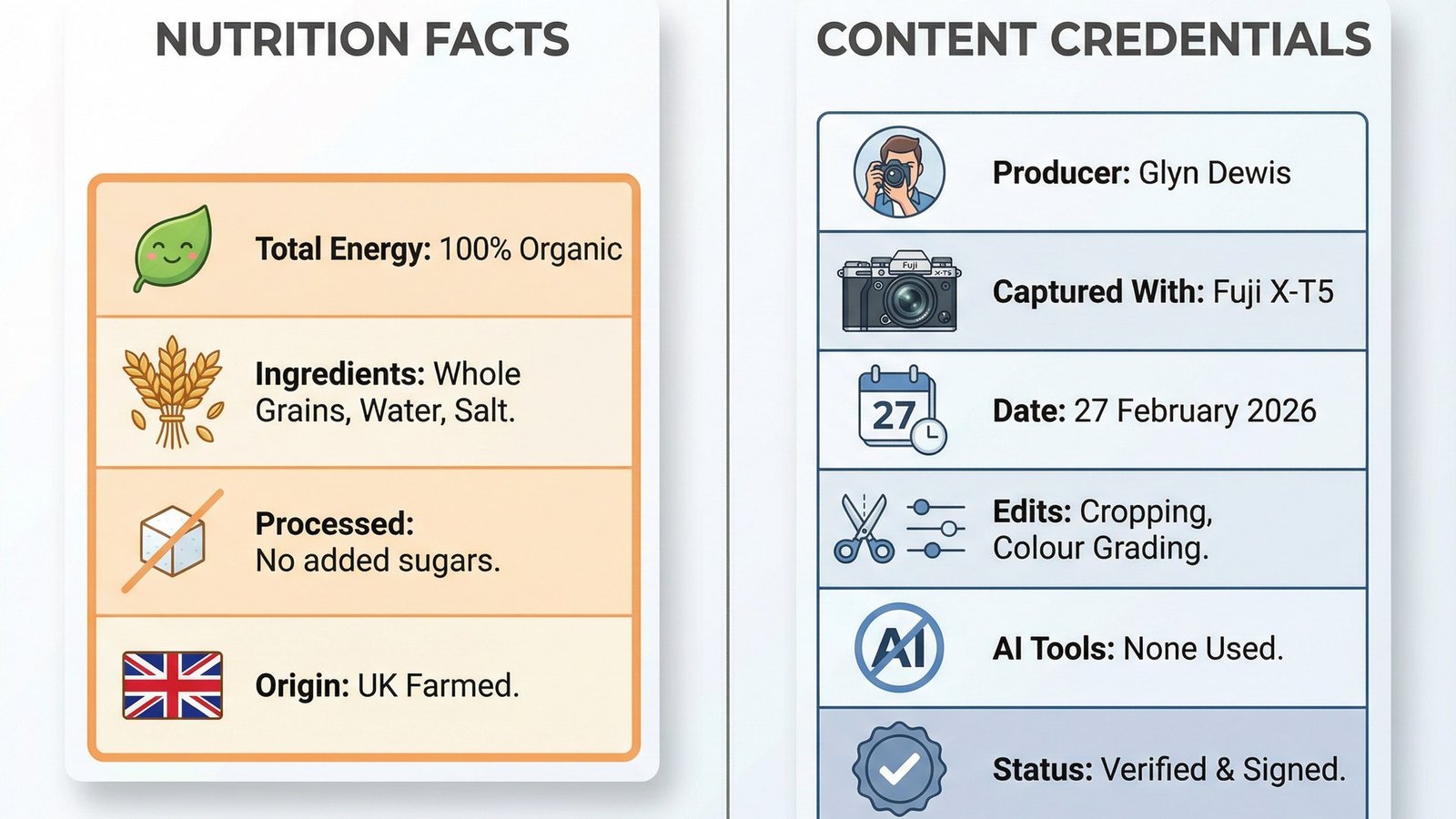
Python 3.10 or newer, pip, and a test image that actually carries a manifest. The c2pa-python repo ships fixtures (for example tests/fixtures/cloud.jpg); you can also export a credentialed image from Adobe Firefly or grab a sample from contentcredentials.org/verify.
Step 1: Install c2pa-python and read your first manifest
Install the library with pip install c2pa-python (Python 3.10+), then read a manifest in three lines with the Reader class. The Reader is a context manager: open it on a file path, call json(), and you get the full manifest store as a JSON string.
Start with the absolute minimum so you can confirm your install and your test asset are sane:
# pip install c2pa-python   (requires Python 3.10+)
import json
import c2pa

MEDIA = "sample.jpg"

with c2pa.Reader(MEDIA) as reader:
    manifest_store = json.loads(reader.json())

active_id = manifest_store["active_manifest"]
active = manifest_store["manifests"][active_id]

print("Generator :", active.get("claim_generator"))
print("Title     :", active.get("title"))
print("Signed by :", active.get("signature_info", {}).get("issuer"))
print("Signed at :", active.get("signature_info", {}).get("time"))
Why parse reader.json() instead of using typed accessors?
The Python binding intentionally returns the manifest store as a JSON string so it stays in lockstep with the c2pa-rs schema across versions. Parsing once into a dict and reading keys like active_manifest, manifests, claim_generator, and signature_info is the stable, documented pattern from the official usage guide. The shape mirrors the C2PA spec exactly, so anything you learn from the spec maps straight onto these dictionaries.Step 2: Check validation_status to confirm the signature is valid
A readable manifest is not a valid one. To validate the C2PA signature in Python, read the manifest store’s validation_state (an overall verdict) and the granular validation_status / validation_results entries, which contain per-check codes like claimSignature.validated on success or claimSignature.mismatch on failure. The library exposes validation_state at the top level of the parsed store and a list of status entries you can iterate.
Each status entry has a code (the machine-readable result), an explanation, and a url pointing at the specific assertion it refers to. The codes follow the C2PA specification’s category.outcome convention — .match/.validated/.trusted are good, while .mismatch/.untrusted/.revoked/.expired are problems. Here’s how to surface them instead of trusting a single boolean:
validation_state is the single rolled-up verdict (Valid, Invalid, or Trusted). validation_status / validation_results hold the individual reasons. Always log the individual codes — a state of Invalid tells you nothing actionable, but a code of assertion.dataHash.mismatch tells you the pixels changed and signingCredential.untrusted tells you they didn’t.
import json
import c2pa

def read_status_codes(store: dict) -> list[str]:
    """Collect every validation status code from a parsed manifest store."""
    codes = []
    # Newer c2pa-rs reports per-manifest results under validation_results;
    # older/store-level reports use a flat validation_status list.
    for entry in store.get("validation_status", []):
        codes.append(entry.get("code", ""))
    results = store.get("validation_results", {})
    for bucket in results.values():               # activeManifest, ingredientDeltas
        for kind in ("success", "informational", "failure"):
            for entry in bucket.get(kind, []):
                codes.append(entry.get("code", ""))
    return [c for c in codes if c]

with c2pa.Reader("sample.jpg") as reader:
    store = json.loads(reader.json())

print("Overall state:", store.get("validation_state"))   # e.g. 'Valid' / 'Invalid' / 'Trusted'
for code in read_status_codes(store):
    print(" -", code)
Step 3: Detect a tampered AI image via the SHA-256 asset binding
C2PA detects tampering through a hard binding: the manifest stores a SHA-256 hash of the asset’s bytes at signing time, and the verifier recomputes that hash over the current bytes. If a single byte changed, the hashes differ and you get an assertion.dataHash.mismatch code — that is the signal a tampered or edited image throws. You don’t compute the hash yourself; the Reader does it during validation and exposes the result as a status code. Your job is to branch on it correctly.
This is where the honest failure-mode walkthrough matters. A hash mismatch does not, on its own, mean someone maliciously doctored a deepfake. It means the bytes you are holding are not the bytes that were signed. A legitimate edit, a re-save, or a social-platform re-encode all produce the same dataHash.mismatch. The code is necessary but not sufficient evidence of foul play — so report it precisely, not hysterically.
TAMPER_CODES = {
    "assertion.dataHash.mismatch",   # hard-binding hash over the asset failed
    "assertion.boxesHash.mismatch",  # JUMBF box hash failed (e.g. PDF/BMFF)
    "claimSignature.mismatch",       # the signed claim itself was altered
}

def binding_intact(codes: list[str]) -> bool:
    """True only if no hard-binding/signature mismatch is present."""
    return not (set(codes) & TAMPER_CODES)

codes = read_status_codes(store)
if "assertion.dataHash.match" in codes and binding_intact(codes):
    print("Hard binding OK -- bytes match what was signed.")
elif set(codes) & TAMPER_CODES:
    print("BINDING BROKEN -- bytes differ from the signed asset.")
    print("   This can be tampering OR a benign re-encode. Investigate; do not assume malice.")
else:
    print("No hard-binding result found -- check for a soft binding or treat as unverifiable.")
“A hash mismatch doesn’t mean someone faked the image. It means the bytes you’re holding are not the bytes that were signed — and a benign Instagram re-encode trips the exact same code as a malicious edit.”
On the most misread signal in C2PA
Step 4: Verify against a trust list (valid is not the same as trusted)
A signature can be mathematically valid yet signed by a certificate you have no reason to trust. To check the issuer, load a trust list into a Settings object, pass it through a Context to the Reader, and look for the signingCredential.trusted code; without a trust list, every self-signed manifest will validate. This is the single most overlooked step, and skipping it is how naive verifiers get fooled by anyone who can run the signing tool — which is everyone.
The official example pattern fetches the Content Authenticity trust anchors, builds a Settings object with verify_cert_anchors enabled, and opens the Reader inside a Context. Here is that pattern adapted into a reusable verifier:
Fetching anchors over the network on every request is fine for a tutorial and dangerous in production. Download the PEM, vendor it into your repo, and refresh it on a schedule. Cache the Settings object too — rebuilding it per request is pure overhead.
import json, urllib.request
import c2pa

TRUST_ANCHORS_URL = "https://contentcredentials.org/trust/anchors.pem"

def trusted_settings() -> c2pa.Settings:
    with urllib.request.urlopen(TRUST_ANCHORS_URL) as resp:
        anchors = resp.read().decode("utf-8")
    return c2pa.Settings.from_dict({
        "verify": {"verify_cert_anchors": True},
        "trust":  {"trust_anchors": anchors},
    })

def read_with_trust(path: str) -> dict:
    settings = trusted_settings()
    with c2pa.Context(settings) as ctx:
        with c2pa.Reader(path, context=ctx) as reader:
            return json.loads(reader.json())

store = read_with_trust("sample.jpg")
codes = read_status_codes(store)
issuer_trusted = "signingCredential.trusted" in codes
print("State :", store.get("validation_state"))
print("Issuer trusted:", issuer_trusted)
if not issuer_trusted:
    print("   Manifest may be valid but the signer is NOT on the trust list.")
What are the three real outcomes when you verify content credentials?
When you verify C2PA content credentials programmatically, there are three distinct outcomes that builders constantly collapse into a false binary: (1) no manifest present, (2) manifest present but signature or binding invalid, and (3) valid manifest but signed by an untrusted issuer. Only one of those is a clean pass. A verifier that only knows “has credentials / doesn’t” will mislead your users. Mapping each outcome to the right code and the right message is what separates a real implementation from a demo.
The table below is the decision matrix I wish the SERP had handed me on day one. Note that “no manifest” is the most common outcome on the open web, because most platforms strip C2PA metadata on upload — it is not evidence of fakery, only of missing provenance.
Pros
Cons
import c2pa

def verify(path: str) -> str:
    try:
        store = read_with_trust(path)
    except Exception:
        # No manifest, or the file/format isn't supported.
        return "NO_MANIFEST"

    codes = read_status_codes(store)
    if set(codes) & TAMPER_CODES:
        return "INVALID_BINDING"
    if "claimSignature.validated" not in codes:
        return "INVALID_SIGNATURE"
    if "signingCredential.trusted" not in codes:
        return "VALID_BUT_UNTRUSTED"
    return "VALID_AND_TRUSTED"

print(verify("sample.jpg"))| Outcome | How it surfaces in Python | What it means | What to tell the user |
|---|---|---|---|
| No manifest | Reader raises (e.g. ManifestNotFound) or store has no manifests | Metadata absent or stripped on re-encode | Provenance unknown — not proof of fakery |
| Invalid signature / binding | validation_state Invalid + dataHash.mismatch or claimSignature.mismatch | Bytes changed after signing, or claim altered | Credentials present but broken; treat as unverified |
| Valid but untrusted | validation_state Valid, no signingCredential.trusted code | Crypto is sound; signer not on your trust list | Authentic-looking but issuer unverified — low trust |
| Valid and trusted | validation_state Trusted + signingCredential.trusted | Intact binding, signer on the trust list | Strongest assurance C2PA can give |
How do you run the c2patool verify command from the CLI?
To verify content credentials from the command line, run c2patool to dump the manifest JSON, add -d/--detailed for the full validation report, and use the trust subcommand with --trust_anchors to check the issuer against a trust list. The c2patool CLI is Adobe-maintained, open source, and runs on all major platforms — it is the fastest way to answer “does this file have valid, trusted credentials?” without writing any Python.
These are the commands I actually use for spot-checks and CI gates:
# 1. Basic read -- prints the manifest store as JSON (errors if no manifest)
c2patool sample.jpg

# 2. Detailed validation report (includes per-check status codes)
c2patool sample.jpg --detailed

# 3. Verify the issuer against the official C2PA trust list
c2patool sample.jpg trust \
  --trust_anchors='https://contentcredentials.org/trust/anchors.pem' \
  --allowed_list='https://contentcredentials.org/trust/allowed.sha256.txt' \
  --trust_config='https://contentcredentials.org/trust/store.cfg'

# 4. Speed up a read when you only care about content, not the signature
c2patool sample.jpg --no_signing_verify
Troubleshooting: stripped metadata, re-encodes, soft bindings, and version drift
No manifest where you expected one? The platform almost certainly re-encoded the image on upload (Instagram, X, WhatsApp, and most CDNs strip C2PA), which removes the hard binding entirely. A soft binding (a perceptual fingerprint registered with a provenance service) can sometimes recover provenance after a re-encode, but the c2pa libraries do not resolve soft bindings for you — you query an external provenance service for that. Getting dataHash.mismatch on a file you only downloaded? Suspect a lossy re-save; re-fetch the original bytes before concluding tampering. Seeing different field names than this article? Pin your c2pa-python and c2patool versions: c2pa-rs has actively reorganized validation reporting (for example, a known issue returned dataHash.mismatch for box-hash failures), so a defensive parser that reads both validation_status and validation_results survives upgrades. Want read-only speed at scale? fast-c2pa-python wraps c2pa-rs via PyO3 and reads faster, but it cannot sign — use it only for high-throughput verification, and keep the official library where you need signing or the latest spec coverage.Builder’s take
I build provenance into Cyntr’s content pipeline, so I’ve hit every one of these failure modes in production. The thing nobody tells you about C2PA verification is that the interesting answer is almost never a clean yes or no.
- A passing signature does not mean you should trust the issuer. Validation and trust are two separate checks, and the library will happily return a cryptographically valid manifest signed by a key you’ve never heard of. Always run a trust list.
- The most common real-world result isn’t ‘tampered’ — it’s ‘no manifest at all,’ because Instagram, X, and most CDNs strip the metadata on re-encode. Treat absence as ‘unknown provenance,’ not ‘fake.’
- A hard-binding hash mismatch is genuinely informative — it means the bytes changed after signing. But a benign social re-compress trips the exact same code, so don’t ship a UI that screams ‘TAMPERED’ on every mismatch.
- Use c2patool for spot-checks and CI; use the c2pa-python Reader when you need to branch on validation_status inside an app. Don’t reach for a paid API until you’ve proven the open-source path can’t do what you need — in my experience, it can.
Frequently asked questions
Install the official library with pip install c2pa-python (Python 3.10+), open the file with c2pa.Reader(path), parse reader.json(), then check the top-level validation_state and the per-check codes in validation_status/validation_results. For full assurance, load a trust list into a Settings object via a Context and confirm the signingCredential.trusted code is present.
C2PA stores a SHA-256 hard binding — a hash of the asset’s bytes at signing time — inside the manifest. During verification the library recomputes that hash over the current bytes and compares. If anything changed, you get assertion.dataHash.mismatch. That code means the bytes differ from what was signed, which could be malicious tampering or a benign re-encode, so treat it as a signal to investigate rather than proof of a fake.
Both wrap the same Rust c2pa-rs engine. c2patool is the Adobe-maintained command-line tool — run c2patool image.jpg for an instant JSON dump, ideal for spot-checks and CI. c2pa-python is the library you embed in an app when you need to branch on specific validation codes or sign assets. Use the CLI for quick checks and the library for application logic and signing.
Validation and trust are separate checks. A manifest can be cryptographically valid (claimSignature.validated) yet signed by a certificate that does not chain to any anchor on your trust list, so you never get signingCredential.trusted. Load a trust list (for example the Content Authenticity anchors) into a Settings object with verify_cert_anchors enabled to make trust checks meaningful; without one, even self-signed manifests will validate.
No. If the file has no embedded manifest, there is nothing to verify — the Reader will raise or return an empty manifest store. This is extremely common because Instagram, X, and most CDNs strip C2PA metadata on upload. Absence of a manifest means provenance is unknown, not that the content is fake. Some assets carry a soft binding you can resolve against an external provenance service, but the c2pa libraries do not do that lookup for you.
Only for read-only workloads. fast-c2pa-python is a PyO3 wrapper around c2pa-rs that reads C2PA data faster, which helps at high verification throughput. But it cannot sign or write manifests, unlike the official c2pa-python. Use the official library when you need signing or the most current spec coverage, and consider the fast wrapper only as a read-optimized add-on.
Primary sources
- Using the Python library (c2pa-python usage docs) — Content Authenticity Initiative
- c2pa-python API reference (Reader, Settings, Context) — Content Authenticity Initiative
- c2pa-python examples/read.py (official trust-anchor example) — GitHub / contentauth
- Using C2PA Tool (c2patool CLI usage) — Content Authenticity Initiative
- How to Extract and Verify C2PA Content Credentials — Fastio
- Python C2PA Tutorial: Verifying Images and Detecting Tampering — Sightengine
- C2PA Technical Specification 2.1 — C2PA
Last updated: June 2, 2026. Related: Identity Provenance.