
Chipmakers and clouds invest in AI labs that spend the money buying their chips and clouds. That loop — more than $800 billion of it by 2026 — is AI circular financing. Here’s how it works and whether the bubble is real.
What is AI circular financing?
AI circular financing is when a small group of chipmakers and cloud providers invest in AI companies that then spend that money buying the investors’ own chips and cloud capacity. The cash loops among a handful of interconnected firms, which can make demand look organic and revenue look robust when much of it is the same dollars going around the circle. By 2026, analysts have identified more than $800 billion in these arrangements across the AI supply chain.
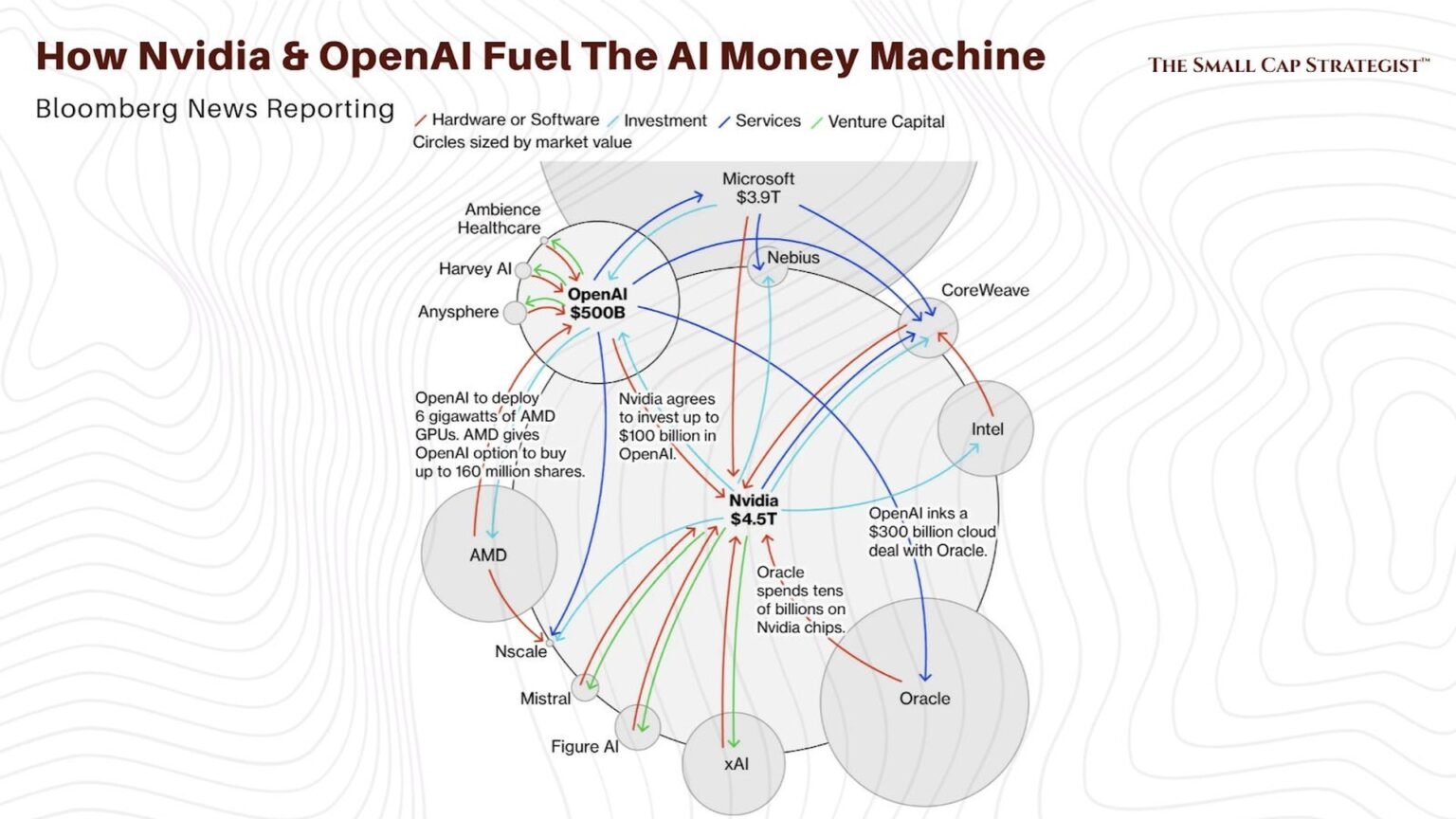
The textbook example is Nvidia: it has helped fund the leading AI developers, which then became some of its largest customers. The question the whole industry is now asking is whether AI circular financing reflects real, durable demand — or an accounting loop that flatters everyone’s numbers until it doesn’t.
AI circular financing: Company A (a chip or cloud vendor) invests in Company B (an AI lab); Company B spends that money buying A’s products. The money circles a small cohort, inflating apparent demand. 2026 analyses put the total north of $800 billion.
The money loop, traced
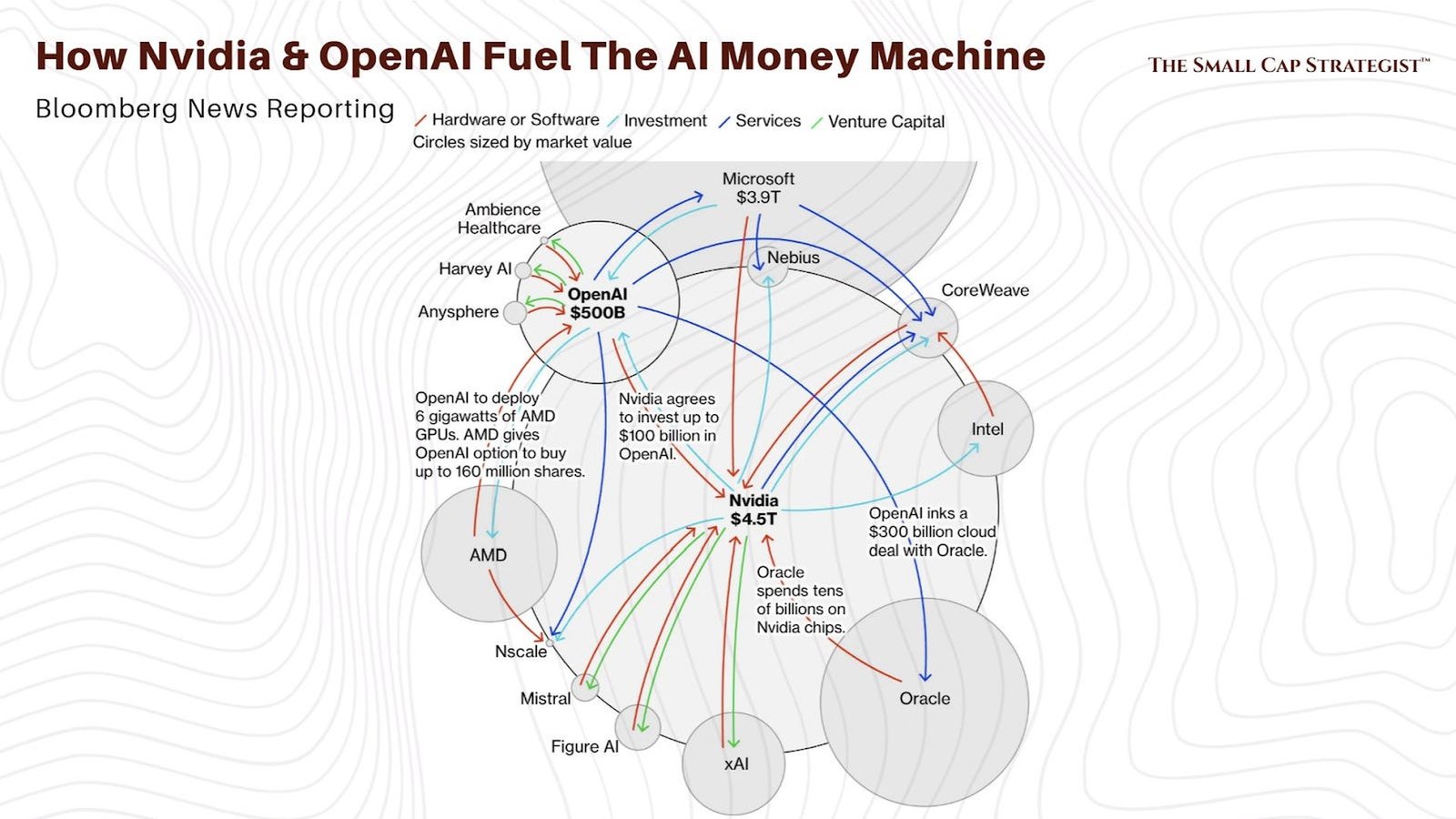
The loop runs chip maker → AI lab → cloud provider → back to chips, with the same firms appearing on multiple sides of the deals. Nvidia invests in and supplies OpenAI; OpenAI commits hundreds of billions to cloud providers like Oracle; those providers buy Nvidia GPUs to fulfill the contracts. Each leg books revenue or backlog from the same underlying spend.
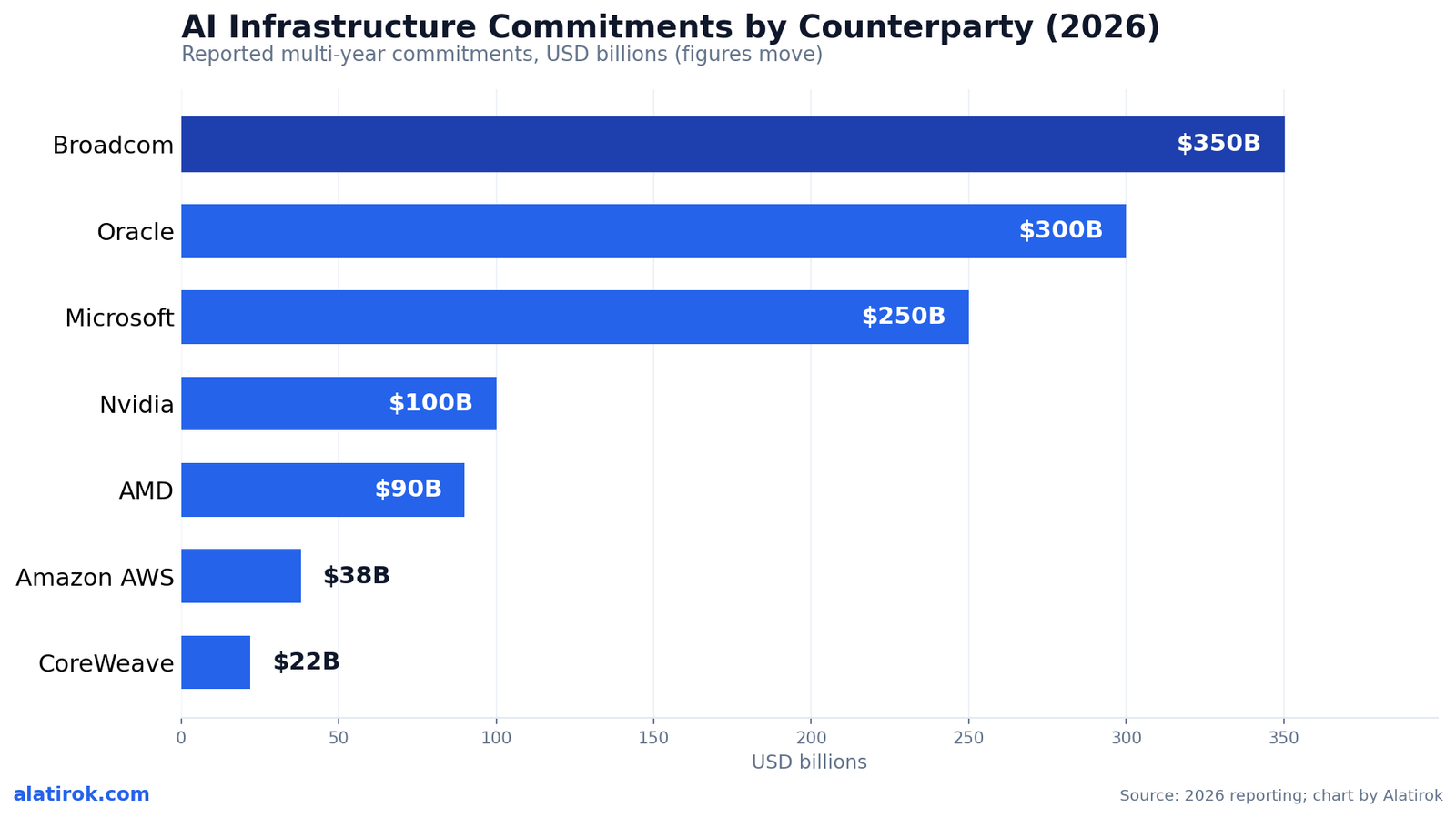
The scale is in the commitments. OpenAI alone has signed enormous multi-year infrastructure obligations — and on the vendor side, the announced commitments stack up across a small group of names. Here are the headline figures from 2026 reporting (treat exact numbers as moving targets).
“When the same $100 billion can show up as a chipmaker’s revenue, a lab’s funding, and a cloud’s backlog, the headline numbers stop meaning what they seem to.”
The core worry behind AI circular financing
| Counterparty | Reported commitment (2026) |
|---|---|
| Broadcom | ~$350B |
| Oracle (cloud, ~5 yr) | ~$300B |
| Microsoft | ~$250B |
| Nvidia (OpenAI partnership) | ~$100B |
| AMD | ~$90B |
| Amazon AWS | ~$38B |
| CoreWeave | ~$22B |
Why AI circular financing looks alarming (the bear case)
The danger of AI circular financing is that it can manufacture the illusion of demand and magnify losses if real demand disappoints. When vendors fund their own customers, incentives skew toward booking deals rather than testing whether end users actually need the capacity.
Critics see uncomfortable echoes of the dot-com era, when companies bought each other’s services to inflate perceived growth. And the underlying economics are sobering: OpenAI is reportedly on track to lose around $14 billion in 2026 — nearly triple its 2025 losses — even as it projects $100 billion in revenue by 2029. If that demand curve slips, the circle tightens fast.
Watch the infrastructure providers’ balance sheets: rising debt loads, swelling lease commitments, and widening credit-default-swap spreads are where the strain of AI circular financing shows up first.
Why it might be fine (the bull case)
Not all vendor financing is a bubble — it has built capital-intensive industries before, and the AI demand underneath may be real. Railroads, telecom, and earlier compute build-outs all used suppliers financing customers to bootstrap genuine markets.
The bull case is that inference and training demand is rising for reasons outside the circle — enterprises, developers, and consumers paying real money — and that the infrastructure being built will be used. In that reading, AI circular financing is aggressive growth funding for a real market, not a Ponzi of mutual invoices. The honest answer is that both can be partly true at once.
So is the AI bubble real?
The verdict on AI circular financing is genuinely contested — and the deciding variable is end demand from outside the cohort. If the spending traces to durable revenue from customers who aren’t part of the loop, the build-out is justified aggressive investment. If much of the apparent demand is the same money circling, the corrections could be severe and concentrated.
What to watch: the share of revenue that comes from outside the circle, the debt and CDS spreads at the big infrastructure providers, and whether utilization of all that committed compute actually materializes. AI circular financing is not proof of a bubble on its own — but it is exactly the structure that makes one hard to see until it pops.
AI circular financing isn’t automatically a bubble — but it hides one well. The tell is real revenue from outside the loop.Builder’s take
I watch the AI circular financing story less for the spectacle and more for what it means as a founder downstream of these giants. When the same hundred billion dollars can appear as Nvidia’s revenue, OpenAI’s funding, and Oracle’s backlog, you learn to discount the headline numbers and look for the one thing the loop can’t fake: end demand from people who aren’t in the circle.
- Follow the cash to its exit from the loop — revenue from outside the cohort is the only number that proves real demand.
- Vendor financing isn’t automatically a scam (it built the telecom and railroad eras too), but it magnifies losses if demand disappoints.
- Watch the lenders, not just the deals — rising debt and CDS spreads at the infrastructure providers are the early-warning system.
- Build assuming compute prices are subsidized today and may normalize; don’t bake permanent cheap inference into your unit economics.
Frequently asked questions
It’s when chipmakers and cloud providers invest in AI companies that then spend the money buying those same vendors’ chips and cloud capacity. The cash loops among a small group of firms, which can make demand appear organic. 2026 analyses estimate more than $800 billion in such arrangements.
Nvidia invests in and supplies OpenAI; OpenAI commits hundreds of billions to cloud providers such as Oracle; those providers buy Nvidia GPUs to deliver the capacity. The same underlying spend books as revenue or backlog at multiple companies.
It’s contested. Circular financing can inflate apparent demand and magnify losses if real demand disappoints — but vendor financing has also built real capital-intensive industries. The deciding factor is how much revenue comes from outside the circle.
Because they can skew incentives toward booking deals over genuine demand, echoing dot-com-era cross-selling. With OpenAI projected to lose around $14 billion in 2026, a demand shortfall would tighten the loop quickly.
The share of AI revenue coming from outside the cohort, utilization of the committed compute, and the infrastructure providers’ debt loads and CDS spreads — the places financial strain appears first.
Primary sources
- AI circular deals: how Microsoft, OpenAI and Nvidia keep paying each other — Bloomberg
- Should we worry about AI’s circular deals? — Noahpinion
- Is the AI boom built on circular deals or real demand? — Beam
- AI’s financial circle game — Global Finance
- AI bubble — Wikipedia
Last updated: May 31, 2026. Related: Capital.