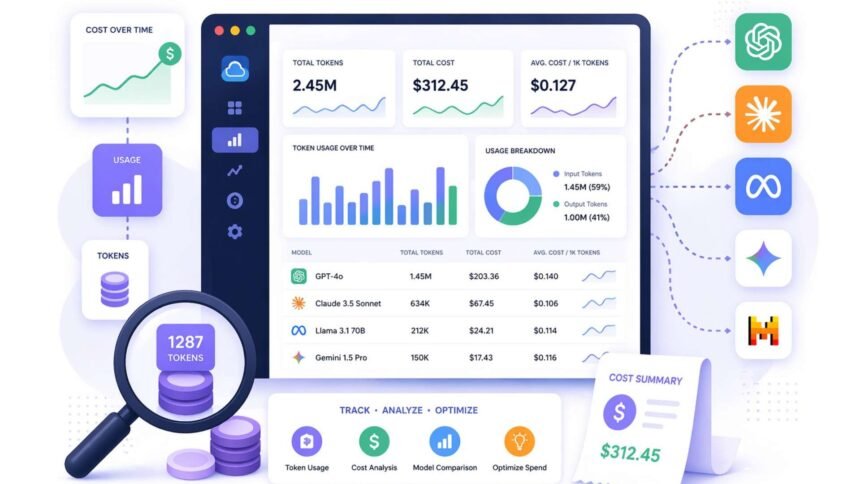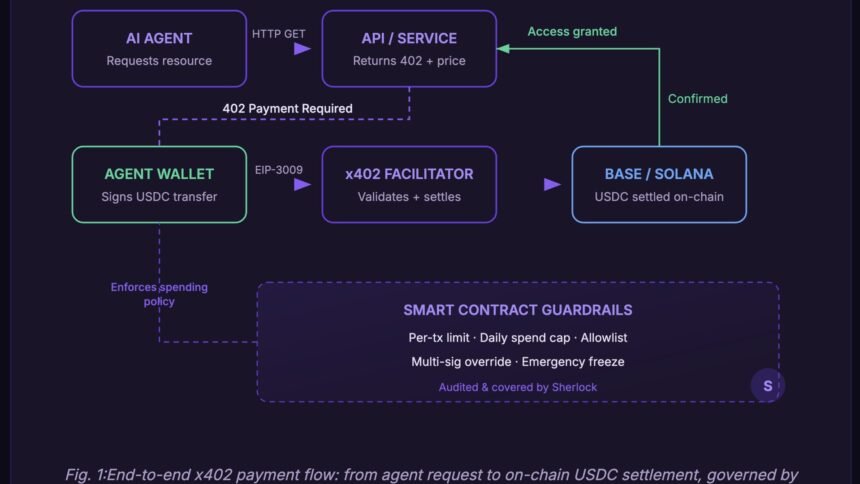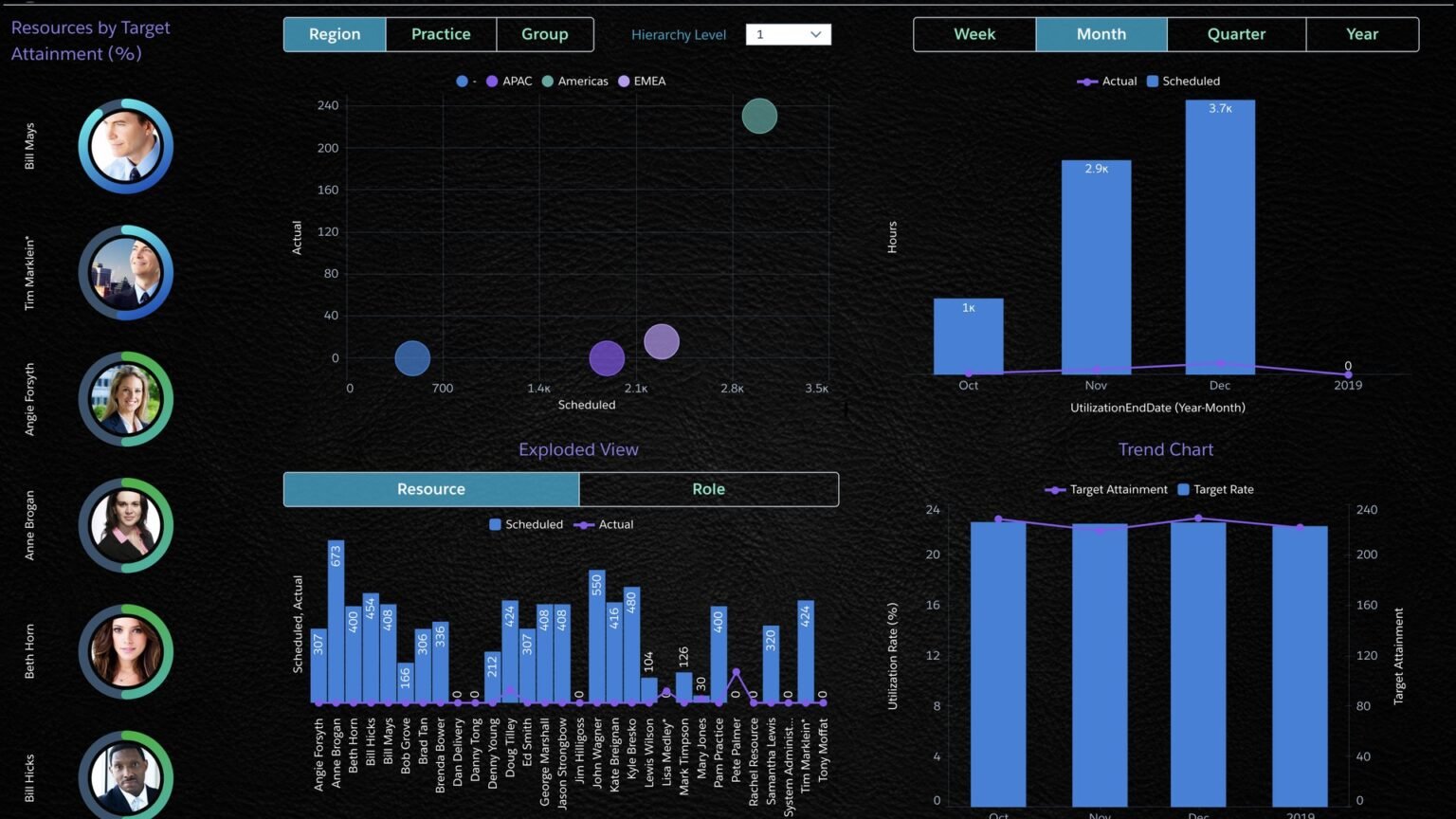

Three lanes, one decision. We map chat-first, notebook, and spreadsheet-first AI analysts against the question that actually decides the buy: does the work need to be governed, re-run, or reviewed?
What is the best AI data analyst agent in 2026?
The best AI data analyst agent 2026 buyers can pick depends entirely on one question: does the work need to be governed, re-run, or reviewed? If the answer is no — you just need a fast answer from a CSV — ChatGPT Advanced Data Analysis or Julius wins on speed and zero setup. If the answer is yes — the number lands in a board deck, a budget, or an audit — a notebook like Hex or Deepnote wins because the analysis becomes a durable, re-runnable asset instead of a screenshot you can’t reconstruct next quarter.
That framing is the whole article, and it’s exactly what the current search results miss. Type “best AI for data analysis 2026” into Google and you get breadth-first affiliate listicles (“10 tools tested and ranked”) plus one vendor-owned page. None of them seriously treat the real decision a buyer faces, which isn’t a popularity contest — it’s a lane choice plus a governance test.
The market has split into three lanes. Chat-first tools (ChatGPT, Claude) live in a conversation. Notebook and workspace tools (Hex, Deepnote) live in a versioned environment built for teams. Spreadsheet-first tools (Julius, Rows) live in a grid and answer in plain English. On top of those sit warehouse-native and BI-native agents (Gemini in BigQuery, Power BI Copilot, ThoughtSpot Spotter) for when the data already lives in a governed platform.
This is alatirok’s first data-analysis vertical, and we built it the way we built Best AI SDR Agents and Best AI SRE Agents: a by-job matrix with a failure-mode column, so you can find your row and stop reading. Below, we map every major tool against lane, whether it runs real math or estimates it, whether it’s reproducible and auditable, NL-to-SQL support, entry price, and — the column the listicles never include — its key failure mode.
Will this number be reviewed, re-run, or audited by someone other than you? If yes, you need a notebook or a governed platform, not a chat window. If no, optimize for speed and pick chat-first or spreadsheet-first.
The lane-by-job matrix: every AI data analyst agent compared
Here is the comparison the affiliate listicles don’t run: seven leading AI data analyst tools mapped against lane, real-math vs estimated, reproducibility, NL-to-SQL, price, best-for job, and the failure mode that actually bites in production. Find your row, not a ranking.
The most important columns are “Real math vs estimated” and “Reproducible/auditable.” A tool that executes Python computes the answer; a tool that only reasons about numbers can confidently state a wrong total. ChatGPT Advanced Data Analysis and the notebook tools run actual code (pandas, matplotlib, SQL), which is why they’re trusted for anything that matters. Pure-reasoning chat — Claude answering a numerical question with no code execution, or Julius leaning on model inference — carries genuine hallucination risk on arithmetic.
Prices below are entry points as of mid-2026 and exclude metered compute, which matters most for Hex and Deepnote where seat licenses and warehouse-style compute are billed separately.
Tellius flags a 2026 epidemic of vendors relabeling plain NL-to-SQL as ‘agentic.’ A real agent investigates WHY a metric moved; most tools only answer the question you literally asked. Translation is not investigation.
| Tool | Lane | Real math vs estimated | Reproducible / auditable | NL-to-SQL | Entry price | Best for | Key failure mode |
|---|---|---|---|---|---|---|---|
| ChatGPT Advanced Data Analysis (GPT-5.5) | Chat-first | Real (runs Python) | Partial — session only, no audit trail | Indirect (writes SQL, no native warehouse) | $20/mo (Plus) | Ad-hoc CSV/Excel analysis with charts | No durable, governed record — answers vanish with the chat |
| Claude (Opus 4.8) | Chat-first | Estimated unless code is run | No persistent audit trail | Writes SQL, no native connection | $20/mo (Pro) | Executive summaries, reasoning about meaning | Can state numerical results without executing them |
| Hex (Notebook Agent) | Notebook / workspace | Real (SQL + Python) | Yes — versioned, cell-level diffs, reviewable | Yes — native, warehouse-connected | ~$149/Creator seat/mo + compute | Repeatable team analysis that gets reviewed | Compute metering + seat cost surprises at scale |
| Deepnote | Notebook / workspace | Real (SQL + Python + R) | Yes — versioned, shared notebooks | Yes — native, warehouse-connected | $39/editor/mo (annual) | Collaborative, reproducible data-science work | Heavier setup than chat; overkill for one CSV |
| Julius AI | Spreadsheet-first | Mixed — runs code but leans on model inference | No — chat-style, no governed record | Limited (DB connect on higher tiers) | $35/mo (Plus) | Non-coders wanting fast charts from a file | Speed over rigor; weaker on auditable correctness |
| Rows | Spreadsheet-first | Estimated (AI tasks in-grid) | Partial — spreadsheet versioning | No (50+ app connectors instead) | $8/user/mo (Plus) | Connecting SaaS data into a live spreadsheet | AI tasks are bulk-op helpers, not deep analysis |
| ThoughtSpot Spotter 3 | BI-native / governed | Real (governed semantic layer) | Yes — governed, explainable answers | Yes — governed NL-to-SQL on live data | $25/user/mo (Essentials) | Enterprise self-service on modeled data | Needs a semantic model built first; not for raw CSVs |
ChatGPT vs Julius AI for data analysis: which wins?
For ad-hoc analysis of a file you just downloaded, ChatGPT Advanced Data Analysis is the best all-around choice and Julius AI is the fastest for non-coders — the deciding factor is whether you value rigor or speed. Both upload a CSV or Excel file and answer in plain English; the difference is what happens under the hood.
ChatGPT (now running on GPT-5.5, OpenAI’s leading model as of April 2026) executes real Python in a sandbox — pandas for the math, matplotlib for the charts — and lets you inspect the code it ran. That code-execution step is the single biggest hallucination mitigation in the category: the number is computed, not predicted. At $20/month on ChatGPT Plus it’s also the cheapest serious option, and it handles mixed questions (analyze this file, then write me the email about it) better than any specialist.
Julius AI owns the spreadsheet-first lane on pure accessibility. Ask “what’s average revenue per user by country, and how did it change last quarter?” and Julius gets you to a chart faster than anything else — under two minutes, with smarter follow-up suggestions and cleaner default visualizations than ChatGPT. Plans run $35/month (Plus), $45/month (Pro), and $200/month (Max), with direct database connectivity on the higher tiers. The trade-off, noted across 2026 reviews, is that Julius leans more on model inference, so it competes on speed and approachability rather than auditable correctness.
The honest verdict: if data analysis is your daily job and you want the most defensible numbers, ChatGPT. If you’re a non-coder who wants answers and charts with the least friction, Julius. Neither produces a governed, re-runnable artifact — which is why both lose to a notebook the moment the work has to be reviewed.
Pros
Cons
Hex Notebook Agent vs ChatGPT: when reproducibility is the product
Hex Notebook Agent beats ChatGPT the moment your analysis has to be reviewed, re-run, or shared with a team — because in Hex the work becomes a durable, debuggable, versioned asset, not a disposable chat. This is the enterprise wedge the listicles ignore, and it’s the strongest argument in the whole category.
The Hex Notebook Agent runs multi-step analysis autonomously: it plans the approach, searches your datasets, writes SQL and Python across chained cells, builds charts, and synthesizes findings in markdown — all inside Hex’s notebook, connected to your warehouse. It’s powered by Claude Sonnet under the hood. But the autonomy isn’t the headline. The headline is that, in Hex’s own words, “all the work you do with the agent becomes a durable, debuggable asset that your teammates can easily jump in and review.”
Crucially, review happens at the cell level. Hex shows a clear diff view where you accept or reject each suggestion inline, so “every line the agent produces is reviewable” before it’s accepted. Auto-saving preserves version history, so a teammate can re-run last quarter’s analysis or restore a prior iteration. That is the difference between an answer and an audit trail. A ChatGPT session gives you the former; Hex gives you the latter.
The cost of that rigor: Hex’s Team tier lists around $149 per Creator seat per month (annual), and compute is metered separately — bigger machines, GPU, and AI features run pay-as-you-go, so heavy or scheduled workloads add up. There’s a free Community plan for individuals, and G2 reports entry pricing as low as $36/month for lighter use. For a solo analyst doing one-off CSVs, this is overkill; for a data team whose numbers get re-run and challenged, it’s the point.
Deepnote occupies the same notebook lane at a gentler $39/editor/month (annual), with Google-Docs-style real-time collaboration, GPT-5 and Claude Sonnet access, and the same core promise: shared, versioned, reproducible notebooks. If Hex feels heavyweight, Deepnote is the lighter on-ramp to the reproducibility lane.
“A ChatGPT session gives you an answer. A notebook gives you an audit trail. When the number gets challenged in a meeting, only one of those survives the question ‘how did you get that?'”
Alatirok analysis, 2026
Claude vs ChatGPT for data analysis: the two-tool workflow
The emerging 2026 standard isn’t Claude vs ChatGPT for data analysis — it’s ChatGPT for the numbers and Claude for the executive summary, used together, because each is better at a different half of the job. Treating it as a one-winner fight is the mistake most listicles make.
ChatGPT’s edge is execution. It runs the Python, so the totals, the regressions, and the charts are computed in a sandbox you can inspect. Claude’s edge is meaning. With Claude Opus 4.8 (released May 28, 2026) topping the Artificial Analysis Intelligence Index, Claude reasons better about what the numbers imply — the surprising finding, the caveat a stakeholder will pounce on, the narrative that turns a table into a decision. Ask Claude to read everything and surface what’s genuinely surprising, then hand the verified figures to ChatGPT to slot into a slide skeleton, then bring it back to Claude to pressure-test the argument and make it sound human.
Practitioners describe it cleanly: Claude thinks with you, ChatGPT executes with you, and the sequence consistently beats either tool alone. The hard rule that makes it safe: never let Claude state a number it didn’t compute. Claude (like any chat model) can confidently produce a plausible but wrong total if you ask it to do arithmetic from prose. Let the code-running tool — ChatGPT, Hex, or Deepnote — own every figure, and let Claude own every sentence about what those figures mean.
For a single buyer’s license, this means the realistic stack isn’t one tool. It’s a $20 ChatGPT Plus seat for execution plus a $20 Claude Pro seat for synthesis — $40/month total — which is still cheaper than most single specialist subscriptions and covers the full numbers-to-narrative pipeline.
The safe rule for the two-tool workflow: every number is computed by the code-running tool (ChatGPT, Hex, Deepnote); every sentence interpreting those numbers is written by Claude. Never let a chat moEnterprise AI data analyst tools: governance, NL-to-SQL, and audit
60%
agentic-analytics projects predicted to fail by 2028
Gartner, via Tellius — for projects relying solely on MCP without a consistent semantic layer
$5,000+/mo
Fabric F64 capacity for Power BI Copilot
On top of the $14/user/month Pro license
$25/user/mo
ThoughtSpot Spotter entry (Essentials)
Governed NL-to-SQL on live data; Pro at $50/user/mo
88–97%
analysis-time reduction in cited enterprise cases
Novo Nordisk 88%, Regeneron 97% — investigation vs translation, per Tellius
For enterprise use, the best AI data analyst agent 2026 has to clear a bar the consumer tools can’t: governed metric definitions, a semantic layer, an audit trail, and NL-to-SQL on live data — which is why Hex, ThoughtSpot, BigQuery, and Power BI win where ChatGPT and Julius can’t follow. The wedge is trust, not intelligence.
The core problem is consistency. ChatGPT, Claude, and Julius have no persistent audit trail and no governed metric definitions, so “revenue” can mean three different things across three sessions. Governed platforms ground every answer in a semantic layer — the metric definitions, hierarchies, fiscal logic, and entity mappings that make an answer trustworthy. Tellius cites a Gartner prediction that 60% of agentic-analytics projects relying solely on the Model Context Protocol will fail by 2028 without a consistent semantic layer. The context layer, not the model, is what separates a “technically correct” answer from an “analytically right” one.
ThoughtSpot’s Spotter 3 is the cleanest example of governed NL-to-SQL: ask in natural language, get instant, governed, explainable answers on live data, with the Essentials plan starting at $25/user/month and Pro at $50/user/month (annual). The catch is that Spotter needs a semantic model built first — it’s not for pointing at a raw CSV. Power BI Copilot brings ML-driven Key Influencers and a Decomposition Tree, but Copilot requires Fabric F64+ capacity (roughly $5,000+/month) on top of the $14/user Pro license, so it’s an enterprise commitment, not a try-it-Tuesday tool. Gemini in BigQuery, Databricks Genie, and Snowflake Cortex keep the data — and the governance boundary — inside the warehouse.
One sharp distinction worth internalizing: NL-to-SQL translation is not autonomous investigation. Databricks Genie, Snowflake Cortex Analyst, Power BI Copilot, ThoughtSpot, and Tableau all answer the question you asked but don’t decompose why a metric moved. Purpose-built investigation agents (Tellius is the example its own analysis names) layer ML-driven variance decomposition and proactive monitoring on top of governed NL-to-SQL — and Tellius cites customers like Novo Nordisk cutting analysis time 88% and Regeneron 97%. If your real question is always “why did this number change?”, a translation tool will leave you doing the investigation by hand.
AI spreadsheet analysis tool comparison: Julius vs Rows vs ChatGPT
For an AI spreadsheet analysis tool comparison, Julius wins on deep analysis of an uploaded file, Rows wins on pulling live SaaS data into a grid, and ChatGPT wins on raw math fidelity — they solve three different spreadsheet problems. Don’t pick on price alone; pick on which problem you have.
Julius is the spreadsheet-first analyst: upload a CSV or Excel file, ask in plain English, get charts and statistical summaries fast, with database connectivity on Pro and Max. It’s built for the person whose data lives in files and who wants answers without writing formulas. Rows is a different animal — a next-generation spreadsheet with a conversational AI agent and 50+ native connectors (Salesforce, Stripe, Shopify, HubSpot, Google Analytics) that can auto-import and consolidate live business data, starting at just $8/user/month on Plus. Rows’ AI tasks shine at bulk operations (classification, summarization, sentiment) across rows, but they’re helpers inside a spreadsheet, not a deep analytical agent.
ChatGPT Advanced Data Analysis sits between them: it doesn’t pretend to be a spreadsheet, but it ingests an Excel file and runs real pandas on it, which makes it the most trustworthy of the three for the actual arithmetic. If your data is already in a connected SaaS stack and you live in a grid, Rows. If your data is in loose files and you want a fast analyst, Julius. If correctness of the computation is paramount and you don’t mind a chat interface, ChatGPT.
The shared ceiling across all three: none of them produce a governed, re-runnable artifact. The moment a spreadsheet answer needs to be defended to finance or re-run next quarter against fresh data, you’ve outgrown the spreadsheet-first lane and you’re back to the notebook-vs-governed-platform decision.
I’m a non-coder with a CSV and I want charts fast — which one?
Julius AI ($35/mo). It’s the fastest file-to-chart path in the category with smart follow-up prompts. Validate any headline number against ChatGPT’s code-run output if it’s going somewhere important, since Julius leans on model inference.My data lives in Stripe, HubSpot, and Salesforce — which one?
Rows ($8/user/mo). Its 50+ connectors auto-pull live SaaS data into a spreadsheet and the AI agent consolidates it. It’s the cheapest entry and purpose-built for live business data, though its AI is bulk-op-focused rather than deep analysis.I just need the math to be unambiguously correct — which one?
ChatGPT Advanced Data Analysis ($20/mo). It runs real Python you can inspect, so the totals are computed, not estimated. It’s the most defensible of the three for arithmetic, even if its charts are plainer than Julius’.The result will be re-run next quarter against new data — which one?
None of these three. You’ve hit the ceiling of the spreadsheet-first lane. Move to a notebook (Hex or Deepnote) so the analysis is versioned and re-runnable, or a governed platform (ThoughtSpot, BigQuery) if it needs a shared metric definition.Verdict: which AI data analyst agent should you buy in 2026?
No single winner — match the lane to the job, then apply the governance test
The best AI data analyst agent 2026 for you is a function of your lane and your governance need — there is no single winner, and any listicle that names one is selling you the wrong frame. Use the score cards below to match a tool to the job you actually have.
If we had to compress it to three sentences: buy ChatGPT Plus ($20/mo) as your default analyst because it runs real math and does everything else too; add Claude Pro ($20/mo) for the executive summary because it reasons about meaning better than it computes; and graduate to Hex or Deepnote the instant your numbers need to be reviewed, re-run, or audited. Julius and Rows are excellent fast lanes for non-coders and SaaS data respectively; ThoughtSpot, BigQuery, and Power BI are the right answer only when the data already lives in a governed platform and the bottleneck is trust at scale.
ChatGPT Advanced Data Analysis (GPT-5.5)
Best for: Default pick for ad-hoc analysis and the ‘numbers’ half of the two-tool workflow
What works
Watch out for
Hex (Notebook Agent)
Best for: Data teams whose numbers get re-run, challenged, and audited
What works
Watch out for
Julius AI
Best for: Non-coders who want answers and charts with zero friction
What works
Watch out for
Claude (Opus 4.8)
Best for: The synthesis step in the ChatGPT-then-Claude workflow
What works
Watch out for
ThoughtSpot Spotter 3
Best for: Enterprises that need trusted, explainable answers at scale
What works
Watch out for
Builder’s take
I run analysis across Cyntr and Loomfeed every week — engagement curves, cohort retention, cost-per-task on the inference bill. After enough months of doing this with AI in the loop, the lane debate stopped being about which model is smartest and became about what happens to the answer after I get it. Here is the rule I actually use:
- If a number will end up in a board deck or a budget, it has to be reproducible. That alone disqualifies a throwaway chat session and pushes me toward a notebook (Hex, Deepnote) where the SQL and the chart are a durable, re-runnable asset — not a screenshot I can’t reconstruct next quarter.
- For exploratory ‘what does this CSV even contain’ work, the spreadsheet-first or chat-first lane wins on speed every time. I’ll throw a Stripe export at Julius or ChatGPT, get five charts in two minutes, and only graduate the question to a notebook if it’s going to recur.
- The two-tool workflow is real and I use it daily: ChatGPT or Hex runs the actual Python so the math is computed, not guessed, then I hand the verified numbers to Claude to write the executive summary — because Claude reasons better about what the numbers mean, not just what they are.
- The failure mode nobody markets: an LLM that ‘estimates’ math instead of executing it. If your tool isn’t running real code or hitting a governed semantic layer, treat every number as a hypothesis until you’ve checked it. That single habit has caught more bad slides than any model upgrade.
Frequently asked questions
There is no single best AI data analyst agent in 2026 — it depends on your lane and whether the work must be governed. ChatGPT Advanced Data Analysis (GPT-5.5) is the best all-around default because it runs real Python and costs $20/month. Hex is the strongest specialist for repeatable team analysis that gets reviewed and re-run. Julius owns the spreadsheet-first lane for non-coders. Pick by job, then apply the test: will this number be reviewed, re-run, or audited?
Julius AI is faster for non-coders who want charts from an uploaded file, but ChatGPT is more trustworthy for the actual math because it runs real Python you can inspect, while Julius leans more on model inference. Julius costs $35/month and offers smarter follow-ups and cleaner visuals; ChatGPT Plus costs $20/month and handles non-data tasks too. For daily, defensible analysis choose ChatGPT; for the fastest non-coder experience choose Julius.
Use Hex Notebook Agent instead of ChatGPT when your analysis has to be reviewed, re-run, or shared with a team. In Hex the work becomes a durable, versioned, cell-by-cell reviewable asset connected to your warehouse, whereas a ChatGPT session disappears when the chat ends. Hex’s Team tier starts around $149 per Creator seat per month plus metered compute. For one-off CSVs, ChatGPT is the better, cheaper choice.
Use both — the 2026 standard is ChatGPT for the numbers and Claude for the executive summary. ChatGPT runs real Python so the math is computed, not guessed. Claude Opus 4.8 reasons better about what the numbers mean, so it writes the sharper narrative and catches the surprising finding. The safe rule: every number is computed by the code-running tool; every interpreting sentence is written by Claude. Running both is about $40/month.
For enterprise governance, the best AI data analyst tools are the ones grounded in a semantic layer with an audit trail: ThoughtSpot Spotter (from $25/user/month), Power BI Copilot, Gemini in BigQuery, Databricks Genie, and Snowflake Cortex. Hex is reproducible and SOC 2 compliant but lacks a full semantic layer. Consumer chat tools (ChatGPT, Claude, Julius) have no persistent audit trail or governed metric definitions, so they’re unsuitable when answers must be consistent and auditable across the organization.
NL-to-SQL converts a natural-language question into a SQL query against your data warehouse. Hex, ThoughtSpot Spotter, Databricks Genie, Snowflake Cortex Analyst, Power BI Copilot, and Tableau all support governed NL-to-SQL. But translation isn’t autonomous investigation — most tools answer the question you asked without decomposing why a metric changed. Purpose-built investigation agents add ML-driven variance decomposition on top, which is what separates answering ‘what is revenue’ from explaining ‘why did revenue drop.’
Primary sources
- Best AI for Data Analysis 2026: ChatGPT, Hex, Julius, Deepnote — BuildMVPFast
- Best AI Data Analysis Agents in 2026: 12 Platforms Compared — Tellius
- Introducing the Notebook Agent — Hex
- Hex Pricing: Plans for Every Data Team — Hex
- Top 5 AI Data Analysis Tools of 2026: Julius AI vs ChatGPT — Deepak Gupta
- Julius AI vs ChatGPT for Data Analysis — Medium / Alex Whiteingale
- Deepnote Pricing — Deepnote
- ThoughtSpot Pricing 2026 — Luzmo
- Spotter | The most trusted enterprise agent for analytics — ThoughtSpot
- Rows Pricing Plans: Free, Plus, Pro and Enterprise — Rows
- OpenAI’s GPT-5.5 is the new leading AI model — Artificial Analysis
- Claude vs ChatGPT vs Copilot vs Gemini: 2026 Enterprise Guide — IntuitionLabs
Last updated: June 3, 2026. Related: Products.