
AgentCore Policy puts Cedar at the gateway boundary and intercepts every tool call. Here is the 4-way decision matrix against OPA/Rego, Verified Permissions, and Guardrails — and exactly when gateway-boundary Cedar beats in-code authorization.
What is AgentCore Policy and how does it fit your stack?
Bedrock AgentCore Policy is a managed authorization layer that intercepts every AI-agent tool call at the AgentCore Gateway boundary and evaluates it against Cedar policies before the call runs — making enforcement deterministic and independent of your agent’s code. It went generally available on March 3, 2026, across thirteen AWS Regions, and it is the answer AWS is giving to a question every agent team eventually hits: how do you stop an agent from doing something it should not, when the agent itself can be talked into anything?
The mechanics are simple to state. You create a policy engine, store deterministic policies in it, and associate that engine with an AgentCore Gateway. From then on, per the AWS docs, Policy “intercepts all agent traffic through Amazon Bedrock AgentCore Gateways and evaluates each request against defined policies in the policy engine before allowing tool access.” Policies are written in Cedar — AWS’s open-source authorization language — or authored in plain English and translated to Cedar with automated reasoning that flags overly permissive, overly restrictive, or unsatisfiable rules before you ship them.
Here is the gap every other ranking page leaves open. AWS docs and the handful of solo blogs that cover bedrock agentcore policy explain the feature in isolation. None of them put it next to the four things a buyer is actually choosing between: AgentCore Policy, OPA/Rego, Cedar on Amazon Verified Permissions, and AgentCore Guardrails. That comparison — scored on enforcement point, policy language, determinism, lock-in, and self-host — is the entire job of this article.
The short version: these are not four flavors of the same thing. They enforce at different points in the request path, and the right answer depends on where your risk lives. Below is the decision matrix, then the case for when gateway-boundary Cedar genuinely wins.
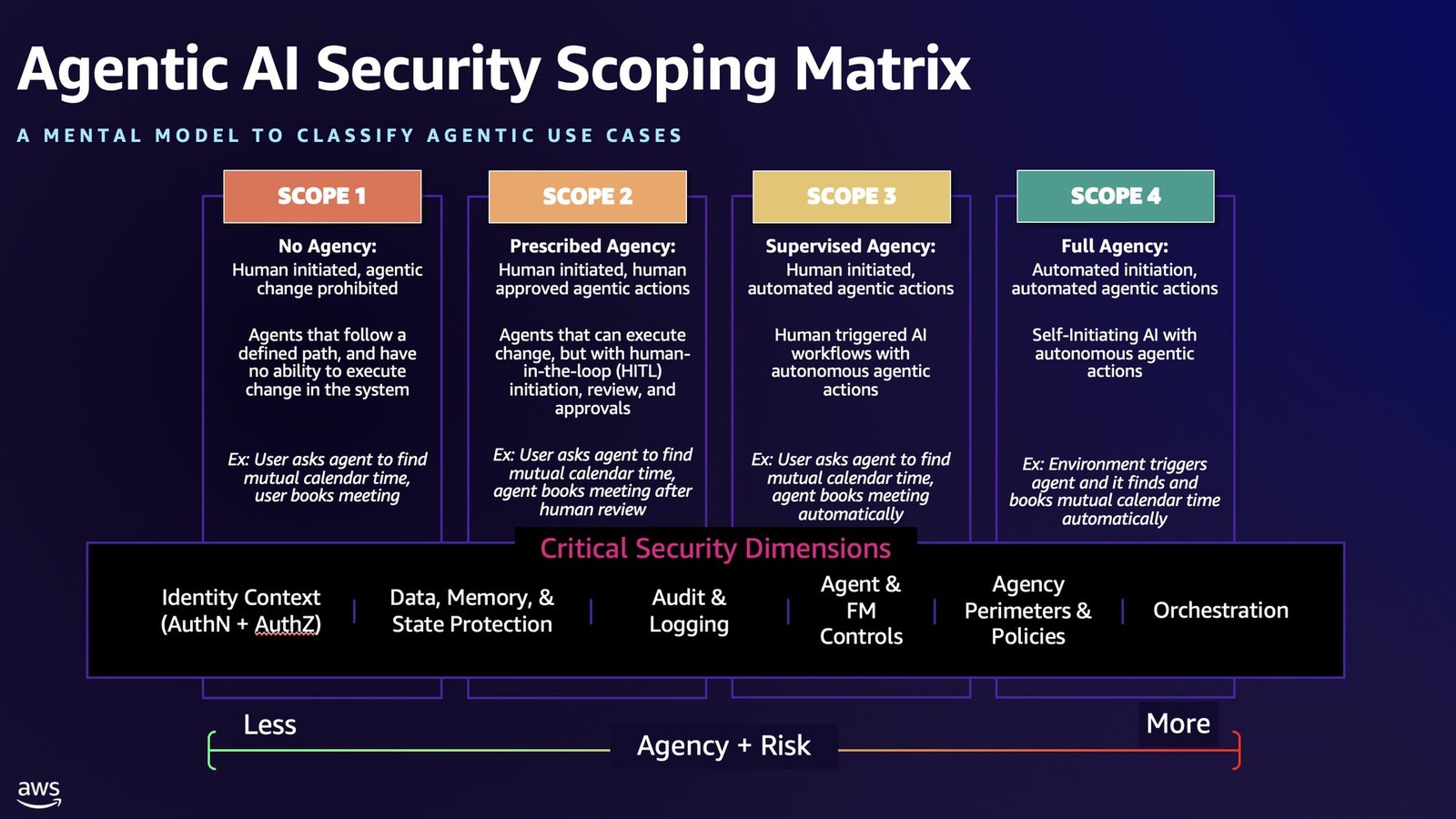
Guardrails govern what the model says. Policy governs what the agent does. Evaluations score how well it did. Payments cap what it can spend. They stack — they do not substitute.
AgentCore Policy vs OPA/Rego vs Cedar vs Guardrails: the decision matrix
The four options enforce at four different points: AgentCore Policy at the gateway boundary, OPA/Rego in your code or a sidecar, Cedar-on-Verified-Permissions via an API call from your app, and Guardrails on the model’s output. Pick the one whose enforcement point matches where your risk actually is — that single decision drives everything else in the table.
Read this matrix top-down by the enforcement-point row first. If your threat is “the agent calls a dangerous tool with bad arguments,” you want a boundary check (Policy). If your threat is “a portable rule must hold across AWS, Azure, and Kubernetes,” you want OPA/Rego. If your threat is “fine-grained per-user permissions inside a custom app,” you want Verified Permissions. If your threat is “the model emits unsafe or off-brand text,” you want Guardrails.
| Dimension | AgentCore Policy | OPA / Rego | Cedar on Verified Permissions | AgentCore Guardrails |
|---|---|---|---|---|
| Enforcement point | Gateway boundary (intercepts every tool call) | In-code or sidecar (you place the check) | API call to Verified Permissions from your app | Model output (filters generated content) |
| Policy language | Cedar, or natural-language prompt to Cedar | Rego (Datalog-derived) | Cedar | Natural-language + managed categories |
| Deterministic | Yes | Yes | Yes | No — probabilistic, can be bypassed by prompt injection |
| Self-host | No — AWS-managed | Yes — open source, runs anywhere | No — AWS-managed | No — AWS-managed |
| Vendor lock-in | High (AWS) | Low (CNCF, portable) | Medium (Cedar is OSS, service is AWS) | High (AWS) |
| GA / maturity | GA Mar 3, 2026 | Mature, CNCF graduated | GA, in production for years | GA |
| Best for | Tool-call authorization at the gateway | Portable policy across clouds & K8s | Fine-grained in-app authorization | Unsafe / off-topic content filtering |
How does AgentCore Policy work at the gateway boundary?
AgentCore Policy works by sitting inside the AgentCore Gateway — between the agent and the tools it calls — and evaluating each tool invocation against your Cedar policies on a default-deny basis before the call reaches the downstream system. Because the check lives outside the agent, no prompt, jailbreak, or code refactor can route around it. AWS calls this “deterministic enforcement that remains reliable regardless of how the agent is implemented.”
Three properties make the gateway boundary the right place for tool-call authorization. First, it is deterministic: Cedar uses default-deny, forbid-wins, order-independent semantics, so evaluation order never changes the decision and an unmatched request is denied. Second, it is fine-grained: policies can condition on user identity (from the JWT) and on tool input parameters — so you can allow a refund tool but cap the amount, or permit a discount tool but forbid bulk discounts above a threshold. Third, it is auditable: every decision is logged through CloudWatch, which is what compliance teams actually need at audit time.
Concretely, a refund example from the AWS materials reads roughly: permit the refund action only when the caller is in the support role and the refund amount is at most $500; otherwise deny. The agent can be coaxed into trying a $5,000 refund all it wants — the gateway evaluates the Cedar policy against the actual tool arguments and returns DENY before any money moves. That is the difference between a guideline in a system prompt and an enforced control.
Authoring has two paths. You can write Cedar directly — it reads like structured natural language, which is why security reviewers tend to prefer it to Rego — or you describe the rule in English and let Policy generate, validate against the tool schema, and reason over candidate policies before you enable them. The natural-language path lowers the barrier for non-experts; the Cedar path gives you exact control and version-controllable artifacts.
“A control that lives in the agent’s code can be talked out of. A control at the gateway boundary cannot — that is the entire argument for AgentCore Policy.”
Alatirok analysis
AgentCore Policy vs Guardrails: what is the difference?
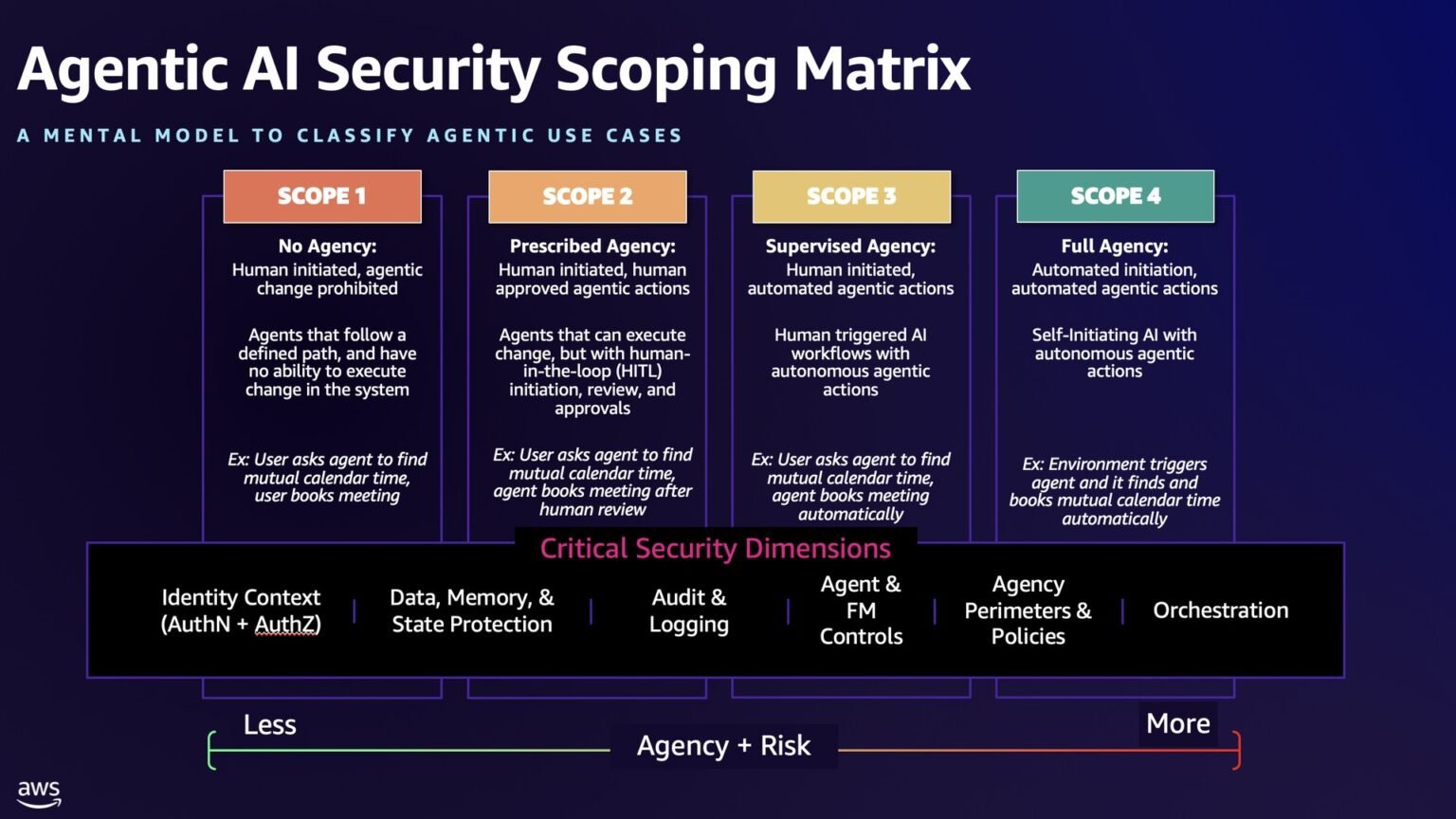
The difference is the surface each one guards: AgentCore Policy authorizes agent actions deterministically at the gateway, while Guardrails filter model expression probabilistically on the output. Policy decides whether a tool call is allowed to run; Guardrails decide whether generated text is safe to return. They are complementary layers, not alternatives, and a serious agent deployment runs both.
The failure modes are different, which is the clearest way to keep them straight. Guardrails are probabilistic content filters — they catch toxicity, PII leakage, prompt-injection attempts, and off-topic responses, but because they reason over language they can be partially bypassed by a sufficiently clever prompt. Policy is a deterministic authorization gate — it does not care what the model said, only whether the resulting tool call is permitted under the rules, and it cannot be argued out of a DENY.
A useful mental model: Guardrails are the bouncer reading the room, Policy is the lock on the vault. You want the bouncer to stop obvious trouble at the door, but you still lock the vault — because the bouncer is fallible and the vault is where the money is. Filtering a toxic message is good; preventing an unauthorized $50,000 wire transfer is non-negotiable, and only a deterministic boundary check gives you that guarantee.
Where teams go wrong is treating Guardrails as their authorization layer because it is easier to configure. If your only control on tool calls is a content filter, a prompt injection that survives the filter reaches your tools unsupervised. Use Guardrails for expression, Policy for action, and do not let one stand in for the other.
Pros
Cons
When does gateway-boundary Cedar beat OPA/Rego or in-code authorization?
Gateway-boundary Cedar wins when your primary risk is agent tool calls and you are already on Bedrock: the boundary check cannot be bypassed by the agent, requires zero changes to agent code, and is auditable by default. OPA/Rego wins when you need one portable policy plane across multiple clouds and Kubernetes, or when you refuse vendor lock-in.
Start with the enforcement point, because that is the load-bearing distinction the other ranking pages skip. In-code authorization — whether hand-rolled or via an OPA library call inside the agent — only holds if the agent’s code path actually reaches the check. An agent that is reasoning, retrying, and chaining tools is exactly the kind of system where a check can be skipped, reordered, or talked around. Moving the decision to the gateway removes that class of failure entirely.
OPA/Rego is the right call in three situations. One: you run agents across AWS, Azure, and GCP and need the same policy to evaluate identically everywhere — OPA is a CNCF-graduated project that runs as a sidecar or library anywhere. Two: you already have a Rego policy library governing Kubernetes admission and service-to-service authorization, and you want agents under the same plane. Three: you have a hard self-host or air-gap requirement, which rules out any AWS-managed service. OPA’s portability is its moat; Cedar’s determinism and gateway placement are AgentCore Policy’s.
Verified Permissions sits in a third spot: it is Cedar too, but you call it from your application code via an IsAuthorized API, metered per request. That is ideal for fine-grained per-user permissions inside a custom app — “can this user view this document” — but it puts the call back in your code path, which is the very thing the gateway boundary removes for agents. If your risk is agent tool calls specifically, AgentCore Policy is the more natural fit than wiring Verified Permissions calls into your agent loop. Note that Cedar itself is open source — Permit.io’s Cedar-agent lets you self-host Cedar like OPA — so choosing Cedar-the-language does not force you onto a managed service, even if AgentCore Policy and Verified Permissions are managed.
Rule of thumb: if your risk is a tool call, enforce at the gateway (AgentCore Policy). If your risk is portability across clouds, enforce with OPA/Rego. If your risk is per-user in-app permissions, caHow do you roll out AgentCore Policy with the log-only to enforce pattern?
Roll out AgentCore Policy in two stages: run the policy in logging mode first to validate it against real agent traffic without blocking anything, then flip to enforcement mode in production once the logs confirm it only blocks what you intend. AWS describes logging mode as a way to “test and validate a policy before enabling it in production,” and treating the cutover as a deploy — not a casual toggle — is the single best practice here.
The mechanics of a safe rollout look like this. Author the policy (in Cedar or natural language) and let the automated reasoning flag rules that are overly permissive, overly restrictive, or impossible to satisfy. Attach the policy engine to the gateway in logging mode. Run your real agent workload — ideally a shadow of production traffic — and watch CloudWatch for what would have been denied. You are looking for two signals: legitimate calls that the policy would wrongly block (tighten or fix), and risky calls that slipped through (add a forbid rule). Only when the would-block set is exactly the set you want do you flip to enforce.
This pattern is why AgentCore Policy is operationally safer than dropping an in-code authorization check straight into production. With in-code authz, your first signal that a rule is wrong is usually a broken workflow or a customer ticket. Log-only mode turns policy tuning into an observable, reversible process — the same discipline you would apply to a feature flag or a canary deploy.
Two practical cautions. First, the gateway only governs tool calls that go through the AgentCore Gateway; if an agent has a side channel to a tool, that path is not covered, so route everything through the gateway. Second, keep your Cedar policies in version control even when you author in natural language — the generated Cedar is the artifact your auditors and your future self will read, and you want its history.
Troubleshooting: my policy blocks legitimate tool calls in enforce mode
Re-run in logging mode and inspect the CloudWatch decision logs for the denied requests. The usual causes are a missing permit for a valid user role, a condition that references a tool parameter by the wrong name (validate against the tool schema), or an over-broad forbid rule that wins under Cedar’s forbid-wins semantics. Fix in log-only, confirm the would-block set is clean, then re-enable enforcement.Troubleshooting: natural-language authoring generated a policy that is too permissive
Open the generated Cedar and read it directly — natural language is a convenience, not the source of truth. Add explicit conditions on user identity and tool input parameters, and rely on Policy’s automated reasoning, which is designed to flag overly permissive policies before enforcement. Commit the reviewed Cedar to version control as your canonical artifact.Troubleshooting: a tool call bypassed Policy entirely
AgentCore Policy only intercepts traffic that flows through the AgentCore Gateway. If an agent reaches a tool by a direct path that does not transit the gateway, no policy applies. Audit your agent’s tool wiring and ensure every tool invocation is routed through the gateway so the boundary check actually runs.How does Policy compose with Evaluations and the x402 Payments preview?
AgentCore Policy authorizes the action, AgentCore Evaluations scores the behavior, and AgentCore Payments caps the spend — together they form a three-layer governance stack that no single competing feature replicates. This composition, not any one feature, is the strongest reason an AWS-committed team chooses AgentCore for amazon bedrock agentcore governance.
Evaluations reached GA on March 31, 2026, four weeks after Policy. It ships built-in evaluators for correctness, faithfulness, helpfulness, harmfulness, stereotyping, tool selection accuracy, and tool parameter accuracy, plus custom evaluators you define. Where Policy is a hard gate at the boundary, Evaluations is continuous quality intelligence inside it — answering “did the agent pick the right tool, with the right arguments, and was the result correct?” The two are complementary: Policy stops the disallowed call; Evaluations tells you whether the allowed calls are any good. Both unify in CloudWatch.
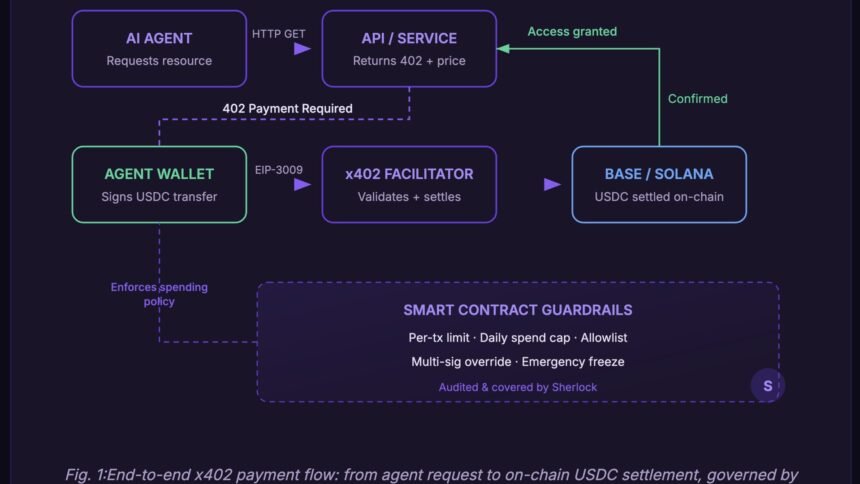
The third layer is AgentCore Payments, in preview as of the May 11, 2026 AWS Weekly Roundup. It lets agents autonomously pay for APIs, MCP servers, web content, and other agents using a Coinbase CDP wallet or a Stripe Privy wallet, with session-level spending limits. That spending cap is itself a governance control — a deterministic budget boundary that pairs naturally with the authorization boundary Policy provides. An agent might be authorized to call a paid market-data API (Policy), produce a correct summary (Evaluations), and be physically unable to spend more than its per-session limit doing so (Payments).
Stacked, the picture is coherent: authorize at the gateway, evaluate the behavior, bound the spend. Replicating that portably means assembling OPA for authz, your own eval harness, and a homegrown spend governor — three integration projects instead of three managed features. That assembly cost is the flip side of AWS lock-in, and it is the honest trade a buyer should weigh.
The three-layer stack is the upside of staying on Bedrock and the cost of leaving it. If multi-cloud portability is a hard requirement, that pushes you back toward OPA/Rego for authz and a self-assembled equivalent of Evaluations and Payments.
Verdict: which agent governance layer should you choose?
Gateway-boundary Cedar wins tool-call authz on Bedrock; OPA/Rego wins portability
Choose AgentCore Policy if your agents run on Bedrock and your top risk is tool-call authorization — the gateway boundary, deterministic Cedar, and composition with Evaluations and Payments make it the strongest single choice for that job in 2026. Choose OPA/Rego if portability across clouds or self-hosting is non-negotiable.
Most mature deployments will not pick one. They will run Guardrails on output, Policy on tool calls, and Evaluations on behavior — because those guard different surfaces and the failure of any one should not be the failure of all. The buyer’s real question is not “which of the four,” but “which one owns tool-call authorization” — and there, on Bedrock, gateway-boundary Cedar via AgentCore Policy is the answer the other ranking pages never quite give you.
Builder’s take
I build agent governance into Cyntr and Loomfeed, so I evaluate every new authorization layer through one lens: where does the decision actually get enforced, and what happens when the agent misbehaves? Here is how I read AgentCore Policy after shipping policy-on-every-path systems.
- The gateway boundary is the right place to enforce tool-call authorization. If the decision lives in agent code, a prompt injection or a refactor can route around it. AgentCore Policy moving the check outside the agent is the whole point, and it is the single biggest reason to take it seriously.
- Policy and Guardrails are not competitors — they guard different surfaces. Guardrails filter model expression (toxic, unsafe, off-topic output); Policy authorizes agent action (which tool, which arguments, which user). You almost certainly want both, plus Evaluations watching quality inside the boundary.
- Cedar’s deny-by-default, order-independent semantics is what makes it auditable. I would rather defend a Cedar policy set to a compliance team than a pile of Rego, but Rego still wins when you need one portable policy plane across AWS, Azure, GCP, and Kubernetes.
- Run log-only first, always. The cheapest way to learn what your agents actually do is to watch what a policy would have blocked before you flip to enforce. Treat the log-to-enforce cutover as a deploy with a rollback, not a config toggle.
- The composition story is the real moat: Policy authorizes the call, Evaluations scores the behavior, and the x402 Payments preview caps the spend per session. That three-layer stack is harder to assemble portably than any single feature, and it is exactly why AWS lock-in is the price of admission.
Frequently asked questions
AgentCore Policy is a managed authorization layer in Amazon Bedrock AgentCore that intercepts every AI-agent tool call at the AgentCore Gateway boundary and evaluates it against Cedar policies before the call runs. It went generally available on March 3, 2026, in thirteen AWS Regions, enforces on a default-deny basis, and works outside your agent’s code so it cannot be bypassed by prompts or refactors.
Policy authorizes agent actions — it decides deterministically whether a specific tool call with specific arguments is allowed to run. Guardrails filter model expression — they probabilistically catch unsafe, toxic, or off-topic generated content. Policy guards what the agent does; Guardrails guard what the model says. They are complementary layers, and a serious deployment runs both.
For tool-call authorization on Bedrock, yes — the gateway boundary cannot be bypassed by the agent, requires no agent-code changes, and is auditable by default. OPA/Rego is better when you need one portable policy plane across AWS, Azure, GCP, and Kubernetes, when you already run Rego for service-to-service or admission control, or when self-hosting is a hard requirement. The deciding factor is your enforcement point and your portability needs.
Yes. AgentCore Policy uses Cedar, AWS’s open-source authorization language — the same language behind Amazon Verified Permissions. Cedar is deny-by-default with order-independent, forbid-wins semantics, which makes evaluation deterministic and auditable. You can write Cedar directly or describe rules in natural language, which Policy translates to Cedar and validates with automated reasoning before enforcement.
Logging mode runs a policy against real agent traffic without blocking anything, recording in CloudWatch what would have been denied. You use it to validate a policy before flipping to enforcement mode in production: confirm the would-block set is exactly what you intend, fix any false positives or missed risky calls, then enable enforcement. It makes policy tuning observable and reversible, like a canary deploy.
They form a three-layer governance stack. Policy authorizes the tool call at the gateway. Evaluations (GA March 31, 2026) scores the agent’s behavior with built-in evaluators for correctness, helpfulness, tool selection, tool parameter accuracy, and more. The Payments preview (May 2026) lets agents pay for APIs, MCP servers, and web content over x402 using Coinbase or Stripe wallets, with session-level spending limits. Authorize the action, evaluate the behavior, bound the spend.
Primary sources
- Policy in Amazon Bedrock AgentCore is now generally available — AWS What’s New
- AgentCore adds quality evaluations and policy controls for trusted AI agents — AWS News Blog
- Policy in Amazon Bedrock AgentCore: Control Agent-to-Tool Interactions — AWS Documentation
- Why Policy in Amazon Bedrock AgentCore chose Cedar for securing agentic workflows — AWS Security Blog
- AWS Weekly Roundup: Amazon Bedrock AgentCore payments (May 11, 2026) — AWS News Blog
- Migrating from Open Policy Agent to Amazon Verified Permissions — AWS Security Blog
- Policy as Code: OPA’s Rego vs. Cedar — Permit.io
- Amazon Verified Permissions Pricing — AWS
Last updated: June 3, 2026. Related: Governance.