
Headline finding: more than $100 billion of AI compute spend across 2024 to early 2026 can be conservatively traced to five concentration points: Microsoft, Alphabet, Amazon, Meta, and NVIDIA’s data center order book, with frontier-lab contracts such as Amazon’s Anthropic partnership acting as force multipliers rather than broad-based demand. Public filings do not cleanly separate “AI-only” infrastructure from general cloud and data center investment, so this analysis uses disclosed capex, supplier commentary, and company statements to frame ranges rather than false precision. The result is a clearer picture of where AI compute spend actually landed—and why the market structure matters for developers, model labs, and agent infrastructure startups. For related context, see alatirok’s AI bubble analysis and map of the agent funding wave.
The headline number: AI compute spend was concentrated, not diffuse
$100B+
Conservatively traceable AI compute-related spend
Across hyperscaler AI infrastructure buckets, frontier-lab contracts, and NVIDIA data center demand from 2024 to early 2026
$11B
Biggest single disclosed contract in this set
Amazon’s planned total investment in Anthropic, announced in stages through 2024
70%+
Share of capex tied to NVIDIA at some buyers
Not a universal figure; based on company-specific GPU-heavy deployments and supplier concentration rather than a market-wide average
Bottom line: AI compute spend clustered around a few buyers
The cleanest way to read 2024-2026 AI compute spend is not as one monolithic market, but as a stack of concentrated commitments. Public evidence points to four hyperscaler buckets—Microsoft, Alphabet, Amazon, and Meta—plus NVIDIA’s data center backlog and a smaller set of frontier-lab compute contracts. That does not mean every dollar of those companies’ capex was AI-specific. It does mean the overwhelming share of verifiable large-scale AI compute investment sat with a few buyers that could finance data centers, secure power, and lock in accelerator supply.
This matters because the popular narrative often treats AI infrastructure demand as broad and evenly distributed. The filings suggest the opposite. Microsoft said in its fiscal 2025 second quarter earnings materials that capital expenditures, including finance leases, were $22.6 billion for the quarter, up 95% year over year, with spending aimed at cloud and AI capacity. Alphabet reported $52.5 billion in 2024 capital expenditures and said it expected roughly $75 billion in 2025 capex, primarily for technical infrastructure including servers and data centers. Meta said 2025 capital expenditures would be in the range of $60 billion to $65 billion, driven by generative AI and core business investments. Amazon said 2025 capex would be higher than 2024’s approximately $83 billion, with the vast majority supporting AWS AI demand.
Those are not all AI-only dollars, and this piece does not pretend otherwise. Still, when the largest cloud and platform companies explicitly tie incremental infrastructure growth to AI training and inference, the center of gravity becomes visible. For more on why infrastructure concentration matters downstream, see alatirok’s coverage of enterprise model distribution, agent observability, and stateful agent platforms.
This article uses disclosed capex, company guidance, supplier commentary, and contract announcements. Where companies do not isolate AI-only spend, figures are presented as infrastructure ranges or attributable buckets rather than exact AI totals.
“The market looked broad in demos and startup decks. In the filings, it looked like a handful of balance sheets buying time, power, and accelerators at industrial scale.”
alatirok analysis of 2024-2026 public disclosures
How we built the dataset
Three source types anchor the numbers here. First are public company filings and earnings materials: Microsoft, Alphabet, Amazon, Meta, and NVIDIA all disclosed capex, infrastructure priorities, or data center demand in official investor materials. Second are official partnership announcements, such as Amazon’s investment in Anthropic and AWS’s role as Anthropic’s primary cloud and training partner. Third are external research sources that help frame the scale of compute demand, notably Epoch AI, whose work on frontier model training costs and compute trends is widely cited in the industry.
The hard part is attribution. A dollar spent on a data center shell, networking, or power equipment may support AI, traditional cloud workloads, or both. A GPU order may be used for training, inference, internal research, or customer rentals. That is why the tables below separate reported infrastructure spend from AI-linked rationale. Readers looking for a single exact number will not find one in any filing. Readers looking for a defensible map of where the money concentrated will.
This is also why ranges matter. NVIDIA’s data center revenue is not the same thing as backlog, and backlog itself is not the same thing as recognized end-customer AI compute spend in a given calendar year. Yet supplier concentration still tells us something important: when one vendor reports data center revenue of $115.2 billion for fiscal 2026, up 142% year over year, it is clear where a large share of accelerator spending flowed.
Most hyperscalers do not disclose AI-only capex. Treat these figures as verifiable infrastructure commitments with explicit AI linkage, not as exact accounting allocations.
| Bucket | Publicly disclosed figure | Period | Why it belongs in AI compute spend |
|---|---|---|---|
| Microsoft capex incl. finance leases | $22.6B | FY25 Q2 quarter | Microsoft said spending was to support cloud and AI demand |
| Alphabet capex | $52.5B | FY2024 | Alphabet tied technical infrastructure spending to servers and data centers for AI services |
| Alphabet expected capex | ~$75B | FY2025 | Company said spend would go primarily to technical infrastructure, especially servers and data centers |
| Amazon capex | ~$83B | FY2024 | Amazon said the vast majority was for AWS, with AI representing a once-in-a-lifetime business opportunity |
| Meta expected capex | $60B-$65B | FY2025 | Meta said generative AI was a key driver |
| NVIDIA data center revenue | $115.2B | FY2026 | Proxy for recognized accelerator demand flowing into AI infrastructure |
| Amazon planned Anthropic investment | $11B total | Announced through 2024 | Capital and cloud partnership directly tied to model training and deployment on AWS |
Microsoft: Azure AI turned capex into the first giant bucket
Microsoft’s role: demand concentrator
Microsoft is the clearest example of AI demand showing up in capex acceleration. In its fiscal 2025 second quarter results, Microsoft reported capital expenditures, including finance leases, of $22.6 billion, up 95% year over year. The company said the increase was driven by investments to support cloud and AI offerings. That single quarter is not a full-year AI number, but it shows the scale at which Azure AI capacity was being built.
The company has repeatedly linked infrastructure growth to AI services, including Azure OpenAI demand and broader model hosting. Microsoft’s annual and quarterly filings also make clear that data center expansion, servers, and networking remain the core physical constraints. In practice, Microsoft’s AI compute spend should be read as a blend of first-party model support, customer inference demand, and reserved capacity for strategic partners.
There is a second-order effect here for the rest of the stack. When Microsoft expands AI infrastructure at that pace, it shapes pricing, availability, and deployment choices for startups building agents and orchestration layers on top of Azure. That is one reason alatirok has argued in agent deployment coverage that infrastructure access matters as much as model quality.
Alphabet: TPU and Gemini made Google the second giant bucket
Alphabet’s disclosures show a similar pattern, though with a different hardware mix. In its 2024 annual report, Alphabet said capital expenditures were $52.5 billion in 2024, compared with $32.3 billion in 2023. On its February 2025 earnings call, the company said it expected to invest approximately $75 billion in capex in 2025, primarily for technical infrastructure, with the largest component for servers followed by data centers.
Google’s AI compute story is distinct because it spans both merchant silicon and in-house accelerators. The company has long positioned TPUs as a core part of its AI infrastructure, and Gemini training and serving sit inside that broader technical infrastructure budget. Public disclosures do not break out TPU spending as a separate line item, so any precise TPU-only estimate would be speculative. What is verifiable is that Alphabet’s capex step-up was explicitly tied to AI products and the infrastructure needed to support them.
That matters for market structure. Google is one of the few companies able to absorb AI demand through a vertically integrated stack that includes custom silicon, cloud distribution, and first-party models. For developers, that means the compute market is not just a race to buy more NVIDIA GPUs. It is also a race to control the serving layer and the economics of inference.
Pros
Cons
Amazon: Trainium plus Anthropic created a hybrid compute bucket
Amazon’s role: compute plus capital
Amazon’s AI compute spend is harder to parse because it combines AWS infrastructure, custom chips, and strategic capital deployment into Anthropic. In February 2025, Amazon said its 2025 capital expenditures would be reasonably representative of the annualized capex rate of the fourth quarter of 2024, and that this was higher than the approximately $83 billion it spent in 2024. CEO Andy Jassy said the vast majority of that capex was on AI for AWS.
The Anthropic relationship makes Amazon’s bucket unusually visible. Amazon first announced a $4 billion investment in Anthropic in 2023, then expanded its total planned investment to $8 billion in March 2024, and later to $11 billion in November 2024. AWS also said Anthropic would use AWS Trainium and Inferentia chips and named AWS as Anthropic’s primary cloud provider for mission-critical workloads.
That means Amazon’s AI compute spend should be read in two layers. One is broad AWS infrastructure growth tied to customer demand. The other is a frontier-lab contract structure in which capital investment, cloud consumption, and custom silicon adoption reinforce each other. It is one of the clearest examples of how compute financing and model distribution merged during this cycle.
The Amazon-Anthropic relationship is not just a venture investment. It is a compute distribution agreement, a cloud commitment, and a custom-chip adoption strategy wrapped into one partnership.
| Amazon / Anthropic milestone | Disclosed figure | Date | Relevance to compute |
|---|---|---|---|
| Initial Amazon investment in Anthropic | $4B | 2023 announcement | Anchored long-term cloud and model partnership on AWS |
| Expanded planned Amazon investment | $8B total | March 2024 | Deepened compute and cloud alignment |
| Further expanded planned investment | $11B total | November 2024 | Largest single disclosed contract-like capital commitment in this set |
| Amazon capex | ~$83B | FY2024 | Amazon said the vast majority supported AWS AI demand |
Meta: the GPU-heavy Llama build became its own spending category
Meta’s AI infrastructure strategy is more direct: spend heavily on accelerators and data centers to support first-party model development and large-scale inference. In January 2025, Meta said it expected 2025 capital expenditures of $60 billion to $65 billion, up from prior expectations, and linked the increase to generative AI and core business investments. Mark Zuckerberg also said Meta would bring online roughly 1 gigawatt of compute in 2025 and end the year with more than 1.3 million GPUs.
Those disclosures do not specify exact mixes of H100, H200, or later systems, and this article avoids filling in what Meta did not publish. Still, the direction is unmistakable. Meta chose to internalize a large share of frontier-model compute rather than rely primarily on external cloud providers. That makes Meta one of the largest direct buyers in the market and one of the clearest examples of AI compute spend bypassing third-party cloud markup.
For the broader ecosystem, Meta’s spending also has a strategic spillover. Open-weight model releases such as Llama can lower software-layer costs for developers, but they do not reduce the capital intensity required to train and serve frontier-scale systems. If anything, they can shift more demand toward inference infrastructure and fine-tuning environments.
“Open weights changed software distribution. They did not change the fact that frontier-scale AI still rides on giant capex budgets and scarce power.”
alatirok editorial analysis
NVIDIA: the supplier bucket was large enough to be a category of its own
NVIDIA’s role: the choke point
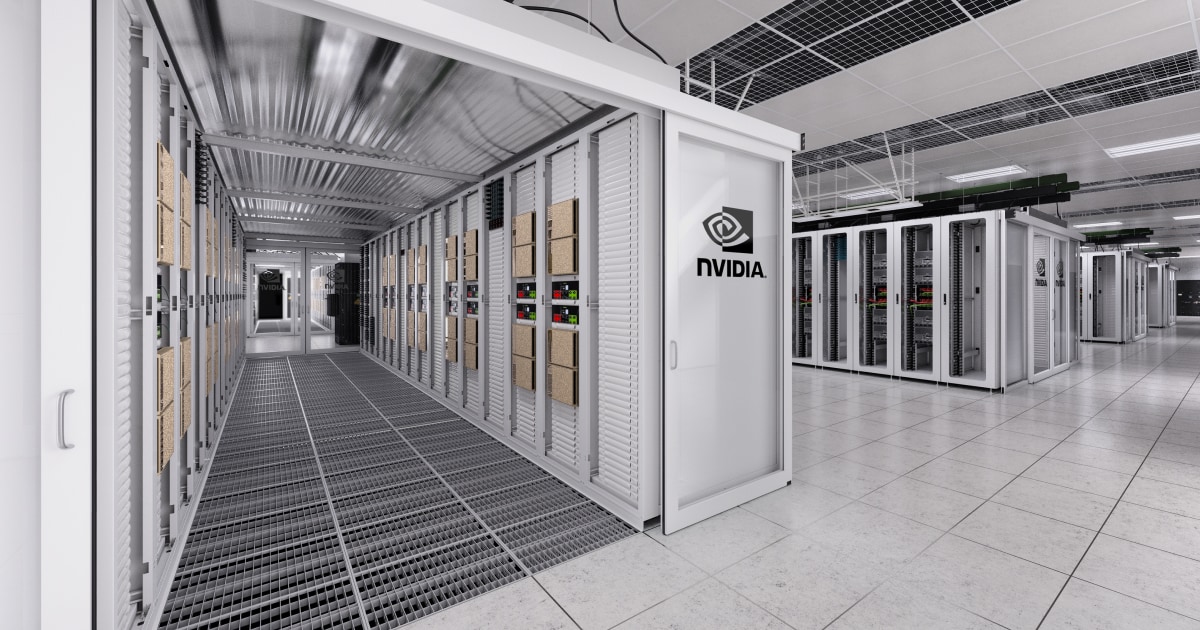
Any map of AI compute spend that omits NVIDIA misses the central supplier fact of the cycle. NVIDIA reported $115.2 billion in data center revenue for fiscal 2026, up 142% from the prior year. Data center revenue is not identical to AI compute spend, and it includes more than training GPUs alone. But for 2024-2026 it remains the clearest public proxy for where a huge share of accelerator dollars landed.
The reason to treat NVIDIA as its own bucket is not just size. It is concentration. Hyperscalers and model labs could spread workloads across clouds, but they could not easily diversify away from the leading accelerator vendor at the same pace. That gave NVIDIA unusual leverage over delivery schedules, system design, and the timing of compute availability.
This is where the backlog discussion matters. NVIDIA does not publish a simple AI backlog number that can be dropped into a table as a clean line item. What it does disclose, through revenue growth and customer concentration commentary, is sustained demand that remained supply-constrained for much of the period. In practical terms, a meaningful share of AI compute spend was committed before it was physically deployed.
Pros
Cons
Frontier-lab compute contracts were smaller than hyperscaler capex—but strategically outsized
The frontier labs mattered less as independent balance sheets than as anchors for cloud and chip commitments. Anthropic is the clearest public example because Amazon disclosed both the investment size and the infrastructure relationship. Microsoft’s relationship with OpenAI has similar strategic importance, but the exact compute economics are less cleanly disclosed in a single current-period figure that can be mapped the same way.
Epoch AI’s research helps explain why these contracts matter. Frontier model training runs have become dramatically more expensive over time, with compute requirements rising across successive generations of large models. Even when a lab does not spend hyperscaler-scale capex directly, it can still drive hyperscaler purchasing through reserved capacity, multi-year commitments, and co-development arrangements.
That is why frontier-lab contracts should be treated as demand multipliers. They are not the largest line items in public filings, but they influence where infrastructure gets built, which chips get prioritized, and how cloud providers justify accelerated capex to investors.
What Epoch AI adds: training costs rose faster than public narratives admitted
Epoch AI’s work is useful here because it provides a framework for understanding why hyperscaler spending accelerated so sharply. The organization has documented the rapid growth in compute used to train notable machine learning systems and has published analysis on the increasing cost of frontier training runs. Those estimates vary by model and methodology, but the directional point is robust: frontier AI progress has required much larger compute budgets over time.
That does not mean every extra capex dollar went into one giant pretraining run. Inference, fine-tuning, retrieval systems, and enterprise serving all consume infrastructure too. Still, the Epoch AI lens helps explain why cloud providers and platform companies were willing to spend at levels that would have looked extreme only a few years earlier. The economics of staying in the frontier race changed.
For readers following capital flows, this also connects to alatirok’s funding map. Venture money into agent startups rose during the same period, but the physical substrate remained dominated by a few companies financing compute at orders of magnitude beyond startup budgets.
Epoch AI is best used here as context for compute intensity, not as a substitute for company-specific capex disclosures.
A conservative breakdown of the $100B+ figure
The editorial challenge is to avoid double counting while still showing scale. If you simply add every disclosed capex number, you quickly exceed the headline figure by a wide margin. That would be misleading because not all capex is AI-specific, and some supplier revenue is already embedded in buyer capex. A conservative approach is to identify a subset of infrastructure commitments that are explicitly AI-linked and large enough to support the headline claim without pretending to solve every attribution problem.
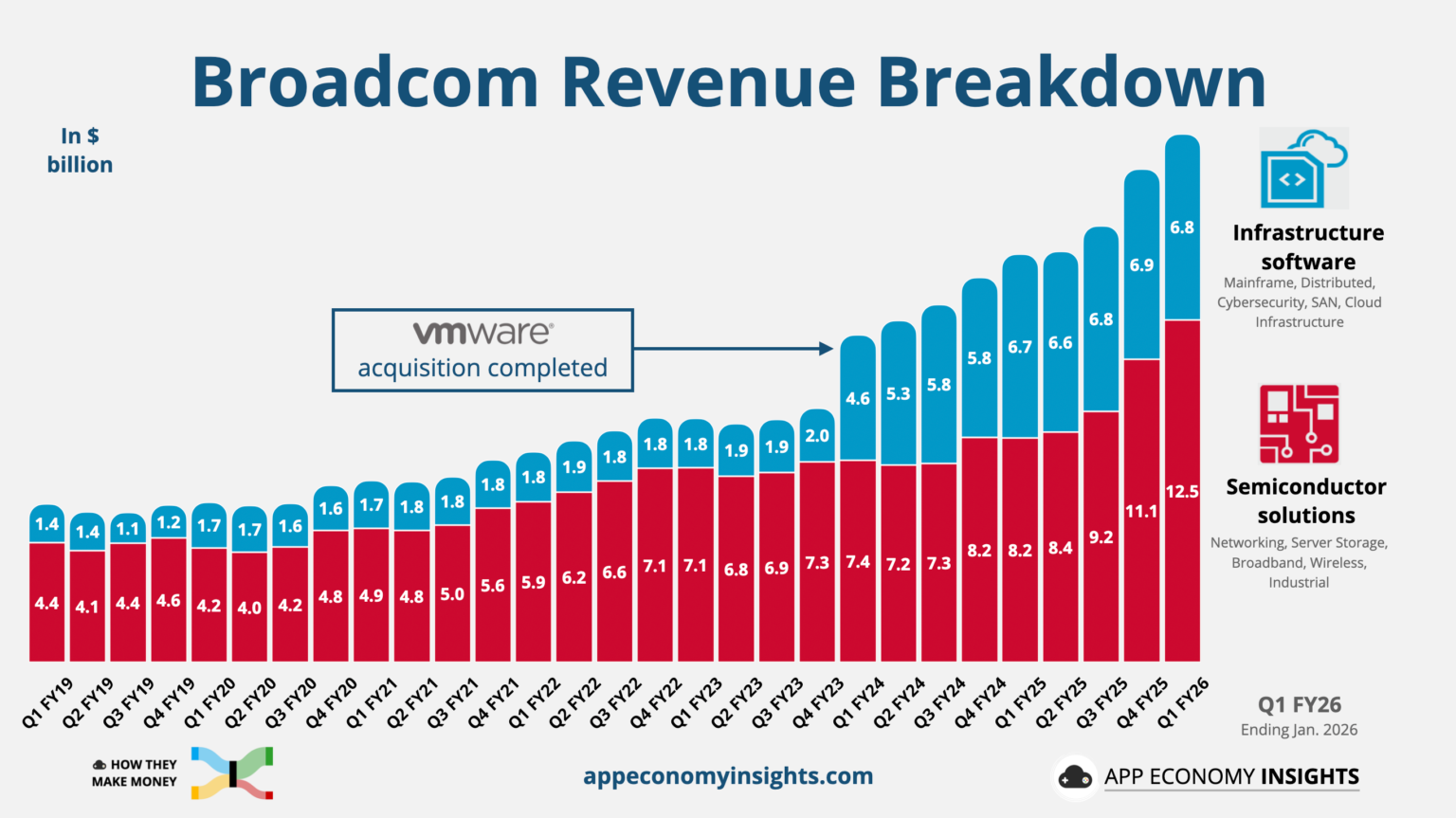
On that basis, the $100 billion+ headline is conservative. Microsoft’s quarterly AI-linked capex run rate alone points to tens of billions annually. Alphabet’s 2024 and 2025 technical infrastructure spending was explicitly tied to servers and data centers for AI services. Amazon said the vast majority of its roughly $83 billion 2024 capex supported AWS AI demand. Meta tied a $60 billion to $65 billion 2025 capex plan to generative AI. NVIDIA recognized more than $115 billion in data center revenue in fiscal 2026. You cannot sum those figures directly, but you also do not need to in order to establish that AI compute spend comfortably cleared $100 billion across the period.
The more interesting question is not whether the market crossed that threshold. It is how little of that spend was broadly distributed. The answer, again, is: very little.
| Category | Conservative interpretation | Why not summed directly |
|---|---|---|
| Hyperscaler capex | Tens of billions in AI-linked infrastructure | Includes mixed-use cloud and data center spending |
| Frontier-lab contracts | Single-digit to low double-digit billions | Can overlap with cloud provider capex and revenue |
| NVIDIA data center demand | Very large supplier-side proxy | Revenue overlaps with customer infrastructure purchases |
What the data says about concentration risk
Meaning of the data: infrastructure concentration is the story
The first implication is supplier and buyer concentration. A small number of companies controlled the majority of verifiable AI compute spending, and one supplier captured a large share of accelerator economics. That creates obvious risks: delivery bottlenecks, pricing power, geopolitical exposure, and a market in which software startups depend on infrastructure decisions made by a few giant firms.
The second implication is that AI competition increasingly depends on financing structure, not just model quality. The companies that could pre-commit to data centers, power, and chips gained strategic flexibility that smaller labs and startups could not match. That is one reason the debate covered in alatirok’s AI bubble piece is often framed too narrowly. Even if some application-layer valuations compress, the infrastructure layer can remain rational for the firms that own demand aggregation and distribution.
The third implication is for agent builders. If compute remains concentrated, the margins and product choices of agent platforms will continue to be shaped by cloud partnerships, model routing, and inference optimization. That is less glamorous than frontier-model demos, but it is where a lot of the durable economics live.
What the data does not prove
It does not prove that every dollar of hyperscaler capex will earn an adequate return. It does not prove that all frontier-model demand will persist at the same rate. It does not prove that custom silicon will displace NVIDIA quickly, or that open-weight models will materially reduce aggregate infrastructure spending. Those are live questions.
It also does not prove that AI infrastructure demand is fake. The filings show real capital deployment, real supplier revenue, and real multi-year commitments. The better critique is not that the spending failed to happen. It is that the spending is highly concentrated and may produce uneven returns across the stack.
That distinction matters for readers trying to separate application hype from infrastructure reality. The money was real. The concentration was real. The uncertainty sits in monetization, utilization, and long-run competitive structure.
What the data means now
From 2024 through early 2026, AI compute spend was not a broad market phenomenon in the way software adoption often is. It was a capital-intensive infrastructure cycle led by a few hyperscalers, reinforced by one dominant accelerator supplier, and amplified by a small number of frontier-lab partnerships. That is the core finding.
For developers and founders, the practical takeaway is straightforward. The next layer of value creation in AI agents, observability, orchestration, and enterprise tooling will still sit on top of infrastructure controlled by a handful of companies. That can create opportunity—especially for software that improves utilization, routing, and reliability—but it also means platform dependence is not going away.
For investors, the data argues for a more nuanced view than either pure exuberance or pure skepticism. The infrastructure buildout is real and historically large. The gains from it will not be evenly distributed. If you want to understand who captured the first $100 billion of AI compute spend, the answer is not “the AI sector.” It is a short list of names.
The first $100B of AI compute spend was less a broad boom than a concentrated industrial buildout. The companies that controlled cloud distribution, custom silicon, or accelerator supply captured the bulk of it.
Frequently asked questions
No. Public companies generally disclosed total capital expenditures and described AI as a major driver, but they did not provide a clean AI-only accounting line. For example, Microsoft, Alphabet, Amazon, and Meta all tied infrastructure spending to AI demand, but none published a single exact AI-only capex figure.
Because NVIDIA’s data center revenue is one of the clearest public indicators of where AI infrastructure dollars were recognized in the supply chain. It should not be added directly on top of customer capex, but it is essential for understanding concentration and supplier power.
Epoch AI provides context on the rising compute intensity and cost of frontier AI systems. Its research helps explain why hyperscaler infrastructure budgets accelerated, even though company filings remain the primary source for the spending figures used in this piece.
Yes. Amazon’s official announcements describe Anthropic as using AWS as its primary cloud provider and adopting AWS Trainium and Inferentia chips, alongside Amazon’s staged investment that reached $11 billion. That makes it both a capital partnership and a compute distribution agreement.
Primary sources
- Microsoft FY25 Q2 earnings press release and webcast — Microsoft
- Alphabet Investor Relations — Alphabet
- Amazon Q4 2024 earnings results — Amazon
- Amazon expands strategic collaboration with Anthropic — Amazon
- Meta Reports Fourth Quarter and Full Year 2024 Results — Meta
- NVIDIA Announces Financial Results for Fourth Quarter and Fiscal 2026 — NVIDIA
- Epoch AI — Epoch AI
- Microsoft Annual Report — Microsoft
- Alphabet Annual Report 2024 — Alphabet
- Amazon Annual Report 2024 — Amazon
- Meta Annual Report 2024 — Meta
- NVIDIA Annual Report 2025 — NVIDIA
Last updated: May 21, 2026. Related: Agent Infrastructure.