
A cross-vendor matrix of the enterprise and developer marketplaces where you can list an agent in 2026 — with the revenue-share and audience-reach column nobody else has assembled.
What are the best AI agent marketplaces 2026 for publishing and selling?
The best AI agent marketplaces 2026 split cleanly into two groups, and which one you pick depends entirely on who your buyer is. For selling to enterprises with real budgets, list on Salesforce AgentExchange, Google Gemini Enterprise, Microsoft Marketplace / Windows Agent Store, or AWS Marketplace — they bundle your agent into billing relationships the buyer already has. For developer reach and self-serve adoption, publish to the GPT Store, the Claude Skills directory, and the big MCP hubs (PulseMCP, mcp.so, Smithery). The single biggest mistake builders make is treating these as interchangeable; they are different funnels with revenue shares ranging from 0% to 25%.
Most “top marketplaces” lists you will find are either a flat directory with no economics, or a vendor landing page that only talks about its own storefront. Neither helps you make the actual decision: where do I list, what cut do I keep, and how does my agent get discovered once it is live? This guide fixes all three. We assembled a cross-vendor matrix with a real revenue-share column, then tied each listing decision to the discovery layer — A2A Agent Cards, agent registries, and the OWASP Agent Name Service — because in 2026 a marketplace listing and a discovery record are two different things you need both of.
A quick orientation on scale before the ranking: Salesforce unified AppExchange, the Slack Marketplace, and Agentforce into AgentExchange, now spanning 10,000+ apps, 1,000+ pre-built agents and tools, and 2,600+ Slack apps (Salesforce Ben). Microsoft Marketplace cleared 11,000 prepackaged models and 4,000+ AI apps and agents (InfoWorld). And the MCP ecosystem crossed roughly 9,400 distinct servers by mid-April 2026, fragmented across PulseMCP, Smithery, and the official registry (Automation Switch). The audience is enormous; the question is which slice is yours.
Picks are ordered by monetization leverage for a builder or ISV in 2026 — the combination of buyer budget, revenue share, and discovery reach — not by raw listing count. An enterprise marketplace with a 15% royalty and pre-qualified pipeline often beats a 0%-fee developer directory for actual revenue.
AI agent marketplace comparison: the full cross-vendor matrix
Here is the AI agent marketplace comparison table the vendor pages will not give you — audience, listing model, the revenue-share or pricing model, the discovery protocol each one leans on, and GA/preview status as of mid-2026. The headline: enterprise marketplaces take 15-25% but hand you a buyer with a budget; developer directories take little or nothing but make you do your own selling; and only AWS, Gemini Enterprise, and the MCP hubs are first-class on the A2A and MCP discovery protocols that let other agents find yours programmatically.
Read the revenue-share column as a signal of who owns the customer relationship. Microsoft’s 85%-to-developer split on the Windows Agent Store is unusually generous because Microsoft keeps the OS-level relationship and the M365 upsell. Salesforce’s 15% (ISVforce) / 25% (OEM) royalty looks steep until you remember it is charging for access to a pre-qualified enterprise pipeline and unified billing. The GPT Store’s ~$0.03-per-conversation usage payout is small per unit but rides ChatGPT’s enormous traffic.
“Revenue share is a proxy for who owns the customer. 85% means Microsoft keeps the OS; 15% means Salesforce hands you a pipeline.”
Alatirok analysis
| Marketplace | Audience | Listing model | Revenue share / pricing | Discovery protocol | Status |
|---|---|---|---|---|---|
| Salesforce AgentExchange | Enterprise (CRM/Slack) | Actions, topics, templates, pre-built agents + MCP servers | 15% ISVforce / 25% OEM royalty on net subscription rev; $50M Builders Initiative | Agentforce + MCP | GA |
| Google Gemini Enterprise Agent Platform | Enterprise (Workspace/Cloud) | Partner agents in unified platform (former Agentspace) | Standard Cloud Marketplace terms; consumption billing | A2A v1.0 + managed MCP | GA (Apr 22, 2026) |
| Microsoft Marketplace | Enterprise (Azure/M365) | AI apps & agents, 11,000+ models | Azure consumption / private offers; standard MS fees | MCP + Agent 365 | GA |
| Windows Agent Store | Enterprise + developer (Windows) | Native OS agents via Windows Agent Framework | 85% to developer | Windows Agent Framework registration | Preview (Win 11 26H2 SDK, July 2026) |
| AWS Marketplace (AI Agents & Tools) | Enterprise (AWS accounts) | Agents + tools, free/paid/usage tiers, unified billing | Standard AWS Marketplace listing fee by category | A2A + MCP via Bedrock AgentCore | GA |
| OpenAI GPT Store | Developer + consumer | Custom GPTs / apps | Usage-based payout (~$0.03/conversation, US-verified) | Apps SDK / connectors | GA (opaque payouts) |
| Anthropic Claude Skills directory | Developer | Agent Skills + plugins, partner-built directory | No first-party rev share (distribution channel) | Agent Skills open standard + MCP | GA |
| MCP hubs (PulseMCP, mcp.so, Smithery) | Developer | MCP server listings (human-browsable directories) | Free to list; monetize via your own meter | Model Context Protocol | GA (community) |
Salesforce AgentExchange vs Google Agentspace (now Gemini Enterprise)
The Salesforce AgentExchange vs Google Agentspace question is now slightly mislabeled, because Google retired the standalone Agentspace marketplace. Salesforce AgentExchange is the better choice if your buyer lives in CRM, Service Cloud, or Slack and you want a curated, security-reviewed enterprise storefront with a defined royalty. Google’s offering — Agentspace was folded into the renamed Gemini Enterprise Agent Platform at Cloud Next 2026 — is the better choice if your agent needs deep Workspace integration, native A2A v1.0 interoperability, and access to a 200+ model garden including Claude and Gemini.
AgentExchange’s pitch is pipeline. Salesforce reported 200+ launch partners (including Google Cloud, Docusign, and Box) and unified billing, private offers, and automated provisioning through a Go-to-Market App. Agentforce itself reached roughly $800M ARR by the end of fiscal 2026, closing 29,000 deals in Q4 alone (SaaStr) — that is the demand your listed agent attaches to. The cost of admission is the 15% ISVforce / 25% OEM royalty on net subscription revenue, partially offset by the $50M AgentExchange Builders Initiative.
Gemini Enterprise’s pitch is the platform. At Cloud Next 2026 (April 22 GA), Google renamed Vertex AI to the Gemini Enterprise Agent Platform and absorbed Agentspace, shipping Workspace Studio (no-code agent builder), ADK v1.0, managed MCP servers with Apigee as an API-to-agent bridge, and A2A protocol v1.0 reported in production at 150 organizations (TheNextWeb, Google Cloud). If you want your agent to be callable by other agents over A2A out of the box, Gemini Enterprise is the most protocol-native of the enterprise storefronts. For deeper protocol detail, see our A2A and agent registry explainers.
Salesforce AgentExchange
Best for: ISVs selling into CRM, Service Cloud, and Slack-centric enterprises
What works
Watch out for
Google Gemini Enterprise Agent Platform
Best for: Builders who need A2A interoperability and Workspace-deep agents
What works
Watch out for
Windows Agent Store and Microsoft Marketplace: the 85% revenue share play
Microsoft is running two storefronts at once, and the distinction matters for where you list. Microsoft Marketplace is the GA, cloud-and-Azure storefront — 11,000+ prepackaged models and 4,000+ AI apps and agents billed through Azure consumption and private offers. The Windows Agent Store is the new, OS-native preview shipping with the Windows Agent Framework in the Windows 11 26H2 SDK in July 2026, and it carries the most builder-friendly economics in the entire market: an 85% revenue share to developers.
That 85% figure (FourWeekMBA) is the headline because it dwarfs the 70% developers keep on the Apple App Store and Google Play. The reason Microsoft can afford it is the same reason it is worth listing: Microsoft keeps the Windows relationship and the M365 upsell — early reporting points to an M365 E7 + Agent 365 bundle around $99/user/month, with Adobe and Zoom already building native Windows agents. The Windows Agent Framework is open-sourced under MIT and provides the runtime, an Agent Registration Service, a gRPC-based cross-agent communication bus, and a memory service, so a listed agent runs natively inside Windows 11 rather than as a hosted web app.
Practically: list on Microsoft Marketplace today if you sell into Azure/M365 enterprises and want unified billing now. Plan for the Windows Agent Store if your agent is desktop-native, benefits from local execution, and you want to keep 85% of consumer-and-prosumer revenue. The two are complementary, not either/or. Microsoft is also running a Magentic Marketplace — but do not confuse it with a storefront; it is an open-source research simulation for studying agent-to-agent markets, not a place to list and sell (Microsoft Research).
The Windows Agent Store ships in preview with the Windows 11 26H2 SDK in July 2026. The 85% split and listing flow are subject to change before general availability — model your economics with a fallback channel until terms are final.
AWS Marketplace: the quiet enterprise default for agents and tools
AWS does not market its agent storefront as loudly as Salesforce or Microsoft, but for teams already running on AWS it is often the path of least resistance. AWS Marketplace promoted AI Agents and Tools to a first-class category, letting you list agents and tools with free, paid, or usage-based pricing, billed through the buyer’s existing AWS account with unified billing and IAM. For an ISV whose customers already have AWS spend commitments, that procurement-friction reduction is the entire value proposition.
The category bundles Bedrock agents and third-party offerings, and ties into Bedrock AgentCore for deployment, plus A2A and MCP for interoperability. The scale of the underlying marketplace is real — ServiceNow’s AWS Marketplace transactions surpassed $1 billion, a signal of how much enterprise procurement now flows through it. AWS takes a standard marketplace listing fee that varies by product category, listing type, and pricing model; it is not the 25% royalty of an OEM CRM deal, but it is not the 0% of a community MCP hub either.
Where AWS wins over AgentExchange and Gemini Enterprise: if your buyer’s budget already sits in an AWS Enterprise Discount Program or committed-spend agreement, listing on AWS Marketplace lets them buy your agent against that commitment — frequently the deciding factor in enterprise deals. Where it loses: discovery is weaker. AWS Marketplace is a procurement channel more than a discovery surface, so plan to drive your own demand and use the listing to close, not to be found.
Pros
Cons
GPT Store vs Claude Skills directory: developer reach, thin monetization
For the GPT Store vs Claude Skills directory comparison, set your expectations correctly: these are distribution channels, not revenue engines. The GPT Store offers the largest consumer-developer audience and a real (if opaque) usage-based revenue share — payouts average roughly $0.03 per conversation, so meaningful income requires tens of thousands of quality conversations. The Claude Skills directory pays no first-party revenue share at all; it is a curated, partner-built distribution surface built on the open Agent Skills standard. Use both for reach and lead generation, then monetize through a contract or a usage meter you control.
OpenAI’s GPT Store ties payouts to engagement (retention and session length), requires a US-based verified account and a public GPT sustaining 25+ conversations a week, and keeps the exact formula undisclosed — which is why most individual creators report a soft ceiling around $100-500/month (The GPT Shop). The honest read: the GPT Store is unbeatable for reach and brand, and weak as a primary income source unless you are in the top fraction of engagement.
Anthropic’s Claude Skills, launched as an open standard for cross-platform portability, ships with a directory of partner-built skills and a plugin submission flow with quality and security review. There is no marketplace cut because Anthropic is not monetizing the directory — it is an adoption play. For a builder, that means Claude Skills is the cleanest way to put a capability in front of Claude’s developer base without giving up a cut, but you must bring your own monetization. Both belong in your stack as top-of-funnel; neither should be your only channel if revenue is the goal.
Treat the GPT Store and Claude Skills directory as marketing channels with a listing, not as your billing system. List for reach; charge through a meter or contract you own.MCP hubs and the discovery layer: where listing meets protocol
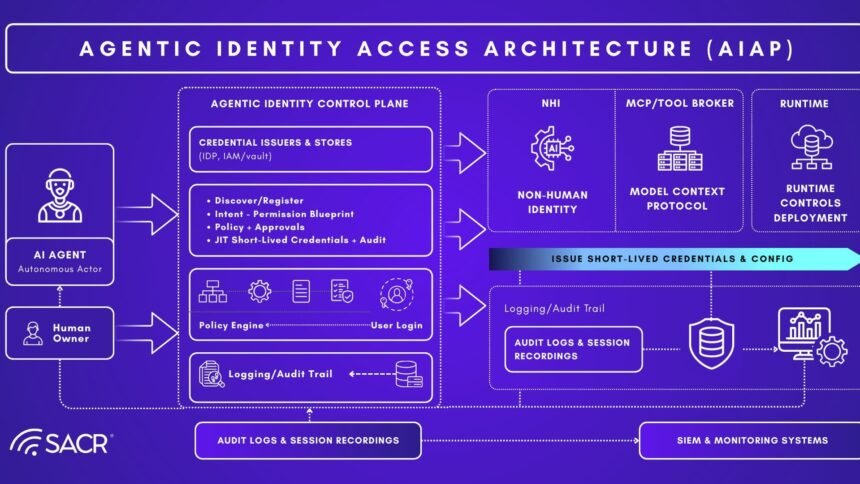
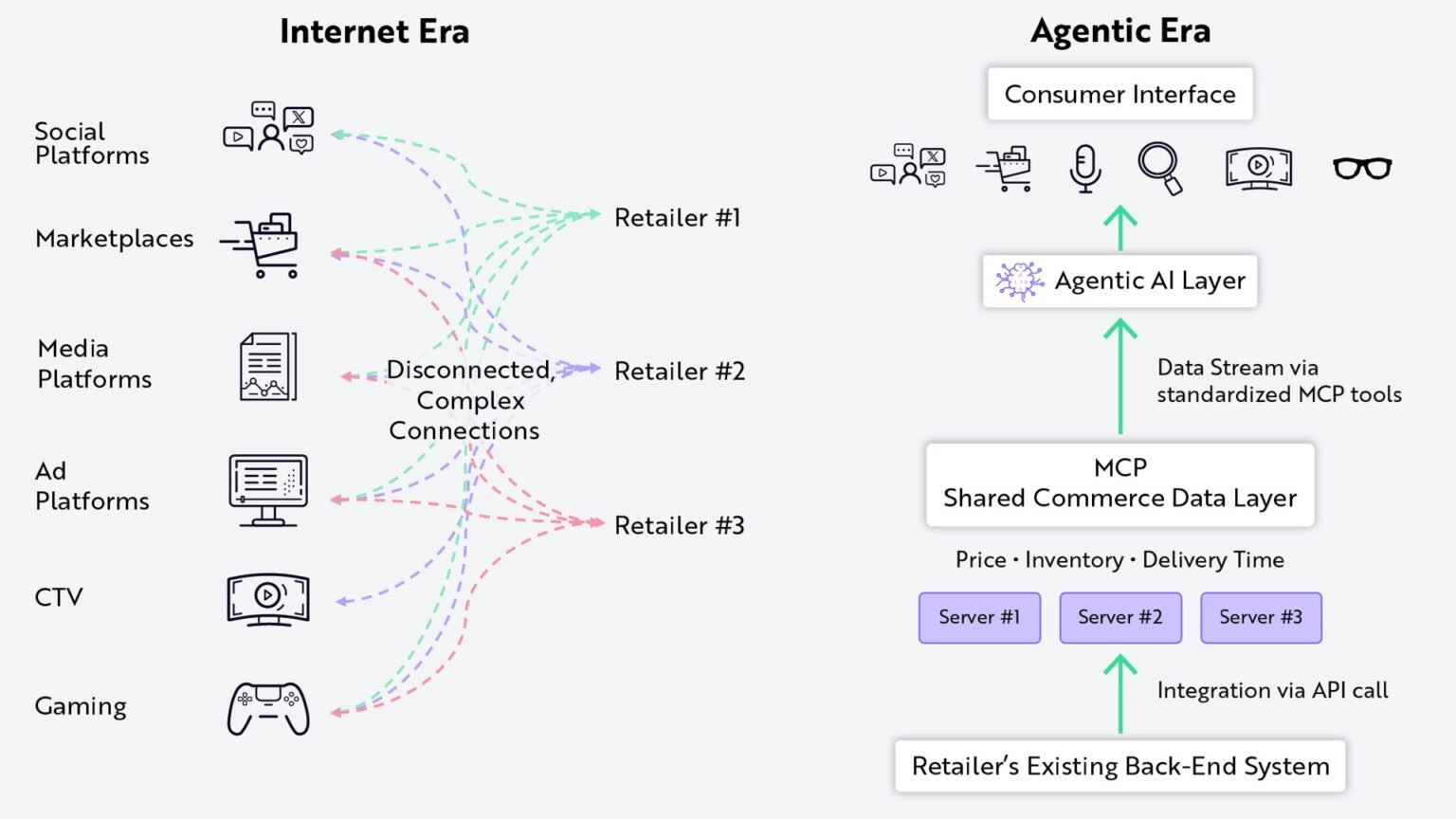
The piece nearly every marketplace roundup omits is the discovery layer — and in 2026 it is the difference between a static listing and an agent other agents can actually find and call. MCP hubs (PulseMCP, mcp.so, Smithery) are the developer directories where you publish a Model Context Protocol server so any MCP-capable agent or IDE can install it. They charge nothing to list, but they are directories, not registries — discovery is human-browsable, not machine-resolvable. To be discoverable by other agents programmatically, you also need to publish an A2A Agent Card and register in a real agent registry or the OWASP Agent Name Service.
The numbers show how fast this moved: the MCP ecosystem crossed roughly 9,400 distinct servers by mid-April 2026, up from about 6,800 at year-end 2025 — roughly +38% in four months (Automation Switch). Listings fragment across PulseMCP (the largest hand-reviewed directory), mcp.so and Glama (broadest automated coverage), Smithery, and the official machine-readable registry at registry.modelcontextprotocol.io. If your agent exposes tools, an MCP listing is table stakes; it costs nothing and meaningfully widens reach.
But a directory listing does not make your agent resolvable by another agent at runtime. That is what A2A Agent Cards and registries are for. The OWASP Agent Name Service (ANS) — a DNS-inspired, PKI-backed registry with a protocol adapter layer spanning A2A, MCP, and ACP — is the emerging standard for verifiable, capability-aware agent discovery. The practical pattern in 2026: publish your storefront listing for human buyers, publish your MCP server to the hubs for tool discovery, and publish an A2A Agent Card plus a registry entry so agents can find and transact with you automatically. See our Agent Registry, A2A, and agentic commerce platform deep-dives for the protocol mechanics.
“A marketplace listing is a storefront for humans. An A2A Agent Card and registry entry is how other agents find and pay yours.”
Alatirok analysis
Where should you publish and monetize AI agents in 2026?
Match the marketplace to your buyer, then multi-home on the protocol layer
The where-to-publish-and-monetize-AI-agents decision reduces to one question — who is your buyer — and then a multi-home strategy on top. If you sell to enterprises, lead with the marketplace whose billing relationship your buyer already has: AgentExchange for CRM/Slack, Gemini Enterprise for Workspace/Cloud, Microsoft Marketplace for Azure/M365, AWS Marketplace for AWS accounts. If you sell to developers or consumers, lead with the GPT Store and Claude Skills for reach and the MCP hubs for tool discovery — then charge through a meter you control. In every case, also publish an A2A Agent Card and a registry entry so the agent-to-agent demand of late 2026 can route to you.
Concretely: a vertical SaaS ISV should list on AgentExchange or AWS Marketplace and keep 75-85% of revenue after royalties, because the enterprise pipeline is worth the cut. A solo developer shipping a clever capability should list on the GPT Store and Claude Skills for reach, publish an MCP server to PulseMCP and mcp.so, and monetize through their own subscription or usage billing. A platform team building agents for other agents should prioritize the protocol layer — A2A, MCP hubs, and an ANS/registry entry — over any single storefront. The channels do not cannibalize; enterprise procurement and developer self-serve are different funnels, and the marginal cost of a second listing is low.
Do not over-index on revenue share in isolation. An 85% split on a channel with no buyers is worth less than a 15% royalty attached to $800M of ARR demand. Weigh the cut against the budget your buyer brings, the discovery the marketplace generates, and the protocol surface it exposes — and remember that in 2026 the strongest position is to be listed in the right storefront and resolvable on the right protocol at the same time.
Builder’s take
I run Cyntr (an agent-orchestration engine) and Loomfeed, so I publish and consume agents from both sides of the counter. The thing every “top marketplaces” list misses is that the listing decision is downstream of two questions: who is the buyer, and how does the agent get discovered once it is listed. Here is how I actually choose:
- Pick the marketplace where your buyer already has a budget code. AgentExchange and Gemini Enterprise win enterprise deals because the agent gets billed against an existing CRM or Workspace contract — that is worth more than any storefront polish.
- Treat revenue share as a proxy for who owns the customer. Microsoft’s 85% on the Windows Agent Store is generous because Microsoft keeps the OS relationship; Salesforce’s 15-25% royalty is steep because Salesforce hands you a pre-qualified enterprise pipeline.
- Developer directories (GPT Store, Claude Skills, MCP hubs) are distribution, not monetization. I list there for reach and lead-gen, then sell the real thing through a contract or a usage meter I control.
- Always publish an A2A Agent Card and register in a real registry. A marketplace listing is a 2026 storefront; the discovery layer (A2A, ANS, agent registries) is how other agents find and transact with yours programmatically — that is where the next wave of demand routes.
- Multi-home on purpose. The marginal cost of a second listing is low and the channels do not cannibalize: enterprise procurement and developer self-serve are different funnels.
Frequently asked questions
The best AI agent marketplaces 2026 are Salesforce AgentExchange, Google Gemini Enterprise Agent Platform, Microsoft Marketplace and the Windows Agent Store, and AWS Marketplace for enterprise sales; and the OpenAI GPT Store, the Anthropic Claude Skills directory, and MCP hubs (PulseMCP, mcp.so, Smithery) for developer reach. The right one depends on whether your buyer is an enterprise with an existing billing relationship or a developer who self-serves.
Revenue share varies widely. The Windows Agent Store gives developers 85%. Salesforce AgentExchange charges a 15% (ISVforce) or 25% (OEM) royalty on net subscription revenue. AWS Marketplace and Microsoft Marketplace take standard listing fees that vary by category and pricing model. The GPT Store pays a usage-based share (roughly $0.03 per conversation). MCP hubs and the Claude Skills directory charge nothing — they are distribution channels, so you monetize through your own meter or contract.
Google retired the standalone Agentspace marketplace and folded it into the renamed Gemini Enterprise Agent Platform at Cloud Next 2026. Choose AgentExchange if your buyer lives in Salesforce CRM, Service Cloud, or Slack and you want a curated, security-reviewed storefront attached to Agentforce’s ~$800M ARR demand. Choose Gemini Enterprise if you need native A2A v1.0 interoperability, managed MCP servers, and deep Google Workspace integration.
Not as general availability. The Windows Agent Store ships in preview alongside the Windows Agent Framework in the Windows 11 26H2 SDK in July 2026. It carries an 85% revenue share to developers, but the listing flow and economics are subject to change before GA, so keep a fallback monetization channel in place until terms are final.
Neither is a strong primary income source. The GPT Store has the larger audience and a real but opaque usage-based payout (roughly $0.03 per conversation, US-verified accounts only), so most creators hit a soft ceiling around $100-500/month. The Claude Skills directory pays no first-party revenue share at all — it is a curated distribution channel built on the open Agent Skills standard. Use both for reach and lead generation, then charge through your own billing.
Yes, if you want agent-to-agent demand. A marketplace listing is a storefront for human buyers; it does not make your agent resolvable by other agents at runtime. Publishing an A2A Agent Card, registering in an agent registry, or listing in the OWASP Agent Name Service (a DNS-inspired, PKI-backed directory spanning A2A, MCP, and ACP) is how other agents discover and transact with yours programmatically. The 2026 best practice is to do both: list in the right storefront and be resolvable on the right protocol.
Primary sources
- AppExchange, Slack Marketplace and Agentforce are now one, plus $50M funding — Salesforce Ben
- The new Gemini Enterprise: one platform for agent development — Google Cloud
- Microsoft launches the app store for AI agents — 85% revenue share, native in Windows — FourWeekMBA
- Microsoft Marketplace opens for AI apps, agents — InfoWorld
- Discover AI Agents and Tools in AWS Marketplace — Amazon Web Services
- OpenAI GPT Store revenue sharing explained — The GPT Shop
- Introducing Agent Skills — Anthropic
- Where to find MCP servers in 2026 — Automation Switch
- Salesforce now has 3+ pricing models for Agentforce — SaaStr
- Magentic Marketplace: an open-source simulation environment for studying agentic markets — Microsoft Research
- Agent Name Service (ANS) for Secure AI Agent Discovery v1.0 — OWASP GenAI Security Project
Last updated: June 3, 2026. Related: Commerce.