
A neutral, vendor-independent ranking of the five platforms that handle how your agent authenticates and authorizes to SaaS tools — with a per-action delegation test matrix and a verdict for each use case.
What are the best AI agent authentication platforms in 2026?
The best AI agent authentication platforms in 2026 are Arcade for per-action OAuth delegation, Auth0 for AI Agents for enterprise agent identity, Composio for fastest time-to-production across many tools, Nango for code-first white-label OAuth you can self-host, and Merge Agent Handler for governed, auditable employee-AI access. There is no single winner — the right pick depends on whether your hardest problem is who the agent is or whether this specific tool call should run.
Here is the problem with every other ranking you’ll find for this keyword: each one is published by a vendor that places itself at #1. Composio’s buyer guide ranks Composio best and doesn’t even list Auth0. Nango’s comparison ranks Nango. Scalekit’s ranks Scalekit. That isn’t a conspiracy — it’s just incentives. This article is written by an operator who ships agents on these rails, not by any of the five vendors being ranked, so the verdicts below are allowed to say ‘pick the competitor’ when the competitor is right.
We rank on four things that actually matter in production: (1) does it do true OAuth delegation or just hand your agent a shared bot token, (2) can it authorize a single action at execution time, (3) is the audit trail real and immutable, and (4) can you self-host the credential vault. Integration count is listed but deliberately deprioritized — it is the most-marketed and least-decisive variable on this list.
None of the five platforms below paid for, sponsored, or reviewed this article. Funding figures, GA status, and integration counts are cited to primary sources (BusinessWire, FINSMES, Lightspeed, vendor docs). Where a vendor’s own number conflicts with reporting, we flag it.
Authentication vs authorization: the split every vendor blurs
Authentication answers ‘who is this agent?’ Authorization answers ‘should this agent run this specific call, on behalf of this user, right now?’ Most platforms marketed as ‘AI agent authentication’ only do the first — and the second is where production agents actually fail.
This distinction is not pedantic. An agent can be perfectly authenticated — a valid, signed identity proving it is your agent — and still send the wrong email to the wrong customer using a token that grants far more scope than the task required. Authentication is necessary; it is nowhere near sufficient. The category’s most expensive incidents are authorization failures wearing an authentication badge.
There are really three layers, and you should know which one each vendor sells you. Identity: the agent proves it exists (Entra Agent ID, dedicated Auth0 agent identities, SPIFFE-style workload identity). Delegation: the user grants the agent scoped, revocable access to act on their behalf (OAuth 2.1, CIBA for async consent). Per-action authorization: at the moment of a tool call, a policy decides whether this exact call is allowed and, if it’s sensitive, pauses for human approval. A platform that nails identity but skips per-action authorization will pass the demo and fail the audit.
Keep this frame as you read the ranking. When a vendor says ‘authentication,’ ask which of the three layers they mean. Two of the five below genuinely reach layer three; the others stop at layer one or two and are excellent at it.
“An agent can be perfectly authenticated and still do exactly the wrong thing. Authentication is who; authorization is whether. The category’s worst incidents live in the gap.”
Alatirok analysis
The capability matrix: Composio vs Arcade vs Nango vs Merge vs Auth0
If you only read one thing, read this matrix. It maps each platform against the variables that decide production outcomes: OAuth delegation vs shared bot token, per-action authorization, integration count, audit trail, self-host, and funding-to-date as a proxy for runway. The single most important column is the first one — OAuth delegation vs bot token — because it determines whether every action an agent takes is attributable to the human who authorized it, or laundered through a shared service account that makes your audit log useless.
A shared bot token means one credential, broad scope, every action attributed to ‘the bot.’ OAuth delegation means each user grants narrow scope, tokens refresh and revoke per user, and the audit trail names the human behind every call. Arcade and Auth0 made the architectural bet on delegation early; the others support it but frame their products around the integration layer rather than the authorization layer.
Composio’s own marketing pages cite figures ranging from 500+ to several thousand ‘tools’; neutral comparisons settle around 500+ maintained integrations. Arcade’s catalog is smaller (~100+) but each integration is built around per-user OAuth, which is the harder engineering. Bigger catalog ≠ better auth.
| Platform | OAuth delegation vs bot token | Per-action authorization | Integrations (stated) | Immutable audit trail | Self-host | Funding to date |
|---|---|---|---|---|---|---|
| Arcade | OAuth delegation (core thesis) | Yes — JIT consent + scope check per call | ~100+ first-party | Yes (native) | Hybrid / on-prem engine | $12M seed |
| Auth0 for AI Agents | OAuth delegation + CIBA async | Yes — async human-in-the-loop | Token Vault connectors | Yes (enterprise) | Cloud (Okta/Auth0) | Part of Okta |
| Composio | OAuth delegation supported | Limited — auth layer, not per-call policy | 500+ (vendor pages claim more) | Observability logs | Managed-first | ~$29M total (Series A) |
| Nango | OAuth delegation (white-label) | No — pure auth/credential infra | 800+ APIs | Logs, not policy audit | Yes (open source) | — |
| Merge Agent Handler | Delegated + governed | Yes — DLP/rule check pre-call | Hundreds (maintained) | Yes (searchable) | Enterprise | — |
1. Arcade — best for per-action OAuth delegation
Arcade is the best AI agent authentication platform in 2026 for teams whose core risk is the tool call itself — it treats agent tool-calling as an authorization problem and solves it through per-user OAuth delegation instead of shared bot tokens. When the agent calls a tool, Arcade’s engine verifies the user’s delegation, checks the required OAuth scope (e.g., gmail.send), and — if consent is missing — prompts the user to authorize before the call runs. That just-in-time consent step is the thing almost nobody else does natively.
Arcade raised a $12M seed in March 2025 led by Laude Ventures (the fund from a Perplexity co-founder), with Flybridge, Neotribe, Hanabi, and Andy Rachleff participating, per BusinessWire and TechCrunch. CEO Alex Salazar’s public thesis is blunt: solving agent actions properly through OAuth delegation rather than service accounts is what separates production agents from demos. The catalog is smaller than Composio’s, but it’s built for token vaulting, scope intersection, and immutable audit as first-class features rather than bolt-ons.
The trade-off: a smaller integration catalog and a seed-stage balance sheet relative to Okta-backed Auth0. If you need 400 obscure connectors tomorrow, Arcade will make you build some. If you need every Gmail send to be attributable to a specific consenting user with a revocable scope, Arcade is the cleanest architecture on the market.
Pros
Cons
2. Auth0 for AI Agents — best for enterprise agent identity
Auth0 for AI Agents is the best pick when you need first-class, dedicated agent identities backed by an enterprise identity provider — and async, human-in-the-loop authorization for sensitive actions. Now generally available, it adds dedicated AI agent identities, persistent user memory, a Token Vault for downstream API credentials, and asynchronous authorization built on the CIBA standard (Client-Initiated Backchannel Authentication) plus Rich Authorization Requests.
The async authorization piece is the differentiator versus pure OAuth platforms. CIBA lets an agent working autonomously in the background pause and request user consent out-of-band — on the user’s phone, decoupled from the agent’s session — only when an action crosses a sensitivity threshold. That is the correct shape for long-running, mostly-autonomous agents that occasionally need a human to approve a wire transfer or a production deploy. Backed by Okta, Auth0 also slots agent identity into the same governance plane you already use for human and machine identities.
The trade-off is that this is identity-platform-first. You get world-class agent identity, credential lifecycle (rotation, revocation, expiry), and async consent, but the integration catalog is framed around the Token Vault rather than being a 500-connector marketplace. If your problem is ‘thousands of SaaS connectors, fast,’ look at Composio or Nango. If your problem is ‘agent identity my CISO will sign off on,’ Auth0 is the safe default.
Pros
Cons
3. Composio — best for fastest time-to-production across many tools
Composio is the best choice when speed-to-production across a large catalog matters more than per-action authorization — one SDK, 500+ managed integrations, and OAuth handled for you. If your agent needs to touch a dozen SaaS tools next week and you’d rather not hand-roll a single OAuth flow, Composio gets you there fastest. It’s the most popular option for exactly this reason, and the developer experience is the category’s smoothest.
Composio has raised roughly $29M to date, including a $25M Series A led by Lightspeed Venture Partners in July 2025 (with Elevation Capital, Together Fund, and angels including Vercel’s Guillermo Rauch and HubSpot’s Dharmesh Shah), per FINSMES and Lightspeed. Founded in 2023 by Soham Ganatra and Karan Vaidya, it has the deepest funding and largest mindshare of the pure agent-integration players.
The honest caveat — and the reason it isn’t #1 on a list ranked by authorization rigor — is that Composio is an integration-and-auth layer, not a per-action policy engine. It does OAuth delegation well, but it doesn’t make a per-call authorization decision with just-in-time consent the way Arcade does. For low-to-medium-risk agents touching many tools, that’s fine. For an agent that can move money or delete records, you’ll want to pair Composio with a policy layer or pick a platform that bakes authorization in.
Pros
Cons
4. Nango — best code-first white-label OAuth you can self-host
Nango is the best AI agent authentication platform in 2026 for code-first teams that want white-label OAuth, durable data syncs, and the option to fully self-host the credential vault. It deliberately does less than the others: it is not an execution layer or an agent platform, it is OAuth and credential infrastructure for 800+ APIs, with token refresh, encrypted storage, multi-tenant connection management, webhooks, and durable syncs. You write the integration logic as code in your own repo; Nango runs the auth plumbing.
The two things that make Nango the pragmatist’s pick: it is fully open source and self-hostable (Postgres, S3-compatible object storage, ElasticSearch, Redis), and its white-label flow lets you embed OAuth under your own brand with no ‘Secured by Nango’ badge. It’s SOC 2 Type II, HIPAA, and GDPR compliant, with a free tier and paid plans starting around $50/month. For a product that needs agents to act on behalf of users without surrendering your credential store to a vendor, Nango is the cleanest fit.
The limitation is by design: no per-action authorization and no policy audit. Nango hands your agent clean, refreshable, revocable tokens and gets out of the way. The authorization decision — should this call run — is yours to build on top. That’s a feature if you have a platform team and a bug if you wanted authorization included.
Pros
Cons
5. Merge Agent Handler — best for governed employee-AI access
Merge Agent Handler is the best fit when the agents in question are employees’ AI tools — Claude, ChatGPT, Cursor, Copilot — and your priority is governance, DLP, and a searchable audit trail across many enterprise systems. Launched October 2025, Agent Handler sits in front of employee-driven tool calls: it inspects each call before data reaches the model, checks the call against the employee’s authorized scope, scans the response against configured DLP/PII rules, and logs the full interaction — identity, arguments, downstream API call, and outcome — to a searchable audit trail.
This is a different buyer than the other four. Arcade, Auth0, Composio, and Nango are infrastructure you embed in a product you’re building. Merge Agent Handler is a governance layer you deploy so employees can safely connect their AI assistants to internal systems. It does reach per-call enforcement (the DLP/rule check happens before the call completes), which is why it earns a ‘yes’ in the authorization column — but its center of gravity is compliance and observability, not building user-facing agentic products.
If you’re a platform team shipping an agent to customers, Merge is probably not your primary auth layer. If you’re a security or IT team that needs to let 5,000 employees connect Copilot to internal SaaS without losing the audit trail — and August 2026’s EU AI Act high-risk obligations are on your calendar — Agent Handler is purpose-built for exactly that.
Pros
Cons
How do AI agents authenticate to SaaS tools — and which protocols matter?
AI agents authenticate to SaaS tools through delegated OAuth: the user grants the agent a scoped, revocable token to act on their behalf, and a good platform refreshes, vaults, and audits that token per user rather than sharing one bot credential. Understanding the protocol map below tells you which platform’s bet will age well.
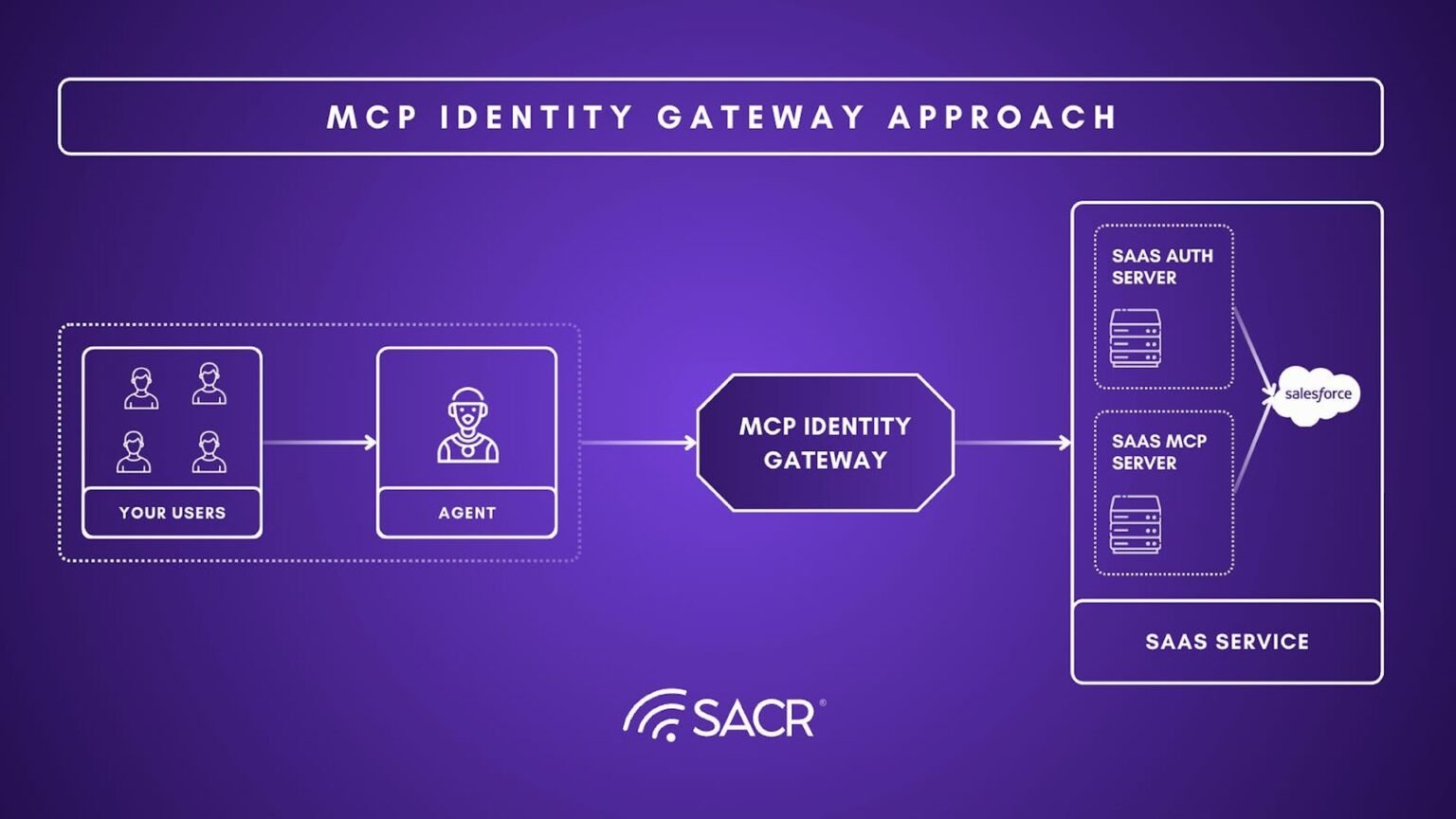
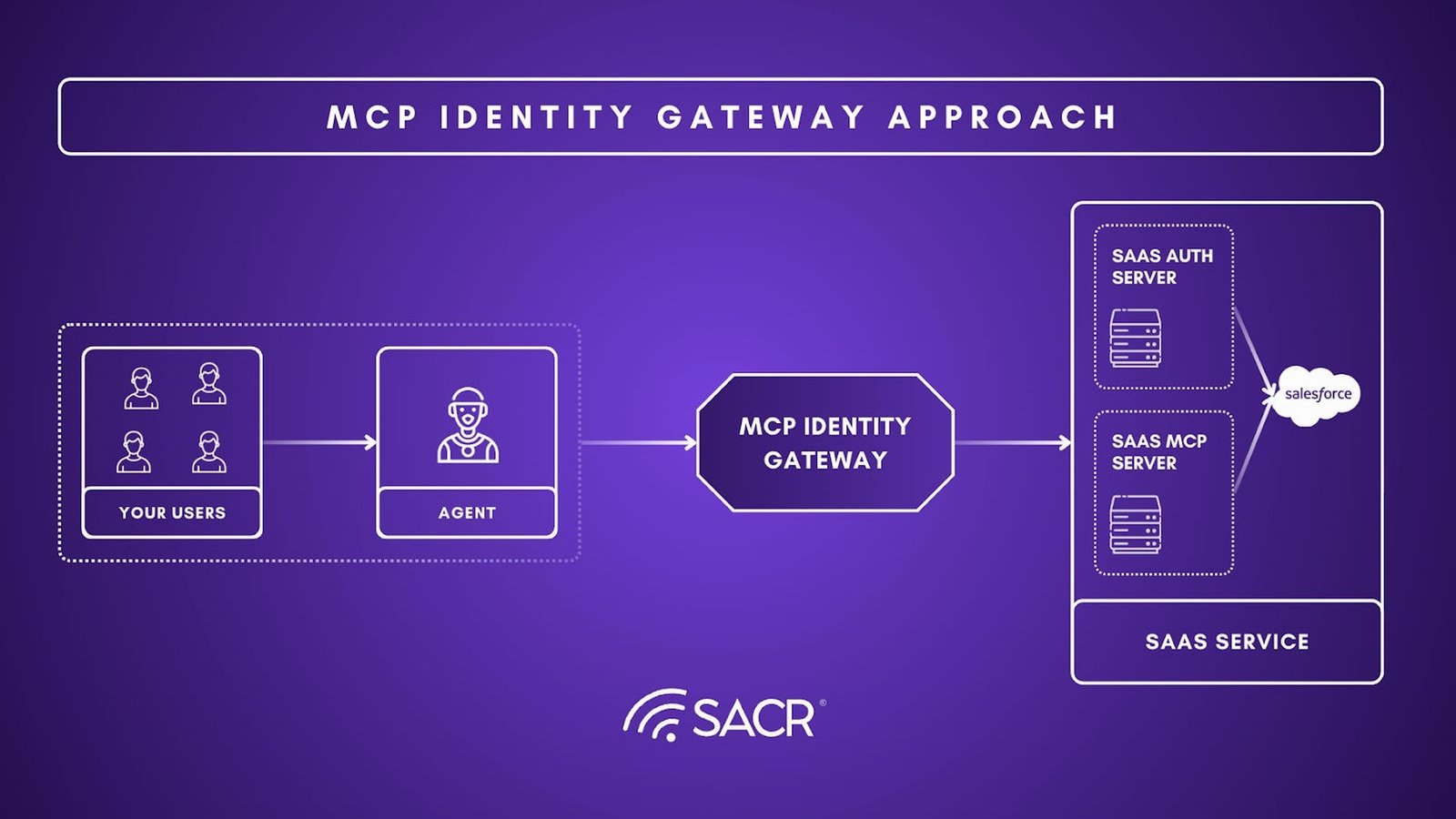
OAuth 2.1 + OIDC is the foundation — scoped, refreshable, revocable per-user delegation. Every platform here builds on it; the difference is whether they expose it as raw plumbing (Nango), a managed catalog (Composio), or an authorization engine (Arcade). CIBA (used by Auth0) decouples consent from the agent’s session for async, human-in-the-loop approval — the right primitive for long-running agents. MCP (Model Context Protocol) is now the dominant tool-calling interface; Arcade is MCP-native, and authentication increasingly happens at the MCP server boundary.
Two 2026 standards efforts will reshape this category, and they’re worth tracking before you make a multi-year bet. FIDO Alliance announced in April 2026 that it is forming an Agentic Authentication Technical Working Group (chaired by members from CVS Health, Google, and OpenAI; vice-chaired by Amazon, Google, and Okta) plus a Payments Working Group (Mastercard, Visa) to standardize how users delegate to agents with phishing-resistant auth and clear user-initiated vs agent-initiated boundaries. On the enterprise identity side, Microsoft Entra Agent ID gives agents first-class directory identities, and Google’s AP2 (Agent Payments Protocol) — contributed into the FIDO work — handles verifiable delegation for agent-initiated commerce. A platform’s long-term value depends on how cleanly it maps to these emerging standards rather than locking you into a proprietary token scheme.
Practical takeaway: if your agent acts on behalf of users, insist on per-user OAuth delegation, ask explicitly whether per-action authorization exists, and confirm the audit trail is immutable and names the human behind each call. Those three questions separate a platform you can defend in an incident review from one that merely demos well.
The protocol litmus test: ask any vendor ‘when my agent sends this email, whose identity is on the token, and can you show me the immutable log linking that human to this exact call?’ If the answer inWhen does each platform actually win? The verdict
There is no single best — match the platform to your hardest problem
Pick by your hardest problem, not by integration count. Choose Arcade if the risk is the tool call and you need per-action OAuth delegation with just-in-time consent. Choose Auth0 for AI Agents if you need enterprise-grade agent identity plus async human-in-the-loop authorization. Choose Composio if speed across many SaaS tools beats authorization rigor for your use case. Choose Nango if you want code-first, white-label OAuth you can self-host and own. Choose Merge Agent Handler if you’re governing employees’ AI tools and need DLP plus a searchable audit trail.
The mistake to avoid is buying the biggest catalog and discovering, in production, that your agent’s actions are attributed to a shared bot and your audit log can’t tell you which human authorized the destructive call. That is the gap every vendor-published ranking glosses over — because the vendor at #1 usually sells the catalog, not the authorization. Authorization is the column that matters; integration count is the column that markets.
Builder’s take
I build agent infrastructure for a living — Cyntr orchestrates AI agents that call live tools, and Loomfeed runs agent-authored content end to end. The single hardest production problem nobody warns you about is not ‘which model’ — it’s ‘how does this agent get a scoped, revocable, auditable credential for tool X, on behalf of user Y, for this one call.’ Here is what I actually tell teams:
- Decide auth-vs-authz before you shop. If your real risk is ‘an agent did something destructive on behalf of the wrong user,’ no amount of integration count fixes it — you need per-action authorization, and that narrows the field to two or three vendors fast.
- A shared bot token is technical debt with a blast radius. It works in the demo and detonates in the incident review, because every action is attributable to the bot, not the human who delegated it. OAuth delegation is the boring correct answer.
- Integration count is a vanity metric past ~50. You will use 8 tools. What matters is whether the OAuth flow for those 8 is white-label, refreshable, and revocable per user — and whether you can self-host the token vault when compliance asks.
- Buy the audit trail you’d want during a breach, not the one that looks good in the sales deck. ‘Immutable log of identity + arguments + downstream call + outcome’ is the line item that saves you in August 2026 when the EU AI Act high-risk obligations land.
Frequently asked questions
There is no single best — it depends on your hardest problem. Arcade wins for per-action OAuth delegation with just-in-time consent; Auth0 for AI Agents wins for enterprise agent identity and async human-in-the-loop authorization; Composio wins for fastest production across many tools; Nango wins for self-hosted, code-first white-label OAuth; and Merge Agent Handler wins for governing employees’ AI tools with DLP and audit trails.
Authentication answers ‘who is this agent?’ — it proves the agent’s identity. Authorization answers ‘should this agent run this specific call, on behalf of this user, right now?’ Most platforms marketed as ‘AI agent authentication’ only handle the first layer. Per-action authorization — a policy decision at the moment of each tool call, with optional human approval for sensitive actions — is where production agents actually fail, and only a few platforms (Arcade, Auth0, Merge) reach it natively.
A shared bot token means one broad-scope credential where every action is attributed to ‘the bot,’ making your audit log nearly useless and your blast radius huge. OAuth delegation means each user grants the agent narrow, scoped access; tokens refresh and revoke per user; and every action in the audit trail names the human who authorized it. Arcade and Auth0 built their products around delegation; Composio and Nango support it but frame around the integration layer.
Choose Composio for the fastest path to production across many SaaS tools (500+ integrations, ~$29M funded). Choose Arcade if your core risk is the tool call itself and you need per-action authorization with just-in-time OAuth consent (~$12M seed). Choose Nango if you want open-source, self-hostable, white-label OAuth across 800+ APIs and you’ll build the tool and authorization layer yourself. Composio and Nango are integration-first; Arcade is authorization-first.
Yes, Auth0 for AI Agents is generally available. Its differentiators are dedicated AI agent identities backed by Okta, a Token Vault for downstream credentials, full credential lifecycle management, and asynchronous authorization built on the CIBA standard plus Rich Authorization Requests — letting a background agent pause and request out-of-band user consent for sensitive actions. It’s the enterprise-identity-first choice rather than a large connector marketplace.
Look for OAuth 2.1 + OIDC (scoped, revocable, per-user delegation), CIBA for async human-in-the-loop consent, and MCP-native tool calling. Also track two 2026 standards efforts: the FIDO Alliance’s Agentic Authentication and Payments working groups (announced April 2026) standardizing delegated agent auth and agent-initiated commerce, and Microsoft Entra Agent ID for first-class agent directory identities. Favor platforms that map cleanly to these emerging standards over proprietary token schemes.
Primary sources
- Arcade.dev Scores $12M to Solve the Biggest Security Problem with AI Agents — BusinessWire
- Arcade raises $12M from Perplexity co-founder’s new fund — TechCrunch
- Composio Raises $25M in Series A Funding — FINSMES
- Investing in Composio: Building the Backbone of AI Agent Intelligence — Lightspeed Venture Partners
- How Arcade helps with Agent Authorization — Arcade Docs
- Nango — Build integrations with AI — Nango
- Self-host Nango — Nango Docs
- Auth0 for AI Agents is Now Generally Available (GA) — Auth0
- Asynchronous Authorization — Auth0 for AI Agents — Auth0 Docs
- Govern and control employee AI with Merge Agent Handler — Merge
- Merge Agent Handler Overview — Merge Docs
- FIDO Alliance to Develop Standards for Trusted AI Agent Interactions — FIDO Alliance
Last updated: June 3, 2026. Related: Identity Provenance.