
Sierra AI is the conversational AI agent platform co-founded by Bret Taylor (formerly co-CEO of Salesforce, chair of Twitter’s board through the Musk acquisition, current chair of OpenAI’s board) and Clay Bavor (formerly VP at Google leading Project Starline and VR). Sierra launched in stealth in 2023, came out of stealth in February 2024 with a $4.5B valuation led by Sequoia and Benchmark, and reportedly hit a $10B+ valuation in late 2025. Sierra’s product is an enterprise conversational agent platform — companies like Sonos, WeightWatchers, ADT, and Casper deploy Sierra-built agents to handle customer-facing conversations across voice and chat.
What is Sierra AI?
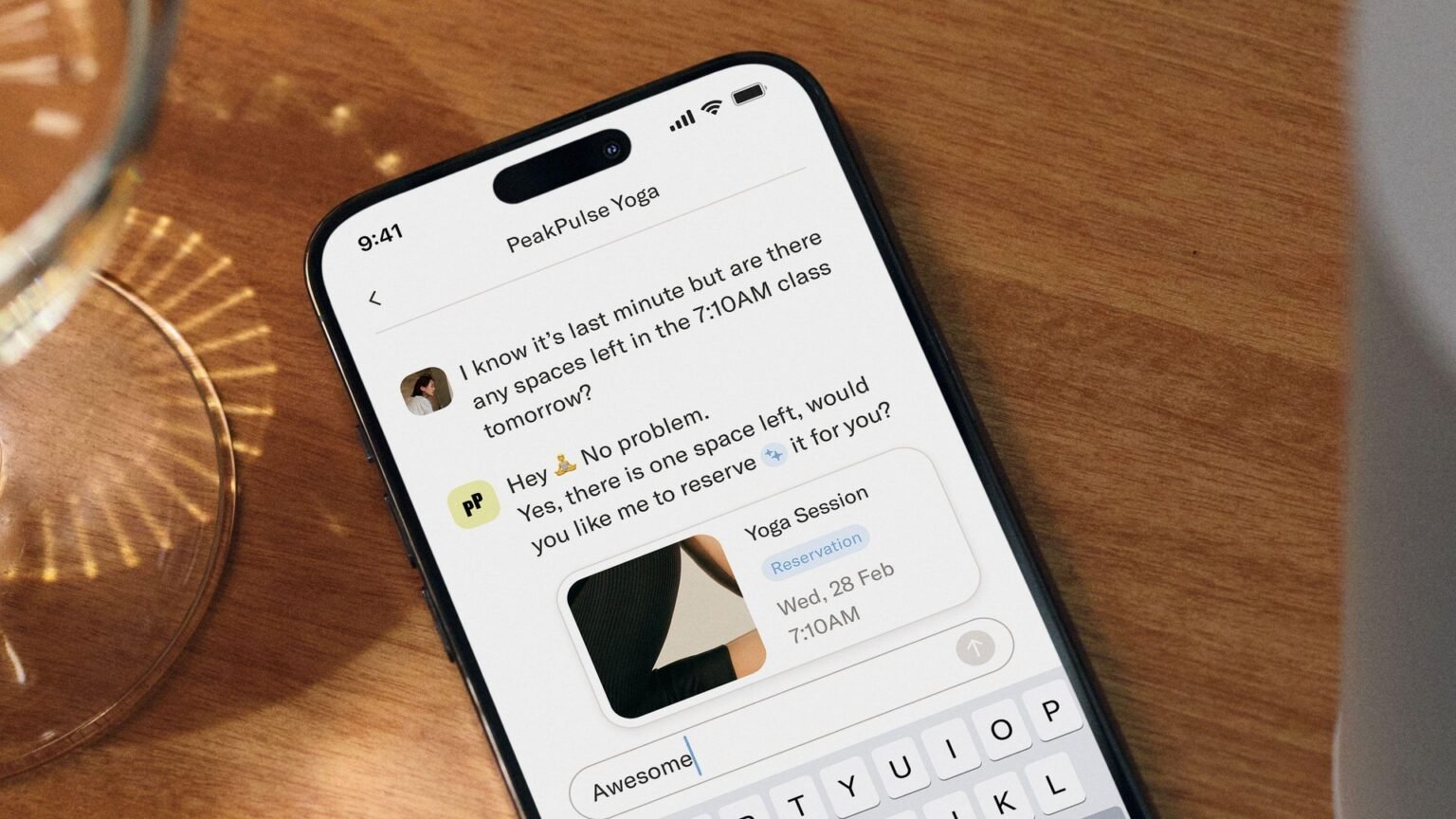
Sierra AI is an enterprise conversational AI agent platform launched in 2024 by Bret Taylor and Clay Bavor. Specifically, Sierra builds branded, voice-and-chat AI agents that handle customer-facing conversations — returns, support tickets, sales conversations, billing questions, account changes. Instead of routing customers to a contact center or a chatbot, Sierra-powered companies route customers to a branded AI agent that resolves the conversation end-to-end.
Sierra’s positioning is different from generic AI chatbots. The company emphasizes brand voice, safety guardrails, and enterprise integration. By contrast, Sierra agents speak in the brand’s voice (the Sonos agent sounds like Sonos; the WeightWatchers agent sounds like WeightWatchers), integrate deeply with the customer’s existing systems (Shopify, Salesforce, custom CRMs), and ship with the AI safety harness Sierra calls AgentOS.

📌 Quick definition. Sierra AI is an enterprise conversational AI agent platform. Founded 2023 by Bret Taylor (ex-Salesforce co-CEO) and Clay Bavor (ex-Google VP). Came out of stealth Feb 2024 at $4.5B valuation; reportedly $10B+ valuation late 2025. Customers: Sonos, WeightWatchers, ADT, Casper. Product page: sierra.ai.
The founders and the strategic positioning
Sierra’s founder story matters because it explains the company’s strategic positioning. Specifically, Bret Taylor was co-CEO of Salesforce — he understands enterprise software distribution, customer relationships, and the pain points of customer-facing teams. By contrast, Clay Bavor spent 15 years at Google leading consumer products, AR/VR (Project Starline), and Workspace. The combination — enterprise distribution plus consumer-product polish — defines Sierra’s product DNA.
Taylor also chairs OpenAI’s board (since the November 2023 board reconstitution) which means Sierra has unusual visibility into model roadmaps and capabilities. This isn’t a casual board role — Taylor was central to the post-Altman-firing rebuild of OpenAI’s governance. As a result, Sierra’s roadmap can plausibly anticipate where conversational AI capabilities are heading 12-18 months out.
How Sierra works in production
A Sierra deployment typically has three layers. The conversational layer (the AI agent that speaks to the customer), the integration layer (connections to Shopify, Salesforce, ERP systems, payment processors), and the AgentOS layer (Sierra’s safety, observability, and evaluation harness). Deploying Sierra is closer to deploying Salesforce than deploying a chatbot — there’s a real services engagement, integration work, and ongoing tuning.
Brand voice and persona design
Sierra agents have named personas (“Ana” for Sonos, “Bot” for Casper, etc.) and brand-tuned voices. The persona work isn’t cosmetic — Sierra invests heavily in tone, vocabulary, and conversational patterns that match the brand. Generic AI chatbots feel like generic AI chatbots; Sierra agents feel like the brand. Customer satisfaction scores on Sierra deployments reportedly exceed what brands see from human contact centers in many categories.
AgentOS — the safety harness
AgentOS is Sierra’s safety and observability layer. It includes guardrails (the agent won’t promise refunds it can’t deliver, won’t claim policies that don’t exist), real-time monitoring (every conversation can be reviewed), and evaluation tooling (Sierra runs synthetic conversations to test agent behavior before deployment). This is the layer enterprise customers care about most — the agent itself is table stakes; the trust harness is what makes Sierra usable in regulated and brand-sensitive industries.
Sierra AI customers and case studies
Sierra’s public customer list is concentrated in consumer brands and direct-to-consumer companies. The company has named Sonos, WeightWatchers, ADT, Casper, and SiriusXM as customers in various press materials. The deployment pattern is similar across customers: replace or augment a contact center with a branded conversational agent that handles common interactions.
“Sierra’s bet is that every consumer brand will deploy a branded AI agent — the way every consumer brand has a website today.”
Industry framing, 2026
| Customer | Industry | Use case | Public details |
|---|---|---|---|
| Sonos | Consumer audio | Customer support — agent named “Ana” | Sonos publicly named in Sierra launch materials |
| WeightWatchers | Health & wellness | Member support, program guidance | WW publicly cited in Sierra case studies |
| ADT | Home security | Customer service for security customers | Mentioned in Sierra growth coverage |
| Casper | DTC mattresses | Sales + support agent | Mentioned in Sierra investor materials |
| SiriusXM | Audio entertainment | Customer service automation | Mentioned in Sierra growth coverage |
Sierra AI pricing and business model
Sierra is enterprise-priced and not publicly listed. Specifically, the company sells annual contracts to enterprise customers, typically in the six-to-seven-figure range. As a result, Sierra isn’t a self-serve product — the company’s services-heavy approach involves dedicated implementation teams, brand-voice tuning, and integration engineering for each customer.
Importantly, Sierra’s pricing model includes both a platform fee and per-conversation billing. This is different from generic chatbot pricing, which is typically seat-based or message-volume-based. As a result, Sierra’s revenue scales with conversation volume — the more customers a brand routes to its Sierra agent, the more Sierra earns. This aligns Sierra’s incentives with the customer’s adoption.
⚠️ Not for everyone. Sierra’s enterprise services model means it’s not the right fit for smaller companies or self-serve buyers. Specifically, if you can’t commit to a 6-12 month implementation engagement and an annual contract starting in the high six figures, Sierra isn’t your platform. Look at Decagon, Crescendo, or Forethought for mid-market alternatives — they’re closer to self-serve.
The competitive landscape
Sierra operates in the enterprise conversational AI market, where competition is intensifying. Specifically, three categories of competitors matter: (1) other AI-native conversational agent platforms (Decagon, Crescendo, Forethought), (2) horizontal AI platforms with conversational agent capabilities (OpenAI’s enterprise offerings, Anthropic, Google), and (3) incumbent CX vendors (Salesforce Einstein, Genesys, NICE) building AI-agent layers on top of existing contact center products.
| Competitor | Positioning | Best for |
|---|---|---|
| Sierra AI | Premium enterprise platform — brand-first agents with AgentOS safety harness | Consumer brands willing to invest in white-glove implementation |
| Decagon | Conversational agents for support — focus on ticket deflection | SaaS companies with high support volume |
| Crescendo | Hybrid AI + human escalation contact center | Companies needing 24/7 support with human backup |
| Forethought | AI for support workflow automation | Mid-market companies replacing tier-1 support |
| Salesforce Einstein | Embedded agent layer in Service Cloud | Salesforce-anchored enterprises |
What this means for builders and operators
First, if you’re building a consumer brand, Sierra is the premium option for replacing or augmenting your customer-facing teams with AI. Specifically, the brand-voice and safety work Sierra invests in is genuinely differentiated — generic AI chatbots can’t match it. Expect a real services engagement and a multi-quarter implementation.
Next, if you’re a builder considering competing, Sierra’s moats are (1) brand-voice tuning at scale, (2) AgentOS as a trust layer, and (3) Taylor’s enterprise distribution network. These aren’t pure-tech moats — the technical capabilities will diffuse to other platforms within 12-18 months. As a result, the moat is the operational discipline of running a services-heavy AI deployment.
Finally, if you’re watching the space as an investor or analyst, Sierra is the most likely vendor to define the conversational AI category for consumer brands. By contrast, competitors will need to either move upmarket (matching Sierra’s services posture) or downmarket (productizing for mid-market self-serve buyers).
Builder’s take
Sierra is the most interesting bet in enterprise conversational AI — not because the tech is unprecedented (it isn’t) but because of the operational discipline of running brand-tuned agents at scale. Specifically, the AgentOS bet — that the trust layer matters more than the agent itself — is the right strategic call. By contrast, most competitors are still over-investing in agent capabilities and under-investing in the safety harness.
- Watch the AgentOS bet. If Sierra is right that the trust/observability/eval layer is the differentiator, that’s a defensible position. If competitors catch up on AgentOS-equivalents within 18 months, Sierra’s moat narrows.
- Taylor’s OpenAI board seat is a real strategic asset. Visibility into model roadmaps 12-18 months out informs Sierra’s product roadmap in ways competitors can’t easily replicate.
- The services-heavy model is the friction. If a mid-market platform emerges with 80% of Sierra’s quality at 20% of the implementation cost, Sierra will be squeezed from below. Watch Decagon’s mid-market motion carefully.
Related reading: For an in-depth look at how teams orchestrate conversational AI agents like Sierra under the hood, see our LangGraph builder’s guide. For the broader autonomous-agent category Sierra competes in adjacent to, our Cognition Devin enterprise guide is a useful companion.
When Sierra is the wrong choice
Sierra’s wins are concentrated in a narrow band of enterprise consumer brands. Four situations where it’s actively the wrong fit.
- You need self-serve onboarding. Sierra is a services-heavy white-glove platform. There is no ‘sign up, deploy in a week’ path. If you can’t commit to 3-6 months of implementation, Decagon or Crescendo are mid-market alternatives.
- Annual contract value below seven figures. Sierra’s GTM is built around large enterprise accounts. The pricing structure makes less sense for companies under $50M in revenue or with fewer than 10,000 monthly customer conversations.
- Voice-only deployments. Sierra’s strongest work is chat and email. Voice is supported but not the focus. Pure voice operations have better-aligned vendors (Vapi, Retell, PolyAI).
- Highly technical or developer-focused customers. Sierra agents are tuned for consumer-brand voice. Developer-facing or B2B technical support workflows often want a more direct, less brand-polished tone than Sierra produces by default.
Frequently asked questions
Sierra AI was co-founded by Bret Taylor and Clay Bavor in 2023. Specifically, Taylor was previously co-CEO of Salesforce, chair of Twitter’s board through the Musk acquisition, and currently chairs OpenAI’s board. Bavor was previously VP at Google leading Project Starline and AR/VR. The company came out of stealth in February 2024 at a $4.5B valuation and reportedly hit $10B+ valuation in late 2025.
Sierra’s publicly named customers include Sonos (agent named “Ana”), WeightWatchers, ADT, Casper, and SiriusXM. Specifically, the customer roster is concentrated in consumer brands and direct-to-consumer companies — Sierra’s brand-voice positioning fits these companies particularly well. As a result, less consumer-anchored industries (B2B SaaS, financial services) are less represented in Sierra’s public customer list.
AgentOS is Sierra’s AI safety, observability, and evaluation harness. Specifically, it includes guardrails (preventing the agent from promising things it can’t deliver), real-time monitoring (every conversation reviewable), and evaluation tooling (synthetic conversations to test agent behavior before deployment). Importantly, AgentOS is the layer enterprise customers care about most — the conversational AI itself is increasingly commoditized; the trust and safety harness is what makes Sierra usable in brand-sensitive industries.
Sierra is enterprise-priced and not publicly listed. Specifically, the company sells annual contracts typically in the six-to-seven-figure range, combining a platform fee with per-conversation billing. As a result, Sierra isn’t a self-serve product — it requires a 6-12 month implementation engagement with Sierra’s services team. For mid-market self-serve alternatives, look at Decagon, Crescendo, or Forethought.
They’re different categories. Specifically, Sierra is an AI-native conversational agent platform built for branded customer-facing conversations. By contrast, Salesforce Einstein is an AI layer embedded in Salesforce Service Cloud — designed to enhance existing Salesforce workflows. As a result, companies anchored on Salesforce often start with Einstein; companies prioritizing brand voice and a premium conversational experience choose Sierra.